‘It is getting bad:’ An Idaho mother’s struggle to find place to rent for her family of 3
READ MORE
Affording Boise: Rental housing
Soaring rents. Skyrocketing home prices. The double-digit rates of increase in the costs of Boise-area housing create increasingly urgent problems for low-income, working-class and even moderate-income Idahoans who need places to live. Affording Boise is a series of Idaho Statesman special reports on housing. This collection focuses on rental homes, including apartments. A separate collection focuses on homeownership.
Expand All
Teresa Thorne hasn’t had to look for a home to rent in eight years.
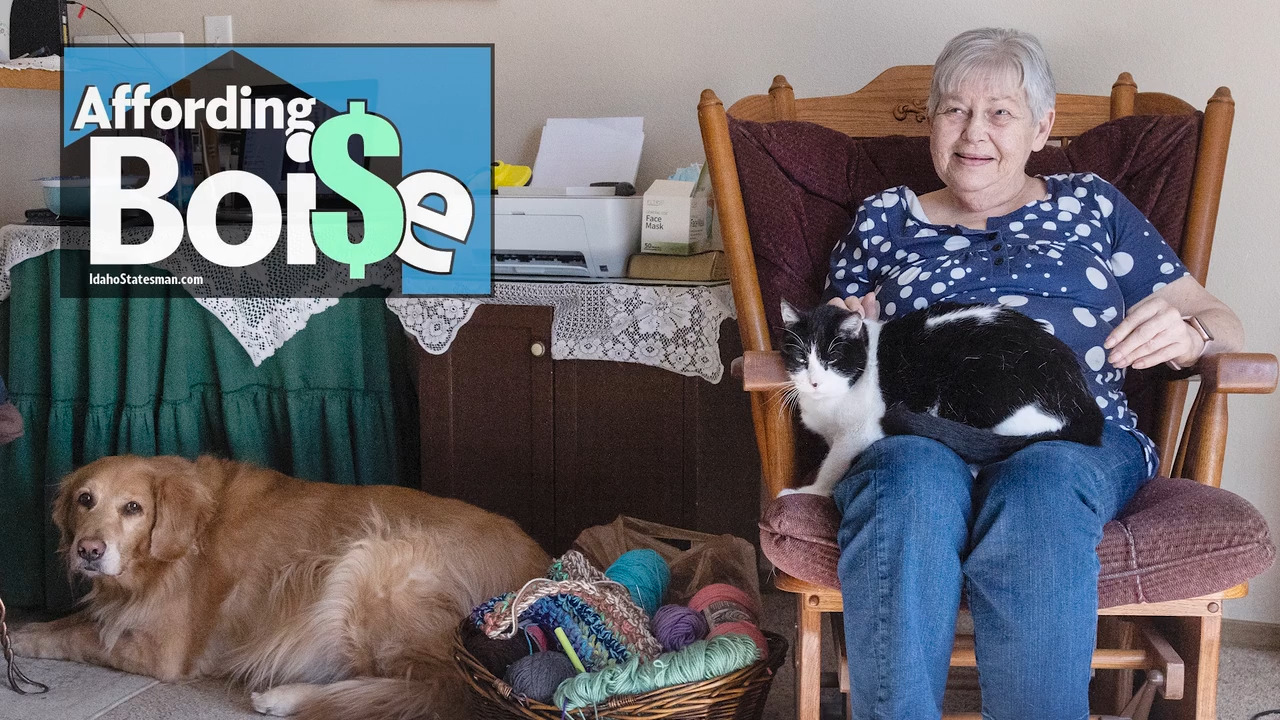
Thorne lives in a three-bedroom house in Boise with her two sons, Tyler, 22, and Tayden, 15, and several pets. The family gets help from a federal housing voucher issued through the Boise City Ada County Housing Authority. The vouchers pay for all or part of a tenant’s rent.
The family’s situation is about to change at the end of February. The Thornes must move because the landlord has a family member who lost a home and needs somewhere to live. Because the Thornes’ landlord has a family member facing homelessness, the Thornes may face homelessness, too.

“It is a cycle,” she said by phone.
To say the Thorne family faces a challenge in finding a new rental is to understate the harsh reality of the Boise area’s rental market in 2022 for poor people.
It’s a tough market even for people who can afford market rents: The median Boise rent for a three-bedroom apartment in December was $2,058, up 20% in the past 12 months, according to Apartment List.
Thorne is reentering that market at a time when rents have become so heavily tilted in landlords’ favor that few landlords need even to consider applications from low-income tenants on vouchers, whom housing advocates say are sometimes stigmatized as people who don’t take good care of the premises.
Her vouchers, officially called housing-choice vouchers, have long been known as Section 8 vouchers. The name comes from a section of the Housing and Community Development Act passed by Congress in 1974 to help low-income people find housing in the private marketplace as an alternative to public housing.
Thorne takes in $9,600 a year on disability. She pays $500 per month in rent toward a house that rents for $1,650. The voucher makes up the difference.
She is lucky in one important sense: She has a voucher. Far more people need vouchers than have them.
That’s because Congress determines each year how much to appropriate through the U.S. Department of Housing and Urban Development for vouchers for low-income people. Housing advocates say that it’s never enough. Many housing authorities, like Ada County’s, hold lotteries to decide who gets them and who doesn’t. Who wins and who loses.
The Boise City Ada County Housing Authorities opened its Section 8 Waiting List Lottery in January. The lottery closes Thursday, Feb. 10, when the housing authority will draw 2,500 names to place on the waiting list. Each name drawn will randomly be assigned a lottery rank by computer.
But even with vouchers, Treasure Valley renters are struggling to find rentals amid high demand and rising prices.
There are about 2,000 vouchers available in Ada County at any one time. People on the waiting list get vouchers as the people who have them start making enough money to cover their rent and stop needing them.
Some people, like the Thornes, need vouchers for years. Ada County has about a 10% turnover rate of people exiting the program each month, either because they now make too much money or they cannot find an apartment where vouchers are accepted.
“It is hard enough to get a landlord to accept a voucher when the market is like this,” said Debra Gehring, deputy director of the Southwestern Idaho Cooperative Housing Authority, which administers Section 8 vouchers in Canyon County and throughout most of the rest of Southwest Idaho, excluding Ada County. That authority has 876 vouchers available.
A 3-year voucher waiting list
The waiting list for the Southwestern authority is 2½ to 3 years long, Gehring said by phone. Ada County caps its waiting list at 2½ years also.
Until about four years ago, the Southwestern authority had a success rate of about 75% for renters with Section 8 finding apartments. Today it is at 60%, Gehring said.
A 60% success rate means about 350 of the 876 voucher holders can’t find apartments within three months, must surrender the vouchers and face the possibility of living in their cars, on friends’ sofas, or on the streets. Their vouchers then go to others on the waiting list.
“HUD doesn’t just increase their vouchers — you can’t go over that 876,” Gehring said. “You are walking a tightrope to try to help as many families as you can.”
The waiting list in Ada County got up to seven years long in 2011. That was when the authority moved to a lottery program instead, said Jillian Patterson, deputy director of the Ada housing authority, by phone.
The last time the authority held a lottery in 2019, 2,234 people applied.
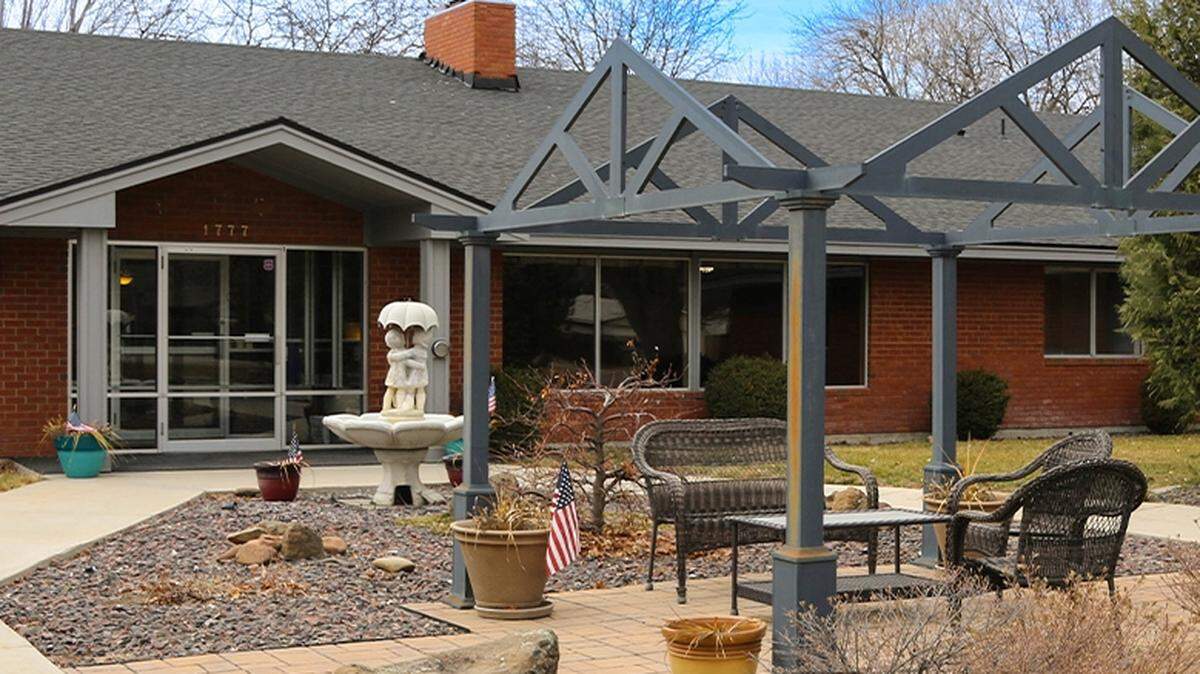
In an effort to provide more housing, the Nampa Housing Authority, which is a public housing program that owns and runs 142 apartments for low-income people, helped by converting 75 of its homes to what HUD calls project-based vouchers. That means the housing authority now accepts vouchers in some of its units, as a private landlord would.
Andrew Rodriguez, executive director, said the Nampa Housing Authority just recently converted to accepting tenants with vouchers.
“There is a stigma attached to people with Section 8,” Rodriguez said by phone. “I wish landlords would see my families down here, because their houses are immaculate.”
Why landlords may not accept Section 8
Gehring said that in previous years when rentals were not in high demand, she would have landlords asking the housing authority if they had anyone with Section 8 who needed a place.
“Even four years ago we were not having a lot of issues,” she said. “It (has) just changed. The rents just go up and up and up.”
How much rent a voucher covers depends on the tenant. Tenants with little or no income will need to look for housing that is covered completely by the voucher. While using a voucher, if the tenant starts making money, some of that income begins to go toward rent payments, and the amount the voucher covers decreases.
A renter looking for a three-bedroom apartment or house could get a voucher for up to $1,734 today. Many three bedrooms are renting for $1,900, $2,000, or more per month.
When a landlord has hundreds of applicants for a rental, a Section 8 renter is not always at the top of the list, Gehring said.
With the high price of homes and buyers getting into bidding wars, some landlords have decided to sell their rentals. The market has been so good to sellers that from September 2020 until August 2021, more than half of all homes sold in Ada County sold for more than the list price.
In some cases, tenants “have been in units for 18 years, with the landlord keeping rents low, but they want to sell,” Gehring said. “People will buy (the homes) as is, and you can get a lot of money for them. “
Thorne hasn’t had to think about the rental market for the last eight years. She has only her disability money and the voucher.
She wakes up every morning and immediately checks Craigslist, Zillow and other websites for a rental.
Most landlords charge between $20 and $60 for each adult to apply, she said. “That is $200 for me and my sons, just to apply,” Thorne said.
Patterson said some landlords also find themselves in a difficult spot.
“Landlords just get so many applicants all at once,” Patterson said. “That message should be clear to people, that there are landlords who want to help.”
Rental increases impact Section 8 voucher holders
HUD gives local housing authorities the ability to set their payments for Section 8 vouchers between 90% and 110% of the official “fair-market rent” set by HUD. Fair-market rents represent the cost of a “moderately priced” home in a local housing market.
The Boise City Ada County Housing Authorities and the Southwestern Idaho Cooperative Housing Authority increased their payments in recent years up to the maximum 110%. Watson said those increases were necessitated by the lag between HUD’s rent determinations and the rising local market.
HUD’s fair-market rent today in the region encompassing Ada, Canyon, Owyhee and Boise counties is $783 for a studio, $896 for a one-bedroom, $1,118 for a two-bedroom, $1,577 for a three-bedroom and $1,841 for a four-bedroom.
For a family like the Thornes, the voucher would cover up to $1,734.70 for a three-bedroom — 110% of the fair-market rent.
A landlord can raise a voucher holder’s rent after one year with a 60-day notice to the tenant and the housing authority, Watson said. If a landlord increases a tenant’s rent by $300 or $400 a month, Watson said the voucher might cover an extra $25 of that increase.
“As the rents have taken such tremendous jumps, that is troubling for voucher holders,” said Watson.
At least 75% of the families receiving vouchers must have income at or below 30% of the area median income. Thirty percent of the Ada County area median income is $22,470.
One family’s search for a rental
The Thorne brothers’ father died in September of COVID-19, Teresa Thorne said — three days before his 53rd birthday.
Chris Anderson, whose friends and family called him Red because of his red hair, helped the family with child support payments. Since his death, Thorne and her sons have been mostly on their own.
“Their dad would go to the store for us, would help us when we needed something,” Thorne said. “He had a good heart, and now my kids don’t have a dad.”
And the family may not have a home.
“The people who do respond to me, it is ‘We don’t accept Section 8,’ ” Thorne said.
Thorne was raised in Idaho from age 3. She said it is unfair that people who have lived in Idaho all of their lives are living on the streets or in mobile homes and trailers.
Thorne does have a small trailer that she would use as a last resort for her and her sons to live in.
“There are people on the sides of the roads camping,” Thorne said. “It is getting bad.”
This story was originally published February 10, 2022 at 4:00 AM.