Working Idahoans who can’t afford to buy a home seek roommates, shared housing to live
READ MORE
Affording Boise: Rental housing
Soaring rents. Skyrocketing home prices. The double-digit rates of increase in the costs of Boise-area housing create increasingly urgent problems for low-income, working-class and even moderate-income Idahoans who need places to live. Affording Boise is a series of Idaho Statesman special reports on housing. This collection focuses on rental homes, including apartments. A separate collection focuses on homeownership.
Expand All
Zachary Strosnider started penciling out the math. He knew how much customers were paying, how much business expenses cost and how much he was earning. He started to think he could make more money on his own.
So a year and a half ago, Strosnider, 32, quit his job as a gutter installer and repairman and launched his own gutter and repair business. He estimates he was making $1,100 per month before he went out on his own, though that fluctuated seasonally. Back then, it was enough to squeak by in his one-bedroom apartment near Boise State University.
When he moved there in 2018, Strosnider paid $800 per month. Rent then increased hundreds of dollars in just a few years. In December, another increase, to $1,300 per month, was announced. That’s when he decided to reconsider his options. He found a house to rent with enough rooms that he could split the rent with two roommates. He’s now spending half as much as he would have if he didn’t move.

“I was willing to pay it up until a certain point,” Strosnider said in an interview. “It just got to be where I couldn’t (find) anything on my own.”
Strosnider, who grew up in Canyon County, is among a growing group of working professionals in Boise who have struggled with increasing rents in recent years. While younger people have long paired up with roommates to save money, experts believe this is becoming more widespread in response to today’s rental market.
“It’s disheartening to see,” Strosnider said. “There’s a lot of people who love growing up here, all their childhood memories are here, and now they’re getting pushed out of the area. They can no longer afford to live here because the price of everything is going up.”
‘Finding housing … is insane’
The median monthly rent for a one-bedroom apartment in Boise is $1,038, according to a recent report by Apartment List. For a two-bedroom apartment, it’s $1,232.
The one-bedroom price is up 14.2% from a year ago. Since March 2020, rents are up 35.6%.
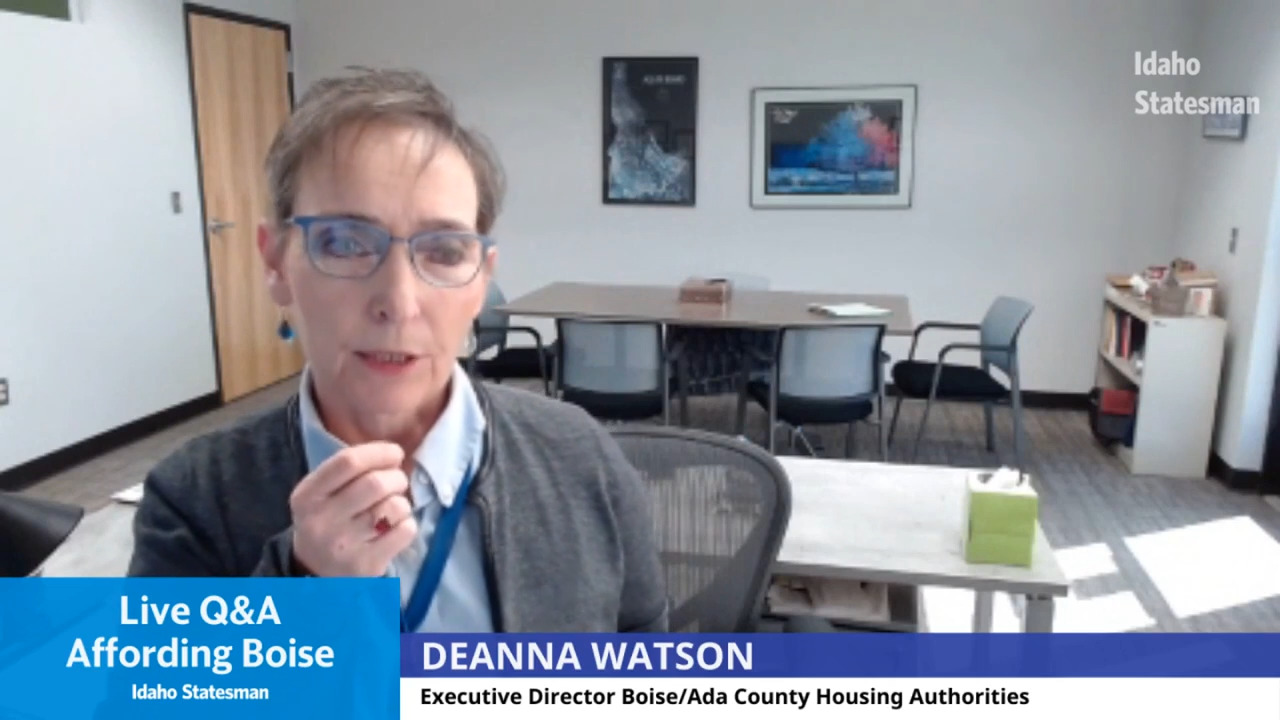
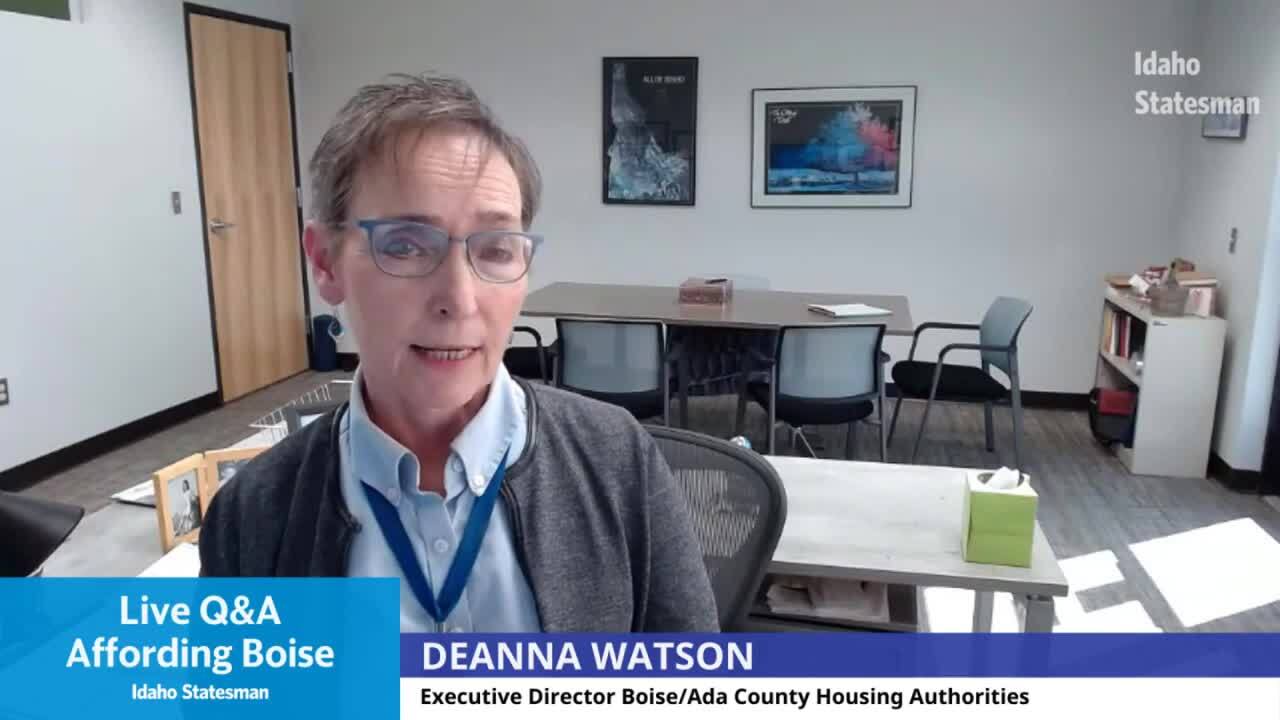
Deanna Watson, executive director of the Boise City/Ada County Housing Authorities, has been hearing more often about people finding roommates to save money.
“I think we’ll see more and more of that demand,” Watson said by phone, “because it’s getting completely out of reach for people on a limited income.”
Strosnider’s landlord raised his monthly rent from $800 to $950 in April 2019. A year later, in May 2020, the rent increased to $1,150.
Each time it rose, Strosnider accepted it. The one-bedroom set up was ideal for him. His dog, an English bulldog he rescued named Tank, is often aggressive toward other animals. He was willing to absorb the cost to continue living alone.
But each increase meant Strosnider had to cut back in other areas. He struggled to pay other bills. He went snowboarding less frequently. He stopped hanging out with friends as much. Strosnider sometimes paid his rent in portions, because he couldn’t come up with all the money at once. He was charged a late fee a couple of times.
“It was very stressful,” Strosnider said. “It’s not the lifestyle I want to live.”
The proposal to increase to $1,300 per month was the tipping point. Strosnider couldn’t afford it. He wanted to find somewhere much cheaper, which meant finding roommates.
In a scramble, Strosnider posted on the social media platform Nextdoor explaining his situation and saying he was desperate for help.
“... Finding housing during this time is insane,” part of the post read. “I’m 32 years old, a business owner, non-smoker ... Hope this helps the vetting process.”
In response to the post, Strosnider connected with and interviewed half a dozen potential roommates. He accepted two. Now he pays $650 per month as he shares a house in Northwest Boise.
Now, when he is home, Strosnider mostly hangs out in his room and keeps Tank in there with him, since his roommates have dogs too. If he wants to invite friends over, he checks with his roommates first.
“I’m really grateful for it,” Strosnider said. “I just feel like at this point I can’t be unhappy about it. It’s different. That’s all I can say is it’s different. And it’s not what I used to have, but I’m making the best of it.”
Roommates address housing costs
Some renters doubling up with roommates have incomes low enough to qualify for scarce federal subsidies.
In January 2021, the U.S. Department of Housing and Urban Development released a notice to remind people that shared housing can be part of the Housing Choice Voucher Program, the federal government’s major housing assistance program for very low-income families. It offers an alternative to public housing by paying private landlords some or all of a tenant’s rent.
“Shared housing can be a viable option for families seeking economical housing under various market conditions,” the notice said. “Families in markets with tight rental conditions or with a prevalence of single-family housing, for example, may determine a shared housing living arrangement to be a useful way to secure affordable housing.”
Debra Gehring, deputy director of the Southwestern Idaho Cooperative Housing Authority, has watched shared housing become more popular in recent years as housing costs have increased.
The housing authority administers housing choice vouchers, also known as Section 8 vouchers, in Canyon County and most of the rest of Southwest Idaho, excluding Ada County. The agency serves about 600 families. Eleven are now involved with the shared housing program. It’s a small number, but the program has been around “a long time,” and no one was using it until recently, Gehring said.
The first family in Canyon County to use the program moved from California about three years ago. The family’s voucher for housing assistance was transferred to Idaho.
“Then there was another,” Gehring said by phone. “And another one. And another one.”
Boise’s future housing market
Strosnider is doubling up without government assistance. He launched Dynamite Gutters with a business partner in August 2020. He’s still doing work similar to what he did previously, except now he’s able to make more money.
But gutter work is often seasonal, and the business is still young. Strosnider made $1,100 in February. In other months, he made as much as $3,000. Either way, he saves more when his rent is lower.
Strosnider’s not sure what may be next. He’s hesitant to buy a house in the Treasure Valley with his savings because he doesn’t want the market to crash and be stuck. He’s thought about saving money to buy a more affordable house in the Midwest, or moving to another country.
Further crunching Strosnider’s budget are price increases for materials and gasoline. He’d either have to raise prices for customers or accept earning less money — a conundrum for a business that’s working to develop a following.
Finding roommates has helped Strosnider save money. But he’s still just squeaking by, and the ever-rising housing costs leave him asking an existential question: “When is it going to end?”
This story was originally published April 4, 2022 at 4:00 AM.