ITD spent nearly $500M on new Boise-area freeway. New plans could double that
AI-generated summary reviewed by our newsroom.
- ITD plans $500M in upgrades to Idaho 16 north of State Street.
- Expansion aims to ease congestion, improve safety and support growth in Gem and Ada counties.
- Full corridor cost estimates are near $1B; funding will have to be identified in phases.
By 2027, Treasure Valley drivers will be able to catapult off of Interstate 84 at Meridian’s western border and shoot north to Emmett in about 20 minutes. About seven miles of that journey will be on a new four-lane elevated freeway up to State Street.
Then what?
The Idaho Transportation Department is planning major upgrades to the old, two-lane highway that, from State, carves north through the Eagle Foothills and carries a growing number of commuters between Gem and Ada counties.
The upgrades — which include widening Idaho 16 north of State and are anticipated to come with a nearly $500 million price tag — have been a long time in the making. Since the early 2000s, state highway officials have contemplated creating the north-south corridor via Idaho 16, and in 2005, ITD first studied improvements to the roughly 14-mile northern segment ending in Emmett.
But a lot has changed in the two decades since. In northern Ada County, Eagle and Star’s populations have exploded; combined, the two cities have more than four times as many people today as they did in 2000, according to data from the Community Planning Association of Southwest Idaho. Emmett, too, has grown, though not as rapidly, U.S. Census data shows.
This growth has accelerated the need for upgrades, while development along the high-crash highway — including a more than 7,000-home development planned in Eagle — has required some rethinking of the 2005 plan, according to Aaron Bauges, the planning manager for ITD’s District 3, which covers Southwest Idaho.
Over the past year, ITD has taken a second pass at plans for the highway and is in the process of finalizing what upgrades are now to come. Here’s what they look like and how they are expected to change the drive for the thousands of people who make it each day.
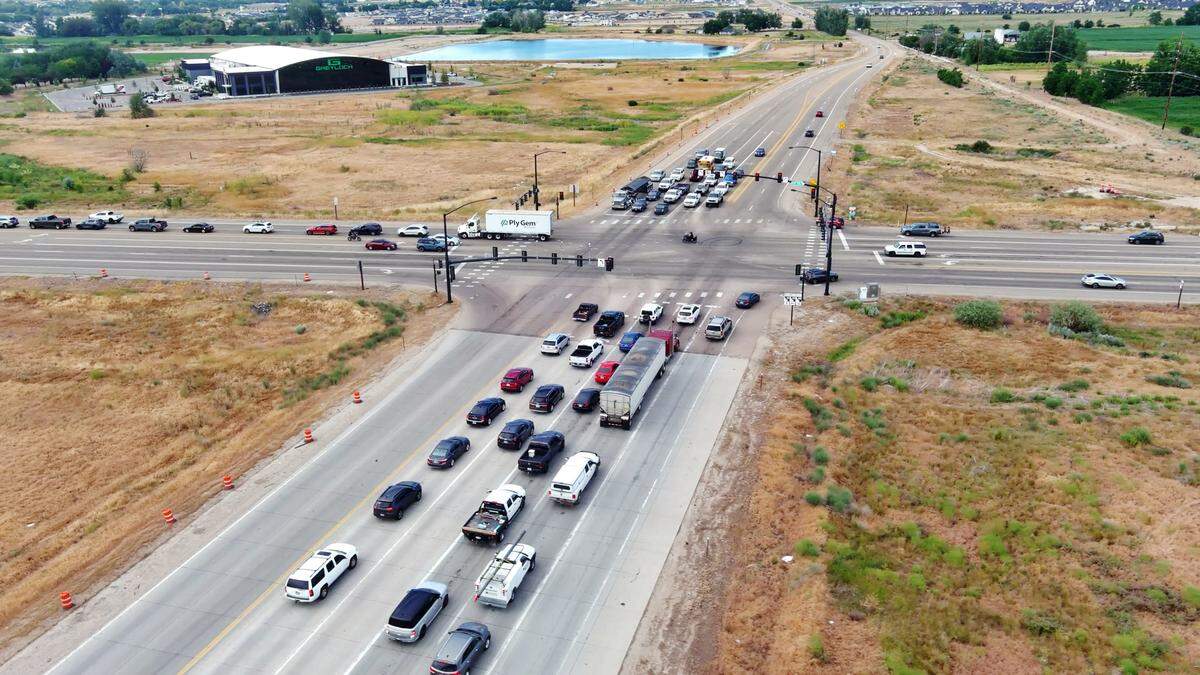
A $500 million, four-lane highway to Emmett
ITD’s latest plans, which still need to be finalized, are anticipated to add on to the roughly $475 million extension of Idaho 16 south to the Interstate that’s now underway. The new plans focus on the highway’s northern piece, from State Street, also known as Idaho 44, to Idaho 52 in Emmett. Carrying their own nearly $500 million price tag, these upgrades would bring the total cost of the corridor project close to $1 billion.
They include:
- Widening Idaho 16 to four lanes (two in each direction).
- Adding a median barrier that will terminate east of Substation Road in Emmett.
- Constructing an overpass at Floating Feather Road and an interchange at Beacon Light Road.
- Building right-in/right-out intersections with overpasses or underpasses at Chaparral Road, Jackass Gulch Road and Cherry Lane.
- Adding access roads that connect Idaho 16 to nearby homes and businesses.
- Building drainage ponds to collect run-off water from the expanded roadway.
Some of these improvements have been bumped up by work on the southern extension, which was expedited in February, ITD officials told the Idaho Statesman. Once the extension opens as early as 2027, four lanes of fast-moving traffic will “dump into a two-lane section” north of State Street, Bauges said.
“That construction occurring now at least forced us to have to try to resolve the piece between there and Beacon (Light),” he said.
Work on that roughly two-mile section, including the Floating Feather overpass, is already funded and expected to be constructed starting in late 2027, Bauges said. ITD estimates put the cost of that phase between $55 million and $65 million.
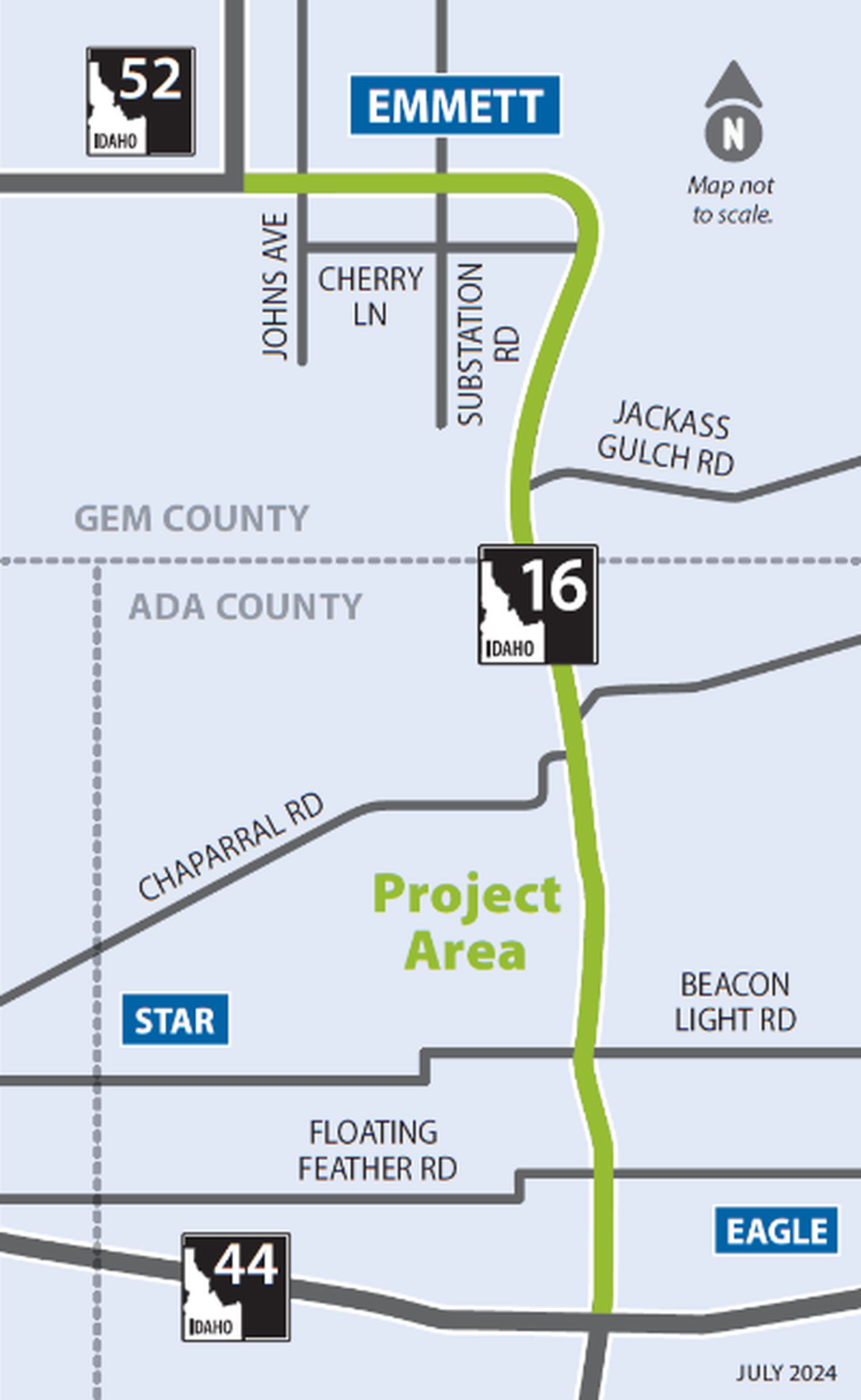
At the intersection of Idaho 16 and Beacon Light, the developers of Valnova, a 6,000-acre planned subdivision east of the highway, started work earlier this month on improvements including widening the intersection and adding deceleration and turn lanes, according to a Facebook post from the developers.
ITD is also working on a new interchange at Idaho 16 and State Street as of July. It will feature a bridge allowing Idaho 16 to cross over State, on- and off-ramps connecting the highways, and a partial cloverleaf or “loop” ramp eliminating a left turn. State will be widened to six lanes around the interchange.
ITD plans to limit roadway access as development moves in
It’s long been ITD’s vision to limit access on Idaho 16 and give it a fast, “free-flowing feel,” according to Kurt Wald, a principal project manager for Horrocks Engineers, the design and environmental consulting firm working with ITD to reevaluate plans for the highway.
Wald, who helped author the initial plans for the highway’s northern stretch in 2005, told the Statesman that planners originally wanted to accomplish that via a system of frontage roads parallel to the highway. But as development crept closer to the roadway, Wald said, available land diminished and “that concept has been changed.”
It’ll still have that feel, he said, but without the frontage roads. Instead, the highway will have a “system that efficiently collects people” and puts them “back onto State Highway 16 at two-mile spacing, to be consistent with what’s happening to the south” along the extension.
The new plan requires “a pretty substantial decrease in right-of-way acquisition,” especially near Cherry Lane in Emmett, Wald said. It also involves “a system of consolidation roads that go along with that, that have been heavily coordinated with the developer, the landowners and key stakeholders,” he said. Those roads will guide cars toward the dedicated access points every two miles.
Some developers will even build their own parallel roads, curbing costs for ITD, Wald said.
But Bauges noted that while development is rapid in the northern stretches of the Treasure Valley, he doesn’t anticipate that the highway improvements would speed up that growth.
“I think the growth is happening no matter what,” he said. “I think it provides more access to those communities that are already growing.”
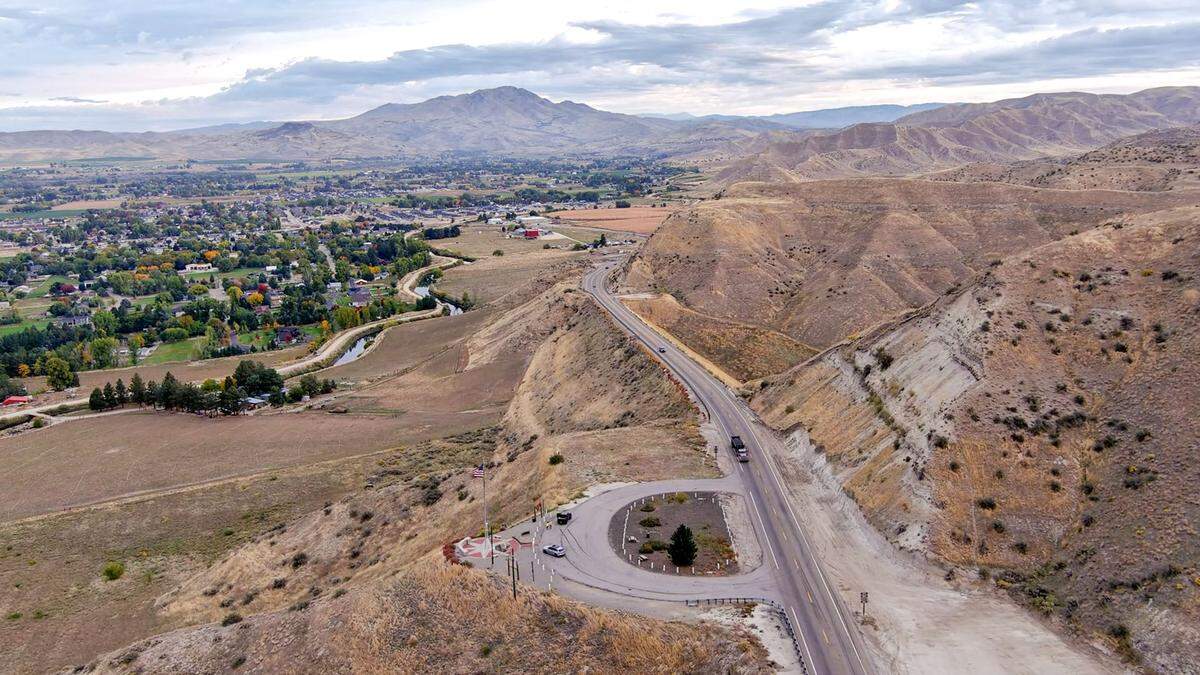
Easier commutes for thousands daily
With controlled access and added lanes, ITD anticipates that the upgraded highway would keep traffic flowing more easily, even as the number of cars on the road is expected to grow.
By 2050, ITD projects that the number of daily vehicle trips will grow on each of the seven segments of the highway it analyzed. Today, nearly 23,000 cars travel Idaho 16 between State and Beacon Light per day, for example. In 2050, that’ll be more than 33,000, if the road isn’t widened. That number jumps to nearly 50,000 with the added lanes. But even with more cars, the level of service on the roadway would still be better, according to ITD’s analysis.
“Level of service is like a report card for how traffic flows,” ITD spokesperson Jill Youmans explained in an email to the Statesman. “With the improvements, drivers on this stretch of road would experience a ‘C,’ which means traffic moves steadily with some congestion at busy times, but generally without the stop-and-go conditions people associate with rush-hour jams.”
With no improvements, service on some sections of the road are anticipated to drop as low as an “F” by 2050 — meaning gridlock, Youmans said.
Bauges noted that the improvements would “make commutes easier” for a growing number of people living in “bedroom communities” north of the Valley who travel to Boise or Meridian for work.
“There’s more connections, faster connections,” Bauges said. “It provides redundancy in the roadway network that allows them to be able to make choices when there’s accidents or congestion that they otherwise wouldn’t have.”
There’s also some hope that “expanding the system to accommodate projected growth” might help alleviate some of the “pressure on the entire system,” Bauges said.
Fewer crashes, head-on collisions, officials hope
Another trend ITD hopes to mitigate: a sharp rise in crashes and crash severity on Idaho 16.
From 2019 to 2023, the highway generated 317 crashes north of State Street, ITD found. That’s more than double the number of crashes from 2007 to 2013.
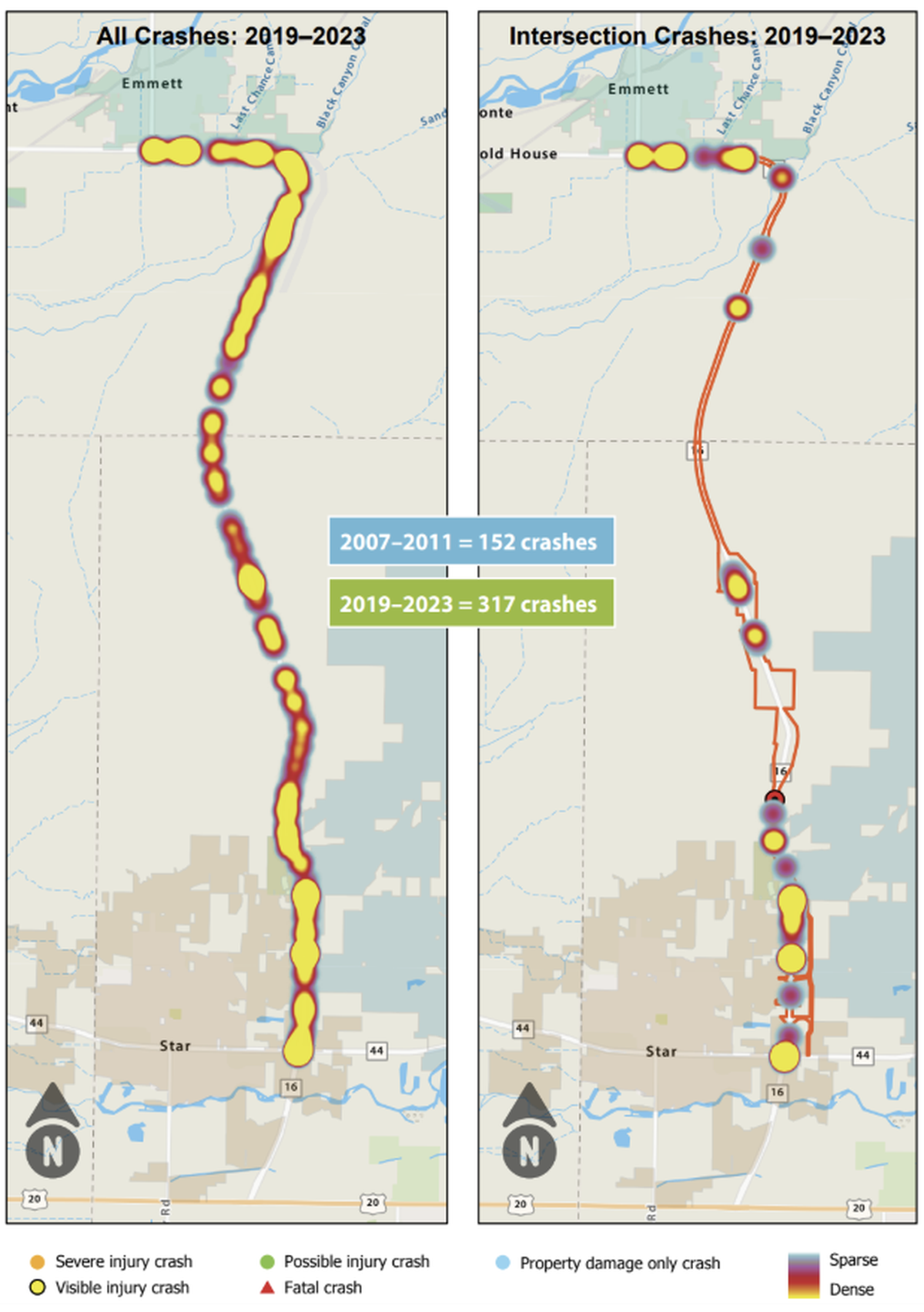
That’s been paired with more severe crashes, according to Wald. “A lot of the crashes that we’ve seen (are) head-on collisions,” he said.
Wald said these safety concerns prompted ITD to move away from a painted median that was proposed in 2005, and instead plan to construct a divided median barrier.
“It introduces a pretty big safety improvement,” he said. “That really precludes the left turns off of or onto State Highway 16.”
Since 2020, there have been nine fatal crashes resulting in 10 fatalities on Idaho 16, ITD crash data shows. That puts the state highway among Idaho’s 20 most deadly over the same time period.
According to the data, six of those fatalities involved head-on collisions.
Funding, phasing to be identified by ‘need’
There’s still a long road ahead for the corridor, Bauges said. First, ITD needs to finalize the improvement plans, which is expected to happen by the end of 2025, and get them endorsed by the Federal Highway Administration.
Next, ITD would move the plans along to design. To do that, the transportation department needs money.
For the first two miles of the project to Beacon Light, ITD has funded the design process, which is starting soon, Bauges said. But north of Beacon Light, none of the improvements have been funded.
ITD has broken the improvements down into six segments and identified each segment’s projected “year of need,” some not until 2040. The goal, Bauges said, would be to use state transportation expansion and congestion mitigation funds “to knock out these pieces as we can.”
But that could change depending on growth patterns and funding opportunities, he said.
“This is the best case right now, looking at how we would break it up,” he said. “But there’s a chance in the future, depending on funding availability … we might package them different.
“The prioritization could change based on growth in the area. We’ll revisit that when we actually have money in hand.”
Bauges said that based on the feedback the plans have received from residents and local agencies, the waiting seems to be the hardest part.
“It’s not a matter of, ‘Don’t do it,’ or ‘You shouldn’t do it,’ ” he said. “It’s really about, ‘Well, how soon can you get there.’ ”
This story was originally published September 29, 2025 at 4:00 AM.