New taxes may be coming for 1000’s of unbuilt houses in Eagle’s Foothills. This is why
New housing developments in undeveloped parts of the Foothills require new roads, new sewers and other improvements. Those cost money. Who should pay? How about taxing the homeowners-to-be, whose houses aren’t even built yet?
You might call that taxation without representation. But it’s perfectly legal in Idaho. In fact, developers say it’s an essential tool to help growth pay for itself instead of burdening existing taxpayers.
Under plans advancing right now, thousands of homeowners would pay tens or even hundreds of thousands of dollars apiece over 30 years in special property taxes to pay for those improvements in the Eagle Foothills.
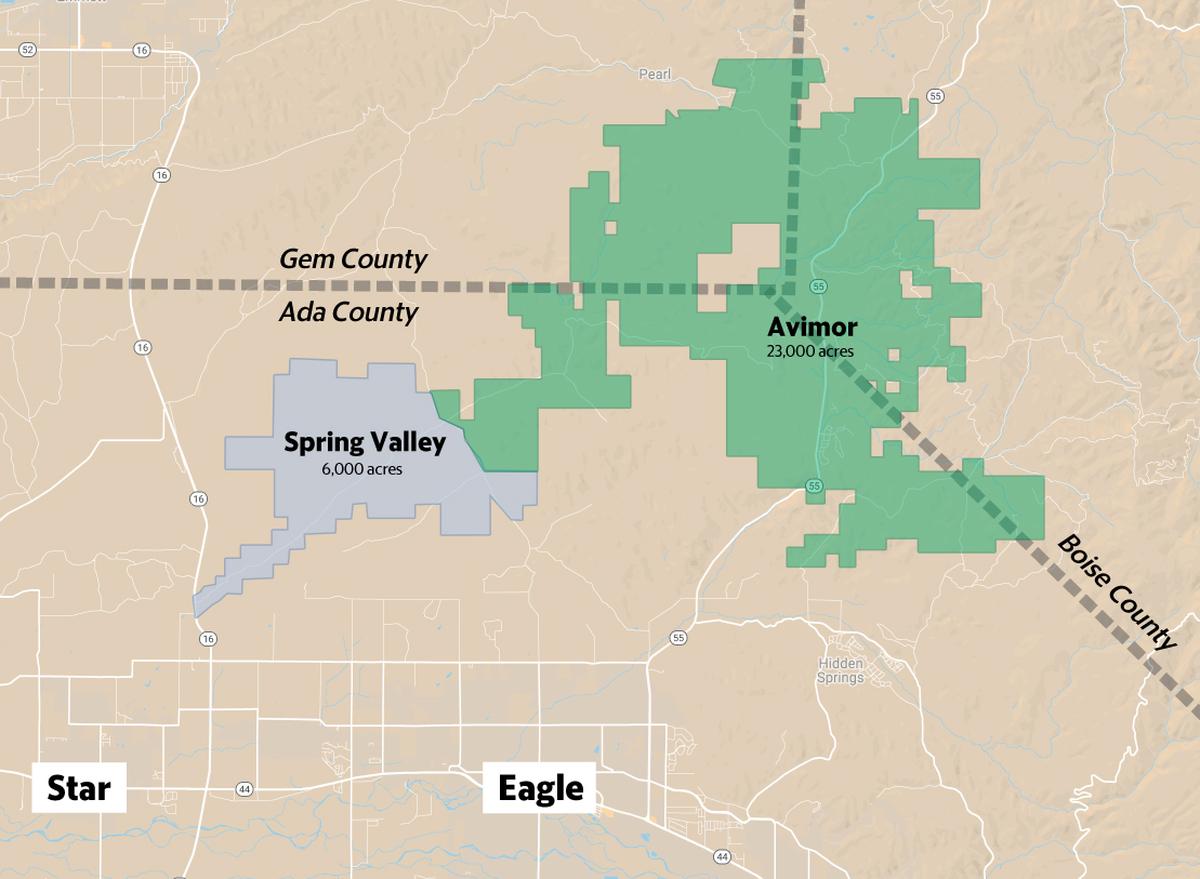
Those homeowners-to-be would become taxpayers in either of two special taxing districts. One would cover the Avimor planned community already partly built along Idaho 55. The other would cover a long-planned but still-unbuilt community called Valnova, renamed from Spring Valley, immediately to the west of Avimor.
A key event takes place Tuesday, Sept. 12, when the board of the special taxing district that covers Avimor will hold a public hearing to expand the district’s territory more than 30-fold.
These are the changes being set in motion for each.
Avimor: Big expansion
On Aug. 1, thousands of Eagle Foothills dwellers officially became residents of the city of Eagle.
In March, the Eagle City Council annexed Avimor, which includes nearly 800 homes now and is expected to have over 8,700 homes when fully built.
As a result of the annexation, Eagle City Council members will take over the board of Avimor’s special taxing district, which Idaho law calls a community infrastructure district. The board decides on property taxes and bonds to pay for the cost of infrastructure improvements and community services.
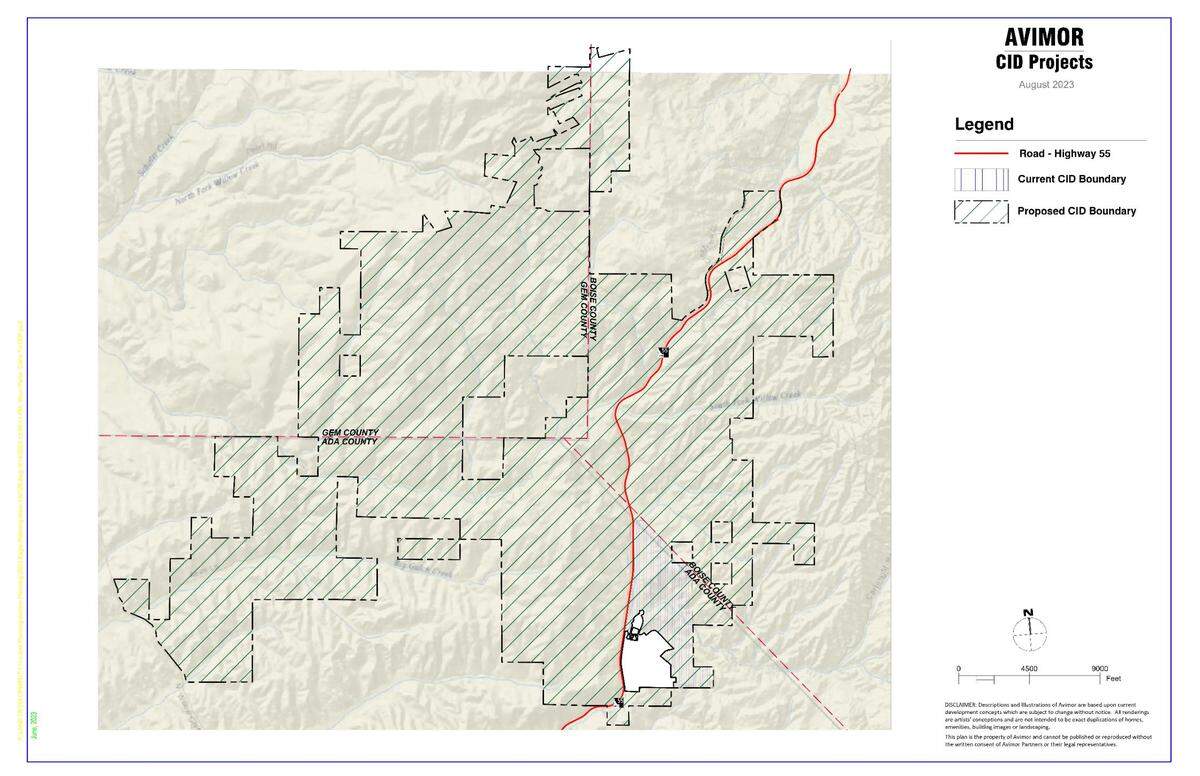
Avimor also wants to expand the district, which now includes just 3% of the planned community.
What does this mean for Avimor residents current and future?
Avimor’s request to expand its district does not come with any additional taxes for its existing homeowners. But it does mean future Avimor homebuyers would pay them too.
The community infrastructure district, or CID, tax appears as a line item on a homeowner’s annual property-tax statement. It is used to pay for Avimor’s roadways, water storage and delivery, parks, pathways and other infrastructure needs.
The estimated yearly tax on a $400,000 home would be $1,526 without Idaho’s homestead exemption, and $1,151 with the exemption, according to the Avimor CID plan. The tax on a $1.6 million home is estimated to be $5,126 without the homestead exemption and $4,751 with. Only a homeowner’s primary residence is eligible for the exemption.
Avimor CID to expand by 17,000+ acres
Avimor includes several hundred acres in Ada County and over 17,000 acres in Gem and Boise counties. Before Eagle annexed Avimor, Ada County’s three elected county commissioners made up Avimor’s CID board, which managed Avimor’s Ada County property.
The law’s requirement that elected county commissioners or city councilors serve on the board of a community infrastructure district assures that leaders who are elected to jobs with taxing authority — not developers — oversee district spending and taxation. They represent the interests of the not-yet-homeowners when levying district taxes. Developers must propose the improvements they seek and win board approval before building them.
Avimor’s CID was one of just two CIDs in Idaho at the time it was created in 2015. The other was in Harris Ranch in Boise.
With annexation, Avimor can now expand its district to include the entire development, which is over 18,000 acres.
Today’s Avimor homeowners won’t see a change in taxes as a result of the expansion, said Pamela Giss, principal of Launch, a financial advisory firm for developers based in Arizona.
But Avimor Partners LLC, the developer, could ask the board to sell additional bonds to build improvements the developer thinks are necessary, just as it has before. That could mean additional property taxes levied on existing homeowners.
“The fact that we’re annexing in additional territory by itself doesn’t impact anybody’s tax bill,” Giss said by phone. “If the developer requests additional general obligation bonds, then that can impact someone’s tax bill.”
Avimor’s list of CID projects includes local roadways, Idaho 55 additions, parks, police and fire stations, and water treatment. The estimated cost is just under $300 million.
The Avimor CID board is scheduled to hold a meeting on the expansion at noon Tuesday, Sept. 12, at Eagle City Hall.
Spring Valley gets a new name
Meanwhile, the Spring Valley Community Infrastructure District, which was formed in April 2012, also has a public hearing scheduled. It is scheduled for 6 p.m. Thursday, Oct. 5, at 12639 W. Explorer Drive in Eagle.
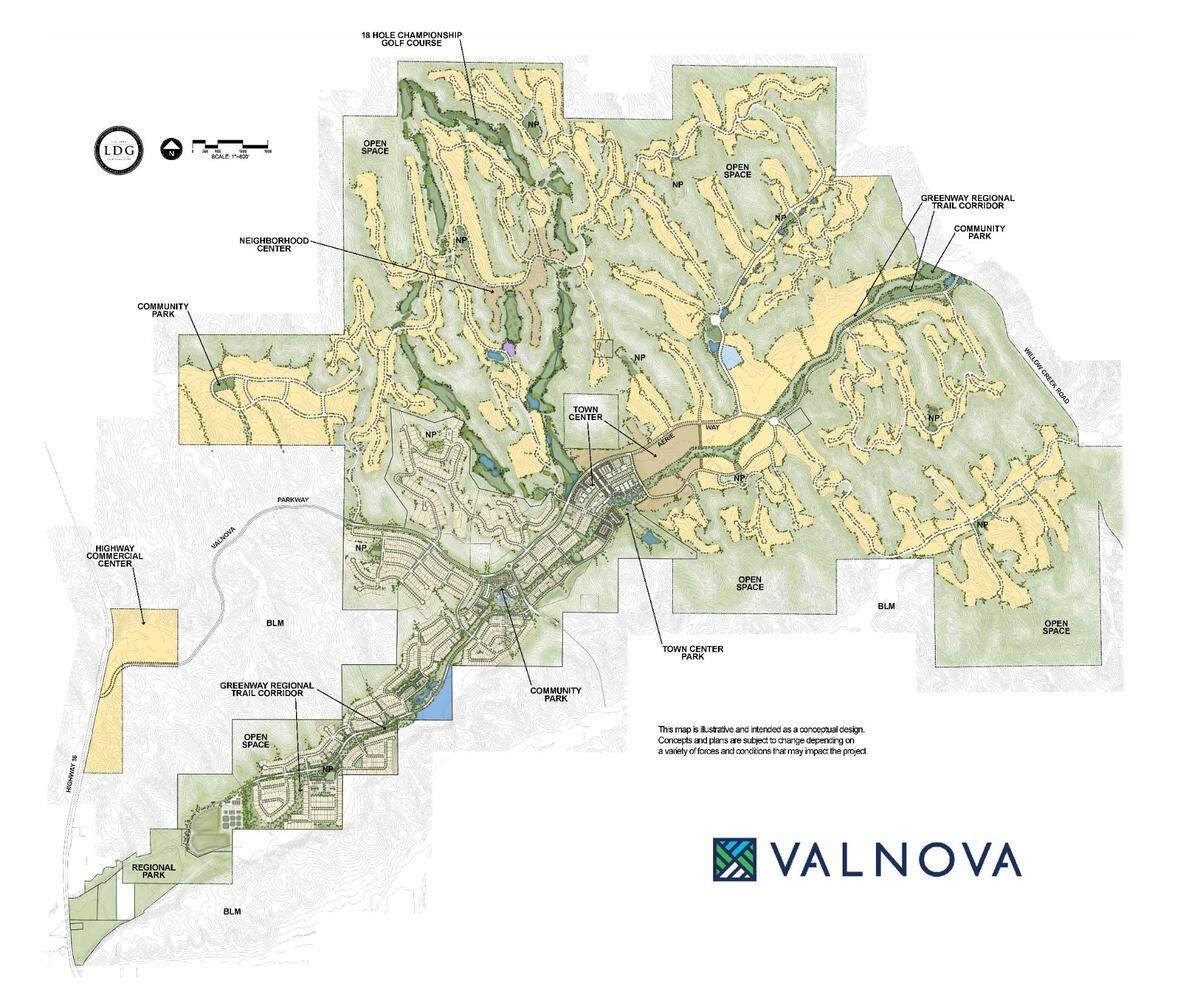
The Spring Valley development, now renamed Valnova, is an immense master-planned community near the State Highway 16 and Equest Lane intersection.
The first phase of development calls for 2,199 residential units, 504 acres of regional and community open space and 150,000 square feet of nonresidential uses, according to an email from GWC Capital, the project’s Utah developer.
GWC Capital’s community could include a library, school and police and fire stations, according to a 2022 city of Eagle staff report. When all phases are complete, the development could include over 6,000 acres of land, host 7,100 homes and 1 million square feet of commercial space.
GWC Capital would divide Valnova into five planning areas: Big Gulch, Northern Residential, Southern Residential, Southwestern Residential and Highway Mixed-Use.
Change is coming
The two meetings could produce a clearer look into how the two districts could increase the tax burden on thousands of proposed homes for decades while easing the developers’ financial load.
The Valnova CID board, made up of Eagle City Council members Charlie Baun, Melissa Gindlesperger and Helen Russell, called the Oct. 5 meeting after GWC Capital submitted a petition to impose a special assessment and issue bonds for the infrastructure.
The tax could total up to one-third of the value of the land upon which houses will be built once the infrastructure is finished, according to an email from GWC Capital. That could cost between $25,248 and $161,264 per unit and would be paid off over a 30-year period, or about $842 to $5,376 per year, respectively.
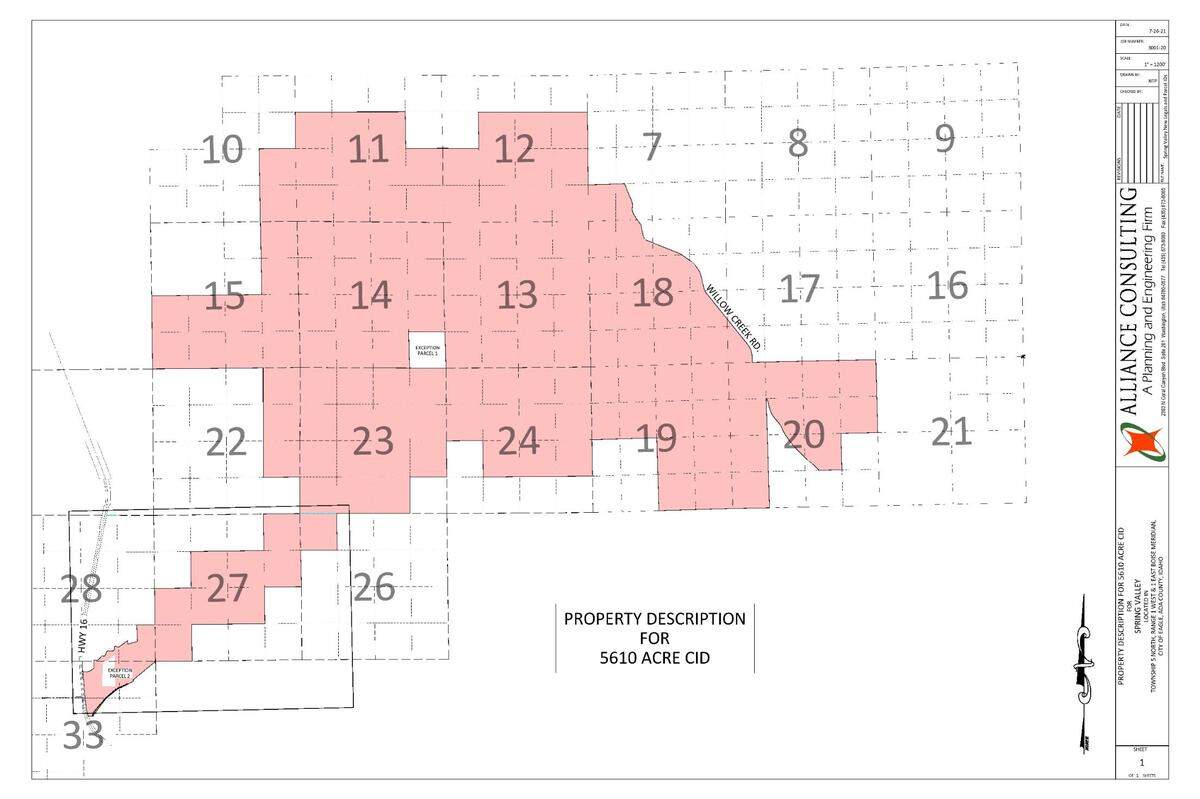
Each acre of the district would generate about $76,582 in property taxes over the 30-year life-cycle of the bonds, according to a public notice posted in the Idaho Statesman.
The property included in the proposed special assessment district would cover about one-third of the 6,000 acres proposed for the completed community, according to the notice.
Expansions of the taxing district or the creation of additional districts could follow, but there are no plans for those yet, according to Robert Behunin, director of business services at GWC Capital.
GWC Capital estimates the construction costs to be nearly $156.5 million, but the real cost could be much higher.
“Figures are preliminary 2023 construction cost estimates and are likely to increase over time due to inflation as well as changes in design and scope of projects,” according to the notice.
Infrastructure projects that make up the nearly $156.5 million total include roadways, bridges, landscaping, a widening of State Highway 16 at the Beacon Light intersection, sewer and water lines, storm drains and irrigation facilities.
Business and Local Government Editor David Staats contributed.