Commuter rail in Boise? Really? Treasure Valley transit leaders keep dreaming
AI-generated summary reviewed by our newsroom.
- Compass named commuter rail its top high-capacity transit priority in Treasure Valley as traffic climbs.
- Study projects rail ridership 65%-115% higher than less expensive bus-based options.
- Funding remains uncertain as Idaho lacks a dedicated source for transit projects.
If you’ve sat in afternoon gridlock on the I-184 Connector or waded through a sea of brake lights on the freeway in Meridian, you may have wondered: What if I could take the train?
It’s long been a dream of transit advocates and some Boise-area leaders to turn the existing freight corridor running through the Treasure Valley into a full-fledged passenger rail system stretching from Caldwell to Boise. In this vision, commuters could ditch their cars in downtown Nampa or Meridian and ride the line to the Boise Depot, then get off or take a bus to Main Street.
High costs and the Legislature’s unwillingness to establish a dedicated funding source to build and operate such a system have stymied the hope time and again. Now, as the region nears 1 million residents and traffic is ever-worsening, a Treasure Valley planning agency is trying — again — to go down that track.
On Monday, Aug. 18, the Community Planning Association of Southwest Idaho, or Compass, voted to make commuter rail the agency’s principal focus for high-capacity transit in the region. The move is anticipated to fast-track future federal review and funding. It may also set the agency up to renew its plea to the Legislature, this time with a unified vision and a $1 million federally funded study under its belt.
The question is: Could it really happen?
$2.5 billion rail through ‘spine’ of the Valley?
This is the closest Compass has come so far. The agency’s study, backed by the Federal Transit Administration, examined roughly a dozen high-capacity transit routes, from adding a bus-lane to Interstate 84 to running buses on the center median of Fairview Avenue and Franklin Road. The study concluded that the region’s best transit option for moving the most people around the most quickly is commuter rail.
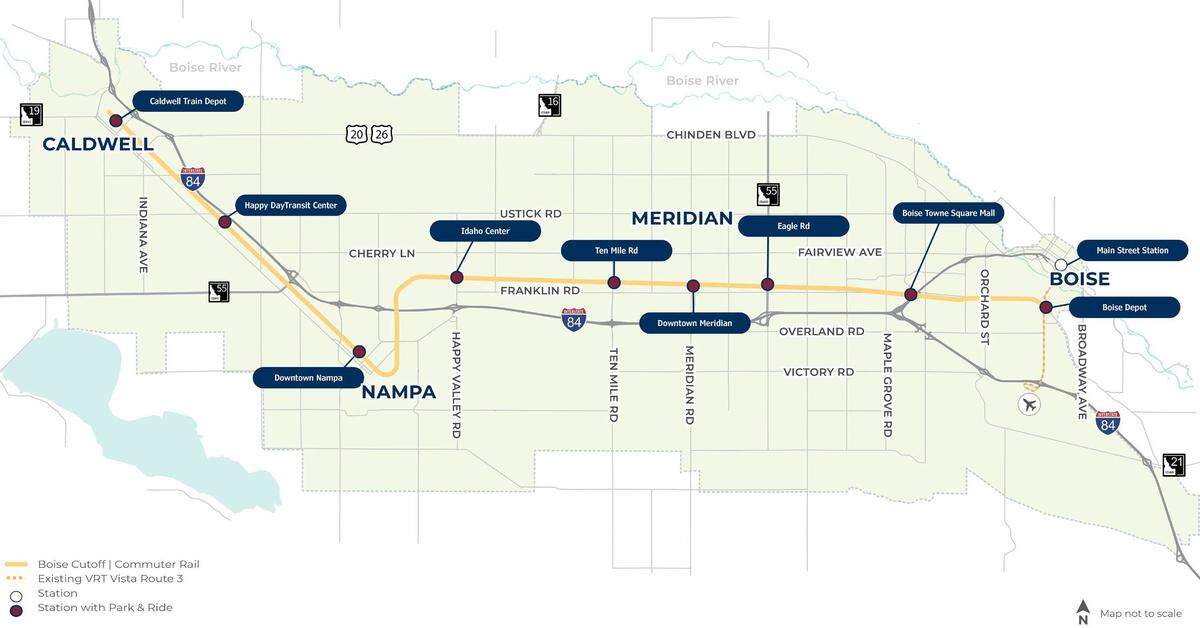
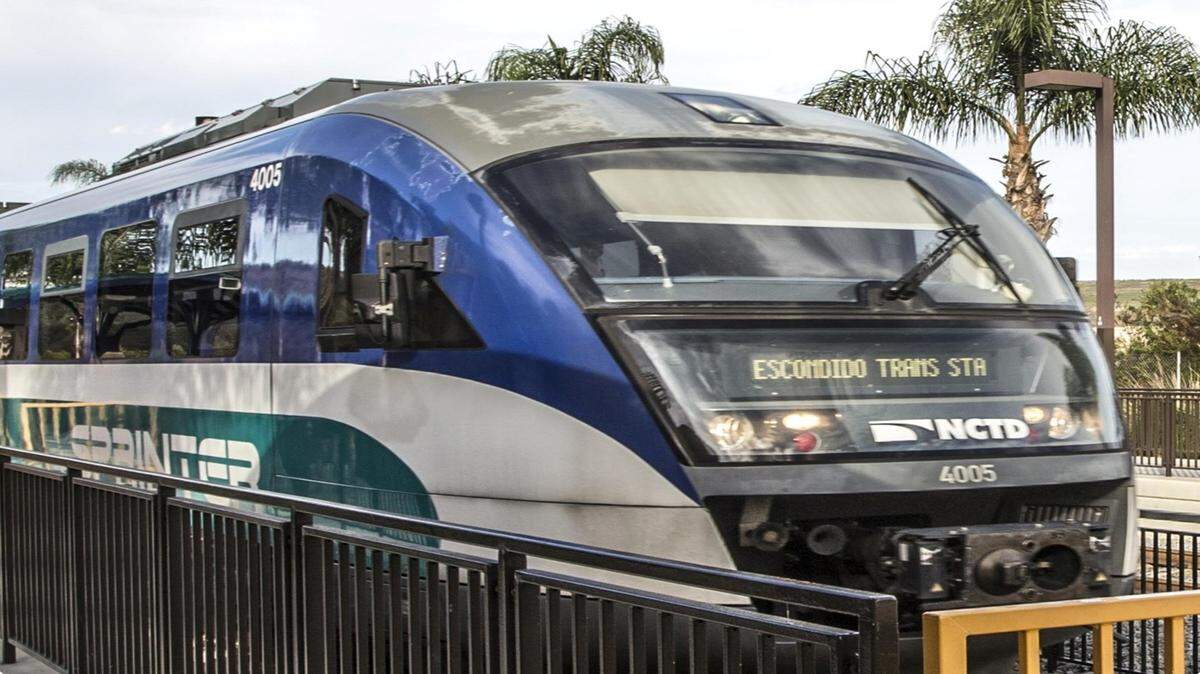
The proposed route is along the Boise Cutoff, a roughly 25-mile rail corridor from Boise to Nampa now owned and operated by Watco, and then linking up with Union Pacific’s Southern Idaho line from Nampa to Caldwell. It would be a “heavy rail” cutting through the “spine” of the Valley, according to a Compass spokesperson, with similarities to lines being built in Denver and a “Sprinter” train system in the San Diego area.
The trains could offer east-west commuters 15-minute peak service and hourly off-peak service, according to Chris Proud, a senior planner with HDR, the consulting firm Compass hired to help with the study.
The service could carry 400 to 560 passengers at one time and would have an anticipated ridership of just over 24,000. That’s roughly 115% higher ridership than was projected for bus-rapid transit along I-84, and roughly 65% higher ridership than for Fairview/Franklin — the two other top-performing routes. Demand was calculated based on current and projected populations in certain zones within the Valley, Proud told the Statesman.
The cost? Between $1.5 billion and $2.5 billion, the study found. That’s between $53 million and $89 million per mile.
Operating costs are estimated at $7.5 million per mile or $4 million per hour during revenue-generating operations. That’s less than operating costs for the Franklin/Fairview and I-84 options.
In an interview, Proud said Compass has assumed that Valley Regional Transit, the public transportation authority for Ada and Canyon counties, would operate the passenger rail. Freight trains would continue to run as well. That’s all pending negotiations with Watco and Union Pacific.
Proud said HDR and Compass have not estimated fares yet, and final costs would be heavily swayed by “value engineering” choices like whether to build a second track along the corridor or to stick with the existing one.
“The assumptions that we’ve made on the design so far are very conservative,” Proud said. “So what we would want to do is look at: How do we make sure we can get the most out of this, for the lowest cost.”
Proud nodded to the Denver system, which cut costs to $650 million for the nearly 40-mile project in part by keeping it mostly single-track.
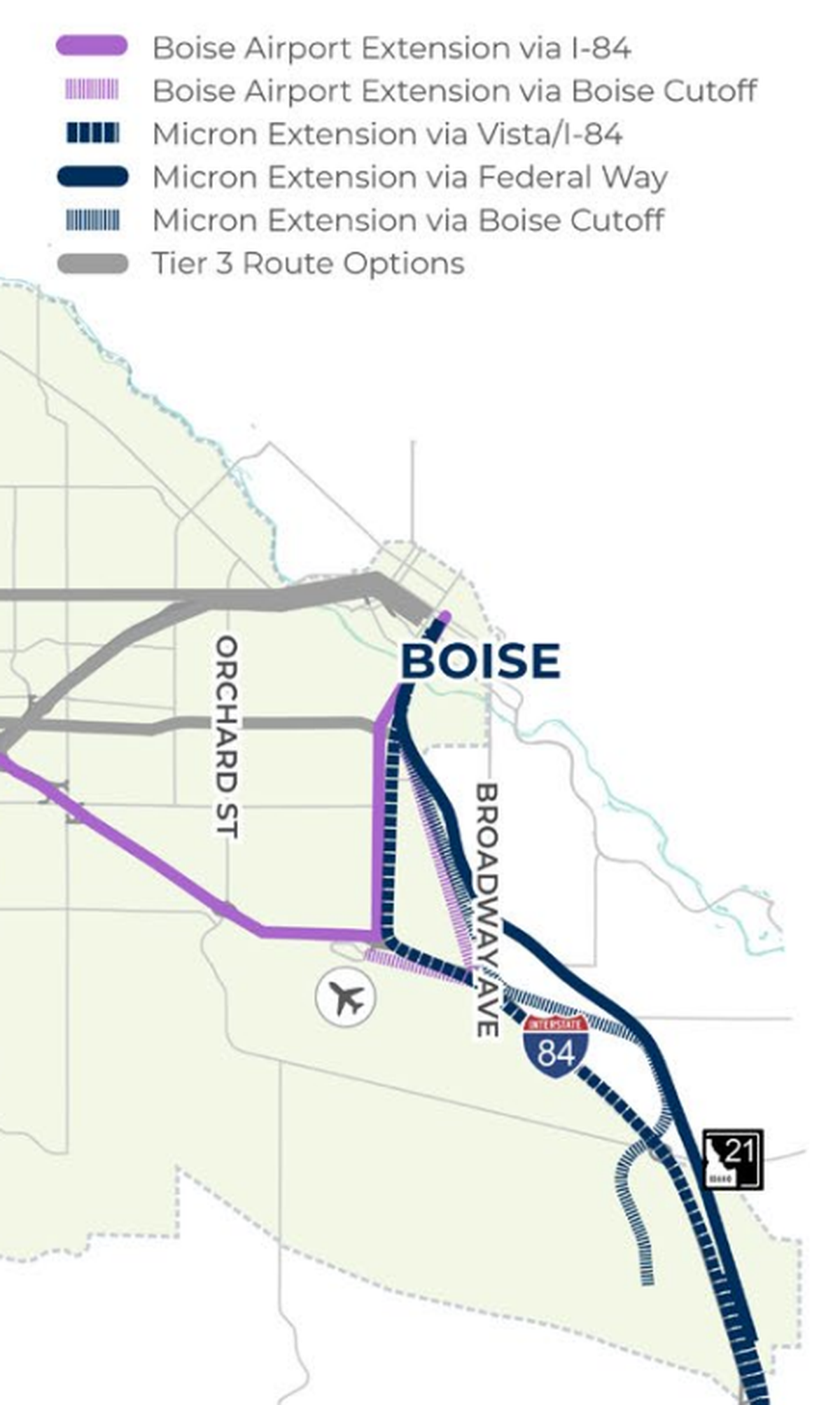
Future design efforts could hone in on extensions to Micron or the Boise Airport, Proud said.
Boise transit leader: ‘It’s time’ for next step on rail
Elaine Clegg has been around the block when it comes to the push for commuter rail, she told her fellow Compass board members on Aug. 18 — first as a longtime Boise City Council member, now as Valley Regional Transit’s CEO. “Twenty years into this, having studied it literally at least six times ... It’s time to take the next step,” she said.
Money is the problem. Money Idaho legislators have long resisted spending — or letting local governments spend. Idaho is one of only two states that still does not have a dedicated funding source for public transportation, according to Compass.
“This means that funding the Treasure Valley’s public transportation system is mainly left to local jurisdictions, competing in local budgets with other necessities such as law enforcement, fire protection, parks, and more,” Compass’s website states.
A workaround that advocates tried and failed to win from the Legislature in years past: authorizing a local option sales tax, which worked for the light rail system in Salt Lake City.
“There was a concerted effort, almost 15 years ago, to ask for a local-option sales tax authority,” Clegg told the Statesman in an interview in December. When that failed in 2008, she said, Valley Regional Transit turned to other funding partners, “leaned into specialized service ... and frankly, quit talking to the Legislature about funding.”
Clegg told the Statesman that she hopes Compass will be able to use its recent study to break out of the “circular process” of study it has been stuck in and move from “Do we want rail?” to “We want rail. Now how do we make that happen?”
A new funding push?
On Aug. 18, the Compass board voted to make commuter rail the region’s “preliminary locally preferred alternative,” a jargony phrase intended to put the agency on the right track for federal funding and design, said Austin Miller, Compass’s principal planner and the study’s project manager.
“We’ve been building our criteria on how we’re measuring these in a way to also set us up for success in a future federal grant,” Miller told the Statesman.
One particular funding option is the Federal Transit Administration’s capital investment grant, which includes a category for projects costing at least $400 million and applicants seeking at least $150 million.
Beyond federal funding, the vote on a preferred route also makes clear to members of the public, as well as lawmakers, where Compass’s intentions lie.
“Would this be a mechanism to try and get that changed legislatively for a dedicated funding source?” Proud was asked by a Compass staff member at a working group on Aug. 6.
“It’s an opportunity, definitely,” Proud responded.
Clegg agreed that the study gives Compass “a lot more basis to go and have the conversation about funding,” but she told the Statesman that it’s too early to tell where those conversations will happen and if they’ll be with state lawmakers. Federal grants are a big piece of the puzzle, but ”you have to have a local match for that,” she said.
Compass can’t move into the next federal stage, an environmental design review, without a dedicated funding source.
State plans for $100 million in interstate widening
Meanwhile, the Idaho Transportation Department is looking into adding a fifth lane to the interstate between Boise and Nampa. The department included $100 million in anticipated costs for future freeway improvements in its draft seven-year plan, which is expected to be reviewed by ITD’s board in September.
Compass spokesperson Amy Luft told the Statesman that public transportation and freeway improvements are not pitted against each other. “We need improvements all the way around,” she said. “It’s definitely not an either-or.”
But she noted, “Often people use the phrase, ‘You can’t build your way out of congestion.’ Eventually, there’s no way to ... put enough lanes out there, essentially, because if they’re there, people will use them.”
Proud added that at the federal level, roads and rails are funded by separate agencies, so “you’re not necessarily competing.”
But when it comes to finding political support for funding rail within the state, that’s all “to be determined,” said Miller, the Compass planner.
“The study focused on what is technically feasible,” Luft clarified by email. “Things were not eliminated based on current law or policy.”
In fact, besides rail, the other two top-performing routes are not legal in Ada or Canyon counties. Idaho law does not allow bus-specific or high-occupancy lanes in counties with more than 25,000 people.
Some board members, including Ada County Commissioner Tom Dayley, expressed hesitation on Aug. 18. at putting Compass’ eggs into one basket, especially as the Trump administration has promised to reform federal environmental reviews. But Clegg noted that if new information arises, the agency can always change direction and return busing options to the table.
“That’s not the end of the transit” conversation, Clegg said in response to Dayley’s comments and his counter-motion to hold off on making rail the preferred route. “And if it is, shame on all of us. It’s the beginning of it.”
This story was originally published August 22, 2025 at 4:00 AM.