Why is Boise so warm? See reason behind unseasonal temps — and when they’ll end
Like most of Idaho, Boise is kicking off February with unseasonably warm weather.
According to the National Weather Service, Boise usually experiences an average temperature of 37 degrees in February with daytime high temperatures around 40 degrees and overnight low temperatures close to 30 degrees.
That hasn’t been the case so far this February.
Idaho’s capital city has seen highs in the mid 40s and lows in the upper 20s over the past few days.
Highs are expected to average in the low 50s for the rest of the week and into the weekend, according to David Groenert, a meteorologist for the National Weather Service.
“We’re gonna be above normal,” Groenert told the Idaho Statesman.
Is Boise experiencing record heat?
It’s “hard to say” if Boise has been experiencing record-breaking high temperatures recently, according to Groenert.
“I’ve seen plenty of months where the first two weeks are abnormally hot or cold,” the meteorologist said. “Then it just switches and goes the other way, and we almost average out for the month.”
Why is Boise so warm right now?
High temperatures are a direct result of “a strong high-pressure system” hanging over the West, according to Groenert.
Not only is the high-pressure system raising temperatures throughout Idaho, but Boise is also “going to be under an inversion,” Groenert said.
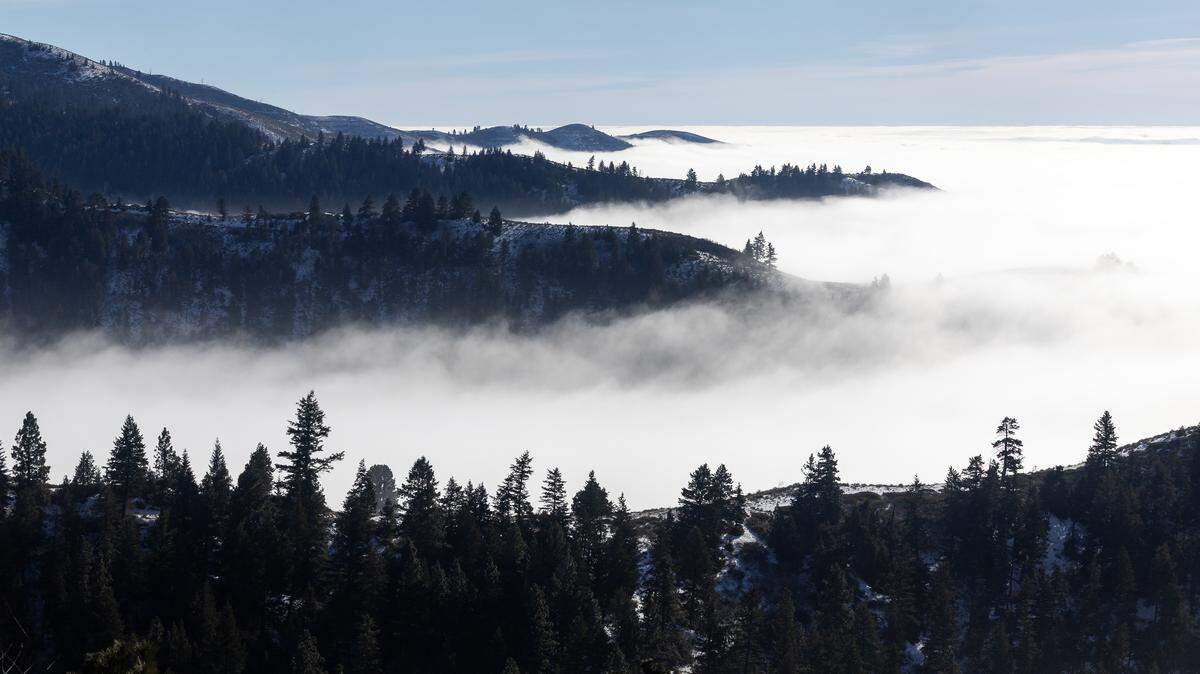
Inversion means stagnant air, fog
Inversions occur when cold air gets trapped beneath warm air. This is the opposite of how air moves unrestricted, the Statesman previously reported.
Warm air “comes in a loft” in the Treasure Valley and cools overnight as it “settles to the ground,” said Groenert. This air becomes trapped by the warmer temperatures above it.
According to the meteorologist, this is why the Treasure Valley was under an air stagnation advisory as of Tuesday.
In its advisory, which will remain in effect through early next week, the weather serviced warned of “an extended period of stagnant air, with light winds and little vertical mixing.”
“Poor air quality may cause issues for people with respiratory problems,” the weather service said.
There’s potential for fog advisories this week, according to Groenert.
There is no guarantee of a “prolonged event, but certainly there’ll be some places that see some fog and low clouds set up over the next few days,” Groenert said.
When will Boise see rain, cooler temperatures?
According to Groenert, a weather “switch” may be coming early next week.
The meteorologist told the Statesman that the National Weather Service is monitoring a cold front that may push into Idaho over the weekend or early next week.
“There will be a possible pattern shift next week, which could bring a chance of rain and cooler temperatures,” Groenert said.
This story was originally published February 3, 2026 at 3:30 PM.