A fog is hanging over Boise. This weather event means it won’t be going away
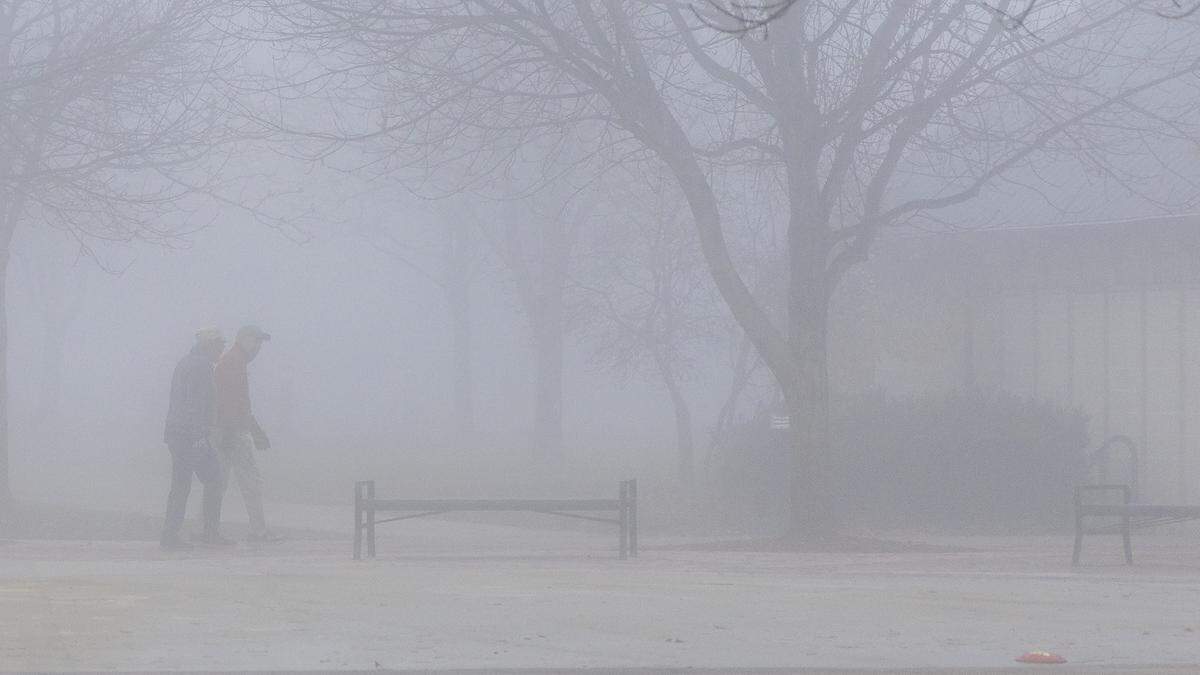
Residents awoke to a dense layer of fog blanketing the Treasure Valley on Thursday. Experts say a weather event known as an inversion is to blame for the misty morning — and it’s not going away anytime soon.
Korri Anderson, a National Weather Service meteorologist, told the Idaho Statesman that January’s long nights and low sun angles are causing the ground to get very cold. An inversion hovering over the area is preventing cold air from rising, causing cool, moist air to become trapped near the surface as fog.
Anderson predicted that the fog would clear out by Thursday afternoon before returning around sunset. He warned that the fog was expected to return on and off for the next week as the inversion continues.
“There’s really no relief in sight,” Anderson said by phone.
What is an inversion?
Because Boise is located in a valley, it experiences more inversions than normal. But what exactly is this phenomenon?
“Inversion means inverting the normal temperature profile,” Idaho News 6 chief meteorologist Scott Dorval told the Idaho Statesman in a 2022 interview.
“We get warm air over the top of the cold air; that’s an inversion,” Dorval continued, “and that traps anything that’s produced; moisture or pollution gets trapped below that warm layer.”
As warm air sweeps over the region, cold air already permeating the area drains into the valleys.
As the cool air sinks, the warm air rises over the top and traps the cold air below. If you travel from downtown Boise to the top of Bogus Basin Road, you will see the temperature rise instead of fall during an inversion, the reverse of what is typically seen when heading to a higher altitude.
That flip in the temperature progression, from colder at the bottom to warmer higher up, is called inversion.
So, going back to the view from Bogus Basin — why does a haze hang over the Boise area under inversion conditions?
Think of when oil and water are put in a beaker together. The oil will rise to the top, and the water will sink to the bottom. That’s just like what happens with the cold air at the bottom and the warm air at the top. The meeting point of the two is where condensation forms and causes a haze.
“(The haze) traps more and more pollution,” Dorval said. “And any moisture that’s melting from the snow during the day goes into the air, and it will start to cause some fog and low clouds to form.”
Air quality conditions in Boise
Pollution trapped in the Treasure Valley can degrade air quality. The National Weather Service in Boise issued an air stagnation advisory this week. Boise’s air quality on Thursday was moderate, or in the yellow, meaning the air quality is acceptable for most people, but there may be a risk for some “who are unusually sensitive to air pollution,” AirNow, the government’s air quality tracking website, said.
This story was originally published January 15, 2026 at 10:16 AM.