Buckle up, Boise: Traffic pain on the freeway keeps growing. What we know
AI-generated summary reviewed by our newsroom.
- Daily traffic on I-84 between Boise and Nampa rose 31% from 2014 to 2023, data shows.
- Crashes on I-84 more than doubled in a decade, mostly minor injuries or property damage.
- ITD launched a $100K study to assess adding a fifth lane and ramp metering tools to I-84.
Cpl. Jeff McConnell spends most mornings on the westbound side of Interstate 84, watching the oncoming traffic.
While inbound commuters slog toward Boise, McConnell waits on the opposite side of “the slab,” what he calls the stretch of I-84 between Caldwell and Boise that he patrols. Sometimes, he said, it feels more like a parking lot.
Perched on his motorcycle — his “best tool” for navigating gridlock — the state trooper scans for traffic violators heading west. Those drivers, he can safely pull over without ruining “thousands of people’s” mornings or causing worse congestion or even an accident, he said.
He holds his breath for the call of the first inbound crash of the morning. It almost always comes.
Then another. “You’ll see,” McConnell told the Idaho Statesman in an interview. “We’ll have a secondary crash a few miles back, and then we’ll have a tertiary crash a few miles back from that. … It never fails.”
Sometimes drivers will be alerted to the accidents and re-route to another major east-west route like U.S. 20/26, also known as Chinden Boulevard. “All of the sudden that’s bottlenecked, too,” he said.
McConnell said that over more than a decade with the Idaho State Police, he’s seen more cars, more congestion, and more crashes on the interstate. His observations confirm what Treasure Valley drivers have dreaded for years as population has exploded in the region: Traffic is getting worse on the interstate, and the effects are starting to be felt on other roads as well.
But what does the data say? Where is the traffic worst and what could happen if improvements aren’t made?
Here’s what we know about how bad the traffic really is on I-84, and where things are headed if we continue down this road.
1. It’s not in your head: More congestion, long commutes
Traffic headaches on the interstate are becoming pedestrian.
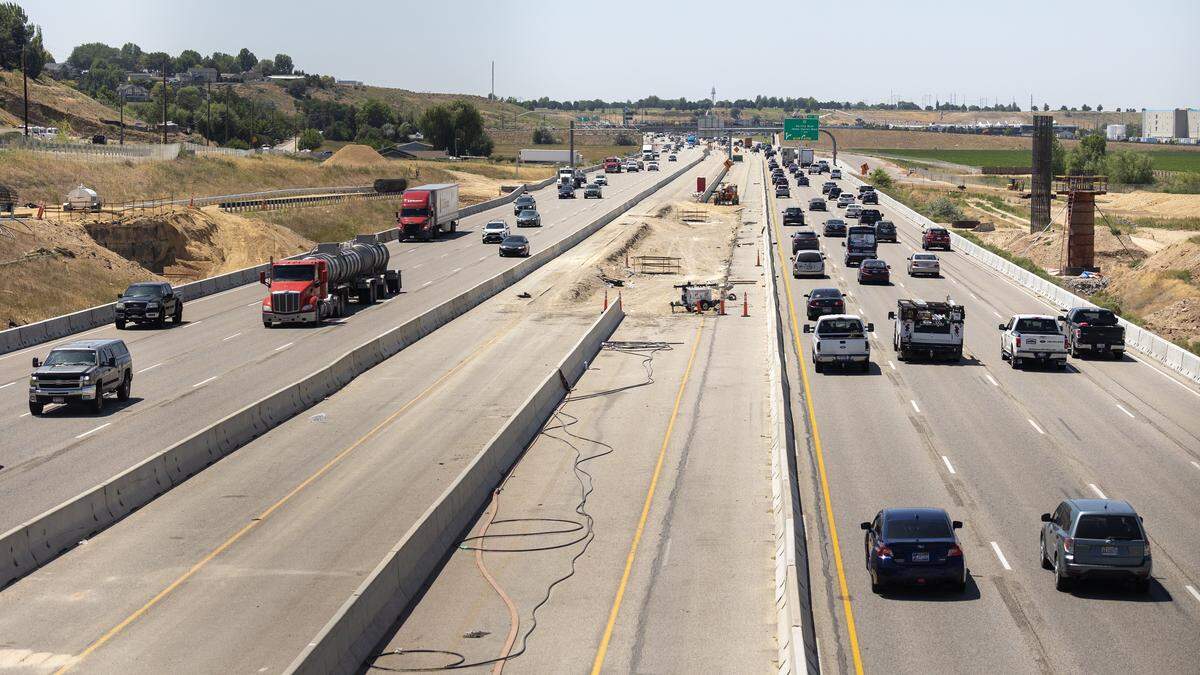
In the decade from 2014 to 2023, interstate traffic between the Flying Wye Interchange in Boise and Garrity Boulevard in Nampa jumped by nearly a third, according to the Idaho Transportation Department. It rose from about 102,000 average daily vehicles to about 134,000.
In 2024, the average daily count reached nearly 138,000.
The trend has led to worsening commutes, according to data compiled from annual congestion reports by the Community Planning Association of Southwest Idaho, or Compass. Those reports, which are available from 2018 to 2023, show that average commute times between Boise and Caldwell have been on the rise since a low in 2020 — but are still lower than pre-pandemic levels.
In 2020, it took morning commuters 27 minutes to drive the freeway from Centennial Way in Caldwell to where the I-184 Connector spits them out in downtown Boise. Just over four of those minutes would be spent in congestion. Three years later, the same trip took 29 minutes, with more than six minutes of congestion.
During the afternoon from 3 p.m. to 7 p.m., those headed back home to Caldwell could count on an average 28½-minute drive in 2020, starting at the Connector and ending at Centennial Way. That was up to nearly 30 minutes in 2023, with nearly 7½ minutes spent in congestion.
Plus, Compass counted 32 days where these commutes took at least 30% longer than the average commute for the year.
But that’s still not as bad as commutes were back in 2018. Then, it took close to 31 minutes to travel inbound during morning rush hour and nearly 35½ minutes outbound in the afternoon.
In 2019, ITD announced it would spend at least $340 million to widen I-84 from Nampa to Caldwell, the Statesman reported. Efforts like these could explain some travel-time improvements. For example, average speeds between Centennial Way in Caldwell and the Flying Wye were generally faster in 2023 than previous years, which a Compass report attributed to “completed capacity improvements.”
One major exception: during the worst of eastbound morning traffic. At 7 a.m., drivers on the freeway slowed to an average speed of 54.5 mph in 2023. That was the slowest since 2019.
2. It’s worst in these places
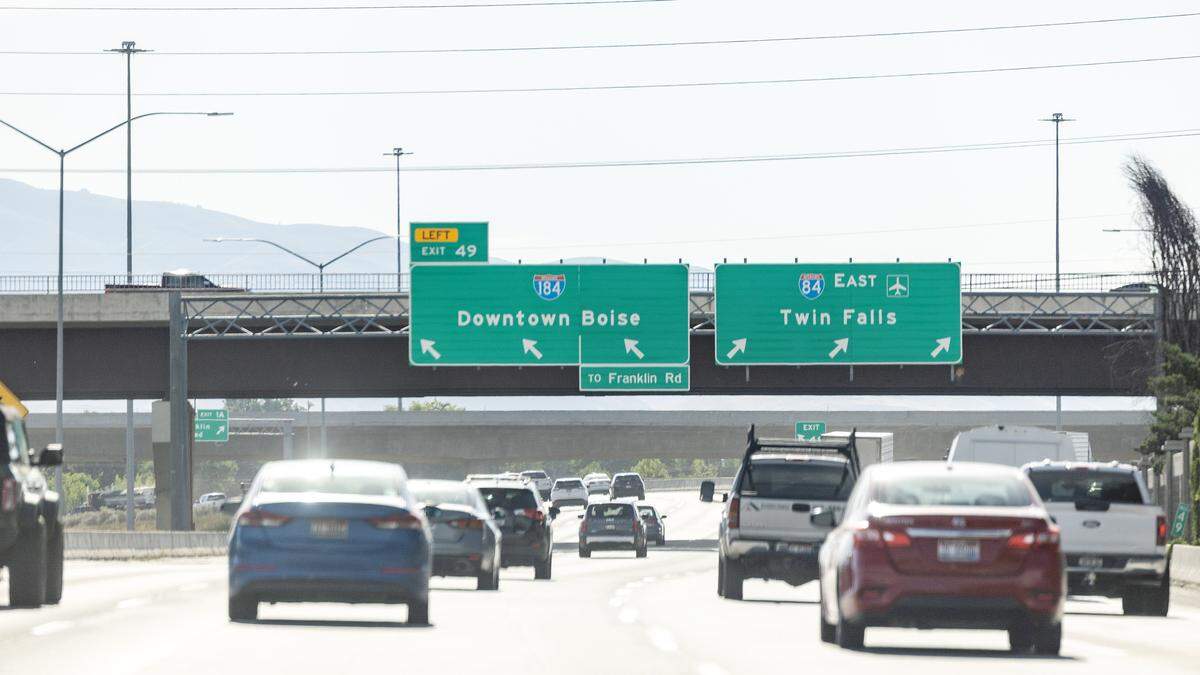
The western stretches of the Treasure Valley. Ramps leading on and off the interstate. The dreaded I-184 Connector. During rush hour, drivers may want to steer clear of these problem areas — or at least be ready to hit the brakes.
Compass reports that over the past five years, I-84 traffic has increased fastest in the west end of Canyon County, though ITD reports rapid increases as far east as the Meridian Road interchange.
One ITD analysis, which went only as far west as Garrity Boulevard in Nampa, showed that between 2019 and 2024, traffic volumes grew fastest between the Ten Mile and Meridian Road interchanges, and next-fastest between the Garrity and Ten Mile interchanges.
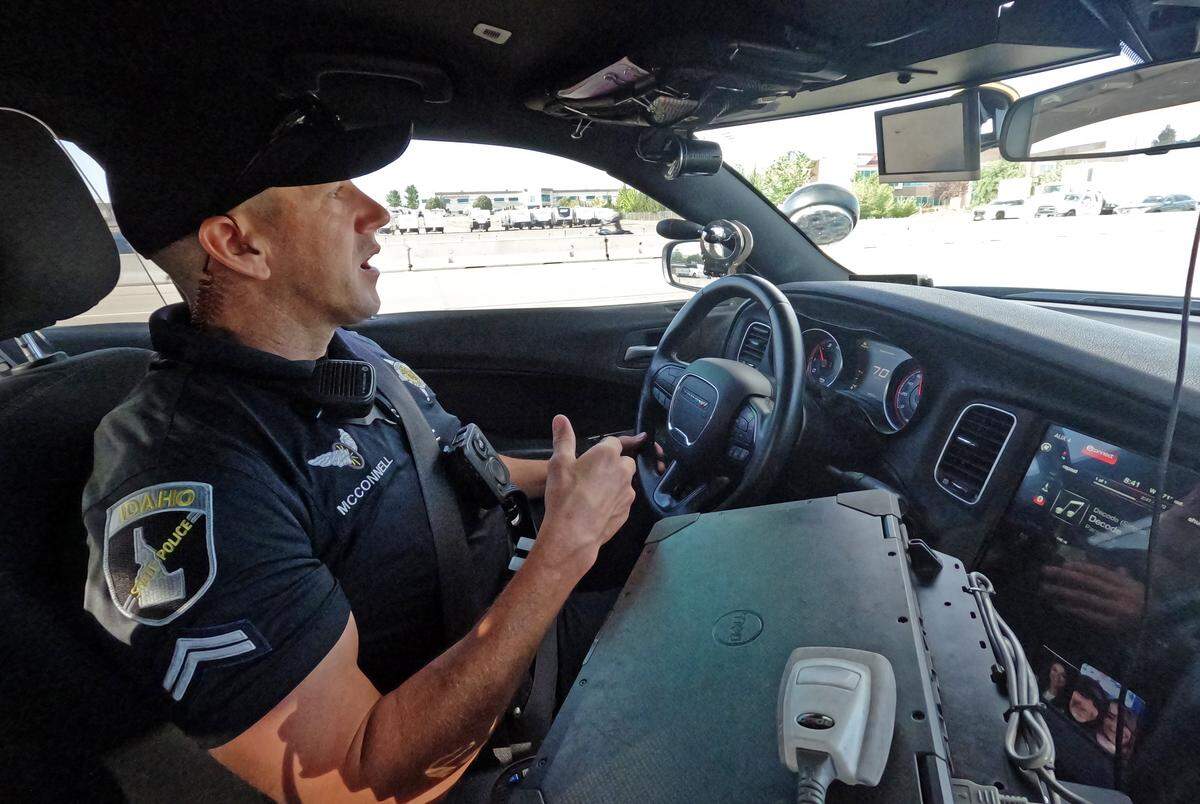
This is in gear with McConnell’s observations. “When I first started working in the Treasure Valley, the big problem areas seemed to be more around the Nampa side,” he said. But with lane additions in Nampa and Caldwell, McConnell said he’s noticing “the bulk of congestion” shifting to Meridian, particularly in the morning when commuters are trying to get onto the freeway from Ten Mile, Meridian and Eagle roads.
Those on-ramps, as well as several ramps in Canyon County, are among the most congested roads in the Valley.
In fact, several of the top 10 congested roads in Ada County lead onto or off of the interstate:
On the Flying Wye, drivers are delayed by 45 seconds traveling a half a mile west in the afternoon, slowed to speeds of 38 mph. That means it takes two and a half times longer to drive the Wye in the afternoon than when not congested, according to Compass.
The same goes for top 10 congested roads in Canyon County:
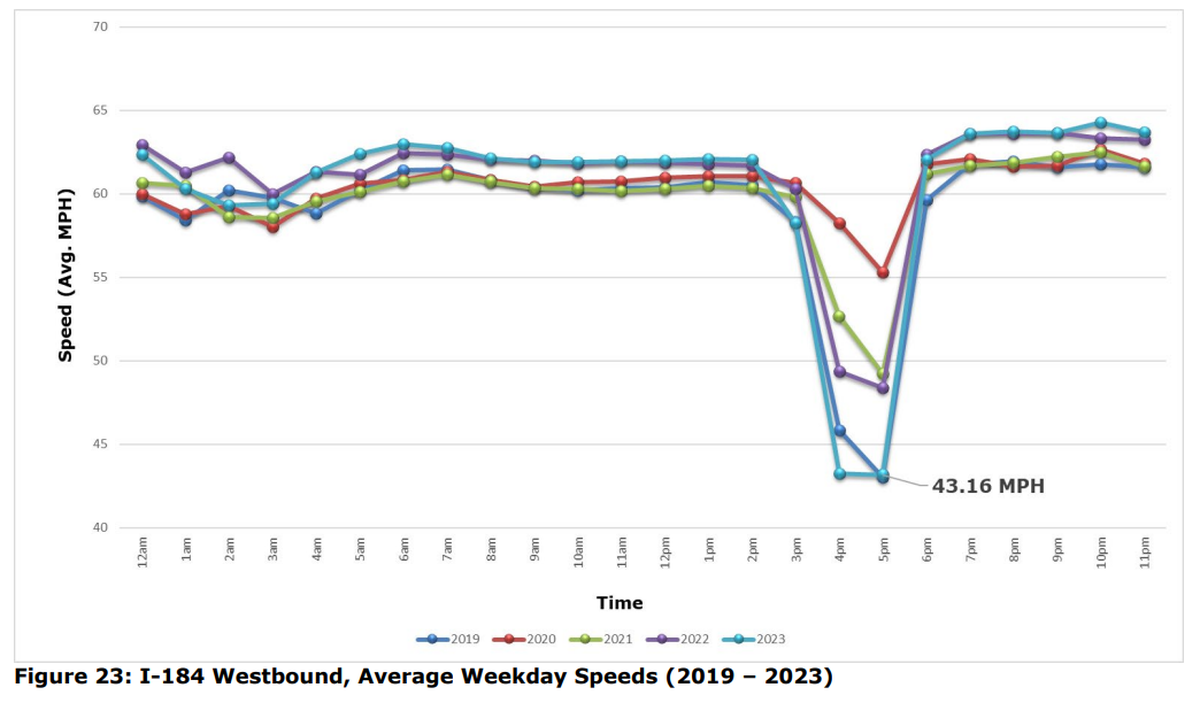
And drivers can’t forget the Connector. Compass data shows that morning speeds on the Connector were generally higher in 2023 than years past, but that speeds slowed significantly during the afternoon rush.
3. It’s much more likely a crash will happen
Over the past decade, the number of crashes per year on I-84 in Ada and Canyon counties more than doubled, from 481 to 1,127, ITD crash data shows.
But that isn’t necessarily translating to more serious injuries or fatalities. In fact, suspected serious-injury crashes dropped from 41 in 2014 to 21 last year. Fatal-injury crashes have fluctuated from year to year, with two in 2014 and three last year.
Property damage crashes, meanwhile, have increased by more than five-fold, from 155 to 834. Seventy-four percent of all crashes in 2024 fell into this category. In 2014, that was just over 32%.
McConnell estimated that state police are consistently reporting up to 50 crashes per week on state highways in Western Idaho. The vast majority of those are on I-84. It’s “just wild,” he said.
More congestion generally means more crashes, he said, but typically nonserious ones.
“Most of the crashes we’re having during the commuter heavy traffic times, I would say, are minor injury or damage only, versus a serious injury crash,” he said “Because most of the time traffic’s going slow already … so the crashes that are happening are less severe.”
4. It’s putting more strain on other roads — and the cops who work them
According to Capt. Michael Winans, who oversees Idaho State Police’s District 3, which includes Ada and Canyon counties, calls for service on the interstate are “constant” — sometimes making it harder for troopers to patrol other highways.
“I tell people, I-84 isn’t necessarily our problem, but it is,” he told the Statesman in an interview. “That’s not really where we’re having the most serious-injury crashes and fatality crashes,” but that’s where his troopers spend most of their time.
“Some of the other outer-lying roadways,” he said, including more dangerous ones, “get neglected.”
Sometimes troopers will plan on patrolling a more dangerous or rural highway like Idaho 21, but get immediately called back to I-84, he said. Those calls can be crashes but also traffic complaints, including people calling in to report inattentive or aggressive drivers, he said.

When troopers arrive at the interstate, he said, gridlock or drivers failing to move aside can make it difficult for them to respond quickly.
As population has grown, Winans said, demand for police services has gone up all over the district, which is the most populous and crash-heavy in the state. But police staffing hasn’t kept pace. Part of that is how many positions are allocated by the Idaho Legislature, and part is the challenge of recruiting and retention, he said. This has a ripple effect beyond the interstate.
“It’s frustrating for the locals that live on those highways, and it’s also frustrating for the sheriff’s departments and police agencies that work those highways, because they’d like some help from ISP as well,” he said.
5. It’s not just California drivers
Sorry, Boise-area natives. The numbers don’t seem to support the notion that California drivers are ruining Idaho’s roads.
Nearly 95% of the roughly 12,000 crashes in Ada and Canyon counties last year — including over 1,100 on the interstate — involved drivers with Idaho driver’s licenses. The second-most-represented state was Oregon, followed by California. More crashes involved drivers with no license than those with California licenses.
What’s more is that the proportion of crashes involving Idaho drivers has stayed nearly flat over the past decade and a half, around 95% to 96%.

“We had a guy the other day that told us, ‘You know, you guys gotta do something about all these California implants that are driving around here,’ ” Winans said. “And it’s funny, because a lot of the problems we see here, local Idahoans are causing. It’s across the board.”
“There’s no rhyme or reason,” echoed McConnell. “We have people of all ages, all demographics, crash.”
“Some people argue Californians are better driving … because they’re used to the congestion,” he said. “I think there’s something to be said about, just people in general aren’t used to the volume of traffic yet.”
He thinks people are slowly getting more comfortable with the “defensive” or alert driving needed on the interstate now.
6. It’s going to get worse
Growth in the Treasure Valley doesn’t seem to be hitting the brakes.
By 2050, Compass projects that the population of Ada and Canyon counties will near 1.1 million, adding 227,000 people on top of the 848,000 we have today. By 2055, it’s expected to hit 1.3 million.
Taking into account that growth, while factoring in already-funded road improvements, the planning association expects that traveling between Boise and Caldwell will take 50% longer by 2050. Based on Compass’s 2023 average I-84 commute times, that means it could take 40½ minutes to make the inbound morning commute, and nearly 45 minutes to make the opposite trek in the afternoon.
“It’s not an unknown secret,” McConnell said. “Everybody hates the traffic.”
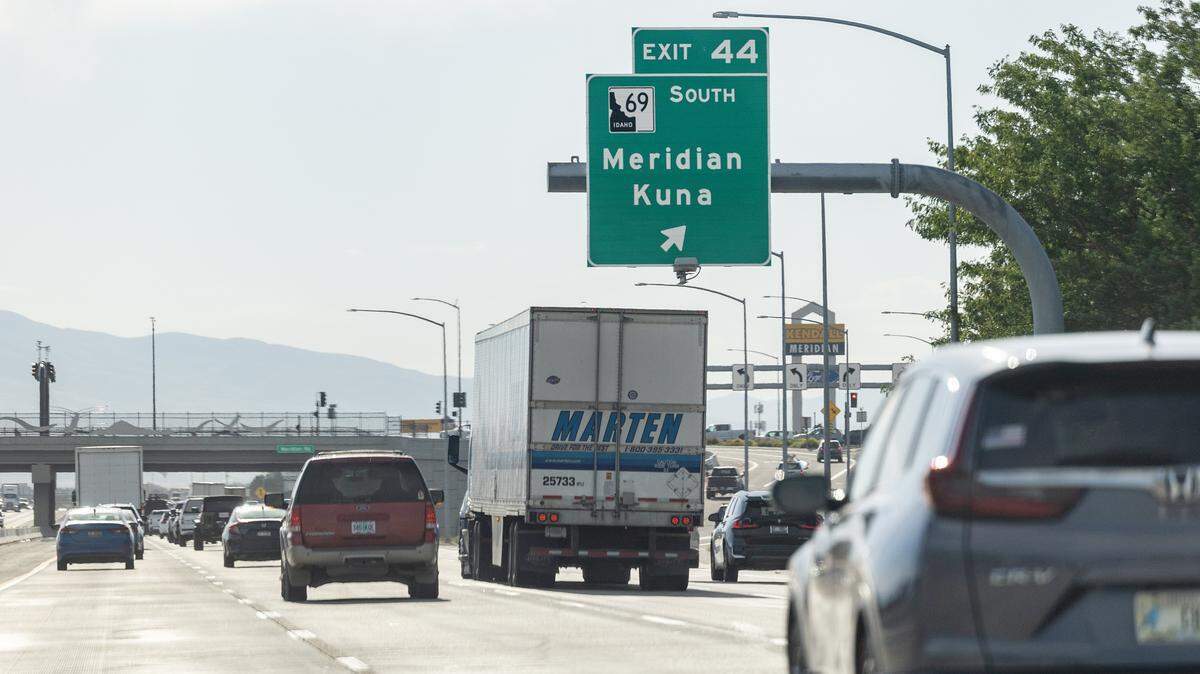
Planners, like drivers, are taking note. This year, ITD started a nearly $700,000 study on an 11-mile corridor of I-84 between Boise and Nampa to consider adding a fifth lane in each direction or auxiliary lanes that connect one interchange to another.
In the meantime, ITD has been working on upgrading overpasses to make room for fifth lanes should they come, according to Mark Wasdahl, ITD’s District 3 planner. That includes the new Linder Road overpass, which is under construction in Meridian, as well as widening the Five Mile Road overpass, which Wasdahl estimates will be done in the next five years.
And ITD is working to design an auxiliary lane between the Meridian Road and Eagle Road interchanges, which would be the freeway’s first.
The study will also examine “ramp metering,” which involves placing traffic signals on freeway on-ramps. These have succeeded in other states at reducing collisions and increasing travel speeds, according to ITD. A 2023 study by Compass estimated that installing ramp meters on 17 sites along I-84 would cost over $17 million.
ITD is also considering “intelligent traffic systems” as part of the study, which would provide real-time traffic and crash information to drivers and ITD.
The study is expected to be complete in March 2026. ITD has included $100 million in anticipated costs for future freeway improvements in its draft seven-year plan.
“Our board is very interested in what’s the next big step forward for transportation in Idaho,” Wasdahl told the Statesman. “We’ve done a lot of work on the interstate, a lot of construction. We have (Idaho) 16 being constructed. And so they wanted to know, what’s next beyond that?”
This story was originally published August 13, 2025 at 4:00 AM.