Scared to use bike lane on a busy street? ACHD aims to ease stress for bikers, walkers
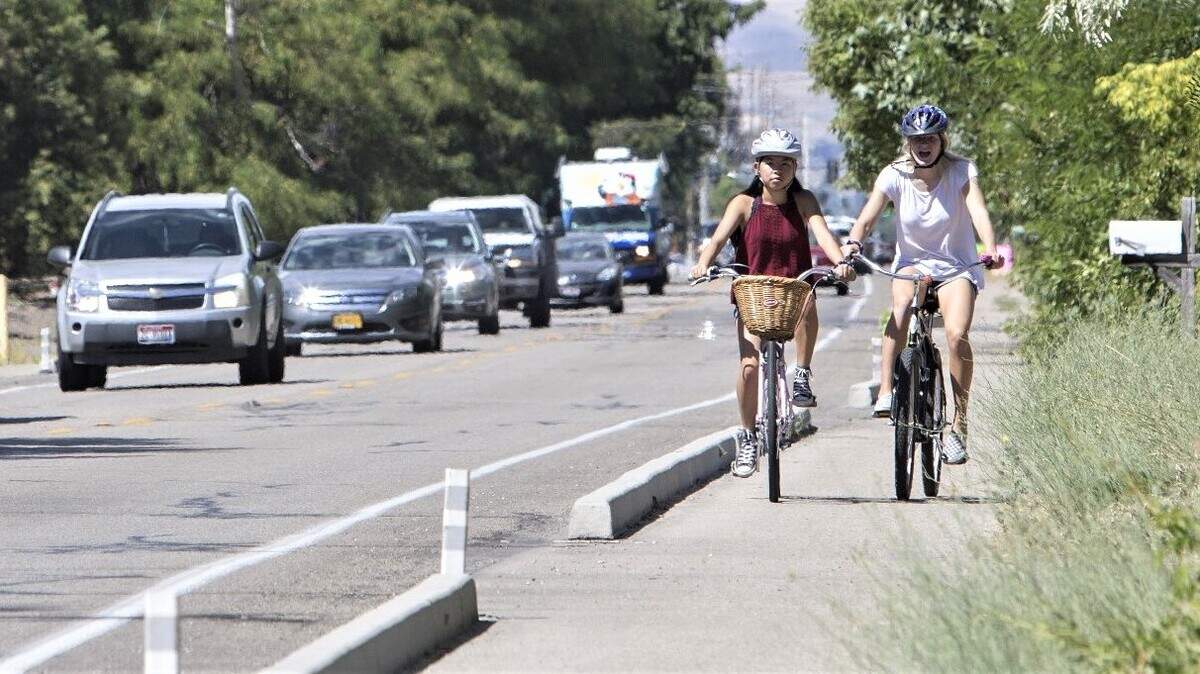
Navigating Ada County streets may become easier soon for bicyclists and pedestrians.
The Ada County Highway District has just adopted a new policy to improve the transportation system by striving for measures to lower stress for pedestrians and bicyclists. They include:
▪ Traffic-calming features on roads with three or fewer lanes.
The primary way they work is to decrease the comfort level of speeding on the roadway.
▪ Raised bike lanes in areas where the speed limit is over 35 mph. Raised bike lanes are paths next to sidewalks at sidewalk height. With bicyclists up on raised lanes, they are more visible to motorists.
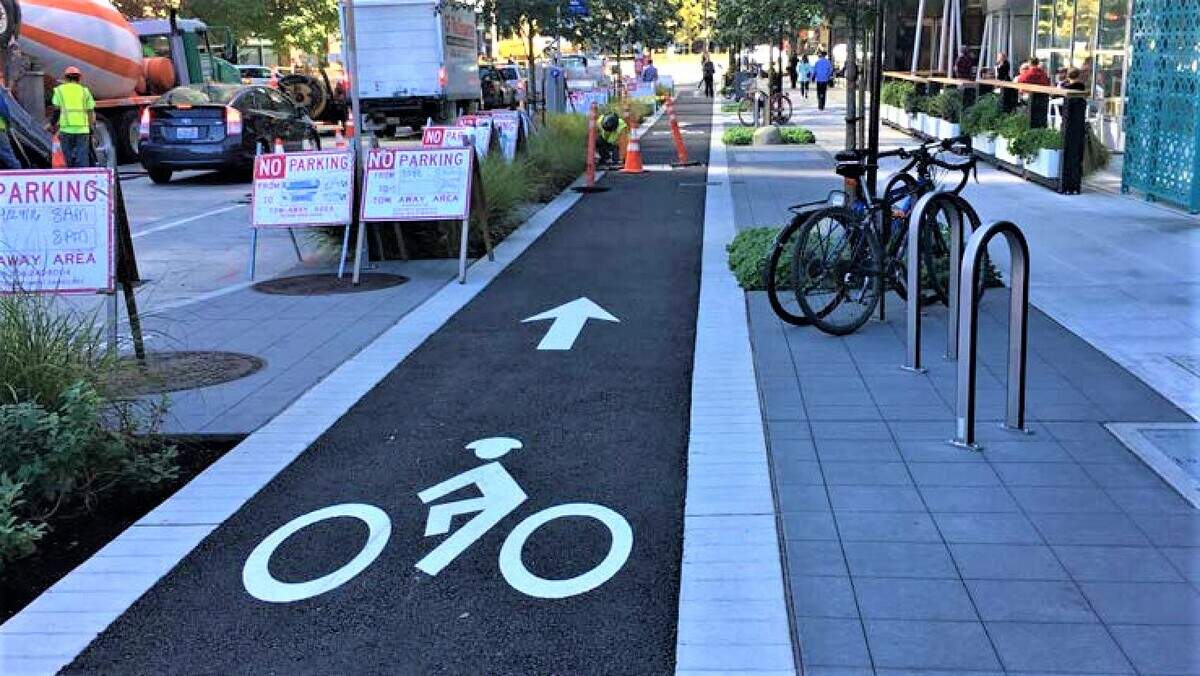
▪ Flashing beacons and 8-foot-wide medians with signs at intersections without signals to help reduce the number of lanes a bicyclist or pedestrian must cross at once.
With guidance from ACHD’s bicycle, pedestrian, and Americans with Disabilities Act Advisory Committees, and citizens, the highway district staff has worked since January to put together the “Livable Streets Performance Measures” policy.
“Our proposal represents a collaborative project to reflect on the comfort and safety of pedestrians and bicyclists,” said Ryan Head, planning and programming manager for ACHD, during the commission meeting Wednesday.
ACHD hosted meetings and focus groups with the Bicycle Advisory Committee and Pedestrian Advisory Committee and hosted a four-week public comment period to develop measurements to determine what the levels of stress are for bicyclists and pedestrians on Ada County roadways.
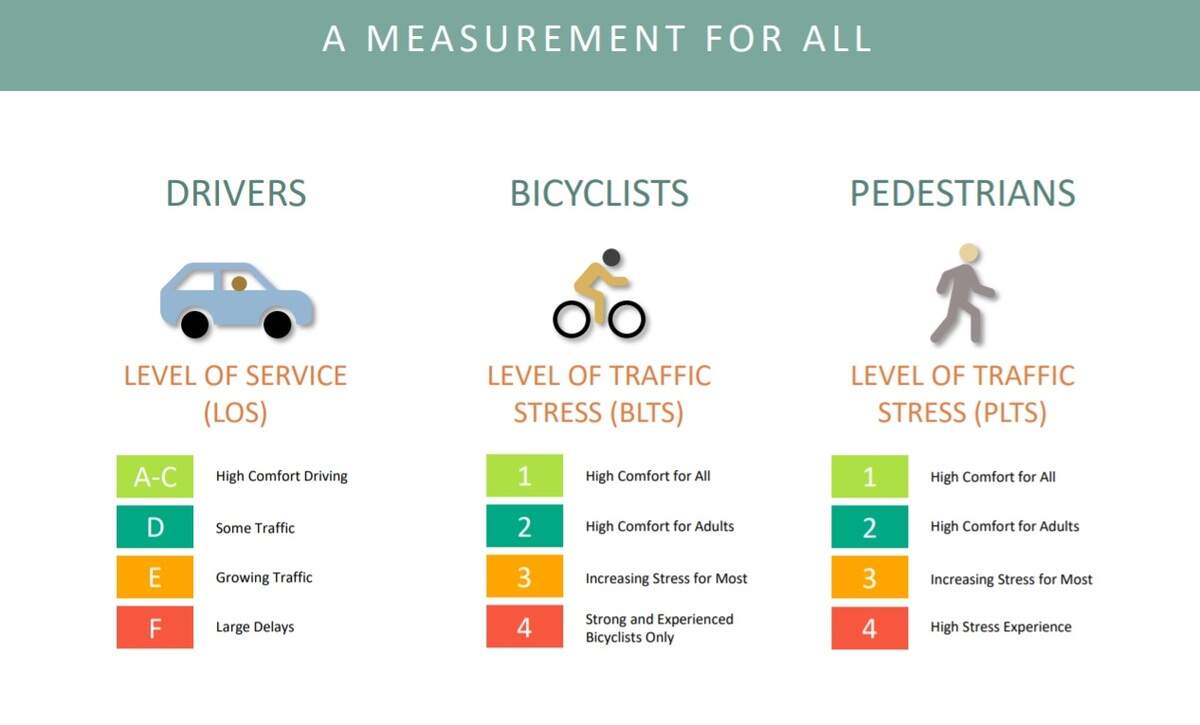
ACHD rated the stress levels on a color-coded 1 to 4 scale, with 1, colored green, being “high comfort for all,” and 4, red, being “high stress” or for “strong and experienced bicyclists only.”
“The end goal is this becomes part of daily practices,” Head said. “This is going to be a guide for evaluating alternatives on improvement projects going forward.”
In response to the agency’s Livable Streets work, ACHD’s planning and design departments are evaluating how to add multi-use and raised/protected bike lanes on heavily trafficked main roads.
ACHD tried raised bike lanes for the first time in 2019 when the agency and the Idaho Transportation Department rebuilt the Cloverdale Road overpass over Interstate 84 after a fire caused by a 2018 accident damaged it. Commissioners were pleased with the results.
Raised bike lanes are also planned on the downtown stretch of the planned 11th Street Bikeway, a project being developed by ACHD and the Capital City Development Corp., Boise’s urban-renewal agency.
Meanwhile, ACHD’s Development Department is working on an interim policy for the construction of temporary multi-use paths on arterial roadways with a development.
The highway district is also looking to hire a bicyclist-pedestrian program manager, a new position within the district.
The policy recommends that ACHD revise projects that don’t meet the appropriate level of stress whenever possible.
During a public hearing on the policy, Clancy Anderson, a Boise resident, asked that the commission add average daily traffic to the level-of-stress determination in the bike-lane section.
For example, Anderson said the levels of stress while riding in the bike lanes on Ustick and Maple Grove roads, where he said the average traffic is 22,000 vehicles per day, are higher than on lower-traffic streets.
ACHD commissioners did not address Anderson’s proposal at the meeting. They adopted the policy unanimously Wednesday.