Two Boise teens died in a car crash. ACHD memorialized the drunken driver with a sign
The Ada County Highway District first installed the rectangular blue sign on March 12, just south of McMillan Road on the west side of Five Mile. The placard bore a short message: “Please drive safely in memory of Devyn Charles Schultz.”
For Schultz’s family and friends, it was a long-awaited permanent home for the notes, candles and other items they often placed at the base of a utility pole at the intersection, which itself was spray-painted in foot-high letters “LLDS” (an abbreviation for “long live Devyn Schultz”).
But for two other Boise families, the installation felt like a slap in the face.
Schultz, the 19-year-old for whom the sign was dedicated, was driving drunk on the evening of May 7, 2020, when he went south through a red light on Five Mile Road at more than twice the speed limit, according to police crash reports. At the same time, 18-year-old Sammi Swenson was driving westbound through the intersection on McMillan. Their vehicles collided, and the crash killed Schultz and 15-year-old Ava Sawyer, a passenger in Swenson’s car. It also left Swenson and her younger sister, Maddi, 15, with physical and emotional scars.
The sign prompted pushback from the Swenson and Sawyer families, as well as other community members, who told ACHD commissioners they glossed over the facts of the case and minimized the consequences of Schultz’s decision to drive drunk. The agency removed, reinstalled and once again removed the sign in a back-and-forth that commission President Kent Goldthorpe called “embarrassing.”
Debate over the sign ultimately spurred commissioners to alter the agency’s memorial policy. According to each of the families involved in the crash, the situation reopened old wounds and roiled tension that could have been avoided had the commissioners been more careful.
For Schultz family, memorial was a place to mourn
Devyn Schultz’s sister Marah, 19, had been visiting and leaving mementos at the site of her brother’s crash, but they kept disappearing — flowers, candles, a poster signed by his friends that she’d hoped to keep. When she complained to ACHD, she said, an employee suggested that she apply for a permanent sign instead.
The highway district adopted its memorial policy in 2015 following the death of 13-year-old Olivia Schnacker, who was hit by a car the previous year while riding her bike through a crosswalk on Ustick Road.
The policy stated that memorials were available for anyone killed in a traffic accident, regardless of fault. Family members of the deceased could request a 12-month temporary memorial, often a cross or other small marker, or the permanent blue road signs. The agency would foot the bill for the permanent signs, which cost $96 to make, as well as their installation. Memorials could not include “candles, flashing lights, glass, moving or spinning parts, music or amplified sound, sharp objects or any other features” that could cause a distraction or potential threat to public safety.
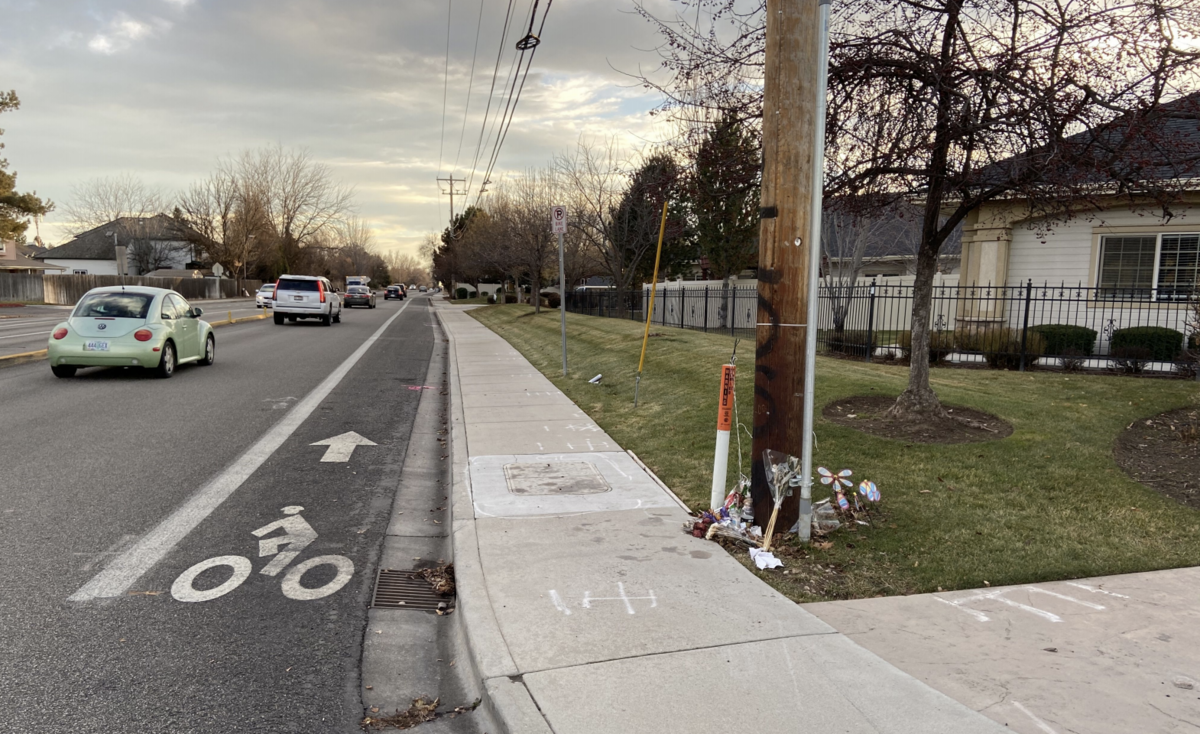
“We thought, ‘Let’s spread awareness,’ ” Marah Schultz told the Idaho Statesman in an interview. “It was a way to memorialize my brother and spread awareness to drive safely.”
The family applied in December. After waiting three months for the sign to be created and erected, Marah Schultz felt like she finally had a dedicated place to mourn her brother, who had been cremated and had no grave site. Notes, balloons, flowers and other items were left there — including, at times, bottles of alcohol.
“There are a lot of people that loved my brother. We’re the type to celebrate one’s life,” Schultz said.
Dyanna Swenson first saw the memorial sign shortly after it was installed. The Boise mother had spent the previous 10 months helping her two daughters recover from the crash — from grief over their friend’s death, from the emotional trauma of the collision and from extensive physical injuries. She instantly felt sick.
Swenson said seeing the sign brought her back to the scene of the crash, which she and her husband saw firsthand after receiving a call from Sammi that night.
“That intersection is not just a place for us that we’re like, ‘Oh, this is what happened,’ ” she said in a phone interview. “This is a place that we lived that night.”
Tim Sawyer, Ava Sawyer’s uncle, said he was confused by the sign.
“I’d never seen a sign like that for someone who had played Devyn’s role in a tragedy like that,” he said in a phone interview.
To the Swenson and Sawyer families, the slogan on the sign encouraging safe driving — the standard message on all ACHD memorial signs — didn’t capture the reality of the crash or Devyn Schultz’s role in it.
“It just minimizes and diminishes my daughters’ experience and the experience of Ava and her family,” Swenson said. “Because a stranger could read that and think, ‘That poor young man was killed by someone not driving safely.’ And it was a very violent collision caused by drunk driving.”
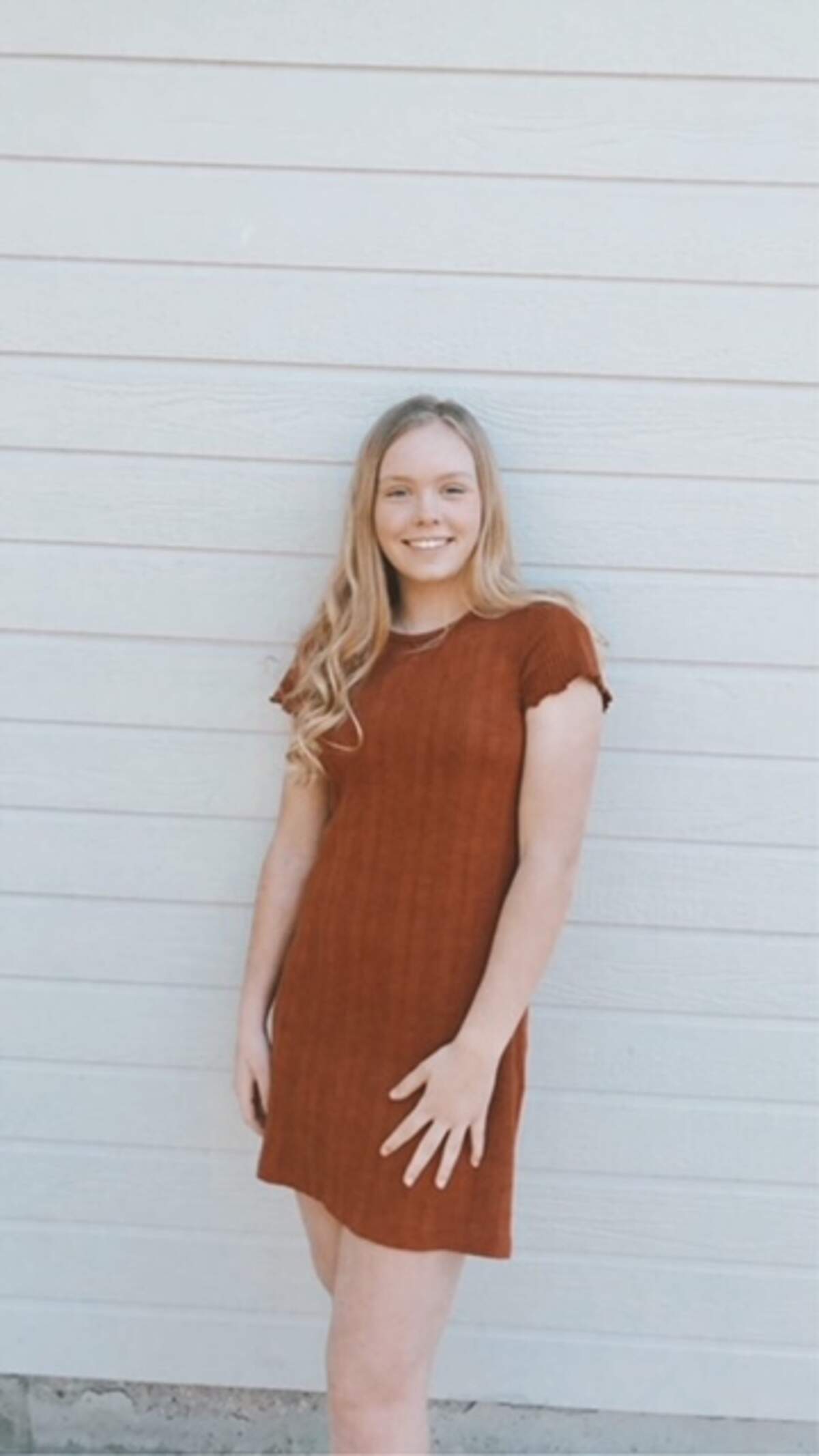
Excessive speed, alcohol factored into fatal Boise crash
According to a Boise Police Department report on the crash, Devyn Schultz had spent the evening of May 7 hanging out with friends, one of whom later told police he had consumed most of a bottle of whiskey and made comments about feeling suicidal. The friend said she drove herself and Schultz to her home in Garden City in Schultz’s vehicle and tried to take his car keys, offering him a place to stay for the night or money for an Uber. She said Schultz took the car keys from her, saying he would drive himself home.
At 10:32 p.m., a short time after Schultz left his friend’s house, a witness called Ada County Emergency Dispatch to report a reckless driver. The witness later told Boise police that a vehicle had sped past her as she waited to turn south from Chinden Boulevard to Five Mile Road. She headed in the same direction as the car to try to get a license plate number to provide to police. By the time she arrived at the Five Mile and McMillan intersection, bystanders were pulling Schultz from his vehicle and performing CPR.
The first Boise Police Department officer arrived at the scene at around 10:33 p.m., according to the police report. Schultz’s vehicle was in the grass, and Sammi Swenson’s was on the sidewalk southwest of the intersection. A utility pole was down and power lines were on the ground. Paramedics informed the officer that two people died in the crash.
Sammi, who’d lost consciousness after the crash but came to at the scene, used a bystander’s cellphone to call her parents. She told them she had overheard officials saying one of the girls — she didn’t know whether it was her sister or their friend — had died.
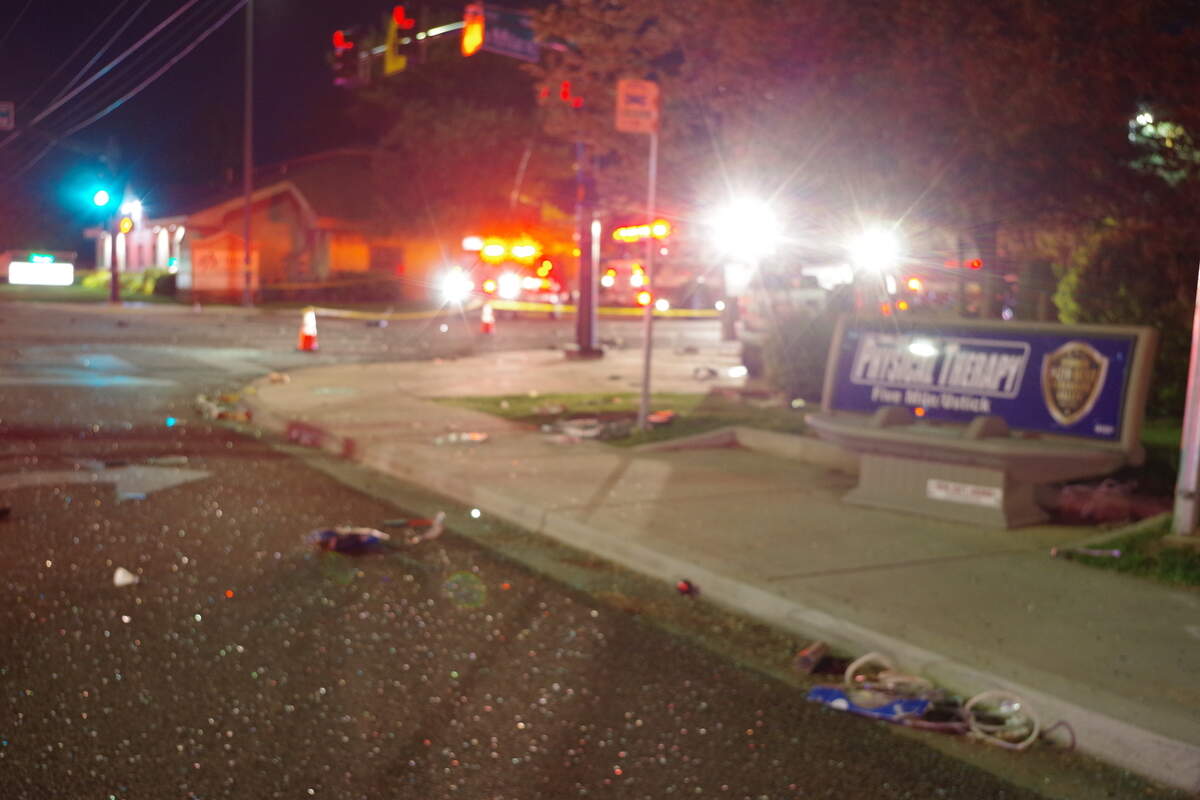
Dyanna Swenson and her husband, Matt, drove to the scene. They also called Sawyer’s mother, who met them there. The families were directed to the emergency room at Saint Alphonsus, where they waited outside because of COVID-19 precautions. For several hours, the families were unsure which of the girls survived or the extent of their injuries. Neither Maddi nor Sawyer was wearing a seat belt, and they had been ejected from the backseat of the vehicle as it spun following the collision.
They later learned that it was Sawyer who died at the scene of the crash. According to an Ada County Coroner’s Office report, she and Schultz died of multiple blunt force injuries.
Sammi sustained a lacerated spleen and a concussion in the crash. Maddi was much more severely injured: She had multiple facial fractures, three broken vertebrae (including the C2 vertebra in her neck), a traumatic brain injury, several broken bones in her right hand, a lacerated liver, a punctured lung, a deep puncture to one of her legs caused by a rosebush and a cut on her face that required 300 stitches and nose reconstruction.
The coroner’s office later confirmed to the Statesman that toxicology results showed Schultz had alcohol and THC, the main psychoactive ingredient in marijuana, in his bloodstream at the time of the crash. An Idaho State Police crash reconstruction report released in February stated that Schultz’s blood alcohol level was .223 — nearly three times the legal limit.
The ISP report also stated that Schultz “was traveling at least 87 miles per hour in a 35 mile per hour speed zone” when he ran the red light on Five Mile. Sammi Swenson, who was reportedly driving 38 mph through the intersection, didn’t have time to react to Schultz. The hood of her vehicle was crushed in the impact with the driver’s side of Schultz’s car. Both vehicles spun, with Schultz’s striking the utility pole and a tree. Schultz was not wearing a seat belt, according to police.
ACHD commission removes — then reinstalls — controversial sign
After the Swensons saw the memorial sign, Matt submitted an email to the Ada County Highway District through the contact form on the agency’s website. He informed the district of his family’s involvement in the crash and said the sign was inappropriate. He included a copy of the Boise Police Department crash report in his email.
On March 22, the memorial sign was taken down. During the ACHD commission meeting two days later, the commission discussed the policy. The Swensons still had not heard back from anyone at ACHD.
Steve Price, ACHD’s general counsel, said during the meeting that the agency had received little feedback on its memorial signs since the policy was adopted in 2015, adding that “when we do it’s generally about whether or not the memorials are appropriate.” He said eight memorials had been installed, and three, which were temporary, were removed.
Price also said Schultz’s sign was removed after the agency received complaints about it. He said ACHD would reinstall the sign unless otherwise directed by the commission.
“It meets our policy,” he said.
Price presented some of the comments the agency received on the sign, one of which called it “completely offensive and inappropriate” and another from state Rep. Codi Galloway to Commissioner Mary May, which said “many of us are deeply disturbed by this sign.” The sign was within Galloway’s district.
Schultz’s mother, Patricia, testified before the commission to explain why she thought her son’s sign should be reinstalled. Dyanna Swenson said she was not informed of the meeting or given an opportunity to testify.
“(The sign is) beautiful and I don’t see how it could hurt people,” Patricia Schultz told the commission through tears. “… I’m just asking that you guys follow your policy. We’re not trying to hurt anyone or other families by wanting that sign up. Ava should have one, too.”
Goldthorpe, the commission president, expressed sympathy for Patricia Schultz.
“It’s very obvious to me that you had absolutely nothing in your mind, heart or anywhere else to justify the kind of behavior that’s been leveled at you or your family or through these emails,” said Goldthorpe, adding that he and other commissioners had spent ample time creating the memorial policy. “In no shape, way or form did we ever anticipate crucifying somebody who was involved in a collision.”
Goldthorpe made multiple references to a collision of his own in which his twin brother died. He said the collision was caused by Goldthorpe’s own “stupid teenage error in judgment.”
“I think, inside myself, I understand everything that’s going on here with regard to our policy,” he said.
“We were all victims in this situation,” Schultz’s mother later added. “… (Devyn) went out with some friends that night, he took off in my car without permission. He drank, he smoked weed and he drove home. Very poor decisions.”
“Yeah, I understand that one,” Goldthorpe interjected.
“That doesn’t make it his fault,” Schultz continued.
An ACHD clerk read a letter from Katie Ipsen, a friend of the Sawyer family who commented on behalf of Ava’s mother. Ipsen said the commission should check accident reports and criminal records during the memorial application process.
“My opinion on that is we are not going to do that because we are not a judge and a jury,” Goldthorpe said.
Commissioners Jim Hansen, Alexis Pickering and May suggested “tweaks” to the policy but did not take issue with reinstalling the sign for Schultz. Commission Vice President Dave McKinney said it’s likely future memorials also could lead to similar conflicts. He proposed doing away with the memorial policy entirely.
The sign for Devyn Schultz was reinstalled on March 25.
ACHD decisions were painful for families
Following the March 24 commission meeting, Dyanna and Matt Swenson again went to the commission with their concerns. Dyanna asked friends to do the same. She said the commission was ignoring her family and Ipsen. This time, the Swensons got a response from Goldthorpe, who told them the five-person commission was unaware of some of the details of the crash despite Patricia Schultz’s testimony, the complaints about the sign and the police report Matt Swenson had shared.
“We had no information,” Goldthorpe later told the Statesman in an interview. “What we were facing at that time was the thought that there were actually people out there in this world that wanted to deny somebody else the opportunity to grieve. That was not OK with me.”
Goldthorpe said once the commissioners had “the whole story,” they decided to take the sign down again. It’s unclear what details changed the commissioners’ minds.
The sign was removed the second time on April 21. ACHD Director Bruce Wong sent the Schultz family a letter informing them that it was removed “in response to numerous concerns voiced by families devastated by the accident, as well as concerns raised by members of the community at large.”
The decision was a blow to Marah Schultz, who said the crash site was the only place she had to mourn her brother.
“I wish they would’ve kept their word,” she said. “Why offer us something just to take it away?”
The situation also prompted a review of the agency’s memorial policy. The commissioners met in private executive sessions — “There’s always a chance of people suing you,” Goldthorpe said — until meeting on June 2 to publicly unveil and approve an updated version of the policy. Dyanna Swenson said she was prepared to comment, but she was unable to connect to the meeting via video call.
The new policy stipulates that no memorial “shall be installed or erected for any deceased who was directly involved in criminal activity that caused the traffic accident and/or led to the deceased’s death, including but not limited to, driving under the influence, reckless driving, or fleeing law enforcement officers.” The policy also makes applicants responsible for the cost of fabricating and installing the memorial.
Goldthorpe said the commission also will take time to further research the collisions in the future.
“We felt like there was no reason to go after (the police reports) initially,” he said. “I’m pretty sure we’ll be at least looking to see if there’s any additional information that needs to be had for any applications going forward. … This was not only sad, avoidable, but in some ways, embarrassing.”
The revised policy still has its critics, even within the commission. McKinney again stated that he expects more issues will arise from the policy and he would prefer it be eliminated altogether. Goldthorpe said the policy will be a work in progress, but it’s here to stay.
“This is something the public wants, absolutely,” Goldthorpe said. “No, they don’t want it — they demand it. They don’t utilize it much, but they absolutely want this to stay.”
Swenson told the Statesman tht she thought the commission was “very thorough” with its policy revisions, though like McKinney, she thinks it may be better to do away with the policy entirely. In particular, she said, she was happy that the revised policy specified that noncompliant items ACHD removes from memorial sites will be held for 30 days by the district so they can be retrieved by mourners.
Ipsen said she still thinks the commission mishandled the situation.
“This comes down to one thing,” she said. “Drunk driving is acceptable or it isn’t. ACHD showed us where they stand.”
Families try to move forward after crash, controversy
Dyanna Swenson said her family’s intent was never to stop Schultz’s family and friends from grieving his death. Had the highway district reviewed the crash report or included stipulations on drunken driving in its initial policy, all of the families involved could have been spared some grief, she said.
“What makes this hard is everybody’s pain is intertwined,” Swenson said.
Tim Sawyer agreed.
“I get the feeling that maybe (the Schultzes) were getting the vibe that we were insensitive to their predicament,” he said. “And I would want them to know that my heart goes out to Devyn’s family.”
Marah Schultz said she, too, can see the pain the other families are experiencing.
“I know my brother didn’t make a right choice,” she said.
But the loss of the memorial still stings. She said her family was confused and hurt by the complaints about the sign.
“I feel like a lot of people didn’t understand. We lost someone, also,” she said. “I feel like that’s what people forget.”
Schultz said she doesn’t want her brother to be looked at as a bad person. Her family has plans to inter his ashes at a local cemetery so they have somewhere to grieve.
The Swensons said they hope the site of the crash can start to be neutral ground, though it will always remain emotionally charged for all three families. In a written statement to the Statesman, the Swensons said they think a different memorial to Schultz can help his loved ones celebrate joyful memories of him rather than immortalize the collision.
“We understand that the friends and family of Devyn may feel the sign is a kind memorial to his memory. However, for those that did not know him, but who experienced and were devastated by this crash, the sign is simply a reminder of the worst thing he did in his life and the trauma they experienced and continue to struggle with because of it,” they wrote. “No one wants to be remembered for the worst thing they’ve done. No one wants to be reminded again and again of the horrific trauma they experienced or their devastating loss.”
This story was originally published June 13, 2021 at 4:00 AM.