Bikeway aims to link Foothills to Boise River, but it won’t reach Greenbelt for years
A bikeway scheduled to be built in 2022 to connect the Foothills to the Greenbelt will extend all the way from Camel’s Back Park south to River Street. But it won’t reach the Greenbelt itself — at least not for several more years.
Plans are advancing rapidly to build the all-ages bikeway on 11th Street from Heron Street, which borders Camel’s Back Park in the North End, south through downtown to River Street.
The Ada County Highway District and the Capital City Development Corp., Boise’s urban renewal agency, are divvying up the work, with ACHD generally taking everything north of State Street and CCDC taking everything south.
The southernmost piece of the bikeway, a 300-plus-foot segment from River Street south to the Boise River Greenbelt, might be built sometime later, but no specific plan has been prepared to do that, and no money has been allocated.
On Monday, Nov. 9, CCDC’s board approved a design for the State-to-River segment. It would add a one-way bike path on each side of 11th Street next to, and at the same height as, the adjoining sidewalk. Bicyclists would ride northbound on the east side of the street and southbound on the west, as vehicle traffic does.
The raised bike lane, 6 inches higher than the street, would be an unusual step for Boise and Ada County, where bike lanes usually are painted onto streets.
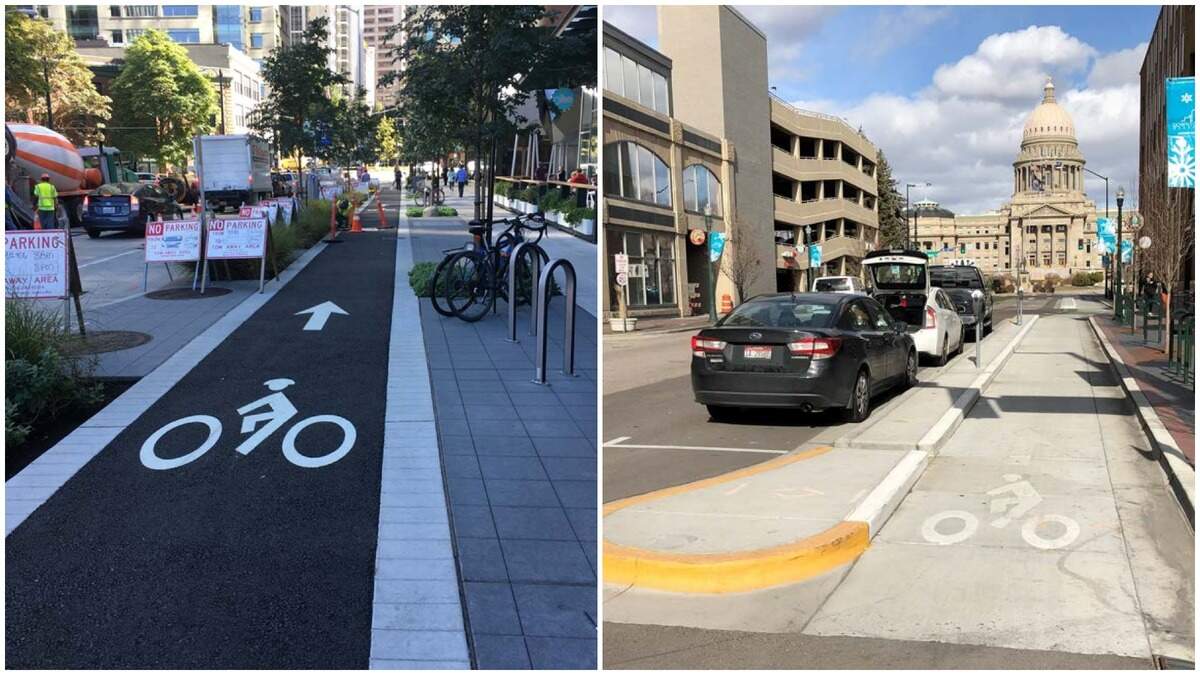
The idea of a bikeway proved highly popular in CCDC’s public outreach efforts. Most businesses in CCDC’s segment of 11th Street told the agency that they like the bikeway idea, too.
“The goal is to create a premier ‘ridge-to-river’ bicycle connection between the Foothills, the Greenbelt, and Downtown Boise,” CCDC says in a page about the project online.
Mayor Lauren McLean, who appointed herself to CCDC’s board after taking office in January, appeared to mention the missing segment at the Nov. 9 meeting. She said, in part, “We had hoped originally that ACHD might be able to extend the 11th Street project all the way down to the river. That wasn’t going to happen, so I do think that this is the best alternative solution.”
ACHD told the Idaho Statesman that it never planned to extend the bikeway from River Street south to the Greenbelt, because it lacks the authority under Idaho law to use eminent domain to acquire property just for a pathway.
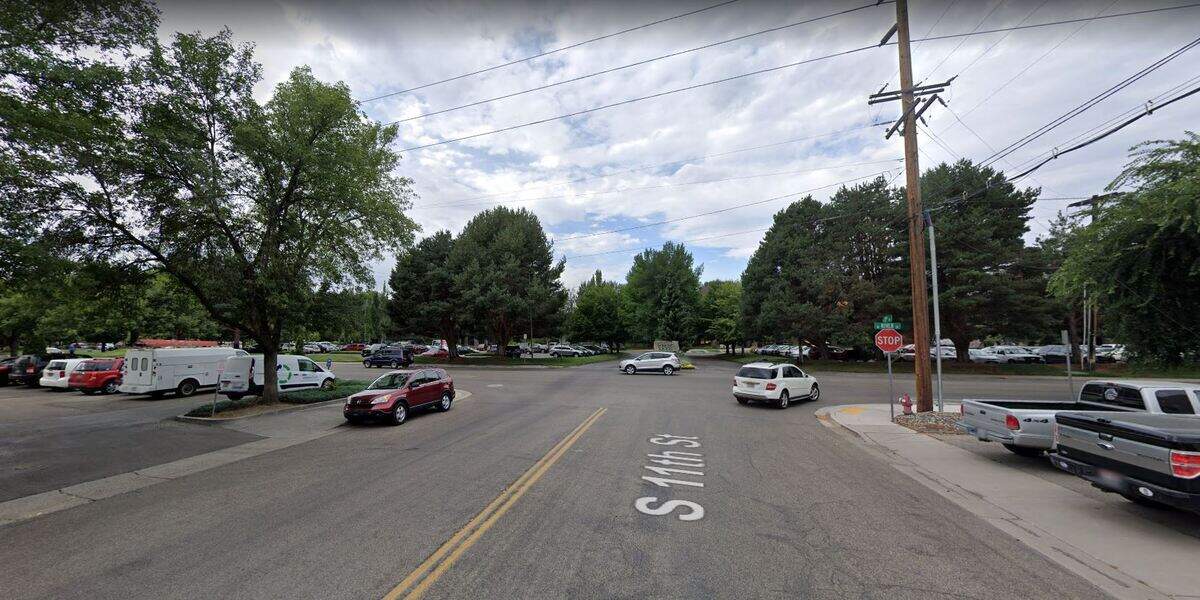
Eminent domain is the constitutionally authorized taking, with compensation, of private property by government for a public purpose. ACHD uses it to acquire land for roads.
ACHD proposed the entire bikeway several years ago. The district later dropped the southern section upon deciding that 11th Street downtown already had bike lanes that met ACHD standards. Boise officials then decided to improve the section themselves, to make it more attractive and friendlier to bicyclists.
CCDC’s segment is estimated to cost $3.2 million; ACHD’s segment $562,500.
CCDC did not include an extension south of River, because that area, which houses the Forest River Office Park, a complex of buildings lining the Greenbelt, was not in an urban renewal district at the time planning began. The City Council created one there in December 2018.
CCDC collects and spends a portion of the property tax revenue generated within an urban-renewal district to improve that district. The agency cannot spend money it collects from one urban renewal district in another, or anywhere else in the city.
A plan for the new urban-renewal district written in 2018 contemplated spending $315,000 to acquire right-of-way through the office park to extend the bikeway. That’s as far as the planning for the extension has gone.
Why bicyclists like raised bikeway
The raised bikeway that CCDC will build north of River Street is a type already used in Seattle, San Francisco and some other cities. Bicyclists like not having to share the street with vehicles. They like the better visibility they get from being 6 inches higher, and they like the ease in stopping at businesses.
A raised bikeway could be a problem for pedestrians, who may dislike sharing sidewalks with bicyclists. But planners say they can keep most users in their assigned lanes with trees, signs and other demarcations between the pedestrian walkway and the bikeway.
The other principal design option CCDC studied is called a protected bike lane, where a concrete separator is built between vehicle traffic lanes and the bike lane. The bike lane remains at street level. This kind of separator is used on Capitol Boulevard in front of Boise City Hall.
CCDC rejected that option partly because of bicyclists’ and business owners’ preference for raised bike lanes, and partly because the protected-lane design would have required removing parking on one side of 11th Street. Business owners said they did not want to sacrifice on-street parking spaces.
The raised bikeway requires eliminating street parking only at intersections — roughly 20% of all parking spaces, compared with 50% in the protected-lane design, CCDC says.
North End segment will be ‘low-stress bikeway’
North of State Street, ACHD is preparing to extend the bikeway right through the Boise High School campus and up to Heron Street, the edge of Camel’s Back Park.
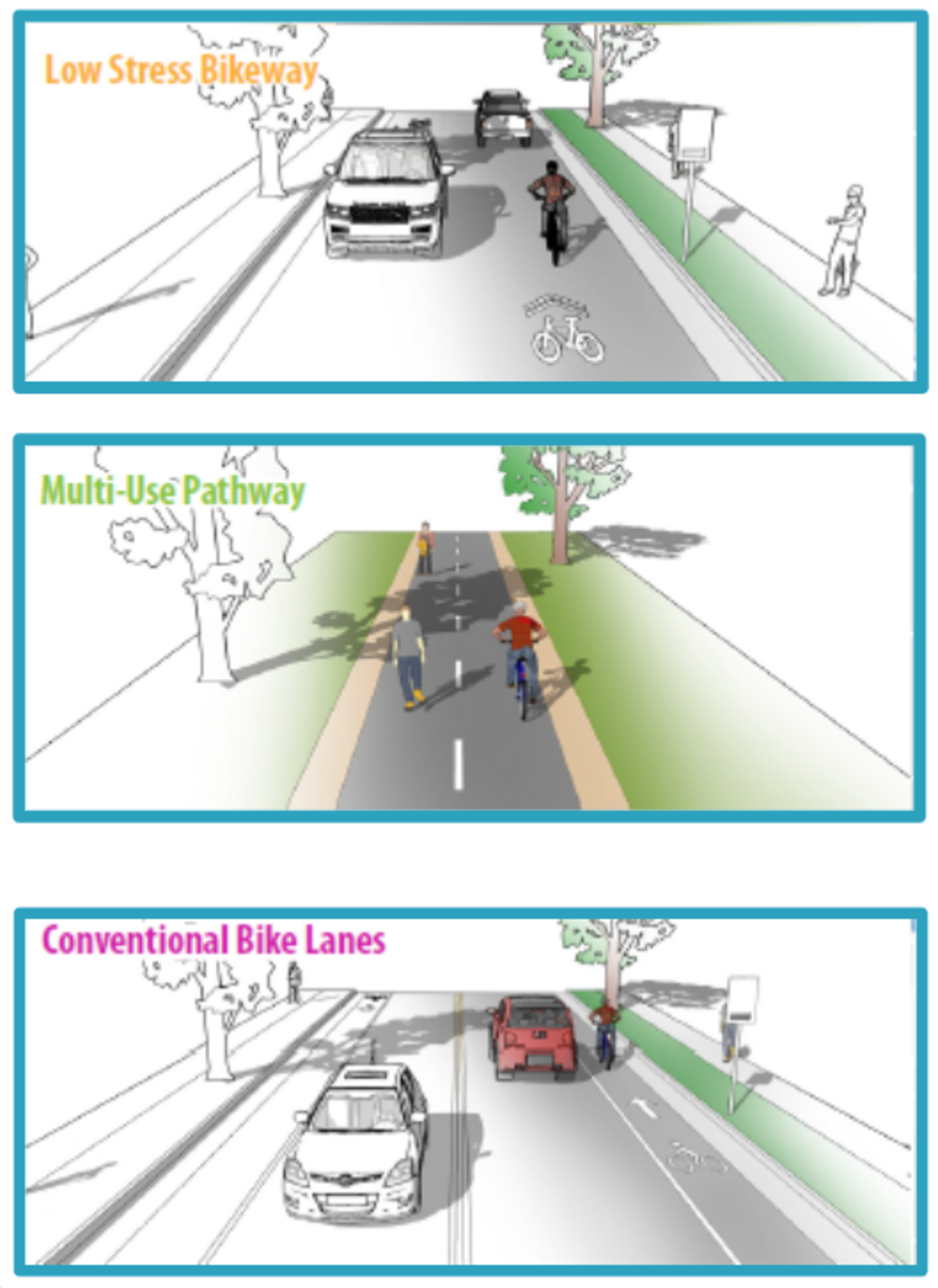
Eleventh Street now ends at the high school campus and resumes on the other side, one block away. The campus segment will be a block-long multiuse pathway.
North of that, 11th Street will be resurfaced and restriped as a “low-stress bikeway.” Cars and bikes will share the street, and sharrows, or street markings, will tell drivers and riders that. Homes line the street in this stretch.
At 11th Street’s south end, CCDC hopes to build that final connection to the Greenbelt itself someday.
“Adding the final connection between River Street and the Greenbelt is an improvement we hope to make a reality using funds that will eventually become available in the Shoreline District,” wrote Amy Fimbel, CCDC’s capital construction project manager, in an email. The Shoreline District is the new urban renewal district.
CCDC would have to talk to the Forest River Office Park’s owners, the RMH Co., about the extension.
“There is no existing public right-of-way connection between River Street and the Greenbelt for the bikeway,” Fimbel wrote. “Creating an easement or public right-of-way through negotiations with the private property owners would be the first step to make that happen, though those conversations have not happened yet.”
Until then, bikeway users can reach the Greenbelt by turning off 11th Street onto the Pioneer Pathway on the southwest corner of 11th and Myrtle streets. That pathway connects to the Greenbelt just south of the Payette Brewing Co.
Some bicyclists told planners they sometimes feel unsafe at the pathway’s connection at 11th and Myrtle. Myrtle is a five-lane, one-way street with heavy commuter traffic.
Bicyclists also can cut through Forest River’s parking lot, and then go over a curb and across a lawn to reach the Greenbelt, though some bikers have said this shortcut can be unsafe, too.
Ryan Head, ACHD’s supervisor of planning and programming, said the bikeway “is a great example of cooperation” by the two agencies.
“The system is working as it should,” he said.
This story was originally published November 15, 2020 at 5:00 AM.