Meridian reconsiders its growth. ‘We can’t keep doing what we’ve been doing,’ mayor says
For the last 30 years, Meridian’s growth exploded outward from its center, driven mostly by developers.
Now the city wants to take the reins.
As developers have proposed houses at the edge of city limits, Meridian has approved them, over and over again to the point where the city’s population is now 114,680 — 10 times larger than it was in 1990.
Each time Meridian agrees to a new development outside its current city limits, it agrees to install more miles of infrastructure to serve those houses. While developers cover some of these costs, Meridian, the Ada County Highway District and other jurisdictions become liable for maintaining the new services. Property taxes must be raised to pay for them.
The city budget is groaning under the weight.
“We can’t keep doing what we’ve been doing,” said Mayor Robert Simison said during a City Council meeting on Tuesday, March 3.
Population growth is inevitable. But where that new population goes is something the city can influence.
Infill is ‘No. 1 growth priority’
More and more, the same word keeps coming up in City Hall: infill.
“Our No. 1 growth priority should be within our boundaries,” Simison said in a phone interview with the Statesman. “In terms of infill: That’s where we can get the best value for our residents.”
Infill is also about developing close to existing transportation corridors, said first-term Councilwoman Liz Strader at the March 3 meeting.
“It will cost our taxpayers a lot more … to continue sprawling outward without getting that density in the core of the city first,” she said.
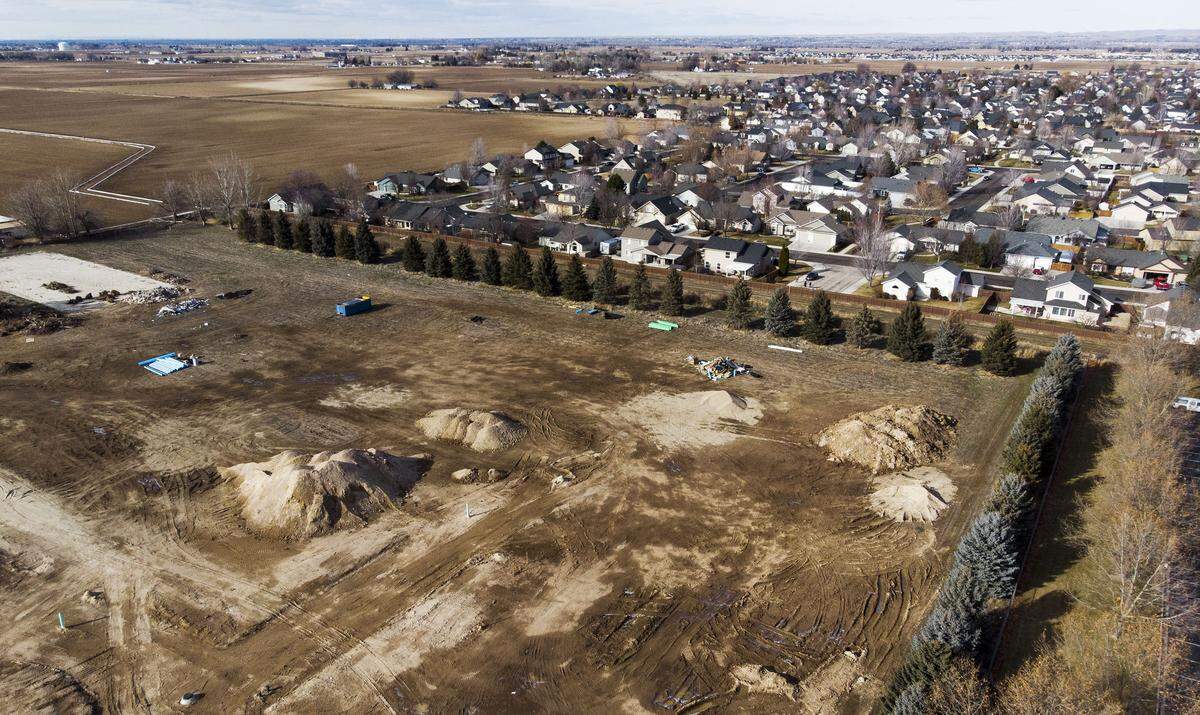
Meridian saves money by developing the parcels already next to existing roads, sewer lines and parks. That’s a realization that government agencies like Boise and Ada County have come to as they’ve grown larger.
Infill has been a goal in Boise at least since 2000. Boise especially has pushed in the last decade to grow inward to achieve the efficiencies cities require to better provide public services like fire, police and libraries.
Boise’s suburbs, including Meridian, usually have welcomed outward growth — in part out of concern that if they didn’t get the new houses and businesses, some neighboring city would instead.
But as Meridian has been planning for its long-term growth, culminating with the adoption of a new comprehensive plan this year, its leaders have reached the same conclusion Boise’s did years ago, and that Ada County’s have in the last two years: Growth must be rechanneled.
The realization comes amid a rising sentiment among Treasure Valley residents that property taxes have grown too high, too fast. Frustration with property taxes led House Majority Leader Mike Moyle, R-Star, to propose freezing property taxes across the board. (The bill died in the Senate last week.)
Paying for public services
Simison worries that if the Legislature does end up restricting the property tax dollars Meridian can collect, the city may not have enough money in its budget this year to build and staff two new fire stations in the city’s rapidly developing northwest and southeast.
Those fire stations are necessary to ensure that the city can respond to emergencies in those areas in under 5 minutes, the current average response time in already developed parts of the city.
“In a house fire, we have a certain amount of time to get a victim out ... and a certain amount of time until the fire can double in size,” Meridian Fire Chief Mark Niemeyer said during the meeting.
The fire department is also responsible for responding to medical emergencies, like heart attacks, which after 5 minutes are more likely to cause permanent brain damage or death.
With all Meridian residents taxed at the same rate, it wouldn’t be fair to provide different levels of service across the city, Niemeyer said.
Channeling growth in northwest, southeast
Simison urged the council to consider focusing growth in two areas where the city and developers are already investing in infrastructure.
The first is northwest Meridian, where the West Ada School District is building its new Owyhee High School at the intersection of Ustick and McDermott roads. As Councilman Treg Bernt put it, “When a school is built, you’re going to see houses. It’s just a given.”
Likewise, commercial development is headed that way. WinCo is building a new store at Chinden Boulevard and Linder Road. And just a few miles away, Costco is expanding Chinden Boulevard for three miles before it builds its new store at Chinden and Ten Mile Road.
“With Chinden being improved out to Highway 16, that makes the northwest area more viable to develop, because you don’t have to make the road infrastructure investments, as in other areas of our community,” Simison said.
The second is southeast Meridian, where north of Lake Hazel Road, much of the area is already hooked up to Meridian’s sewer system.
Strader advocated limiting growth to these areas, in addition to the existing undeveloped holes in Meridian’s Swiss-cheese city limits.
“I would not feel comfortable approving a project now that would require an entire new sewer shed ... because of the exorbitant cost at this time,” she said.
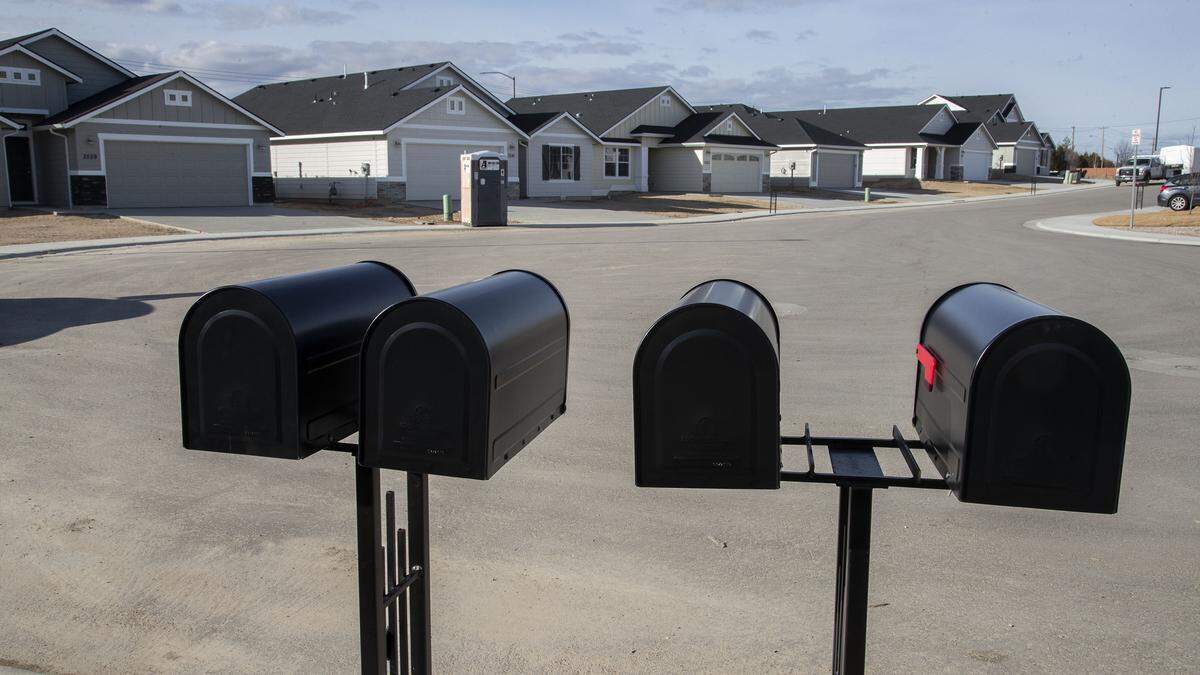
‘All of Meridian is a priority’
But in Meridian, a conservative city that places a value on property owner’s rights to develop, not all council members agree.
“I struggle to say: ‘This is the area where we are going to apply our services or create incentives to grow,’” said Councilman Luke Cavener. “All of Meridian is a priority to us.”
Simison said choosing to focus growth in certain areas would signal developers about where they’ll have better luck winning city approvals.
“We’re never going to tell someone no — everyone has the right to apply,” he said.
Creating incentives for growth
The city has a limited set of tools to push growth toward specific areas. Ultimately, a property owner within city limits has a right to build a project on the owner’s land that complies with the land’s designated zoning.
But Meridian could direct growth in other ways. The City Council could reject landowners’ requests to be annexed by the city in areas that are not a priority. The council could also require developers to wait to begin building until all the new fire stations, schools and roads meant to serve a new area are built — a policy that would first require the council to enact what’s called an adequate public facilities ordinance.
The city could also implement a tiered development impact fee system, Simison told the Statesman. These fees, paid by developers to the city to pay for infrastructure like parks, fire stations and police stations, are now paid at the same rate across the city. Boise, on the other hand, charges lower fees to infill developers, because their projects don’t require the city to build additional infrastructure.
Meridian could also build out sewer and water lines to the areas where it wants to see growth, which Simison said would show developers: “This is where we’re going to make it easier for growth to occur.”
The city did that in 2016, when it extended a city sewer main south past Victory Road, allowing property owners south of Amity Road to be annexed by the city. Public works experts at the time estimated a cost of $4 million to build 1.25 miles of sewer line to the area.
Another option Simison mentioned: creating more urban renewal districts in targeted growth areas. The districts can put money toward public infrastructure like sewer lines or sidewalks that developers would otherwise be required to pay for.
The council’s March 3 conversation was just the beginning, Simison said. He’ll also hold discussions with the school district and ACHD.
Strader said the conversation does not mean Meridian would stop growing, or that it was “closed for business.”
“It means that we’re going to have to grow very smart and make some difficult choices in terms of prioritization,” she said.