
‘A sacred mission’: At last, this Boise shelter is about ready to open its doors
AI-generated summary reviewed by our newsroom.
- Interfaith opens 42,000-square-foot State Street shelter after five-year legal fight.
- New facility offers 205 beds, 24/7 access, lockers and expanded programming.
- Interfaith raised $12 million to date, faces continued litigation as operations begin
More than 20 years ago, a man froze to death on the Boise streets, and religious leaders vowed that it would never happen again. They started to organize, setting up beds in their houses of worship. Ultimately, they founded the Interfaith Sanctuary, a nonprofit dedicated to sheltering the city’s unhoused.
For years, Interfaith shuttled bunks from church to church. Then, it found a 10,000-square-foot warehouse on River Street and christened the Interfaith Sanctuary Shelter. That’s been its home — until now.
Soon, Interfaith will start moving guests into a new, 42,000-square-foot center on State Street, pushing through a five-year legal fight and launching the group into a new phase of 24/7 programming for Boise residents with nowhere else to go. The shelter is waiting for the city to certify it fit for occupancy, Executive Director Jodi Peterson-Stigers told the Statesman; she’s optimistic the final approval will come in February.
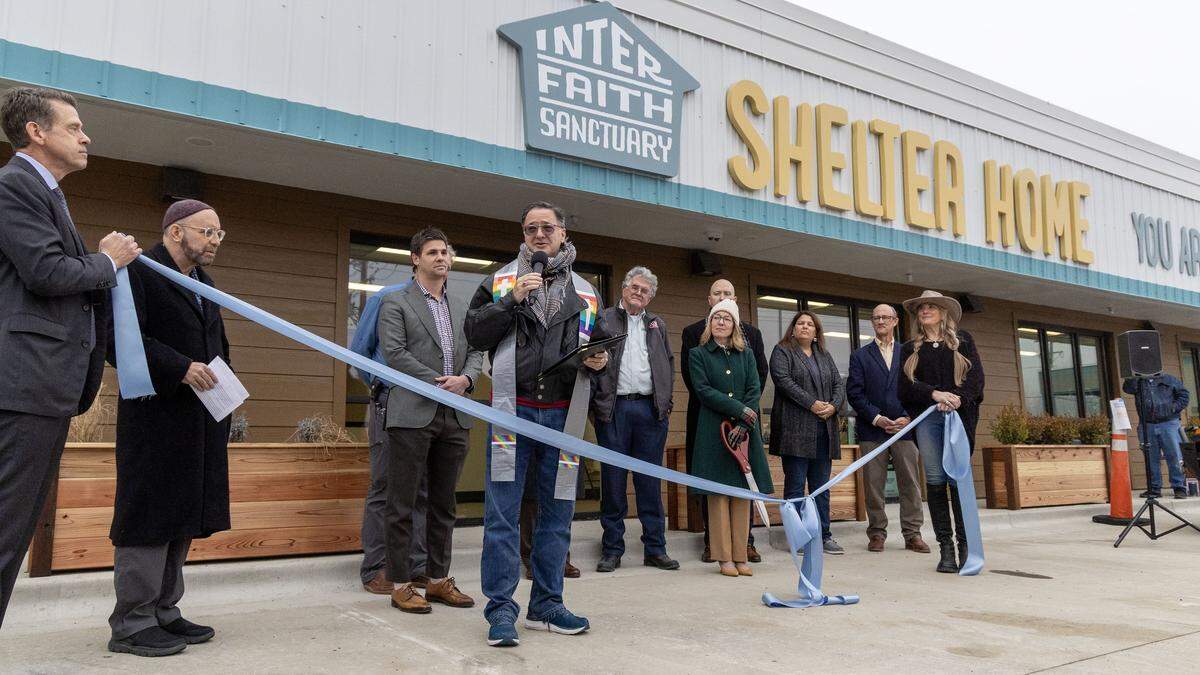
On Thursday Mayor Lauren McLean cut a slack blue ribbon outside the onetime Salvation Army structure at 4306 W. State St. amid an outpouring of support with a sobering undercurrent: that the real work — the “sacred mission,” Rabbi Dan Fink said — of caring for the Treasure Valley’s unhoused is about to start.
“The real miracle — the ongoing miracle — is the spirit of love, justice and compassion that will keep this project moving, and has kept it moving against long odds.”
Homeless shelter offers 24/7 support
COVID-19 laid bare the limitations of Interfaith’s building near the Interstate 184 Connector on west of downtown, according to Board President Andrew Scoggins. Early on in the pandemic, Scoggins and Peterson-Stigers toured “building after building” looking for new space, “and found out why each wouldn’t work,” he said.
They settled on the State Street structure and stumbled into a minefield of opposition, overruns and legal fights.
A one-year project became a five-year project, Scoggins said. And a $4 million build became a $15 million fundraising push. (Interfaith has raised $12 million so far, Peterson-Stigers said.)
“Not every packed room I’ve stood in has been as beautiful and smiling and supportive as you,” Scoggins joked Thursday before supporters in the shelter’s new common room. But, he said, “there’s no other choice. And when there’s no other choice, you can’t quit.”
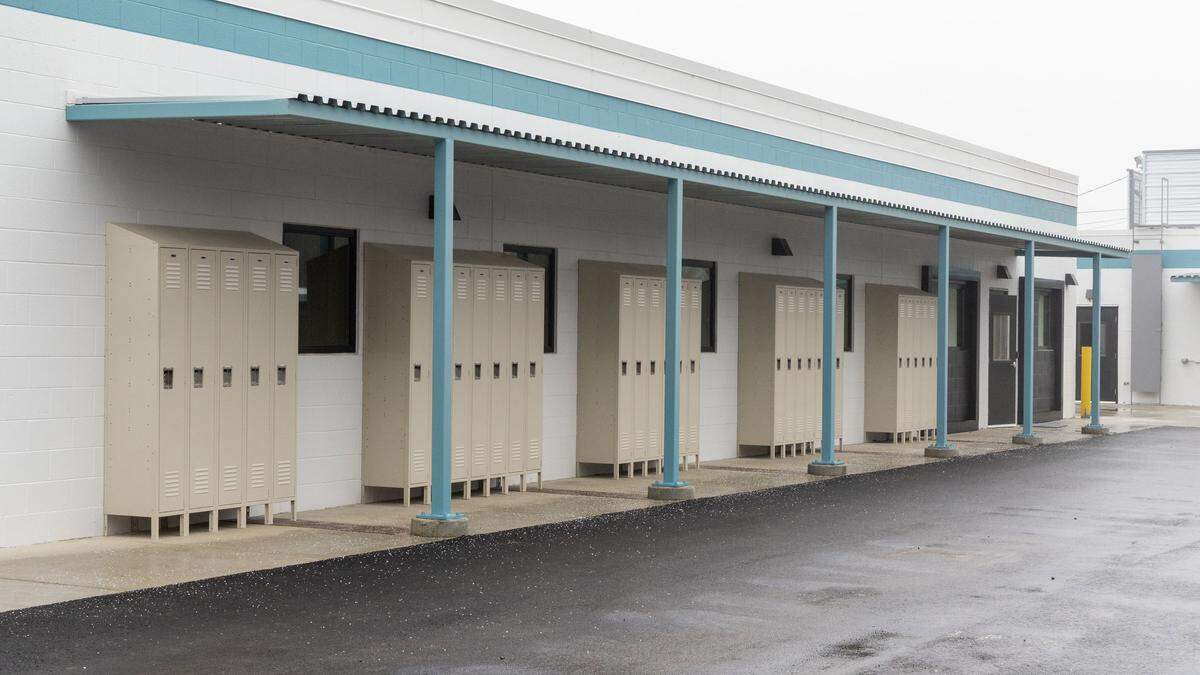
The new shelter features 205 beds with an emergency capacity of 236, Peterson-Stigers told the Statesman in December. Its main difference from the old warehouse isn’t the size of the building but its availability: Guests will be able to stay 24/7, rather than leaving every morning and lining up each evening for beds — a “life-saving game changer” for the unhoused, Peterson-Stigers said. Residents will now have a home base to go any time of day and can keep their belongings in lockers by their beds — two changes aimed at adding a sense of security during the stay. And Interfaith staff members plan to fill the time with additional programming.
“When people ask about programming — why it matters — it matters because they are full human people,” Peterson-Stigers said Thursday, “and they should not only be recognized for the one thing they have in common, and that’s that they just don’t have a home right now.”
‘A model for the entire nation’
Interfaith’s new design features separate wings with bunk rooms for single men, single women and families. Its 205 beds represent a huge chunk of Ada County’s emergency shelter capacity, which totaled 767 beds in 2025. On Jan. 19, 2025 — the date of Ada County’s most recent annual point-in-time homeless count — 772 people were found to be experiencing homelessness, 126 of whom were living outside.
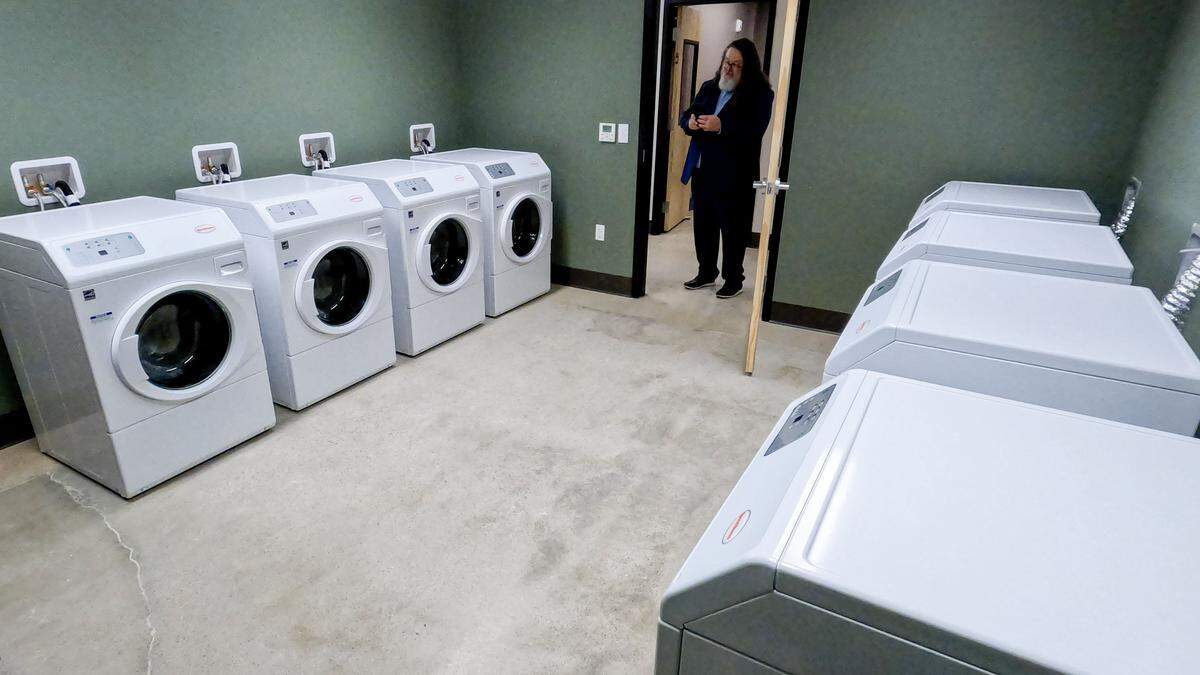
On Thursday, mattresses were wrapped in plastic atop new black bunks. Kitchen equipment near the adult dining room, which will replace a food truck and tent, was taped shut and tagged with manufacturers’ instructions. Offices needed to be set up. The family dorm, Peterson-Stigers said, was still a work in progress, excluded from the tour officials gave the news media. A volunteer had run to a hardware store to buy a welcome mat ahead of the ribbon cutting.
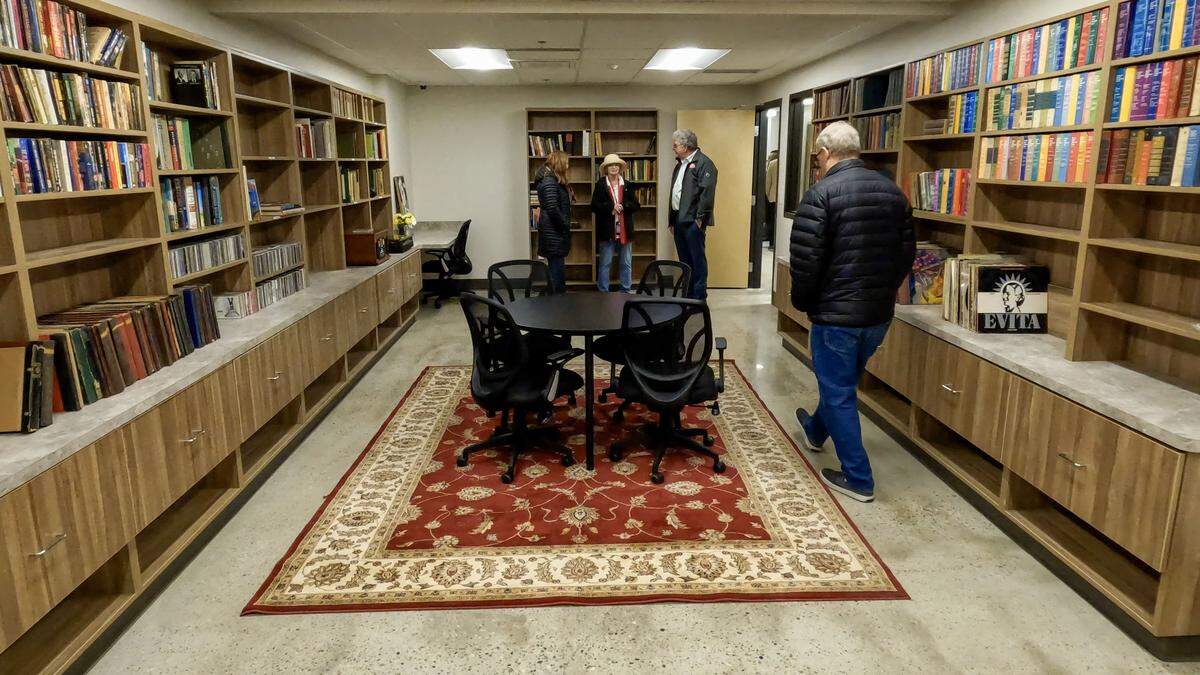
But there were books and records in the new library, where a new speaker pipped faint, reedy jazz out the door and down the freshly painted halls. Inside, a poster advertised an upcoming book club. Come by Saturdays to discuss “To Kill a Mockingbird.” Music appreciation club to follow.
“We’ve all been lost at some point,” said Duane Anders, senior pastor at the Cathedral of the Rockies, a Methodist church downtown. “We need a community to celebrate us when we’ve been found.”
There’s work ahead. There is furniture to assemble, rooms to set up and money to raise. But for those who have seen the place evolve, it’s starting to feel like a home. More than that, Scoggins said, it’s starting to look like “a model for an entire nation.”
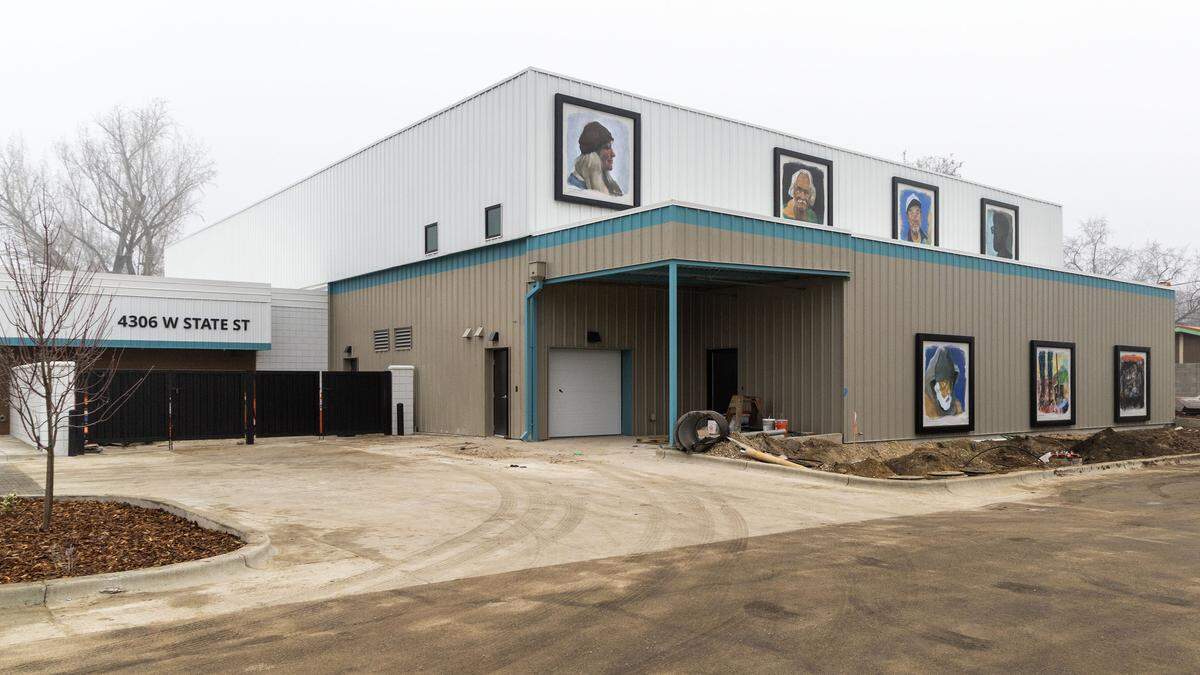
Brady Ellis, executive vice president of the Idaho Housing and Finance Association, was there through the “roadblocks and distractions” that Interfaith has powered through. His organization, a quasi-governmental arm of the state, helped secure funding for the shelter.
“They need you,” he told attendees on Thursday. “They need your support, your acceptance, and your continued contributions.”
“Throughout the state and beyond,” he added, “this is not something that exists elsewhere.”
Legal challenge ongoing
Interfaith’s move comes amid a new challenge by the Veterans Park Neighborhood Association, which has petitioned a court to overturn the city of Boise’s approval for a second time to halt the shelter.
But Interfaith Sanctuary Executive Director Jodi Peterson-Stigers said the pending litigation doesn’t invalidate the shelter’s permit to operate, which was unanimously approved by Boise’s Planning and Zoning Commission in July and confirmed on appeal by the Boise City Council in a 5-1 vote in September.
The move will bring an end to operations at Interfaith’s longtime base on West River Street. It will also vacate rooms the shelter rents from the nearby Red Lion Downtowner hotel, which it used to house an additional 60 people, primarily families and the infirm. Those staying at the hotel now will move into rooms at the new State Street building.
“I’m hopeful that as we move in, some of the [neighbors’] fears won’t be realized,” Peterson-Stigers told the Statesman in December, “and we can have a different conversation.”
Now, she believes local opinion has started to turn. In the run-up to the ribbon cutting, Peterson-Stigers has led 200 neighbors on tours through the shelter. For many, she said, the experience was “transformative.”
“This is the best and most beautiful shelter home in the world,” she said, “and it’s because so many people leaned in to make it that way.”
This story was originally published January 15, 2026 at 6:09 PM.