Meridian tees up property tax increase as growth cools, costs heat up
Meridian’s years of explosive growth may be in the rearview — or so said the city’s chief financial officer in a recent annual budget meeting.
New construction revenue, which in 2020 bolstered the Boise suburb to the tune of $2.6 million, is now projected to bring in less than half that, Meridian CFO Todd Lavoie told city leaders gathered at City Hall on June 22.
The latest projection, at $1.2 million, is nothing to balk at, according to Lavoie.
“I think any agency in the state of Idaho would love those growth numbers,” he said. “We’re still very healthy on a growth standpoint.”
But it’s going to require a mindset shift, when it comes to how much the city can rely on new growth to pay for rising costs and expenses, he said. The city “got used to some pretty big numbers, you know, five, six, seven years ago,” he noted.
“I think those days are behind us.”
Unveiling this year’s initial draft budget, Lavoie warned that state-imposed property tax restraints, sagging revenues and increasing costs of maintaining a more than 600-person staff presented real challenges for the city’s financial position and goals.
The proposed budget clocked in at roughly $152 million and included requests to collect the maximum 3% property tax increase allowable under state law — and claw back an additional 1% in forgone property taxes, or taxes the city was allowed to collect but opted not to in previous years.
That’s even as the budget proposal is $97 million leaner than last year’s, with large capital expenses like the new community center and Can Ada sewer lift station having cycled out, Lavoie explained.
Overall, the changes would kick Meridian’s property tax levy rate up from 0.00198 to 0.00199, according to the city’s budget plan. That’s an increase of roughly $1 per $100,000 of taxable property value. The city’s general fund would total $116 million, of which $62 million would come from property taxes.
Mayor: Property tax hike to keep up services, growing costs
For Mayor Robert Simison, the request to collect roughly $530,000 in forgone taxes is a way to maintain services in Idaho’s second-largest city and have employee pay keep pace with inflation. Services and employees marked his two top priorities for the 2027 budget, he told the Idaho Statesman.
“Across the board ... we’re experiencing an increase in all of our contracts, all of our costs,” Simison said by phone.
He pointed to challenges like declining revenue from new construction as well as liquor revenue, which dropped roughly 9% from fiscal year 2026, and franchise fees, which dropped nearly 17%. In all, city revenue declined by nearly $6.3 million this year, the draft budget shows.
And thanks to a 2021 state law capping how much cities and counties can increase their budgets and collect in property taxes from new growth, the city has missed out on roughly $2 million a year, Simison estimated.
At this point, the full 3% property-tax increase allowable under the law doesn’t even cover the city’s base operational budget — employees’ healthcare, cost-of-living wage increases and a rank-based compensation system.
“You have to find another way to try to stay focused on your priorities,” Simison said.
This year, taking forgone taxes is Simison’s proposed way.
“My own personal place is we’re just making up what our Legislature has taken away from us,” he said in the June 22 meeting. “Until they change the law, I think ... we should try to make up at least what we’ve lost.”
.jpg "unnamed (4).jpg")
Council considers budget for new prosecution office, parking
Simison said his third priority was implementing the public-safety levy that voters passed in November 2025. That levy is anticipated to generate $5 million through an increase for taxpayers of roughly $20.11 per $100,000 of taxable property value annually.
Simison said Meridian residents are expected to see that increase on their next tax bill, and the money generated would hit the city budget at the start of the fiscal year on Oct. 1. About $2.1 million raised would be used to raise police wages and would be reflected in officers’ paychecks by the end of October, according to city spokesperson Trevor Smith.
An additional $500,000 would go toward establishing an in-house prosecution office to handle infractions and misdemeanor cases now contracted out to the city of Boise. But while the proposed budget included a request for $1.5 million to hire a 10-person prosecution team, City Council members debated at the budget meeting whether to pump the brakes.
“I think we’re all aligned on the destination of where we want to get to,” said council member Liz Strader. “I think this might be one of those areas where we want to come back a little more to the ‘save before we spend’ philosophy.”
“Maybe by taking a little bit more time ... we could do this in a way that at least to me just would feel more fiscally responsible,” she said.
The City Council suggested revising the request down to two new employees, using funds from the levy, as a starting point. That would mean the city would sign another roughly $850,000 contract with Boise for prosecution services for the next year.
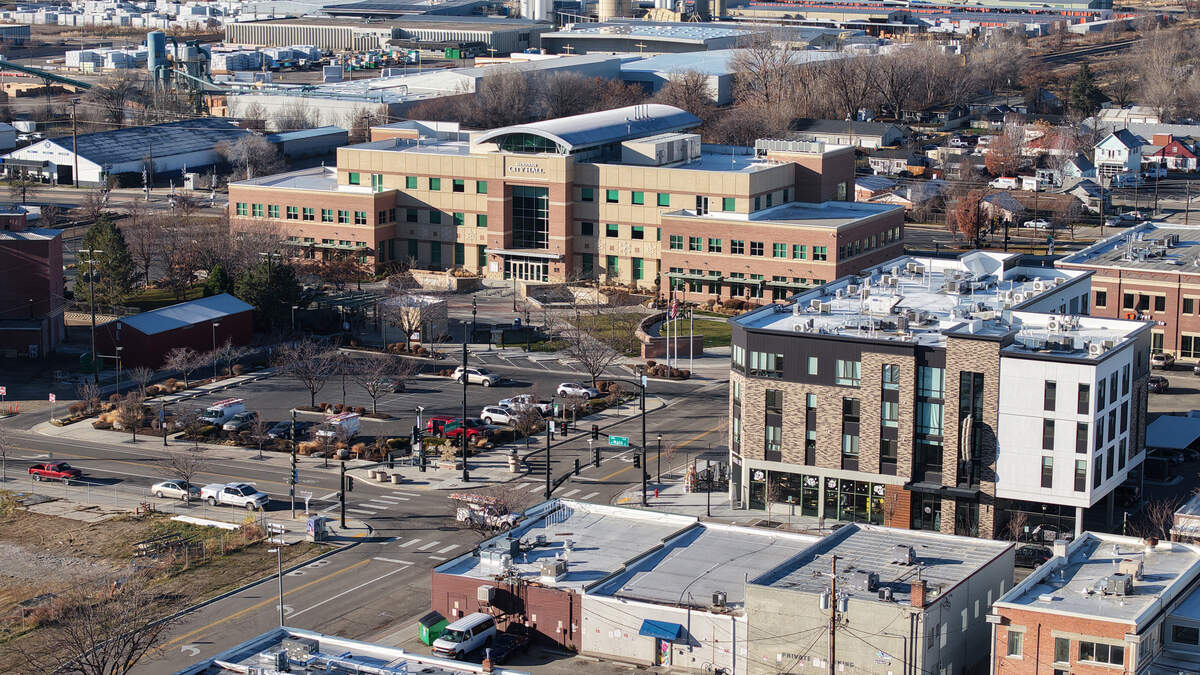
The budget proposal also included $7 million for the construction of a downtown parking garage in partnership with a “local development company,” according to the draft plan. Representatives for The Pacific Cos. and Ahlquist development told the Statesman in April that they hoped to complete two parking garages with up to 350 spaces on the site of the stalled Union 93 project across from City Hall, and had been in communication with city leaders.
Simison said during the meeting that he hoped including the money in the budget would signal the city’s commitment toward the project and developers. Council members appeared supportive.
Meridian officials to talk budget again in July
In a phone interview with the Statesman, Lavoie noted that the proposed levy rate would be need to be revised for the next budget meeting, in light of changes to the request for the prosecution office.
The council is expected to meet on July 21 to determine what proposed budget and forgone request to advance to the public for consideration. The council would then hold a public hearing at City Hall in August, then vote on the final budget in September.