Tight budgets, dropping enrollment — how will Boise area schools respond?
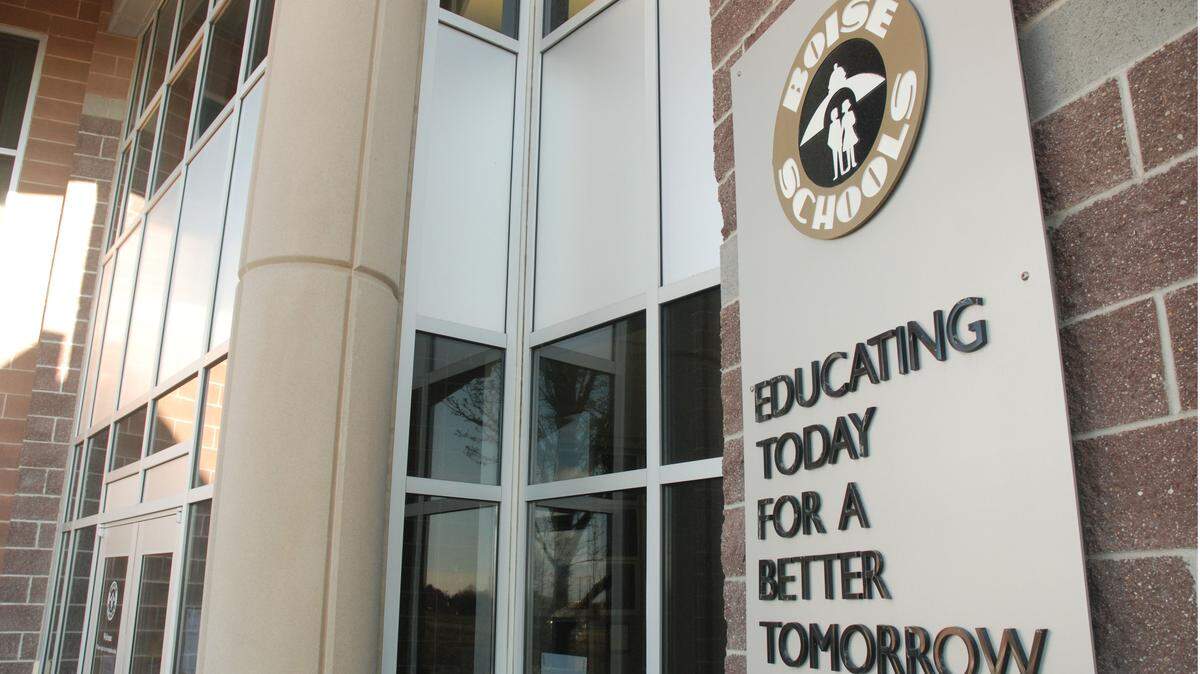
Idaho’s two largest school districts projected dropping enrollment as they approved their budgets for next school year.
During this year’s legislative session, lawmakers made statewide cuts to try to balance the budget and prepare for a projected deficit, but they sought not to make explicit cuts to K-12 schools. Still, due to inflation and other rising costs, school districts are having to make some changes.
“The Legislature has talked a lot about how they held K-12 harmless,” Nick Smith, the Boise School District’s deputy superintendent, said during a board meeting last month. “That’s not entirely true. But in addition to being held harmless, we do have increased costs.”
The Legislature allocates funding to school districts largely based on average daily attendance. When school districts see a drop in attendance, that means they receive less funding. Both Boise and West Ada have seen their enrollment decline in recent years, and both districts are expecting another year with fewer students. Boise district officials, in part, attributed this to lower birth rates and high housing costs.
The Idaho Legislature for years has considered revamping its school funding formula, but none of its previous efforts have come to fruition. State Superintendent Debbie Critchfield is holding listening sessions across the state this month to gather information to modernize the state’s funding formula. In recent years, Critchfield has said one of her priorities is to rewrite the state’s funding formula to more closely align funding with student needs.
“The education model and what we provide in schools has morphed over time and the funding formula for staffing doesn’t necessarily reflect the needs of today,” Smith said last month.
During a board meeting this month, Boise School District Chief Financial Officer Sheila Kessel said the district built its budget on “maintaining student services, while making thoughtful reductions where possible.” The district is also increasing its spending on special education, a response to a growing number of students receiving special education services despite dropping enrollment overall.
The West Ada School District said funding for next fiscal year will be similar to this year’s funding, but it too is expecting a slight drop in enrollment.
Boise to increase special education classrooms
The Boise School District is expecting to have about 650 fewer students next school year, district officials said. Over the next several years, the district is predicting its enrollment will continue to drop below 20,000 students from where it stands now at about 22,000.
The district is also dealing with increased costs for medical insurance and utility costs. Smith said the district expects to see a nearly 10% increase in health insurance premiums totaling about $3.4 million from the general fund, a 12% increase in water costs and a 4% increase in gas costs.
“Flat discretionary funding from the state means that you have to find that money from somewhere else,” Smith said during a board meeting
Most of the district’s general fund budget goes to salaries and benefits. The district will see reductions in capital outlay, travel, professional services and other operational areas to help balance the budget “with the least impact possible on classroom instruction and student programs,” Kessel said. The district will see a decrease in spending from the general fund on salaries, due to position cuts and retiree savings. In an email earlier this month, the district said several district-level positions were eliminated, and staff adjustments were made to align with enrollment. These include in-house legal counsel and a district-level learning coach, along with secondary and elementary teachers and school-level learning coaches.
“Despite budget challenges, the district continues to prioritize competitive compensation and the retention of quality educated staff, which aligns with the district’s strategic plan,” she told the board.
The district doesn’t plan to increase property taxes this coming school year, according to the budget documents.
On the other hand, the Boise School District has seen a jump in the number of students who need special education services. The district plans to add three special education teachers for new “self-contained” classrooms, three special education teachers and 10 new classroom paraprofessionals.
The district’s priorities include sustaining full-day kindergarten in all elementary schools, providing free breakfast for all students, enhancing mental health training and resources for students and staff, expanding career technical education and opening new pre-K centers.
West Ada projects enrollment drop, ups superintendent salary
In West Ada, the district has been seeing drops in kindergarten enrollment for the past several years, and is projecting this year will be no different. But the district normally gains students throughout the year, including students coming into the district from charter schools or homeschooling, Chief Financial Officer Dave Roberts said during a board meeting.
The district said it projects its enrollment will drop by just over 200 students next school year from about 37,966 students to 37,733 students.
The district will see a drop in salary and benefits as a result of attrition.
During a board meeting this month, Trustee Rene Ozuna asked whether the district expects to see any “major additions or deletions” to any of its programs this coming year.
“We do not,” Roberts said. “The natural attrition of less students means less classes necessary at all different levels, so there will be some natural attrition of teaching and support staff, but we do that every year whether we increase or decrease, but nothing major.”
This month, the district approved a new three-year contract with Superintendent Derek Bub for a yearly salary of $250,822, an increase of about $20,000. He will receive $20,000 increases each year. In a memo, the school board said it had recently conducted a national search for an administrative position and had learned that its salaries are not competitive with comparable school districts across the country. As part of its effort to improve that, the memo said, the board was taking steps to up its superintendent salary to fall more in line with national levels.
“While West Ada has long been recognized for operating efficiently with per-pupil expenditures well below national averages and an administrator-to-teacher ratio significantly lower than similarly sized districts, we also understand that attracting and retaining exceptional talent requires compensation that reflects the scope and expectations of the position,” the memo said. “The best way to serve our students, employees, and community is to ensure West Ada remains Idaho’s premier school district. Aligning the Superintendent’s contract more closely with national norms reflects our commitment to sustaining that excellence.”
The Nampa School District will hold its budget hearing Tuesday night.