The Boise area’s most expensive homes are getting even more costly. Why?
Perhaps you’ve noticed more and more McMansions in Eagle, wedged behind golf courses or perched in the Boise Foothills.
Much of that is thanks to a frenzy of luxury home building that accompanied the COVID-19 pandemic. The market later slowed, though real estate agents are still seeing a surge of interest from out-of-staters with deep pockets — especially as the spring homebuying season heats up.
But interested buyers, or Idahoans who have dreams of someday owning a McMansion of their own, might need to dig deeper in their pockets going forward.
According to data from the Intermountain Multiple Listing Service and compiled by The Agency, an international real estate brokerage, home prices at the top of the market are not only getting more expensive, their prices are rising at a faster rate than median home prices are.
In Ada County, the median price of homes sold in the top 10% of price points increased from $649,000 in 2019 to $1.2 million in 2025, a nearly 85% increase, according to listing-service data. The median overall home price increased from $345,000 in 2019 to $540,000 in 2025, a 56.5% increase.
The price escalation here has set a national record. According to a Realtor.com analysis in February, the prices of luxury-home listings — defined as those priced at or above the 90th percentile — in Boise have grown 150% since 2017, blowing past the rate of growth seen in the rest of the country’s 100 largest metro areas.
“The surging luxury market in Boise has been fueled not by splashy celebrity sales, but rather by low-profile, deep-pocketed buyers seeking a quiet refuge, stunning natural beauty, and refined living out of the limelight,” Realtor.com wrote.
According to Jan Roeser, an economist with the Idaho Department of Labor, most of the state’s growth over the last decade has been from people moving from other states, rather than from births. In 2024, migration from other states made up 80% of the state’s growth, including from California where the median income is nearly $22,000 higher than in Idaho.
“We have a spectacular place to live and raise a family, and that is the draw,” Jared Sherburne of Eagle-based luxury builder Sherburne-Marrs said by phone.
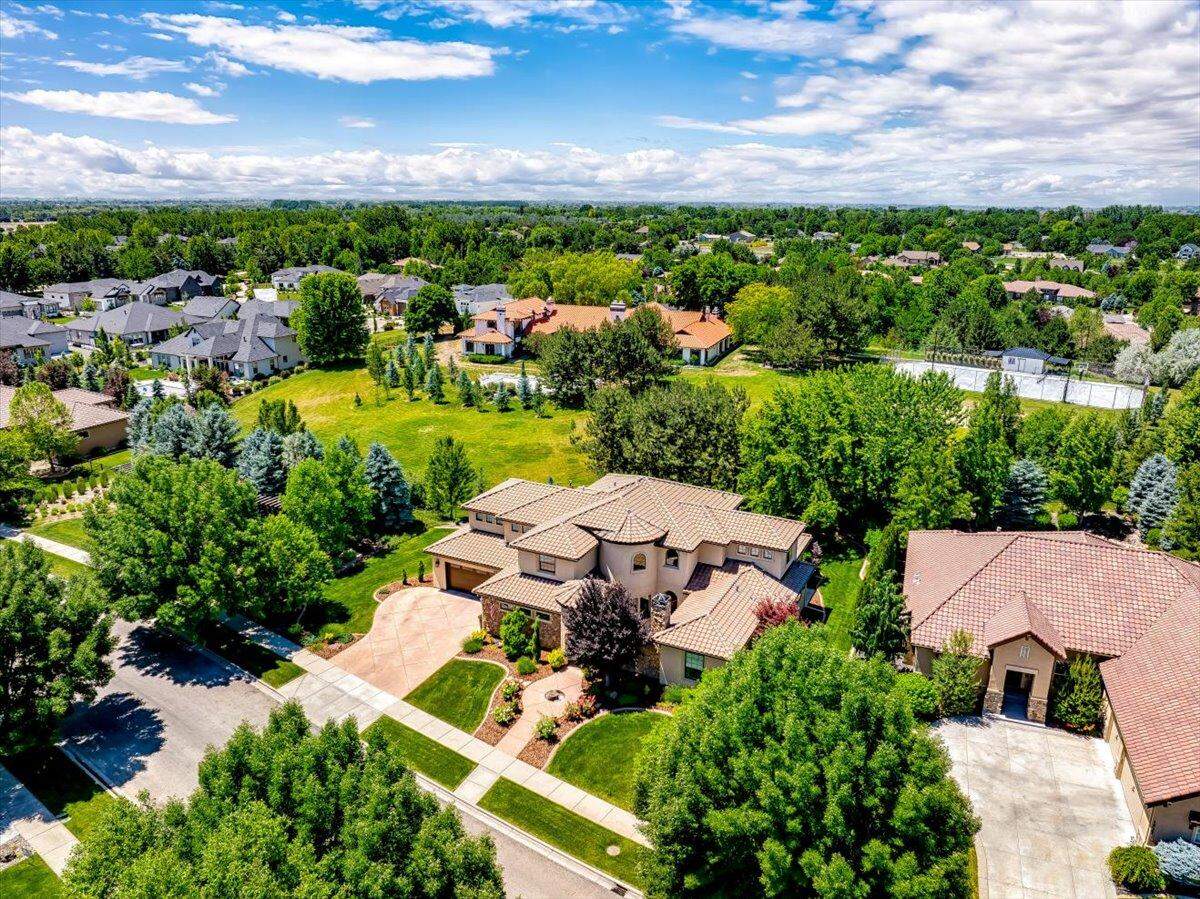
Sherburne estimated that 85% to 90% of his clients are from out of state. He said he’d had clients from California express interest specifically in Eagle when considering a move to Idaho.
Eagle has had several seven-figure house listings recently, including a $1.7 million home and a $6 million ranch-style home listed by the Agency, said Cassie Zimmerman, the firm’s marketing accounts manager.
Eagle is marching upward in its percentage of high-end homes compared with other Ada County cities, according to Intermountain Multiple Listing Service data.
Home buyers eye uniqueness in Idaho
Sherburne said Eagle still has a small-town feel, good schools, a quietness that can be hard to find in sprawling urban metro areas, and properties along the Boise River.
East Boise is also a draw, Sherburne said, and can almost act like a separate market from the rest of Boise. Luxury homes there often take advantage of views from the Boise Foothills. This includes Sherburne-Marr’s Boulder Point subdivision on Warm Springs Mesa, where the company is building custom homes often highlighting and building around the natural boulders of the area.
Available Sherburne-Marr homes at Boulder Point cost $2.3 million to $4.4 million, according to the company’s website. The company also has two $2.7 million homes in Eagle’s Terra View subdivision and a $1.75 million estate in Eagle.
Sherburne said his clients want something tailored to their personalities that can act as a sanctuary and provide a place to entertain guests.
“A lot of our clients want to design and build something that is unique and specifically theirs,” he said.
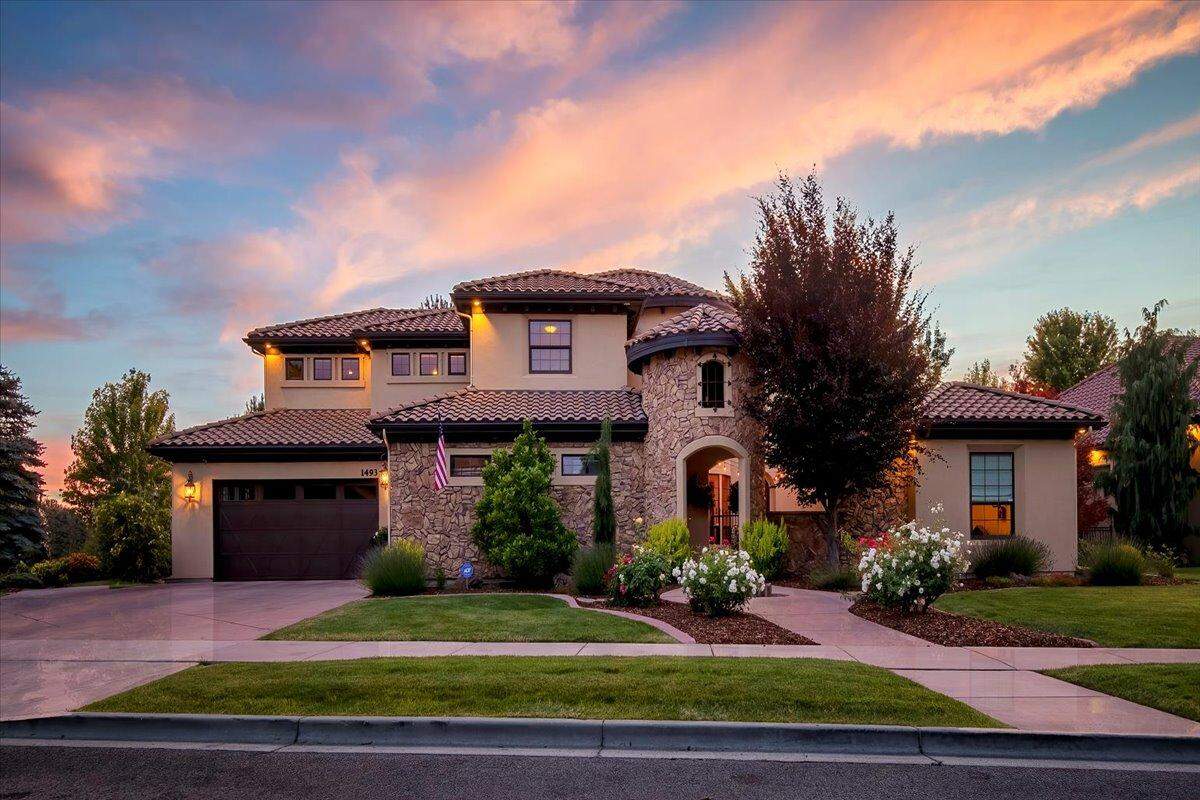
That adds cost to homebuilding. So does the cost of building in the Foothills on uneven terrain, which requires more engineering. Plus, the area sits in the city’s wildland urban interface area, where homes have extra requirements for fires.
Still, the risk of fire or other natural disasters in the Boise area may be lower than in some areas that people are moving from such as California, Sherburne said.
“We do expect some folks to relocate here just because of the natural disasters,” Sherburne said. “I think some folks are going to say: ‘Well, maybe it’s time.’”
Changing Idaho, changing real estate
Markets are shifting, too, Sherburne said.
“The last couple of years have been a little odd market-wise,” Sherburne said. “From about mid-2020 to 2022 we were drinking from a fire hose… It was the busiest I’ve ever been in my career.”
The luxury market softened in 2023 and 2024, he said. Over the last several months, there has been another uptick as the region approached the spring homebuying season.
But the picture of the future is still murky amid economic uncertainty. Sherburne said he doesn’t know how President Donald Trump’s tariffs could affect the market, though he expects costs will continue to rise anyway as labor and materials keep going up.
The American homebuilding industry relies heavily on global materials, including softwood lumber from Canada and gypsum from Mexico, according to the National Association of Home Builders. The United States imports 85% of its softwood lumber from Canada and 70% of its gypsum, which is used in drywall, from Mexico.
“We don’t have a crystal ball, we don’t know what’s going to happen,” Sherburne said. “We do know that it’s going to affect the cost of items.”