Want to buy one of Boise’s iconic historic buildings downtown? Now’s your chance
If you’ve wandered down Capitol Boulevard sometime in the past 123 years, you’ve likely noticed the historic Adelmann Building, with its orange turret standing watch over the intersection of Capitol Boulevard and Idaho Street.
The two-story building has been a Boise icon since 1902, when German miner and Civil War veteran Richard Adelmann built it on the intersection’s northeast corner, according to the Idaho Architecture Project. The building is across Idaho from Boise City Hall and catty-corner to the Chase Bank building and JD’s Bodega.
But the building’s storied history could soon face a new future. Colliers, an international commercial real estate firm with an office in Boise, recently listed the “irreplaceable generational asset” for sale for a cool $4.6 million.
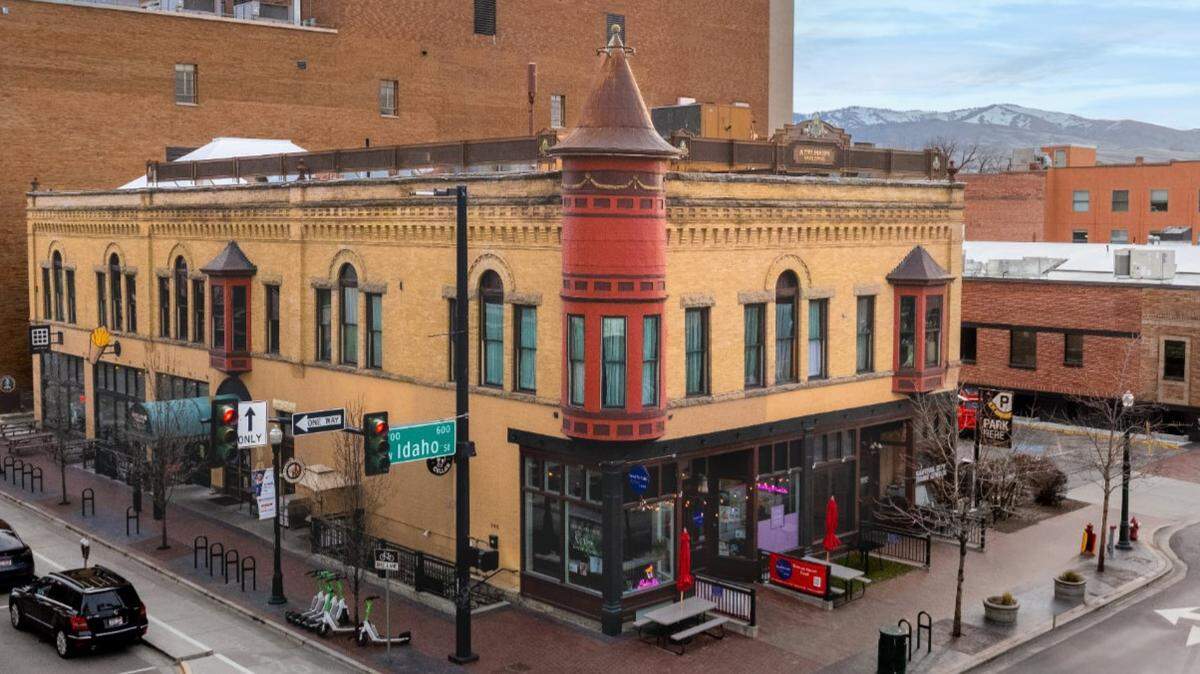
Colliers listed it as an investment property, with a net operating income of nearly $234,000 and over 16,000 square feet of rentable space. The building is 100% occupied and has “huge upside with below market rents,” according to a property flier.
According to the flier, market rents in the area are $30 or more per square foot, which is over double the $14.69 per square foot the Adelmann is charging. That gives a future buyer the “opportunity to increase rents over time and remain well below other property rental rates,” according to the flier.
The price also comes with a historic liquor license that would stay with the building, which Colliers said was valued at $170,000, according to the flier. Some 27,000 vehicles pass the building every day.
“The Adelmann Building is a rare, generational investment opportunity in the heart of downtown Boise,” according to the flier. “This high-traffic location serves as a gateway to Boise’s vibrant downtown, surrounded by historic landmarks, boutique shops, renowned restaurants and key cultural destinations.”
Dozens of businesses have called the building home over the years, including Starbucks, Fong’s Tea Garden, Cafe de Paris and Cool Hand Luke’s Steak House, according to the Idaho Architecture Project. Newer businesses have since taken over, including Boise Fry Co., Seoul St. Cafe, Voodoo Cellar, Press and Pony, and Liga, a sports bar.
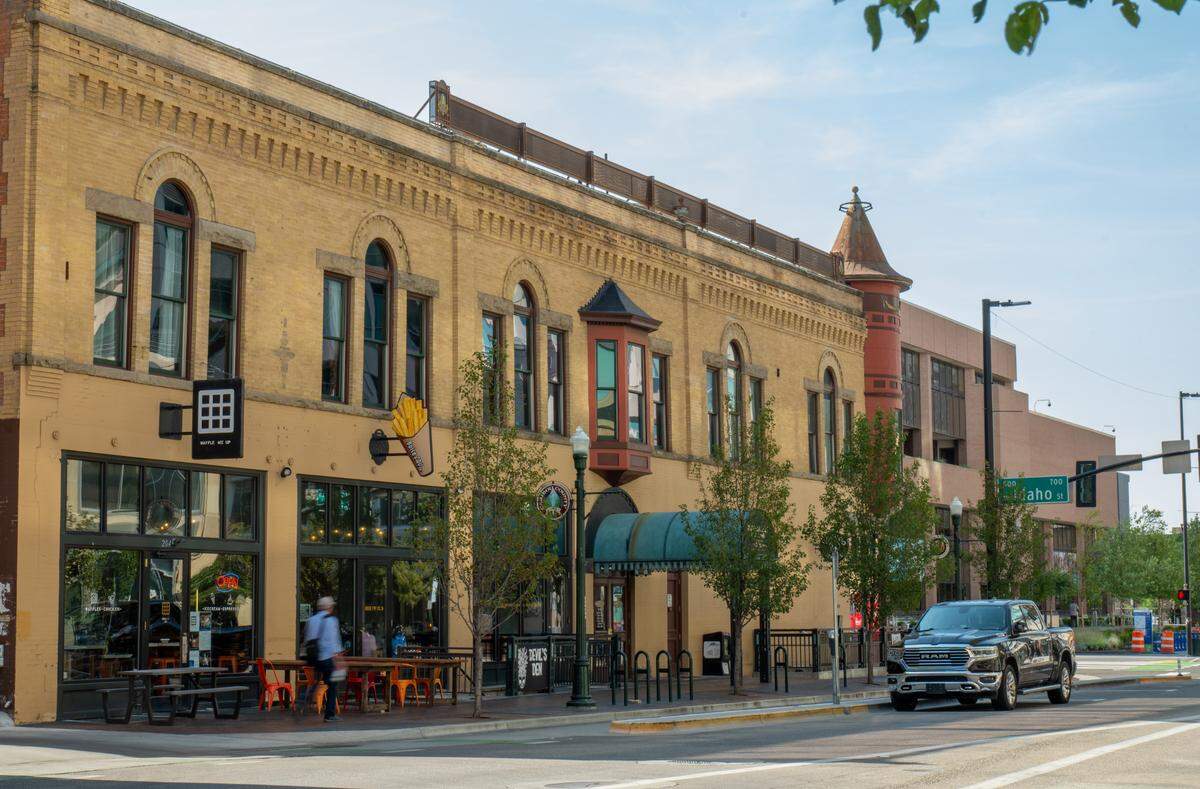
Capital City Event Center hosts events in two ballrooms on the second floor, including recently hosting DJs and musicians for Treefort Music Festival.
A historic piece of Boise
Adelmann fought in the Civil War battles of Antietam and Gettysburg, Idaho Statesman reporter Anna Webb wrote in the Statesman’s 2013 book, “150 Boise Icons,” which celebrated the 150th year of the city founded in 1863.
“He moved to Boise in 1872 and opened a saloon on Main Street,” Webb wrote. “Adelman was a member of the city’s volunteer fire department and staked a mining claim near Idaho City. In 1875, Adelmann married Emma Ostner, daughter of artist Charles Ostner, who carved the statue of George Washington at the Capitol.”
According to the Idaho Architecture Project:
- The building, designed by Boise architects Campbell and Wayland, blends Romanesque and German influences. The Roman-like influence can be seen in the arched windows, while German influences can be seen in the stepped brick pattern and sandstone trim.
- It also saw Chinese influence inspired by the building’s Chinese tenants, namely Fong’s Tea Garden which covered the turret in Chinese characters in the 1950s. The characters were removed in the 1990s amid “huge controversy.”
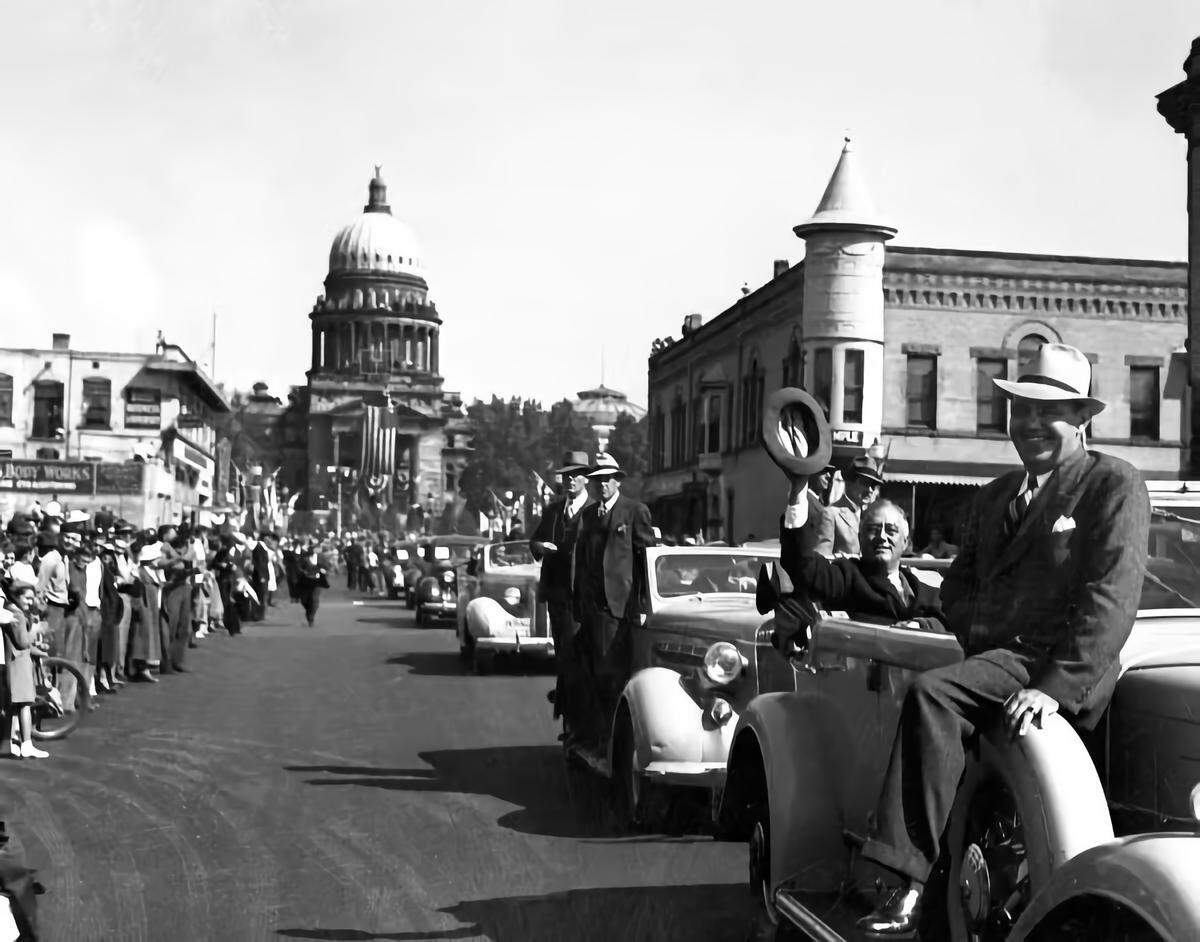
- “The people who were removing the characters believed that they were restoring the building to its original structure.”
- “Those who opposed the removal of the characters believed that the characters had become a major part of the building’s history and thought that it was deprecating to remove a piece of the building’s history.”
- “Through its different occupants and unique architecture, the Adelmann Building has become a colorful downtown location.”
An international sign painting company painted a Stearn’s Motor Car Co. mural on its southeastern brick facade in 2000. The mural was based on an old advertisement for an automobile repair shop owned by Adelmann after he’d arrived in Boise from New York City in 1872 after serving in the Union Army, according to a 2010 publication from the city of Boise’s Planning and Development Services Department and Preservation Idaho.
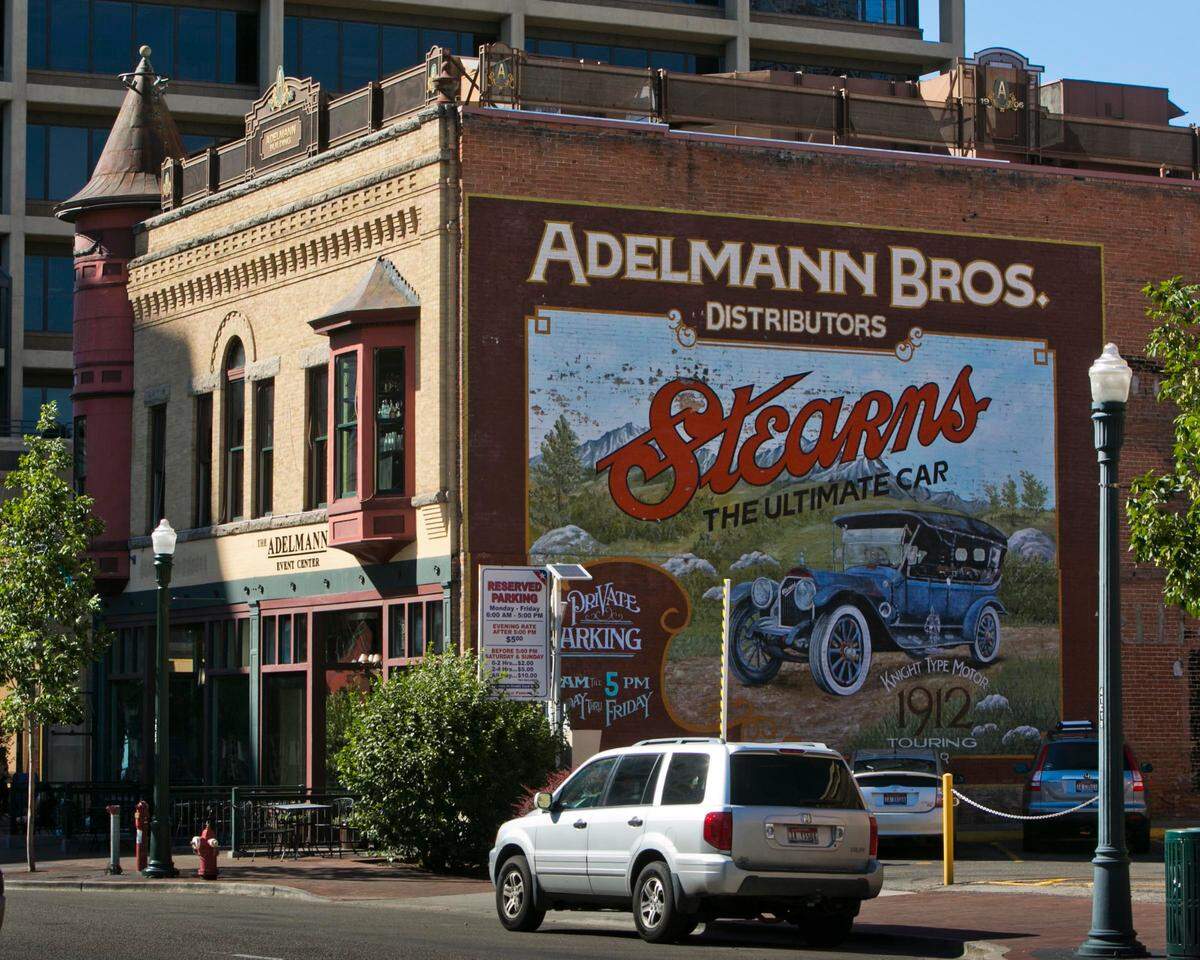
Adelmann made his fortune in a mining company, the repair shop and Acme Plumbing and Heating Co., according to the publication. Another German immigrant, Fred Wills, joined Adelmann’s business ventures and helped construct the building, originally called the Wills-Adelmann Building.
A flurry of now-iconic buildings went up downtown between 1900 and 1905, including:
The Rocky Mountain Bell Telephone Co. building (now the Amsterdam Lounge).
The Idanha Hotel (now apartments).
The Union Block building (which has been closed since November 2023 over structural concerns).
The Gem and Noble Blocks (next to the Avery Hotel).
The Central Fire Station (home of the Melting Pot restaurant).
The Old Federal Building (home of a U.S. Post Office).
St. John’s Cathedral.
This story was originally published April 2, 2025 at 4:00 AM.