There’s still no actual plan for Boise sports stadium — and may never be. Here’s why
Mounting evidence suggests that the proposed baseball and soccer stadium may not be built, at least not in Boise, and especially if City Council President Lauren McLean defeats Mayor David Bieter in next month’s runoff election.
Developer Chris Schoen, of Atlanta’s Greenstone Properties, wants to build a $50 million, 5,000-or-more seat stadium that would be accompanied by private residential and commercial development. Together, the projects could spruce up a neglected area just west of downtown, create a modern urban vibe there and generate new tax revenues.
But Schoen, who proposed the Boise Sports Park in February 2017, has had one obstacle after another thrown in his path this year, most recently by voters in the Nov. 5 election. Nearly three years since he proposed the stadium, all he has to show for it is a bar.
Schoen (pronounced shane) and business partner Jeff Eiseman bought the Boise Hawks minor-league baseball team in January 2015 through a company they control, Agon Sports and Entertainment. Schoen and Eiseman say a new stadium would give players a better place to play than the aging Memorial Stadium and fans a better fan experience.
Their stadium ambitions include soccer: Last January, Agon acquired a professional soccer franchise whose team members could play at the stadium. Concerts and other events could be held there, too.
Schoen wants to use the stadium as a springboard to the larger development. More people would come to games and events at the stadium, and residents, stores and dining and entertainment businesses would follow, he told the Idaho Statesman in April 2017.
“All of a sudden, when you’ve got that many people coming, retail can survive, that amenity base that surrounds that ballpark can survive,” he said then. “If you’ve got that amenity base, then all of a sudden people want to live there.”
He has built similar stadiums in Indiana and Georgia.
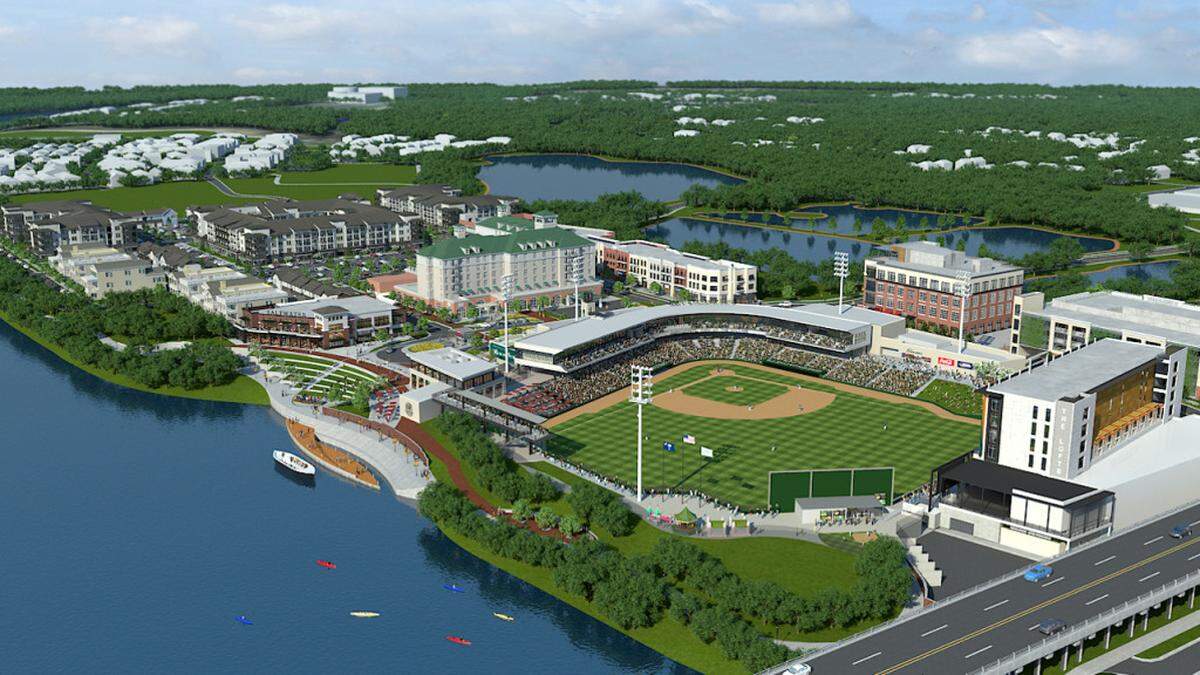
But his idea has stumbled despite enthusiastic support from Bieter.
Schoen’s first site fell through. The 11-acre site, including 4 acres for the stadium, was at Americana Boulevard and Shoreline Drive on the grounds of a long-closed, 1960s-era Kmart store. Until 2018, the store building had been occupied for years by St. Luke’s Health System.
The site drew vocal opposition from neighbors. So in July 2018, with Bieter’s help, Greenstone abandoned plans to buy the Kmart/St. Luke’s site and pursue a 6-acre cluster of vacant parcels about half a mile northwest. In November 2018, it bought an option on the property, an agreement giving Greenstone the right to buy it before a certain date — in this case, Jan. 1, 2020.
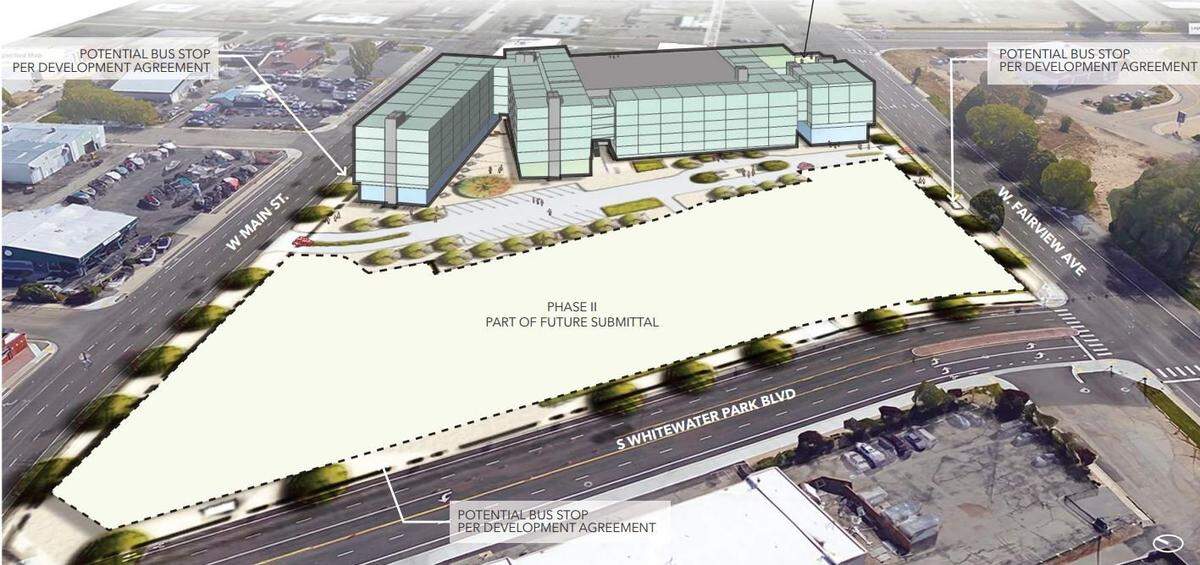
The new site has drawn little if any neighborhood opposition. It is bordered by Main Street on the north, Fairview Avenue on the south, Whitewater Park Boulevard on the west and 27th Street on the east.
With the economy growing, downtown thriving and the Whitewater Park area to the north exploding in popularity, the site is ripe for the kind of dense, urban residential and retail/restaurant development that Schoen, other developers and business leaders, and Bieter say could turn the neighborhood into a vibrant place to live.
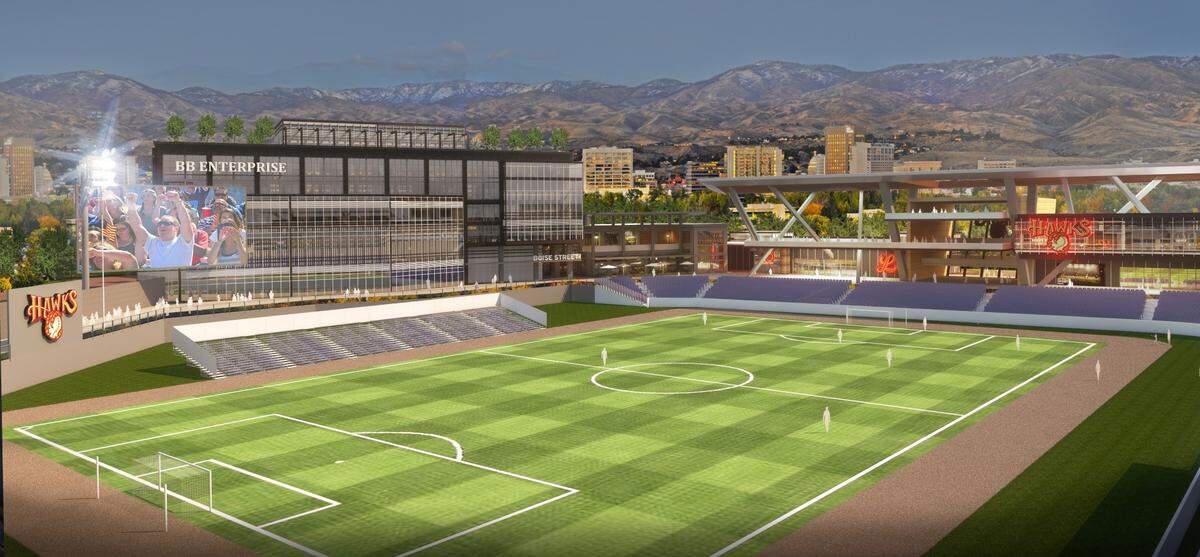
One year since Schoen bought the purchase option, he has yet to buy the site. It is as bare as ever, and no plan has been offered for its development.
Problems that have emerged since Schoen bought the purchase option include:
1. The state clamped down. Schoen hoped that Boise’s urban renewal agency, the Capital City Development Corp., would borrow money by selling bonds to pay for most of the stadium’s construction cost. But in April, Gov. Brad Little signed into law a bill imposing new restrictions on the use of property-tax revenue in urban renewal districts.
The law requires a citywide election if the cost of a municipal building or a major remodel exceeds $1 million and is funded by at least 51% nonfederal public money that includes any amount, even $1, of property tax money from an urban renewal district.
The new law made the CCDC borrowing option much more difficult.
2. Boise State said no. In June, Boise State University said it would build its own baseball stadium rather than be a tenant in Greenstone’s. Boise State would have paid up to $360,000 annually for 25 years to share the stadium. Schoen was hoping for that stream of revenue.
3. Bieter’s protection is now threatened. Boise voters forced the four-term mayor into a runoff against McLean, who garnered 50 percent more votes than Bieter on Election Day. McLean has said she welcomes the developer’s interest in Boise but says there are higher priorities for city dollars, notably affordable housing and transportation.
“We’ve heard about the stadium for 16 years,” she said at a Nov. 12 debate with Bieter before the City Club of Boise. “The needs of the city have changed drastically.”
While the City Council has yet to see an official stadium proposal, it set aside $3 million last year as the city’s share. McLean agreed to that budget line item but said then that the money should not be spent without a hearing on the proposal.
In the debate, she called the stadium a “legacy project” for Bieter — an assertion he angrily denied. “That’s what you were implying — that I want a building with my name on it,” he said.
4. Voters clamped down too. Boise voters on Nov. 5 enacted an ordinance requiring a citywide election on any sports stadium that would cost more than $5 million in public and/or private money. The stadium’s most recent cost estimate is 10 times that much. Voters also enacted a similar ordinance requiring an election for the proposed new main library.
Greenstone could challenge the stadium ordinance in court. Bieter and some City Council members have questioned its constitutionality.
5. Schoen is not buying adjacent parcels. The land on which Schoen holds the option is smaller than the Americana/Shoreline site. It’s big enough for the stadium itself, and perhaps some commercial/residential development, but Greenstone had expressed interest in acquiring more land for development to help the project succeed.
Several neighboring properties are available for new development, but Schoen and his representatives have bought only one: the site of the Symposion bar, on a fraction of an acre south of Fairview Avenue that backs up to the Interstate 184 Connector.
A second property owner, Meridian resident Maryann Fivecoat, turned down an offer for her 1.1 acres at 27th and Fairview where a U.S. Bank branch closed this year. Fivecoat says she plans to sell to someone else. The property is assessed at $610,400, and Fivecoat says Greenstone’s offer was too low.
(Fivecoat, who is 85, said in a phone interview: “Why do we need another big library, and why do we need a stadium? The older people can’t pay their taxes. I’d hate to see old people get homeless.”)
A third property owner, Idaho Power, says conversations with Greenstone have not led to an offer. The utility has a shop in a former car-repair building on nearly an acre on the west side of Whitewater Park Boulevard.
A fourth owner, Lesley Andrus, of Hailey, who owns two parcels with a building formerly occupied by a Midas automotive-service center and now occupied by a vacation-van rental business, said no one has approached her about her nearly 1-acre site.
Boise businessman Daniel Yanke, of the family that owns the Yanke Machine Shop in southeast Boise, owns three parcels on Fairview’s south side that Greenstone could develop. Statesman attempts to reach him for comment were unsuccessful.
The red peg marks the proposed stadium site. Several developable properties, some with existing older buildings, adjoin it or are across streets to the west, south and east.
6. The option to buy will soon expire. The owner of the stadium land says Greenstone has had almost no communication with him about its purchase option, which expires Jan. 1, six weeks from now.
That owner is Los Angeles apartment developer Casey Lynch. Lynch is CEO and founder of LocalConstruct, recently renamed Roundhouse, which built The Fowler apartments at 401 S. 5th St. and the Watercooler apartments at 1401 W. Idaho St., and helped renovate downtown’s historic Owyhee Hotel into an apartment building.
Schoen isn’t saying whether he will exercise the option or let it expire. He did not respond to a Statesman email and phone message requesting an interview. Neither did Eiseman. Greenstone’s local lawyer, Geoffrey Wardle, sent an email saying: “We do not have anything to share at this time regarding the Boise Sports Park.”
7. Greenstone has not lined up financing. Schoen’s plans hinge on arranging for other people, including taxpayers, to chip in to cover the cost of construction.
“No financial institution is going to lend us $50 million to finance this,” Eiseman said in June on “Idaho Sports Talk with Caves and Prater” on Boise radio station KTIK “The Ticket.”
Local-government bond sales are key. Greenstone hoped CCDC, the urban renewal agency, would use its authority to sell bonds to raise much of the $50 million cost. Schoen proposed to put up $1 million and donate the land. The city would contribute $3 million (the money the City Council appropriated last year), and the Greater Boise Auditorium District $5 million or more.
The CCDC bonds would be paid back over time by the tax revenue from the new multifamily and business development — estimated by Eiseman in June at $150 million to $200 million — plus more than $1 million a year in stadium lease fees. Eventually, the city would own the stadium.
With the state’s new urban-renewal restrictions, Schoen has turned his eyes to the Greater Boise Auditorium District, or GBAD (pronounced gee-bad), to sell the bonds. The district, like CCDC, has the authority to sell them. It also has authority to build and operate a stadium.
Bieter likes the GBAD option, because the auditorium district’s money comes from out-of-towners, not city residents. GBAD assesses a 5% room-tax fee on hotels within its boundaries, which reach beyond Boise into parts of Meridian, Eagle and unincorporated Ada County. Plus, GBAD is sitting on more than $16 million that it can spend however its elected board decides.
“If there is going to be a tax, it’s a room tax, from the auditorium district,” Bieter said Nov. 12 at the City Club debate. “That is the bulk of any public money that’s going to go into the stadium. ...
“Playing ball is a great thing. People love to come out and support a team. ... We need that kind of thing, and a place to go to concerts.”
Wardle, Greenstone’s lawyer, met with GBAD’s board in August. Schoen met with the board’s executive committee early this fall, said Patrick Rice, GBAD’s executive director.
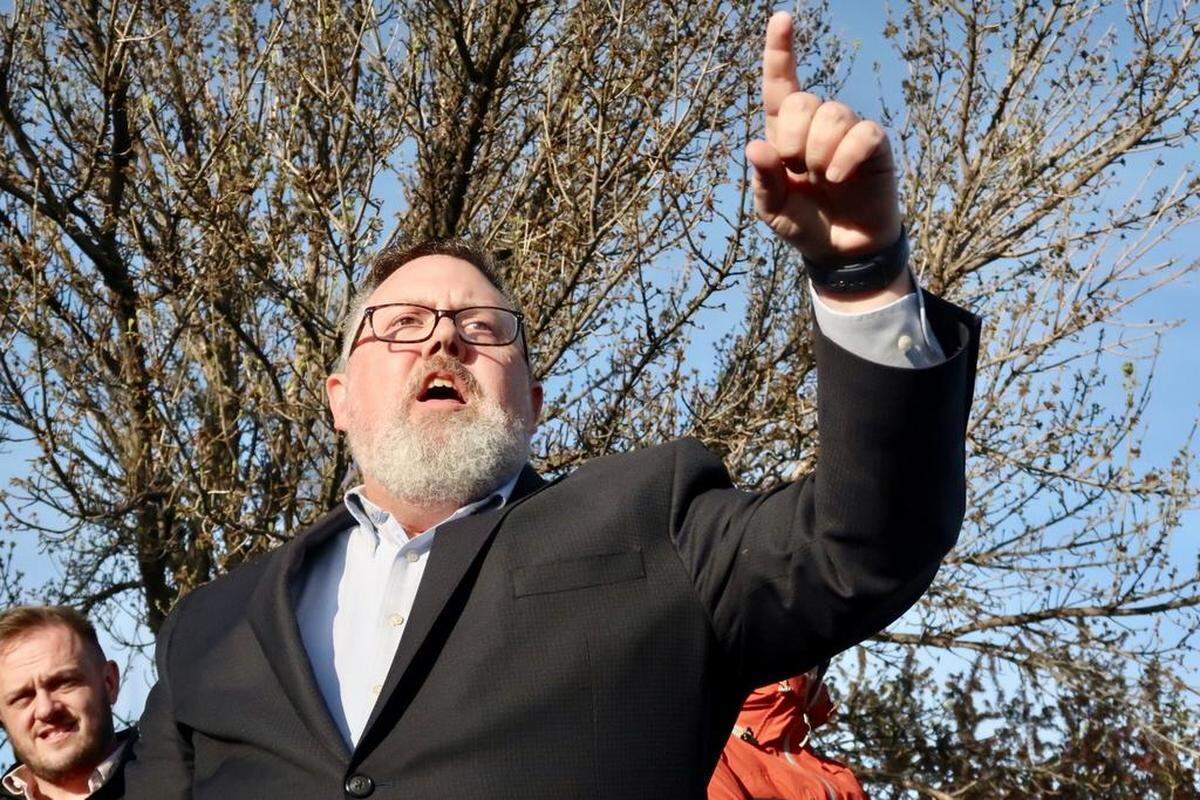
Rice said the two sides have discussed GBAD’s legal authority and procedures, including that GBAD would not be legally required to own the stadium but would be required to operate and maintain any stadium it builds.
“We haven’t been asked to play a role yet,” Rice said by phone. “We’ve never been formally asked for anything.”
Meanwhile, the City Council is sitting on the $3 million it appropriated more than a year ago for the city’s contribution. That unspent money has been rolled over from last fiscal year into the current one.
McLean declined to say if she would try to rescind that appropriation if elected mayor. “When we reviewed that line item in the budget, I said that I didn’t want it spent without a full hearing on a proposal,” she said by email.
What comes next?
1. Schoen could stick with his current plan. If Bieter wins Dec. 3, Schoen still would have enough time to exercise the purchase option if he thinks the stadium’s chances remain strong enough.
The soccer team’s existence depends upon the stadium’s completion.
He could then get serious about making a proposal to GBAD for bonding. He might bet that a good turnout from soccer fans could help ensure a victory in a citywide election, or that a lawsuit would succeed in making an election unnecessary.
If McLean wins, Schoen could let the option lapse. He could shelve the proposal or take it elsewhere.
Eiseman told the Statesman before the November election that the owners remain committed to the stadium project. But the lack of property purchases and financing, and Schoen’s silence, may indicate trouble.
2. Schoen could try the CWI site. It seems unlikely but possible that Greenstone could pursue the College of Western Idaho’s 10-acre campus on the northwest corner of Main Street and Whitewater Park Boulevard, kittycornered from the site for which Greenstone holds the soon-to-expire option.
That site, which once housed the former Bob Rice Ford dealership, adjoins the Greenbelt along the Boise River. The current stadium site does not border the Greenbelt and would need other properties to link to it.
CWI has been unsuccessful in persuading Canyon County voters to support a bond sale to build a Boise campus there, so the site has sat vacant since the dealership buildings were torn down six years ago.
Asked about that, Mark Browning, CWI’s vice president of college relations, said by email, “We are not currently having any talks related to a stadium ... We have not been approached by anyone with any formal proposal.”
The GBAD funding opportunity would still exist there. But so would the restrictions set by the new state law and the voter-enacted election ordinance.
3. Schoen could go outside Boise. Schoen may seek a warmer welcome beyond Boise. This may be his most promising option.
He could try to persuade Ada County and Garden City to let him redevelop the county’s property in Garden City that houses Memorial Stadium, Expo Idaho, the Western Idaho Fair and the out-of-business Les Bois horse-racing track. That land has been eyed for possible urban development for more than a decade, and this week the Ada County Commission decided to establish a citizens committee to examine its future.
If the citizens’ committee thinks the Hawks should stay put, “new changes to the land might really incentivize them to stay where they’re at long term,” county Commissioner Kendra Kenyon said by phone.
Garden City Mayor John Evans favors the site’s development.
“The city has been interested in exploring a higher and better use for the Expo Idaho site, as it sits vacant most of the time in a prime location,” Evans said by phone. “My perspective would be that if a commercial development was included with a sports complex that the county commissioners might consider, the city would love to take a look at it.”
Garden City is within GBAD, too.
Lynch: We’re ready to develop
If Schoen lets his option to buy Lynch’s land lapse, Lynch says he will immediately resume preparations Roundhouse was making before last year to develop the site itself.
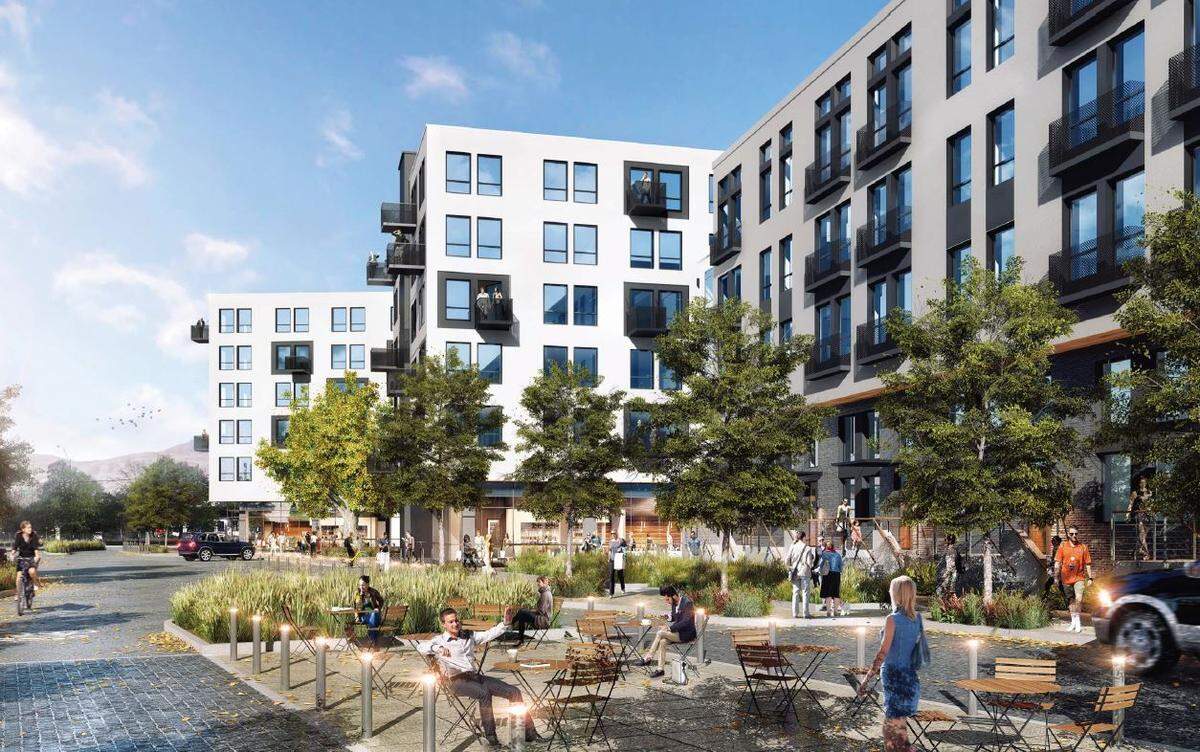
Lynch signed a development agreement, a legally binding contract, with Bieter in March 2016 on behalf of the company he set up to develop the site, The Whitewater Project LLC. The city and Whitewater amended that agreement last year to enable the purchase option for Greenstone. But if the option lapses, the agreement still requires Whitewater to build.
The agreement requires at least 50 residential units, including at least 10 for people earning less than 80% of the area’s median income. Lynch said Whitewater probably would build 200 to 300 apartments, plus retail spaces.
“If the stadium does not move forward,” Lynch said by phone, “we have every intention to immediately restart our mixed-use development plan, a phased project with housing, retail and potentially other uses.”
Statesman reporter Hayley Harding contributed.
This story was originally published November 20, 2019 at 3:34 PM.