
Idaho redistricting commission keeps Treasure Valley’s congressional district divided
The Idaho redistricting commission missed an opportunity to create a Treasure Valley congressional district.
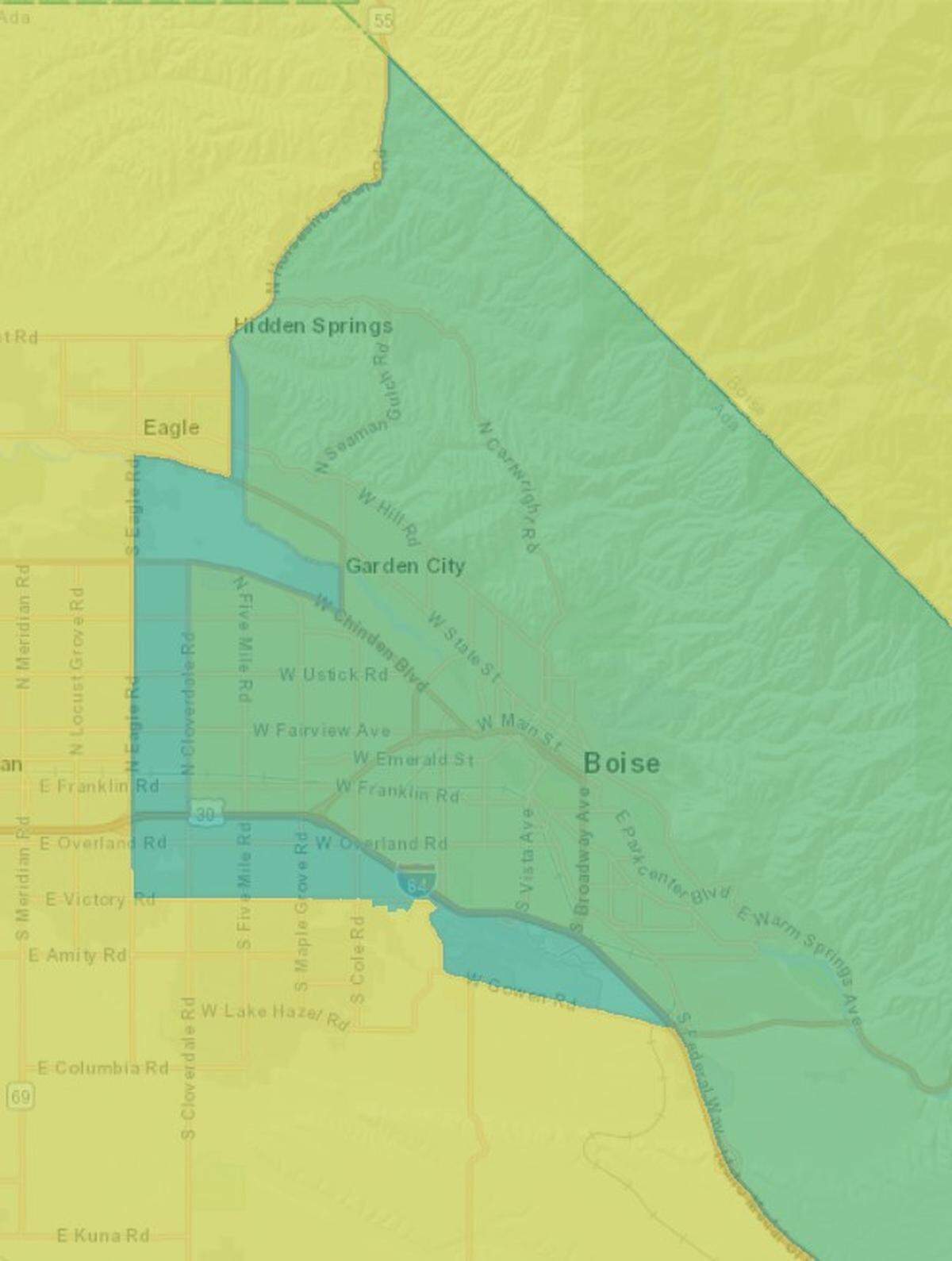
Instead, the commission voted with the minimum majority needed, 4-2, to pass a map that continues to draw the congressional dividing line right down the middle of Idaho’s largest county, Ada.

“I voted against the map that was approved because I don’t think it complies with the Idaho statute,” Nels Mitchell, a Democratic appointee from Boise, said in a phone interview. “The Idaho statute is very clear about the criteria that we’re supposed to consider in drawing the maps, and under that statute, we’re supposed to avoid splitting counties whenever possible, and it’s possible to draw congressional maps in Idaho and not divide counties.”
In fact, there were several maps proposed that avoided county splits.
One such map put out by the commission created a congressional district that followed the county lines of Washington, Payette, Canyon, Ada, Boise, Gem, Owyhee, Elmore and Twin Falls counties, creating what you might call a Southwest Idaho district.
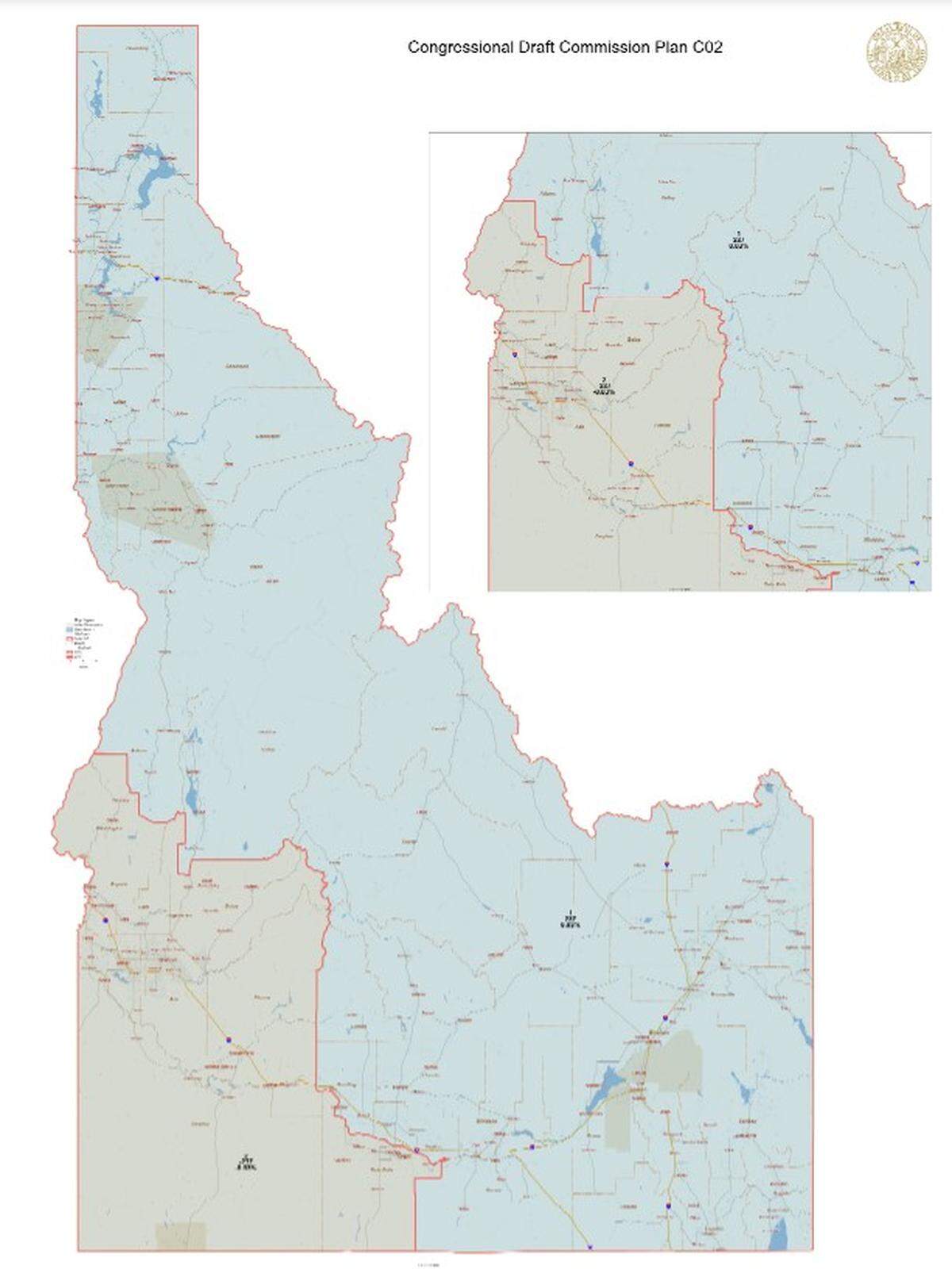
The other congressional district was the rest of the state, lumping east and north Idaho together. The difference in population between the two districts would have been just 237 people, or 0.03% deviation.
Instead, the commission approved a map that simply moves the dividing line that runs north-south just a little bit to the west in Ada County to add enough people — about 35,000 people — into the 2nd Congressional District so that it evens out with the 1st Congressional District.
“In that map, the 1st (Congressional District) and the 2nd (Congressional District) have identical population, and that’s the federal standard,” Bart Davis, Republican appointee to the commission from East Idaho, said in a phone interview. “That’s the primary standard, and so that’s what I focused on, was that standard.”
Davis, co-chair of the commission, voted in favor of the map that split Ada County, along with fellow Republican appointees Tom Dayley and Eric Redman and Democratic appointee Amber Pence. Co-chair Dan Schmidt, a Democratic appointee, voted against that map, along with Mitchell.
I appreciate the goal of getting to zero deviation, but Idaho’s population numbers in reality have already changed every day since Census data was collected last year. Further, when you’re talking about nearly 2 million people, a difference of 237 is pretty negligible, wouldn’t you say?
But Davis also scoffs at the notion of creating, in essence, a Treasure Valley district.
“If there’s real serious interest in (that proposal), I don’t know where that is,” Davis said. “So you’re telling me, East Idaho and North Idaho should be in the same congressional district? That doesn’t make sense to me.”
Sure, but putting Eagle, Meridian and Kuna in the same congressional district as Hayden, Post Falls and Athol doesn’t make sense to me either.
Live on the east side of Eagle Road and your representative is U.S. Rep. Mike Simpson, of Idaho Falls. Live on the west side of Eagle Road, and your rep is U.S. Rep. Russ Fulcher, of Meridian.
It’s not an easy choice when deciding whether to create a united Treasure Valley district (and unify very-different eastern and northern Idaho), or divide the Treasure Valley into north and east.
But by creating a united Treasure Valley district, you at least aren’t dividing any of Idaho’s three communities of interest.
East and North would just be two communities in the same district, and neither is divided between two different congressional districts.
Further, East and North Idaho are both rural, agricultural areas, whereas the Treasure Valley is largely urban.
Why split a community of interest when you don’t have to split any?
The state legislative districts have garnered the most attention in this process so far and likely will garner the most attention moving forward, with at least two lawsuits already filed challenging the legislative districts. I’d be surprised if anyone files a challenge to the approved congressional district line, especially since it’s a minor tweak to a line that’s run north-south for the past nearly 70 years.
And unfortunately, it will be another 10 years before we find out if Idaho’s population gets a third congressional district. If we do get a third district, the task will be much easier to divide the state into East, North and Southwest Idaho districts.
Until then, though, the Treasure Valley likely will be split down the middle.
BEHIND THE STORY
MOREWhat is this column all about?
This column shares the personal opinions of Idaho Statesman communities editor Scott McIntosh on current issues in the Treasure Valley, in Idaho and nationally. It represents one person’s opinion and is intended to spur a conversation and solicit others’ opinions. It is intended to be part of an ongoing civil discussion with the ultimate goal of providing solutions to community problems and making this a better place to live, work and play.
Want more opinions each week?
Subscribe to The Idaho Way weekly email newsletter, a collection of editorials, columns, guest opinions and letters to the editor from the Opinion section of the Idaho Statesman each week. You can sign up for The Idaho Way here.
Want your say?
Readers are encouraged to express their thoughts by submitting a letter to the editor. Click on “Submit a letter or opinion” at idahostatesman.com/opinion.