
Privatization or piratization: Idaho learns again that outsourcing doesn’t always work
READ MORE
Idaho Transportation watchdog series
Idaho Statesman reporter Audrey Dutton took a deep dive into Idaho Transportation’s practice of working with contractors that have changed and falsified pavement test results on road projects across the state. Those tests were paid for with Idaho taxpayer dollars. Enjoy this award-winning series.
Expand All
Fool me once, shame on you. Fool me for more than 20 years, shame on me.
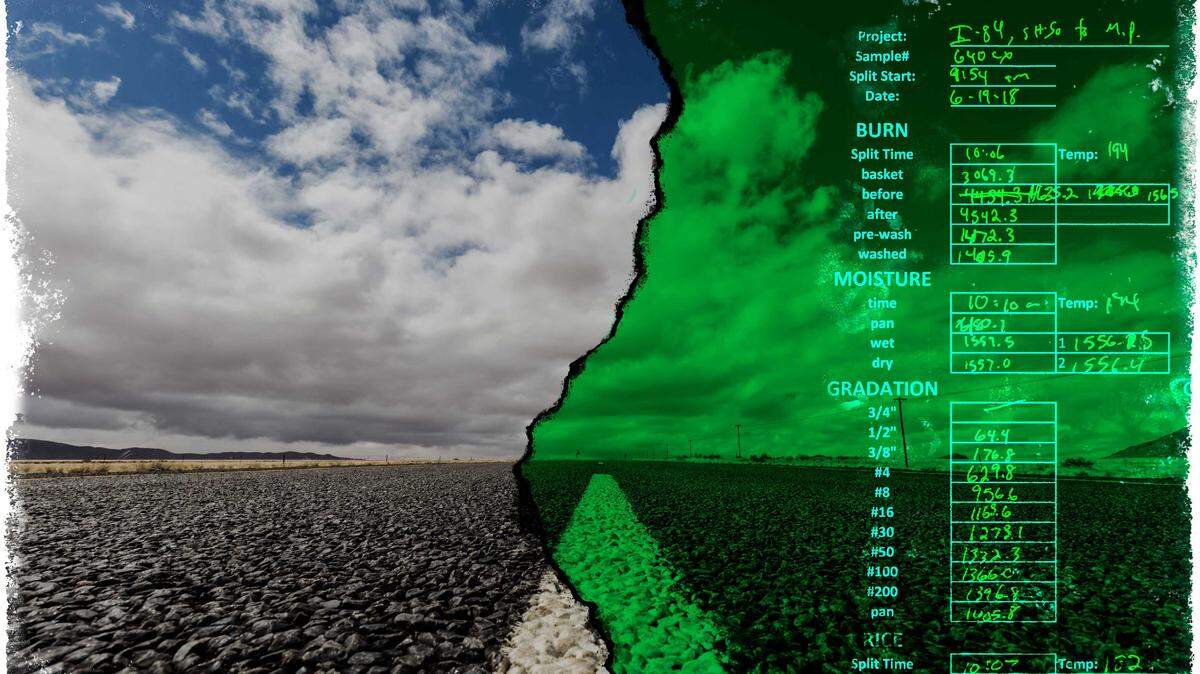
That’s the case with revelations reported by the Idaho Statesman’s Audrey Dutton that private companies responsible for checking the quality of Idaho’s road materials have altered the results of their asphalt tests thousands of times.
The so-called “suspicious alterations” may have allowed contractors that repair and build Idaho’s highway infrastructure to get bonus payments when they should have been penalized for substandard work — or even forced to tear up the asphalt and replace it.
Privatizing some functions of government can be disastrous, when taxpayer dollars are involved and the profit motive is so strong.
In this case, the companies that stood to gain financially from better test results were left to conduct the tests.
As one former Idaho Transportation Department senior technician said, “I flat told management there ... ‘You guys have given the keys of the henhouse right into the fox’s hands, because you privatized too much of this.’”
High cost of saving money
The Idaho Transportation Department used to have a fully staffed lab as far back as 1986, but “over the years, management kept dwindling it and privatizing it,” according to Bill Fogg, an ITD senior technician who retired in 2016.
In hindsight, that move to privatization appears to be costing taxpayers more money, not producing savings.
A Statesman analysis of just four highway projects completed in 2018 found that Idaho paid contractors about $8 million, including about $190,000 in bonuses, for asphalt whose test results were altered dozens or hundreds of times.
The asphalt from one test on a stretch of Interstate 84 near Twin Falls shows that a lab technician changed asphalt weight numbers from 2,289.1 grams to 2,291.2 grams about seven minutes later.
Instead of docking the contractor $80,364 for subpar materials, the state gave the contractor an $11,320 bonus, according to an internal document obtained by the Idaho Statesman. Questions from the Statesman about the “Impact of Changing Numbers” document prompted ITD to review its findings, spokesman Vincent Trimboli said in an email. That review found “the draft document overstates the magnitude of difference” caused by altered test results.
Still, when you’re talking about the difference between being docked $80,000 or getting paid $11,000, the motivation to fudge the numbers is just too great.
Further, the state was spot-checking road contractors’ work to make sure it met quality standards. But guess what? ITD often contracts those “quality assurance” tests out to private labs — whose tests also had suspicious alterations.
Those private labs hired to spot-check other contractors’ work appear to have had an interest in not rocking the boat if discrepancies were found.
“I also think there’s (a culture of) you scratch my back, I’ll scratch yours,” Fogg told the Statesman.
Lessons weren’t learned
This situation isn’t something that just sprang up last year.
In fact, the practice of using these private consultants for testing has been going on since the late 1990s, and problems were discovered in 2002.
A whistleblower came forward in 2002 and told the state that he was pressured to falsify asphalt test results because, as he was told by his private employer, “I’d hate to lose a million-dollar client.”
That whistleblower eventually went public, and ITD consequently put a moratorium on using private consultants for construction inspection and testing.
That moratorium ended after the 2002 construction season, and it appears they just picked up right where they left off.
By the fall of 2018, an internal Idaho Transportation Department document titled “Impact of Changing Numbers,” obtained by the Idaho Statesman, detailed how test results were being altered.
This practice appears to have been going on for years, if not decades.
How could this go on for so long without it being stopped? Where were the internal controls?
Further, it’s worth noting that Idaho has a history of problems with private contracts. An Associated Press investigation of Corrections Corporation of America’s contract with the state of Idaho to run the state’s largest prison showed that CCA had understaffed the prison by thousands of hours in violation of the state contract and falsified reports to cover up the vacancies, such as sometimes listing guards as working 48 hours straight to meet minimum staffing requirements.
The revelations led to Idaho State Police and FBI investigations and resulted in CCA agreeing to pay back $1 million in a settlement with the state. That’s probably a low amount, especially considering that Idaho spent about $3 million less when it took over prison operations again.
Certainly, the state benefits from contracting with the private sector in any number of areas, especially where the state may not have expertise. But when you do have expertise in an area and can do a better job of controlling how taxpayer dollars are spent, privatizing isn’t the answer.
Public safety at issue
This isn’t just a matter of taxpayer dollars. It’s also a matter of public safety.
The Federal Highway Administration sent a team to Idaho in 2017 to conduct a forensic review on 13 roadways in the state. The team looked at 10 roads in person or on video. Four of the 10 showed “moderate” distress. This usually means cracks of various types, but it can mean other issues, such as potholes. Those distressed roads were only two to five years old.
Who knows how many millions of dollars we’ve had to spend to resurface roads that deteriorated before their time because the initial work was inadequate but hidden by suspicious alterations in the testing data.
Deteriorating roads can pose a safety hazard, and road deficiencies, especially potholes, can do expensive damage to vehicles.
Lack of cooperation
Finally, the Idaho Transportation Department at first was cooperative with the Statesman’s inquiries and supplied public records as requested and without charge. Officials also agreed to arrange an interview between the Statesman and a department expert who could answer technical questions about the document and others, and about records they relied upon.
But the department later changed its mind, declining multiple requests for a fact-checking interview. The Statesman was able to fact-check with other sources, but lack of cooperation from the Idaho Transportation Department limited our ability to more deeply analyze the data.
The Statesman has relied on this type of fact-checking interview in the past with other agencies, and it has proved successful in ensuring that we are providing accurate information to the public. We are disappointed that ITD did not share that same desire for a higher level of accurate communication with the taxpayers.
The Statesman also requested an interview with ITD Director Brian Ness. A spokesman instead provided an innocuous statement from Ness.
Answering to the public is an important function for any state employee whose salary is funded by the taxpayer. In this case, we are disappointed that an acceptable level of transparency and accountability has not been met.
This is also a keen reminder that even in a state that prides itself on being the least-regulated in the country, sometimes regulations are necessary to protect public safety and public dollars.
This story was originally published March 1, 2020 at 12:00 AM.