Back in 2002, he spoke up about falsifying Idaho road-construction tests. What happened?
READ MORE
Idaho Transportation watchdog series
Idaho Statesman reporter Audrey Dutton took a deep dive into Idaho Transportation’s practice of working with contractors that have changed and falsified pavement test results on road projects across the state. Those tests were paid for with Idaho taxpayer dollars. Enjoy this award-winning series.
Expand All
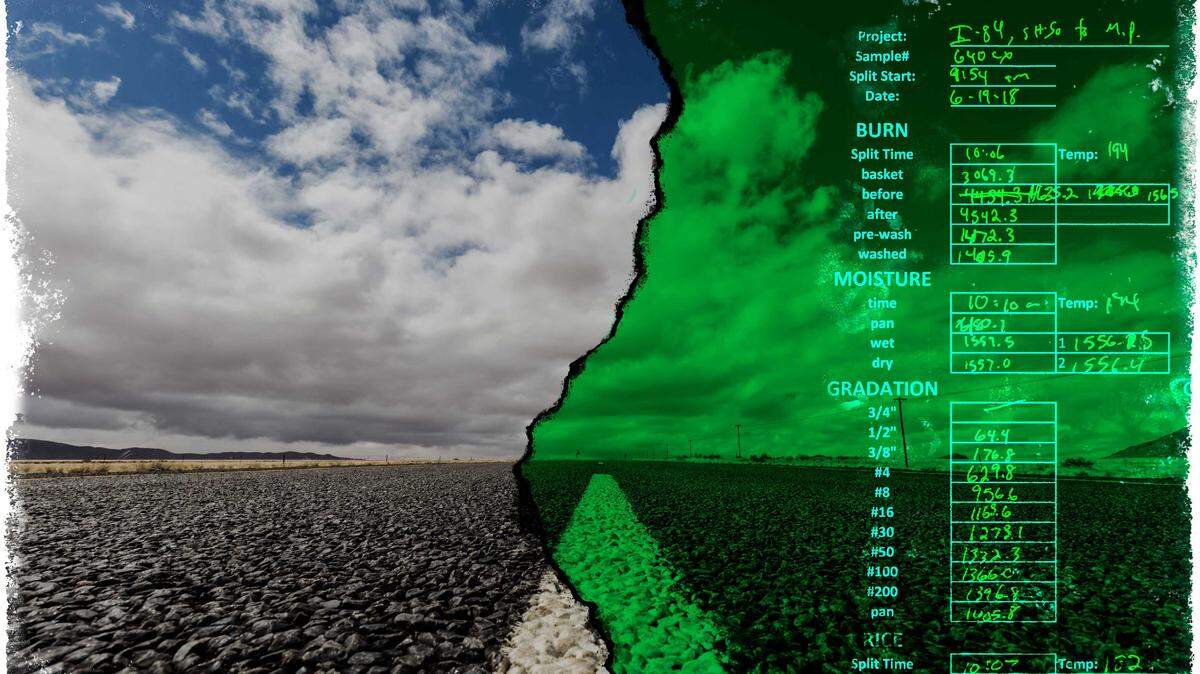
Mark Draper told investigators in 2002 that he had been running asphalt tests for a local company for about two months when an asphalt sample failed a test. About two weeks later, another one failed, he told investigators.
Draper, who was employed at Strata, told investigators that he took the test to his boss, who looked at it and said, “I’d hate to lose a million dollar client.”
Draper understood from the conversation that ensued that “he was to falsify the test results so the contractor could proceed with the job,” he told investigators.
Nearly two decades later, federal agencies are looking into some strange anomalies in Idaho’s asphalt tests. The investigation in some ways echoes what happened when Draper went public in 2002 about falsifying results.
Draper claimed he was pressured to falsify asphalt test results for two years while working in the asphalt lab for Strata, a Boise-based engineering and testing company.
“An asphalt engineer says his former company made him falsify tests on asphalt samples from many southwestern Idaho roads,” said an Associated Press story published in The Times-News in June 2002.
Draper “decided to come forward because he is concerned about road safety. He said he falsified about 70 percent of the tests he performed on sample mixtures,” the story said.
Dwight Bower, the director of Idaho Transportation Department in 2002, said “he doubted that asphalt on state roads was substandard” but asked Idaho State Police to investigate nonetheless, the story reported.
The Statesman obtained documents from that investigation through a public record request. The documents said agents did confirm some of Draper’s allegations. They couldn’t confirm that he was pressured by the company’s management to falsify results, nor that falsification was pervasive, the records say.
BEHIND THE STORY
MORETips? Contact us
Be heard
Tell state leaders what you think. Click on names below to send an email to officials who run Idaho’s government.
▪ Idaho Gov. Brad Little
▪ Brian Ness, director of Idaho Transportation Department
▪ Scott Bedke, Idaho Speaker of the House
▪ Brent Hill, Idaho Senate President Pro Tem
While falsification of test results is a felony, Draper was never charged. He told the Statesman, and the records confirm, that he cooperated with investigators to help them gather evidence.
Draper said in 2002 that one project for which he falsified results was Meridian Road between Meridian and Kuna. When investigators took five samples of that road to test themselves, all five tested outside the project’s specifications, according to the investigators’ report.
When they looked at Draper’s original test results for that road, investigators found “FAILING TEST RESULTS that, if reported accurately, would have resulted in (asphalt) being removed and a new asphalt mix design needing to be developed,” they wrote. “Because false test results … were reported, the entire ‘Amity to Kuna’ project proceeded with an INFERIOR ASPHALT MIX being used.”
Nearly two decades later, “suspicious alterations” showed up in the test results for a 2018 project to repave Meridian Road between Meridian and Kuna. The Statesman wasn’t able to determine whether the project was on the same stretch of road Draper worked on.
Draper reported going to his boss “at least a dozen times” to complain about falsifying test results, investigators wrote.
A Strata official at the time told a reporter that Draper was “a disgruntled former employee and denied that the company had pressured him to fake test results.”
Draper told the Statesman he was, indeed, a disgruntled employee. But he said that’s not because he was fired; he was fired because he was disgruntled.
He didn’t like having to reverse-engineer test results to look legitimate, instead of just following the rules, and he spoke up about it, he says.
“After about a year and a half, two years of this, I said, ‘I’m not gonna do this anymore. The results are what they are,’” Draper told the Statesman. “ITD had some kinda screwed-up policies that encouraged this kinda thing.”
Draper claims that when he pushed back, the company changed his working conditions, cutting his asphalt lab’s man-hours, which meant he had to work longer hours. The company eventually fired him, he says.
“I could’ve lived with being canned for not meeting the production whatevers — that didn’t piss me off,” he said. What made him angry was the company’s reaction to his concerns, he said.
“You guys wanna play that game?” Draper remembers saying. “I’ll just go to the news and let them know.”
Records from 2002 say Draper was joined by a television news crew the first time he met with investigators.
The report also details conversations with four other people who had worked at Strata:
One person told investigators he was “asked to do some questionable things and when he said he wanted it in writing, the requests stopped. (The former employee) said he never falsified test results himself but he is sure test results were being falsified.”
Another former employee said “she heard instructions being given by Strata managerial personnel to testing personnel for them to falsify test results (but had) no physical evidence of wrongdoing.”
A third person, who still worked for Strata at the time, told investigators “she heard employees complaining about falsifying documents and it has been ‘implied’ to her she needed to falsify test results, however, she denied ever doing it.”
And a fourth person, a former employee in Strata’s Pocatello office, said “she had witnessed falsification of several reports by her boss” on projects that included a building in Pocatello and airport projects in Idaho and Wyoming.
After Draper came forward, the department changed at least some of its policies. For example, ITD started having its own staff watch contractors’ lab tests or perform the tests themselves.
“It is my intent to place a moratorium on the use (by the state) of consultants doing construction inspection and testing ... for the state to ensure work done and materials produced meet the contract specifications,” said a 2002 memo from ITD’s then-chief engineer to the agency’s director at the time, Dwight Bower.
“While this will place a burden on (ITD staff) doing inspection and testing work, I believe we do have sufficient resources to do the job with the understanding that some maintenance work may not get done this year,” the memo said.
The 2002 moratorium ended the following construction season, an ITD spokesman told the Statesman.
BEHIND THE STORY
MOREHow we did this story
Since starting our investigation in December, the Idaho Statesman has reviewed Excel spreadsheets, memos, PowerPoint presentations, federal and state reports, emails and handwritten lab records. The Statesman also conducted interviews with people in the construction industry.
To read more about how we reported this investigation and to contact us, click on the arrow in the top right.
We asked for public records
Much of this reporting is based on documents obtained through public record requests to the Idaho Transportation Department and Idaho State Police.
In response to the Statesman’s initial record request to ITD in December, the agency provided not only the records requested but an additional set of documents, including the “Impact of Changing Numbers” presentation and the Federal Highway Administration’s forensic pavement assessment.
The Statesman requested lab reports for several asphalt tests that were performed by private contractors. Idaho statute says governments “shall not prevent the examination or copying of a public record by contracting with a nongovernmental body to perform any of its duties or functions.” In other words, anything that would be public record if the government hadn’t outsourced the work remains a public record, and the private contractor must provide it.
Two companies provided all lab reports the Statesman asked for. One provided some. One provided none.
The two companies that failed to provide them didn’t have the reports for those asphalt tests, according to ITD.
Idaho statute allows agencies to charge fees for any record request that takes more than two hours to fulfill. ITD has provided dozens of records to the Statesman, and the agency has not imposed any fees on the Statesman.
The Statesman is awaiting records from pending requests to ITD, Ada County Highway District and the U.S. Department of Transportation’s Office of Inspector General.
We talked to people
The Statesman reached out to people in Idaho and elsewhere to discuss the asphalt quality control and quality assurance process and to better understand the QC/QA paper trail, or lack thereof.
Reporter Audrey Dutton also located and interviewed former road construction materials testing employees. These interviews took place over the phone and in person.
Dutton had in-person interviews totaling about two hours with Idaho Transportation Department spokesman Vincent Trimboli and Dave Kuisti, who oversees a division of the department that deals with asphalt QC/QA.
Tips? Contact us
Do you work in Idaho’s road construction industry? Are you a former employee? If you think we have more to investigate, contact reporter Audrey Dutton at adutton@idahostatesman.com or (208) 377-6448.
And be heard
Tell state leaders what you think. Click on names below to send an email to officials who run Idaho’s government.
▪ Idaho Gov. Brad Little
▪ Brian Ness, director of Idaho Transportation Department
▪ Scott Bedke, Idaho Speaker of the House
▪ Brent Hill, Idaho Senate President Pro Tem
• • •
Investigative journalism such as this makes a difference. And your support makes it possible.
#ReadLocal and subscribe to the Statesman today.
This story was originally published February 22, 2020 at 9:01 AM.