Smoky skies continue to blanket Boise. With more wildfires, is this the new normal?
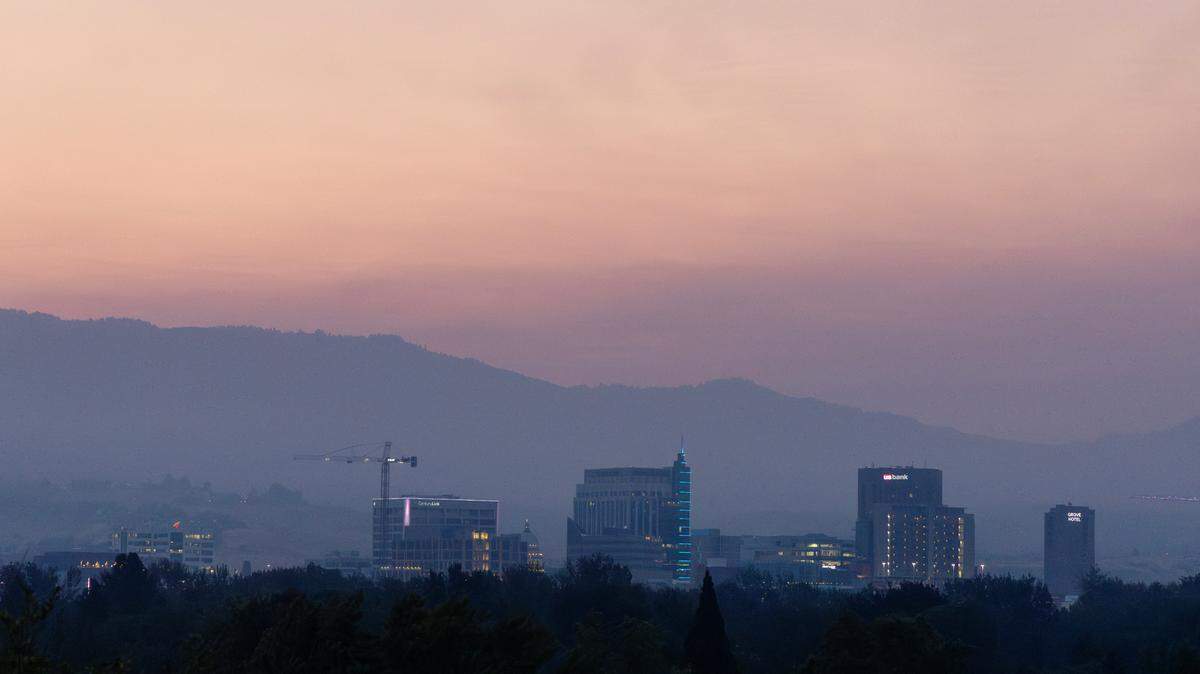
This week’s wildfires brought another onslaught of air pollutants into the Treasure Valley.
After a short reprieve last week, a blanket of smoke once again seized Boise’s skies after more wildfires ignited near Southwest Idaho following a lightning storm. The Paddock Fire, north of Emmett, took off Monday night, prompting evacuations north of Baldwin Corner, along with reduced air quality and ash in some parts of Boise.
The continued warnings of air pollutants this week follows a July that saw more “unhealthy” air quality days in Boise than in years past, according to U.S. Environmental Protection Agency data. Michael Toole, Boise airshed coordinator for the Idaho Department of Environmental Quality, warned the Idaho Statesman in a phone interview last week that reduced air quality would return alongside high temperatures.
The poor air quality last month was the result of weather patterns and numerous fires burning west of Boise, where wind patterns funneled pollutants into the Valley, Toole told the Statesman.
“This fire season so far has been the most significant in terms of the (air pollution) concentration we’ve seen in past five, 10 years,” Toole said.
Data from AirNow, the EPA’s air quality website, showed just three days last month — July 1, 2 and 6 — were in the “good” air quality category with an air quality index, or AQI, score of 50 or lower. More than half of the July days either were in the “unhealthy for sensitive groups” or “unhealthy” category.
One day — July 23 — crossed into the “very unhealthy” category, with an AQI value of 227, according to preliminary data. It’s the only time air quality has reached the category in July for nearly 25 years, according to AirNow data dating back to 2000.
AQI categories are determined by measuring the ozone — a colorless atmospheric gas that forms when heat interacts with pollutants — and particulate matter in the air. Wildfire smoke is considered a fine particulate.
Brittany Brand, director of Boise State University’s Hazard and Climate Resilience Institute, told the Statesman that fires are becoming larger, hotter and more frequent as climate change makes Idaho’s summers hotter and drier. As a result, the Treasure Valley is facing more smoky days than in the past.
“As long as we continue to see an increased trend in wildfires, we can expect increased smoke conditions in our valley,” Brand said. “Unfortunately we’re downwind from a lot of the California and Oregon fires, so smoke not only gets funneled here, but it can get trapped in the valley.”
Brand said wildfire smoke particulates can be especially hazardous when the smoke travels far from the fire. Those small particles are about 1/50th the size of a grain of sand, which makes them easy to inhale.
Smoke particles can irritate the respiratory system and impact the cardiovascular system. As air quality worsens, it becomes dangerous to exercise or exert yourself outside, especially for children, older adults and people with existing respiratory issues.
Brand encouraged people to stay informed about air quality by visiting AirNow or the Hazard and Climate Resilience Institute’s website. Most importantly, she said, people need to be careful to avoid ignitions as human-caused fires become more common.
“We live in a wildfire-prone landscape,” she said. “We need to remain vigilant in preventing fires.”
Wildfires play major role in Boise air quality
Toole said last month’s air quality doesn’t necessarily indicate a trend toward worsening overall air quality, though.
In particular, Toole said, mid- to late July was “rough” compared to years past. Around the middle of the month, lightning storms sparked a series of fires in central and eastern Oregon, including the Durkee, Cow Valley and Badlands Complex fires, which are still burning. Toole said some smoke could be coming from as far as Chico, California, where an arsonist started the Park Fire on July 24.
Toole said in the last 10 to 15 years, the number of moderate to unhealthy AQI category days in the Treasure Valley has increased. While last month had worse air quality than years past, the main pollutant for the majority of the month was ozone, not the particulate matter often caused by wildfires.
Particulates were the main pollutant nine days last month, compared with nearly double that number in recent years. Toole noted that on the worst air quality day last month, the primary pollutant was ozone.
Already this year, the Boise area has had five days in the unhealthy AQI category — two of them in January and the rest in July. That’s more unhealthy days in six months than the area saw in an entire year for nearly every year since 2014. Boise had no unhealthy AQI days last year.
There have also been 16 days in the sensitive AQI category, more than most full years in the last decade.
But Toole said it can be misleading to simply say that air quality is getting worse. The standards for air quality have changed in that time, making direct comparisons of AQI values impossible, he said. And populations in Idaho and the Treasure Valley have grown rapidly during the same period, adding pollutants from more people, vehicles, businesses and other sources.
Still, wildfire — and the ever-expanding season in which fires are likely — plays a major role. And EPA data has shown a major increase in the particulate matter as a primary pollutant in the Boise area.
“Every year is so different,” Toole said. “I don’t think it’s getting worse, I just think it’s really unfortunate where the fires are this year.”
This story was originally published August 2, 2024 at 9:50 AM.