Idaho weather keeps getting warmer. What could the future look like? 4 trends to expect
There’s been a concerning pattern in Idaho’s meteorological direction in recent years: lower annual precipitation and milder annual temperatures.
That may not sound too terrible on its face; warmer weather and fewer rainy days means more time to enjoy what the Gem State has to offer. But with most areas of the state in either a moderate or severe drought, including Ada County, the current trend of less precipitation and higher temperatures casts a worrying forecast for the future.
That future could look a little like this:
- A 35-65% reduction in the state’s snowpack by the end of the century, leading to water shortages and drought that could affect agriculture and residents alike. The snowpack is the amount of compressed snow on the ground that will eventually melt and run off downstream.
- Low yields for rain-fed crops, such as chickpeas and grain. Chickpea yields were down 50% across the state in 2021 and grain yields were down 20%.
- An increase of extreme heat days, when the temperatures are at least 90 degrees. That dries out the landscape and in turn affects agriculture. The Treasure Valley is averaging 10 more days per year of extreme heat compared to 1979, according to Idaho News 6 chief meteorologist Scott Dorval.
- An increase of fire weather days, which is a culmination of meteorological parameters — such as relative humidity, wind speed and direction, and soil moisture — to determine whether conditions are favorable for fire growth. The Treasure Valley has seen an increase of 22 days per year of fire weather days compared to 1973, Dorval said.
The following graphs, from the National Oceanic and Atmospheric Administration and nonprofit organization Climate Central, put into visuals the worrying path that Idaho is quickly barreling down.
Heating up in the Gem State
The following graph includes the average annual temperature since 1980, the earliest data available, for Ada, Owyhee, Boise and Valley counties.
Boise and Valley counties, north of Boise, are important because they include the Boise Mountains, where much of the water runoff in Ada County and the Treasure Valley comes from.
Owyhee County, south of Boise, is included because the Owyhee Mountains provide an indicator of future trends for Central Idaho as warmer temperatures creep in from the southwest.
Ada County has recorded the warmest average temperatures out of the four counties due to the its lower altitude. But looking at the climate over time, all counties have seen rising average temperatures between 2019 and 2021.
“I don’t see one warming more than the other. It’s just that the Owyhees don’t have any more room,” Dorval said. “A little bit of warming and they lose more snowpack than the Boise Mountains because there’s a greater area of coverage of the basin (in Owyhee).”
What does that mean looking forward? If the Owyhee Mountains start to lose snowpack at a higher rate, that typically means the mountains in Central Idaho will see a similar trend in the near future.
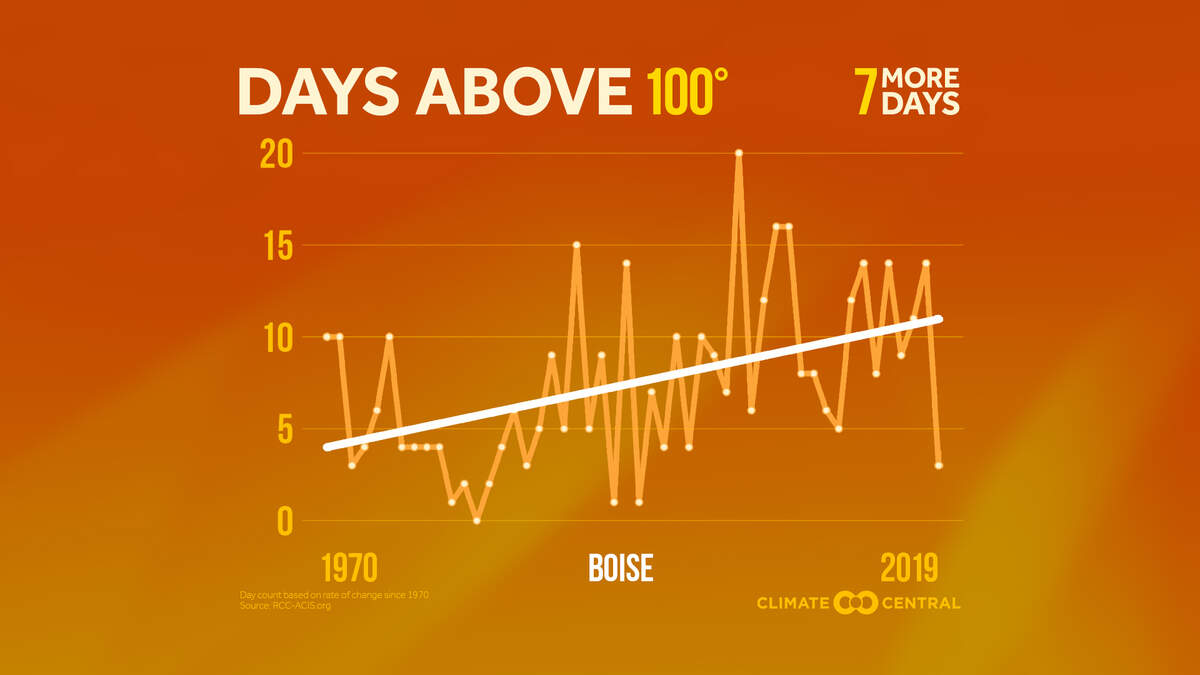
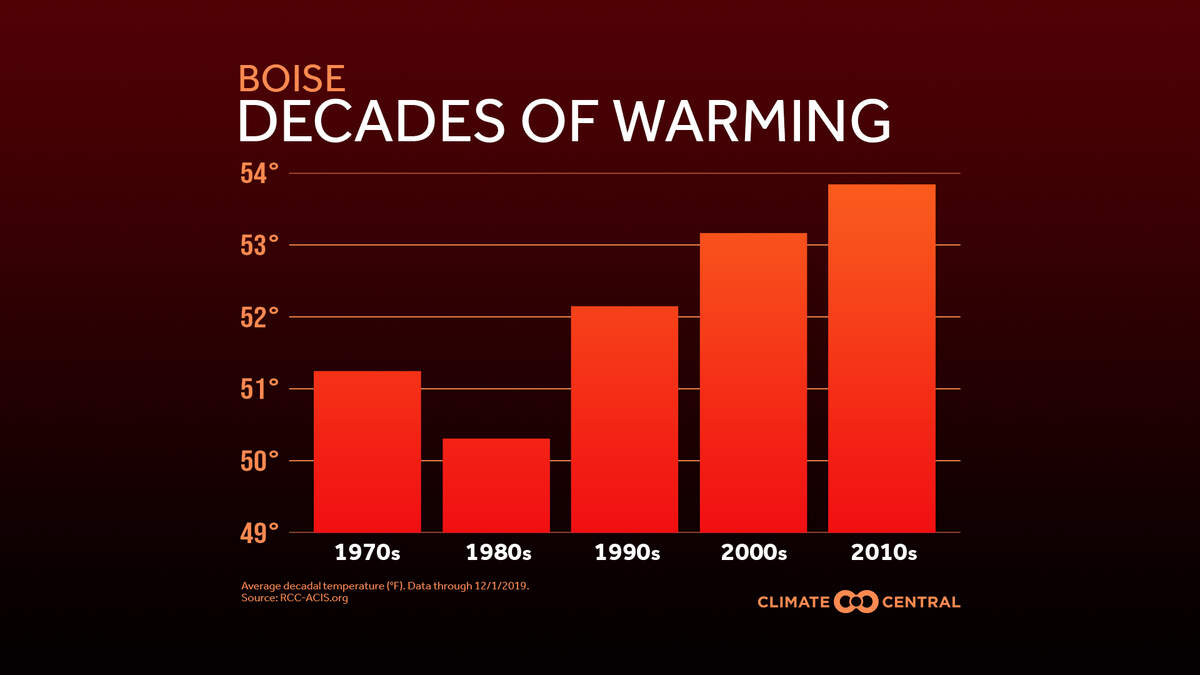
Looking at Boise specifically, the city has seen on average seven more days per year of days above 100 degrees, increasing from just four in 1970 to 11 in 2019. The average temperature in Boise has increased from just over 51 degrees in the 1980s to just under 54 degrees in the 2010s.
Heat rising, precipitation falling
As the temperature rises, precipitation is falling — and not in the good sense of falling from the sky.
The last three years have seen annual precipitation decreasing gradually in Ada County, but more drastically in all three mountainous counties. That’s significant because Ada County only picked up 12.5 inches of precipitation last year, meaning the general downward trend, while concerning, isn’t debilitating.
But looking at the other three counties, Owyhee County picked up just 11.1 inches in 2021, Boise County 27.8 inches and Valley County 29.3 inches. Those three numbers are at least 3 fewer inches when compared to their respective precipitation amounts in 2019.
For Boise, since 1950 the area has seen a gradual decrease in days providing at least 1 inch of rainfall.
March’s forecast
After a snowy December that saw Boise pick up 15 inches of snow, the city has seen an abnormally dry January and February, Dorval said.
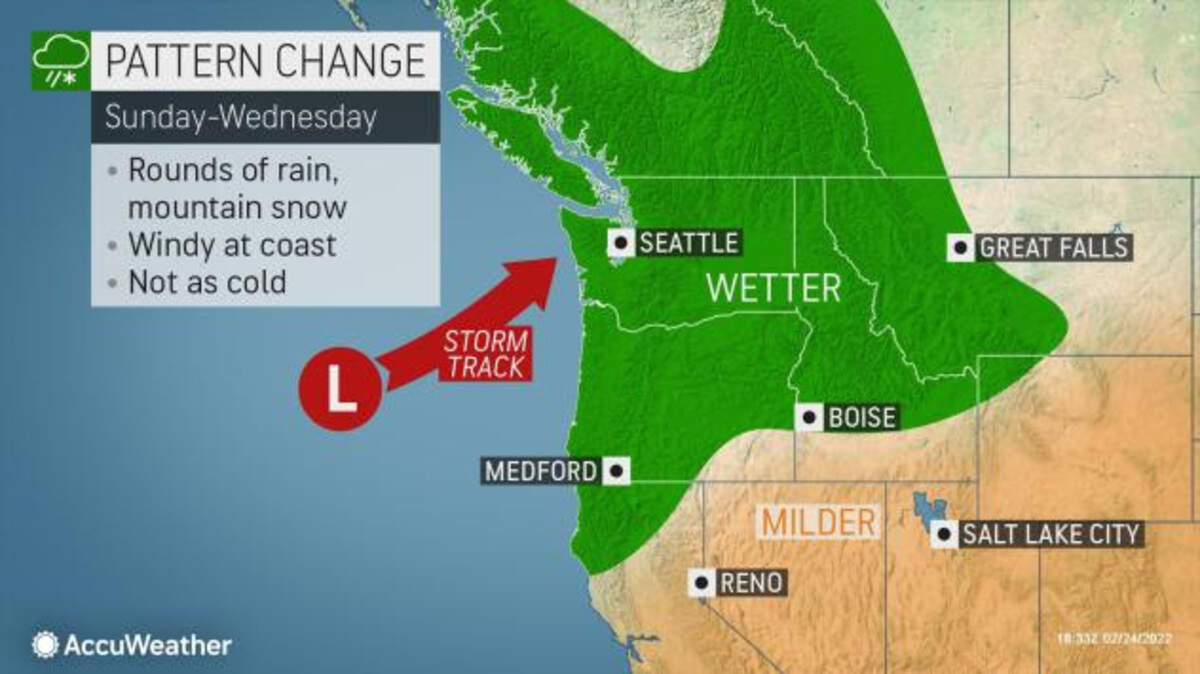
But Dorval, along with weather service Accuweather, finally anticipates moisture returning to the Pacific Northwest in March.
“There is a lot of moisture, and I’m hoping for what we’re calling a ‘Miracle March,’” Dorval said.
Storms will finally be allowed to track into the United States off the Pacific Coast for the first time since early January, when a low pressure system settled just off the California coast. Along with a blast of cold air moving into the region from Canada, moisture and snowstorms can be expected in Central Idaho and perhaps as far south as Boise.
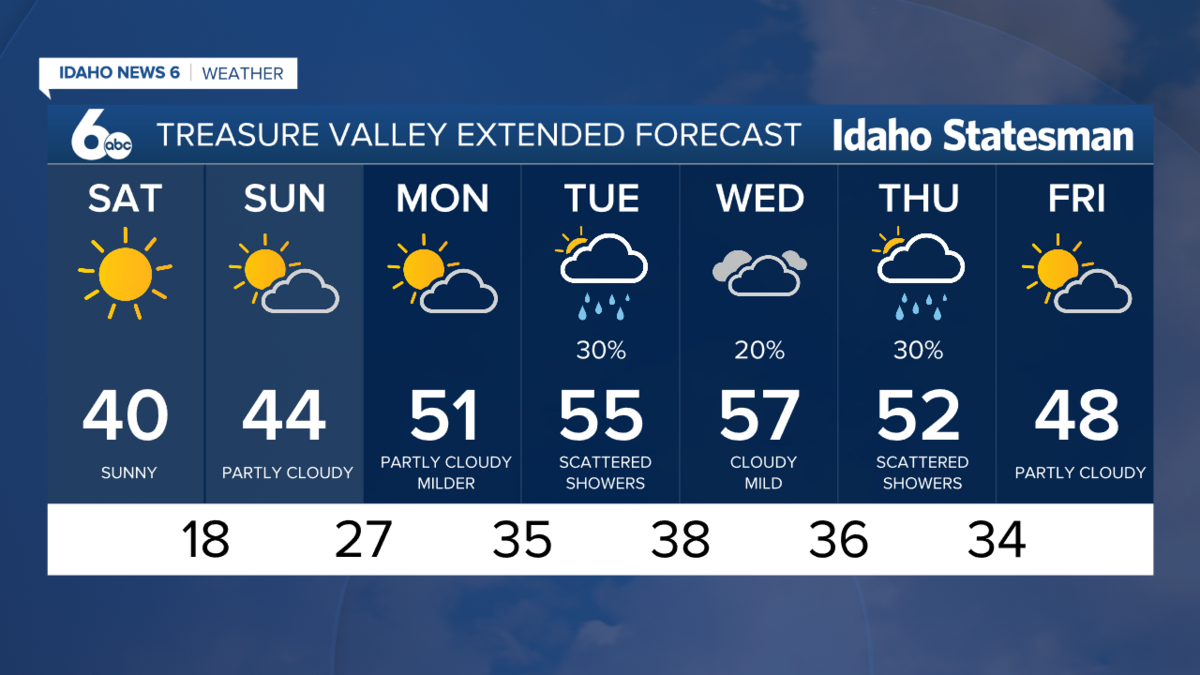
Boise could see scattered showers on both Tuesday and Thursday, and temperatures in the mid- to low-50s, Dorval said.