WeatherWhys: Why is a weather system off the California coast affecting Idaho?
Although small snow showers continue to briefly pass through the Boise area, the precipitation drought is set to continue for the Treasure Valley for at least a couple more weeks.
The reason is because of a high-pressure system sitting just off the coast of Northern California and Oregon. The large area of clockwise-spinning air has remained there for several weeks and is blocking the chance for large storms to pass through Idaho and provide the type of snowstorms we saw in December.
Idaho News 6 chief meteorologist Scott Dorval explained to the Idaho Statesman in this week’s edition of WeatherWhys why this system is causing Idaho to see such dry conditions.
Flatlining snowpack
To understand just how dry the Treasure Valley has been this month you have to look at the snowpack over the course of the winter, which is the layer of snow in high elevations that eventually drains into the Boise River basin and Treasure Valley.
At weather stations across the nation, the National Oceanic and Atmospheric Administration measures the snow-water equivalent, which is how much liquid water is inside the snowpack.
The nearest station to Boise is at Mores Creek Summit, 60 miles northeast of Boise. It is one of many stations in Idaho.
Mores Creek Summit recorded about 18 inches of snow-water equivalent through the end of December, then flatlined for the whole of January outside of a slight bump during the small snowstorm on Jan. 20.
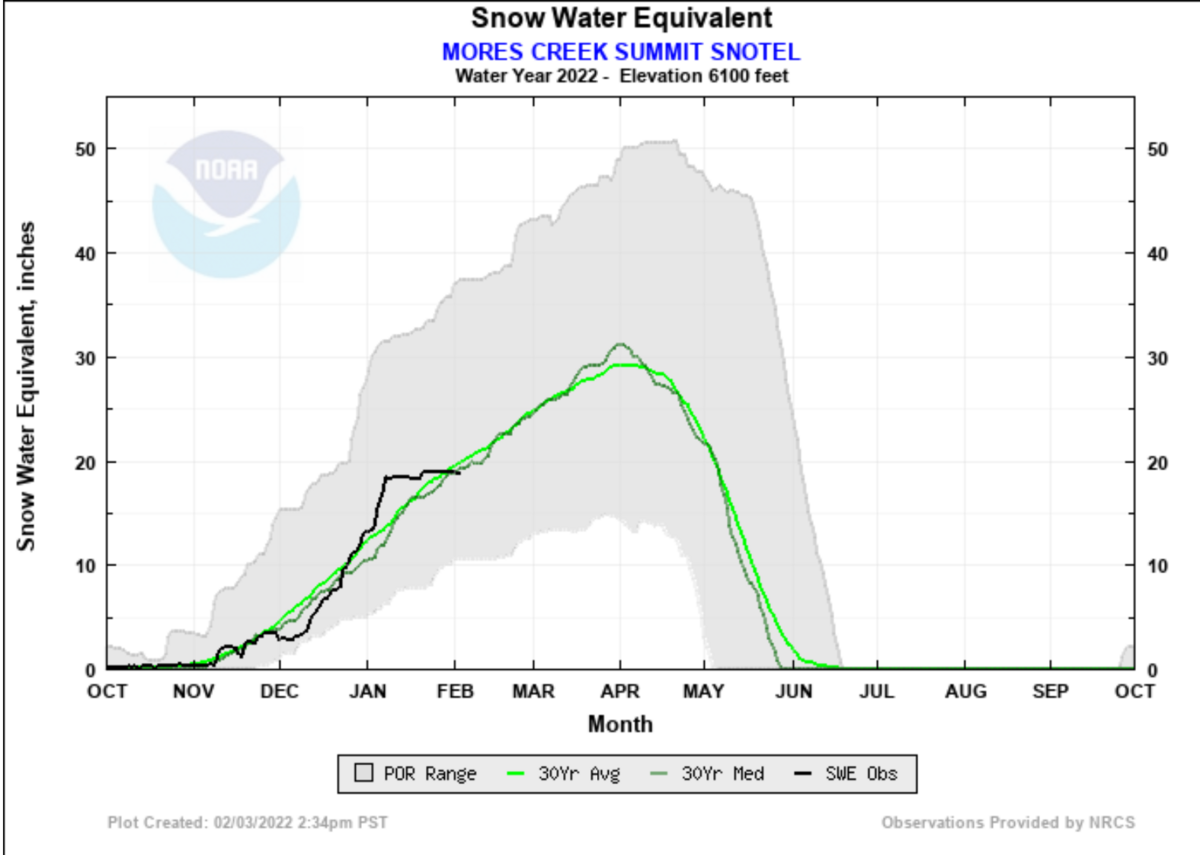
At the start of January, Mores Creek was far above the yearly average. After a month of nearly no snowfall, the snowpack now sits at 98% of what it usually would be, based on the 30-year average.
“If the snow melts at those sites, it will drain into our reservoirs,” Dorval said. “And so when you add them all up ... we’re right at average now. But that average curve keeps going up and we keep flatlining.”
Dorval expects the Boise area to continue flatlining for the next couple of weeks based off his forecasts of the high-pressure system off the West Coast, and the general flow in weather patterns that occurs every 4-6 weeks.
High pressure off the coast
So why is the high-pressure system affecting Boise so much?
As the system sits above the Pacific Ocean, it’s creating a trough in the jet stream that’s denying any storms coming to Idaho from the west or southwest. It’s those types of storms that bring heavy moisture.
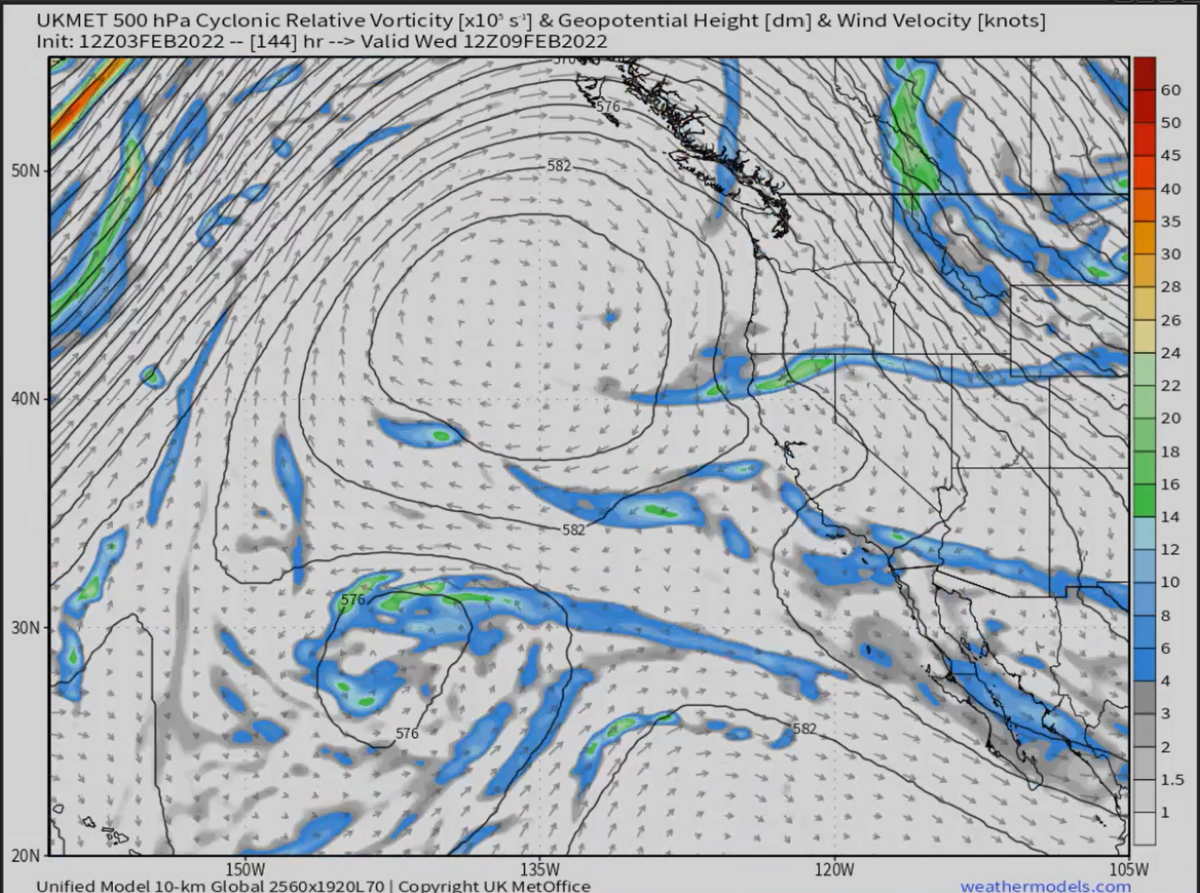
Instead, the system is forcing storms to come through Idaho from the north. By the time those reach the Gem State, they’ve lost much of their moisture or are only hitting North and Central Idaho.
“Storms will go up into Canada and then they drop down over us from the northwest, and they’re coming over land so they dry out,” Dorval said. “So to really get the moisture, you want it to come in ... right off the ocean.”
With the current setup, expect another week of calm and steady conditions for Boise, with the high not deviating from 38 to 41 degrees and the low 20 to 24.
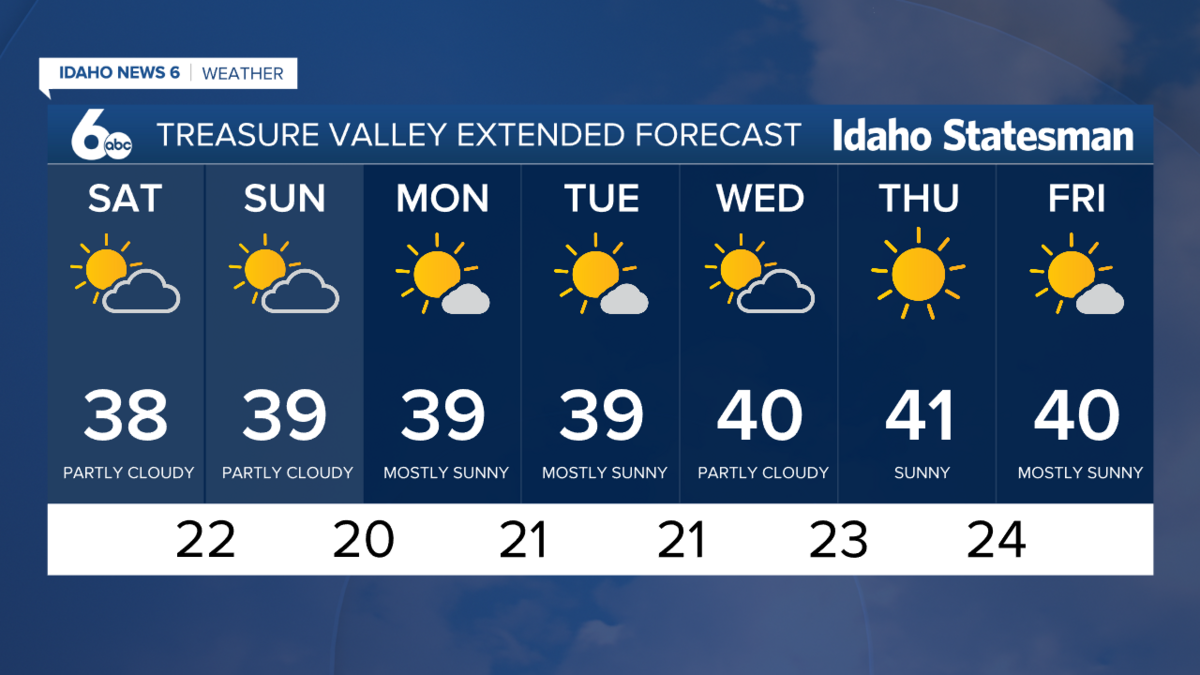
There’s the potential for snow in the Treasure Valley the week starting Feb. 14, Dorval says, but it depends on the high-pressure system backing off the coast. Even then, the storm likely will plummet down the coast and toward the southwest.