These 10 new Idaho laws go into effect today. Here’s what you need to know
The start of July is packed with plans for Fourth of July celebrations and fireworks fun.
It’s also the time when numerous state laws take effect.
Several new Idaho laws go into effect Wednesday, July 1, bringing changes that affect everything from silent classrooms to relaxed codes for short-term renters.
Retailers are changing how they handle cash transactions. Educators will develop a statewide framework for generative artificial intelligence in schools, while officials are cracking down on flying drones near prisons and criminal trespassing at churches.
Here’s what to know about Idaho’s new laws — and what they mean for you:
How does Idaho’s new bathroom bill work?
Idaho’s so-called “bathroom bill” makes it a crime to use a public restroom that doesn’t align with your sex assigned at birth.
Under House Bill 752, you could be charged with a misdemeanor and sentenced to a year in county jail if you “knowingly and willfully” use a restroom or changing room meant for the opposite sex in a government-owned building or place of public accommodation.
A second offense within five years is considered a felony publishable by up to five years in prison.
However, a preliminary injunction issued by an Idaho judge in June blocks the bill from fully going into effect.
U.S. District Judge Amanda Brailsford’s ruling allows Idahoans to use bathrooms with multiple stalls with gender-affirming signage when a private restroom isn’t available.
The preliminary injunction only addresses bathroom usage so the law will still fully criminalize using changing rooms designated for the opposite sex starting Wednesday.
New Idaho law requires ‘moment of silence’ in schools
When Idaho students return to public schools, they will be required to start their morning with a ”moment of silence.”
House Bill 623 requires teachers at government-funded schools to implement a minimum of 60 seconds of silence to start the school day.
Students can pray, meditate or simply relax during that minute-long period as long as they remain quiet and nondisruptive.
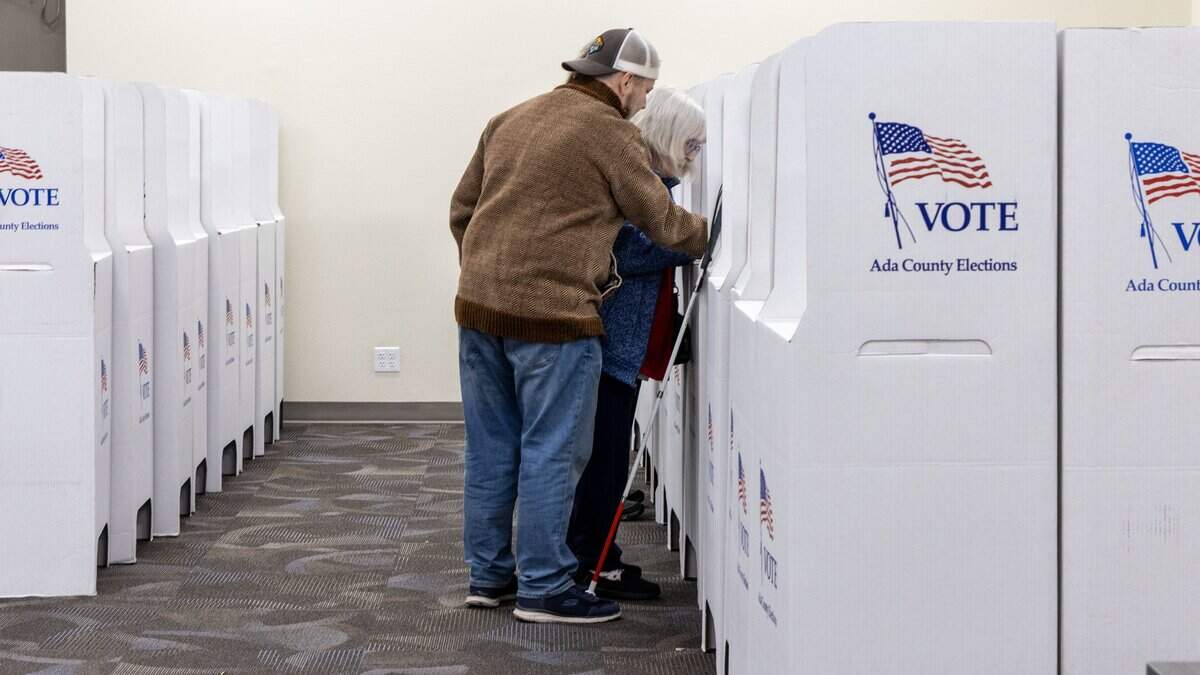
What do I need in order to vote in Idaho?
Idaho voters could encounter a couple new hurdles at the polling place.
Under Senate Bill 1237, you must present a government-approved picture ID before you receive a ballot.
The following forms of identification are considered acceptable proof:
- Idaho driver’s license
- Idaho Division of Motor Vehicles identification card
- U.S. passport with a photo
- Tribal identification card including a photo
- License to carry concealed weapons issued by Idaho
If you are unable to provide personal identification, you’ll have to complete an affidavit and sign it.
Senate Bill 1322, which also goes into effect Wednesday, requires voters to provide their full name, address and birthdate. A valid Idaho driver’s license or identification card number can be used in place of your date of birth.
Before receiving a ballot, poll volunteers will need to verify that your information matches your voter registration.
If any info you provided is false, you could be denied a ballot and found ”guilty of a felony,” the new law says.
Do e-bikes have the right of way in Idaho?
Idaho drivers will need to extend the right of way to people using electric bicycles starting Wednesday, when House Bill 500 goes into effect.
The new law gives e-bike users the same legal protections from motor vehicles as regular bicyclists and pedestrians.
The law also requires e-bike riders to abide by all posted signage and follow the rules of the road.
How is Idaho vehicle registration changing?
A new Idaho state law ends the legal requirements for vehicle registration tags on motor vehicles.
House Bill 533, which takes effect Wednesday, eliminates the color-coded vehicle registration stickers Idaho drivers attach to their license plates as a cost-saving measure.
However, you’ll still need to renew your vehicle’s registration.
Having expired tags in Idaho is a traffic infraction punishable by a $101 fine, according to the Idaho Supreme Court.
If you’re caught driving with fake registration or borrowing or stealing tags, you could pay a $115 fine, the Statesman previously reported. The true owner of the registration is at risk of being fined the same amount.
If you provide false information when you’re registering your vehicle, you could face a $156.50 fine. That includes giving a name that is not legally recognized by the state of Idaho.
How much money can I spend on Idaho lottery tickets?
Starting Wednesday, House Bill 504 caps bulk purchases of lottery tickets at $5,000 within a 24-hour period.
That restriction applies to individuals as well as people or entities working together to buy multiple lottery tickets at a time.
The new law also allows the Idaho Lottery to investigate any winning tickets to verify they were purchased legally.
Lottery officials reserve the right to refuse any winnings to lottery players caught illegally buying tickets in bulk.

New limits on lifetime hunting licenses in Idaho
House Bill 855 limits lifetime hunting licenses to residents who have lived in Idaho for a minimum of five years.
In Idaho, lifetime licenses are available to hunters of all ages.
Fees range from $221.75 to $1,113, depending on age and license type.
Parents and legal guardians must provide evidence of their five-year residency when purchasing licenses on behalf of a child under age 15, as well as the child’s birth certificate.
Proof of residency needs to be provided with an Idaho driver’s license or other photo ID.
Teenagers ages 15 to 18 may provide their own Idaho driver’s license as proof of residency or depend on a parent’s residency status.
How are rental regulations changing in Idaho?
House Bill 583, which takes effect Wednesday, strips away several local requirements for short-term rental properties in Idaho, like your neighborhood Airbnbs.
Instead, the new law requires cities and counties to treat short-term rentals like any other homes, the Statesman previously reported.
Changes included under HB 583 dissolve requirements for inspections, parking, fire safety and licensing.
It’s now up to county and municipal offices to enforce basic fire safety and building codes such as those governing maximum capacity and accessible fire extinguishers.
Parents must be told about transgender transition plans
Starting Wednesday, schools, doctors and other childcare providers must notify parents and legal guardians about transgender children seeking to transition — or risk a lawsuit.
Under House Bill 822, teachers, healthcare providers and childcare workers must notify parents within 72 hours if a minor under age 18 requests to “socially transition.”
Requests can include using preferred pronouns, using any name other than the child’s legal name and allowing the child access to gender-affirming restrooms.
If parents aren’t told in time, they’re now allowed seek up to $100,000 in civil penalties.
To avoid civil punishment, education, childcare and healthcare professionals must obtain written consent from parents and guardians in order to provide support for children’s transition plans.
How fast are semitrucks allowed to drive in Idaho?
If you find yourself flanked by tractor-trailer trucks traveling at high speeds over the Fourth of July weekend, you can thank House Bill 664.
Drivers in vehicles weighing more than 26,000 pounds will no longer be required to travel at a lower speed than other traffic on certain sections of rural interstates.
Starting July 1, semitrucks can follow the same posted maximum speed limit as passenger cars, reaching speeds up to 80 mph in some places.
This story was originally published July 1, 2026 at 4:00 AM with the headline "These 10 new Idaho laws go into effect today. Here’s what you need to know."