Idaho judge blocks transgender bathroom ban from fully going into effect
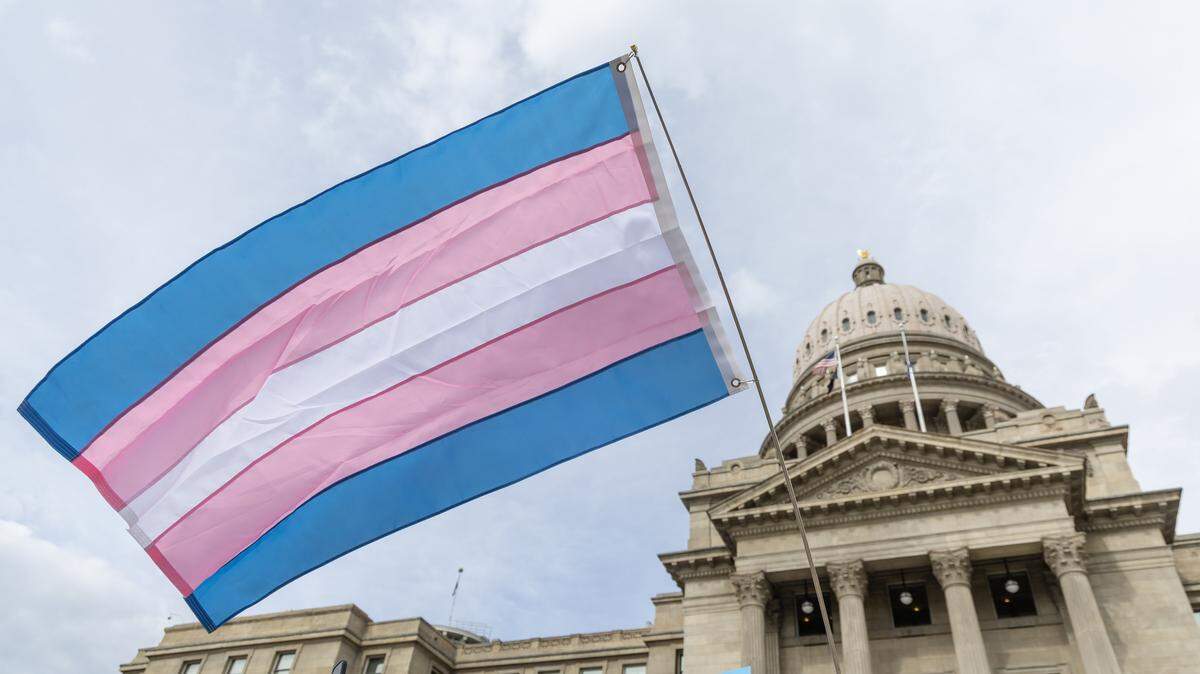
An Idaho judge on Tuesday issued a preliminary injunction blocking an Idaho law that makes it a crime to use a restroom that doesn’t align with one’s sex assigned at birth from fully going into effect.
The order, issued Tuesday, found the plaintiffs were likely to succeed on their claim that the law is unconstitutionally vague.
The injunction, which applies to restrooms, comes a few months after six transgender Idaho residents filed a lawsuit alleging the law violates the constitutional rights of transgender people and puts their safety and well-being at risk. The lawsuit names Attorney General Raúl Labrador and county prosecutors.
“This ruling means trans folks in Idaho can continue participating in public life without the threat of being arrested for using the bathroom,” Paul Carlos Southwick, the legal director at the American Civil Liberties Union of Idaho, said in a news release. “Trans Idahoans have been understandably anxious about the disruption this unconstitutional law would cause in their daily lives. This ruling will relieve that anxiety for our trans friends and neighbors.”
The law, which the Republican-dominated Legislature passed by a large margin, makes it a misdemeanor to “knowingly and willfully” use a restroom in a government-owned building or place of public accommodation that doesn’t correspond with someone’s sex assigned at birth. A second offense within five years comes with a felony and up to five years in prison.
The law carves out a number of exceptions, including one that allows a person to use a restroom that doesn’t align with their sex assigned at birth if they are in “dire need” and it is the only facility that is “reasonably available” at the time. Another allows a person to use single-user facilities that don’t align with their sex at birth if it is the only facility “reasonably available.”
The lawsuit calls the law one of the “most punitive and broadest-sweeping laws in the country.” It forces transgender people to make an “impossible choice” between using a bathroom that doesn’t align with their gender identity and risking “severe physical and psychological harms,” or breaking the law and facing prison time, the lawsuit said.
Court finds Idaho bathroom law ‘fails to provide sufficient standards for law enforcement’
During a hearing earlier this month, attorneys for both sides presented their arguments before U.S. District Judge Amanda Brailsford.
Kell Olson, an attorney with Lambda Legal, argued on behalf of the plaintiffs, and said despite lawmakers’ arguments, this ban doesn’t make anyone in Idaho safer. Olson raised concerns about the vagueness and enforceability of the law — an issue law enforcement brought forward when GOP lawmakers introduced the bill during this year’s legislative session. He also challenged the law’s constitutionality under the Equal Protection Clause of the 14th Amendment.
Michael Zarian, Idaho’s solicitor general who argued on behalf of Labrador and county prosecutors, said men and women should have privacy in separate spaces and have a right to shield their “unclothed” bodies. He argued against the ideas that the law was vague and unconstitutional. When questioned about how law enforcement could enforce the law, he said there were ways, including DNA testing. The judge noted in the ruling, though, that law enforcement can’t collect DNA from people without consent or a warrant unless they are convicted of certain crimes.
The court said the law “fails to provide sufficient standards for law enforcement,” and that leaves law enforcement needing to determine what constitutes “reasonably available” and “dire need” on a case-by-case basis.
“For example, H.B. 752 does not indicate whether availability turns on physical proximity, the presence of an unoccupied restroom on the same floor, the temporary occupancy of a restroom, the functionality of the restroom, or the location of other restrooms,” Brailsford wrote in the order. “Different officers could reasonably reach different conclusions regarding identical conduct, not because the facts differ, but because the statute furnishes no standards by which those facts are to be evaluated”
The order also said the dire need and reasonably available exceptions “subject individuals to an unascertainable standard.” The court cites responses from law enforcement entities who said the law creates unenforceable standards.
“In sum, H.B. 752 does not provide sufficient standards to prevent arbitrary enforcement,” the order said.
The injunction allows transgender people to use restrooms that align with their gender identity when they are single-user facilities, or when a single-user restroom isn’t available, either because none exist on the same floor as the multi-user facilities or because all of them are in use or not in service.
Olson said in a news release that he will continue to fight to defeat this “discriminatory law,” but that in the meantime, the injunction will allow transgender people to use restrooms without fearing arrest.
“Our Constitution provides critical protections against laws that are unclear and that call on officers to make arbitrary judgments about how to enforce them, especially when the law threatens imprisonment,” he said.
This story was originally published June 16, 2026 at 11:07 AM.