‘Bring reality to the populace’: California podcaster created Idaho’s biggest show
AI-generated summary reviewed by our newsroom.
- The Ranch is a prolific Idaho podcast, with more than 750 episodes.
- The show attracts top officials, like the governor and secretary of state.
- The Ranch hosts officials and experts but limits real‑time fact checks and corrections.
READ MORE
Calif + Idaho
Expand All
Thousands of Californians move to Idaho every year. Who are they?
‘Architects’ vs. ‘arsonists’? A face-off between newcomers and longtime Idahoans
Newsom migration: Californians moved to Idaho in droves, jolting housing market
‘Bring reality to the populace’: California podcaster created Idaho’s biggest show
Editor’s note: This is part of a series of stories exploring how newcomers from California are changing Idaho. Have ideas? Email tips@idahostatesman.com.
The Ranch Podcast isn’t one of the top results when you search for shows about Idaho on podcast streaming platforms — in fact, the show doesn’t come up under the search term on apps like Spotify or Apple Podcasts at all.
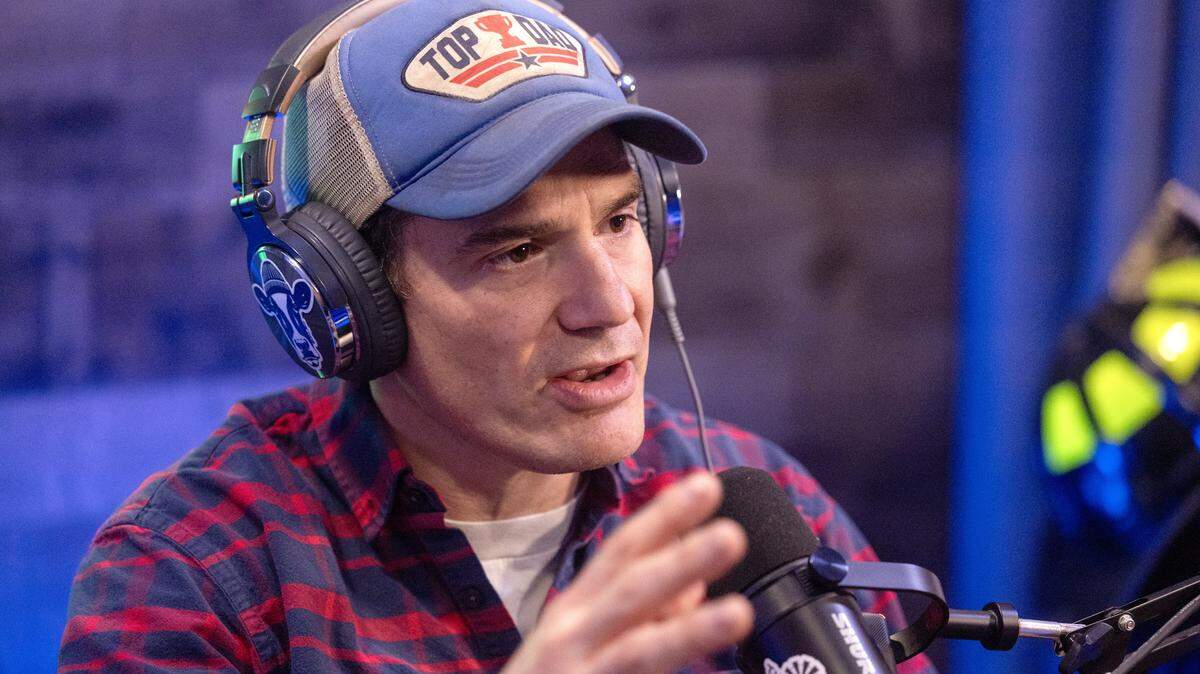
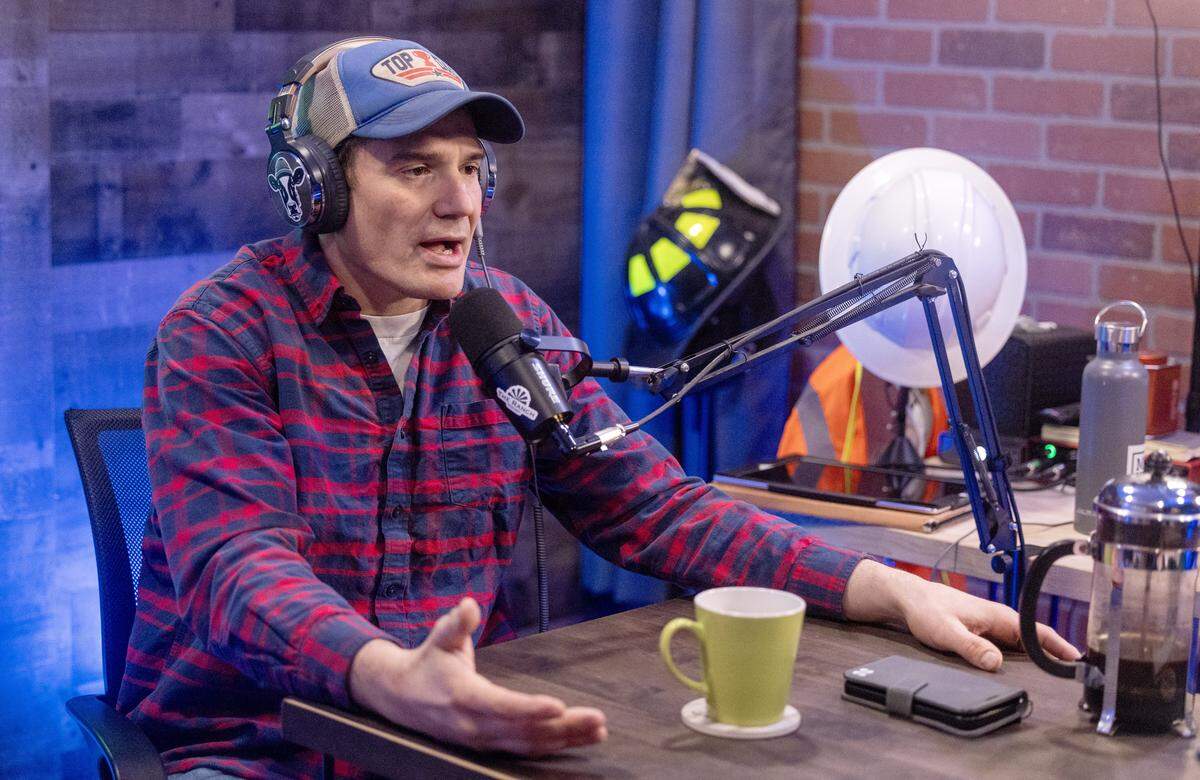
But in just a few years, creator and host Matt Todd has turned The Ranch into the most prolific podcast about Idaho issues with 761 episodes. The show has 30,000 followers on Instagram and, since it started in 2022, Todd has interviewed Gov. Brad Little and Lt. Gov. Scott Bedke, Boise Mayor Lauren McLean, numerous members of the Idaho Legislature, Idaho Secretary of State Phil McGrane, all four of Idaho’s delegates to Congress, local business leaders, law enforcement members, educators, political candidates, government officials, health care experts and more.
The Ranch has become Todd’s full-time job. He does multiple interviews each day, typically around an hour long, and told the Idaho Statesman in an interview that he’ll publish close to 500 episodes this year.
His success comes just four years after moving to the Treasure Valley from California — a fact that has become an asset as he channels his natural curiosity about his new home.
“He has opened the door for people who are like, ‘Oh, I moved to this new place. How do I understand it?’ “ McGrane, who has been a guest on the podcast several times, told the Statesman.
Todd’s background has also, at times, been ammunition for critics.
“People love to hate on me because I’m not from here,” Todd said. “They’re like, ‘How dare this Californian tell us how to live?’ I don’t believe I even articulated a position in the entire episode that you’re mad about. I didn’t even take a side. How do you think I’m telling you how to live?”
The bar for getting on the podcast: make it interesting. Todd said he wants to make the conversation worth his time and his guest’s, learn something new, teach his listeners something, maybe debunk a misconception.
“As with most things, it starts with me just stumbling ass-backwards into a random conversation with somebody that goes to another one, to another one, to another one and to another one,” Todd said. “That’s the entire story of this show. So everything I know started from like one random thread getting pulled and then just more people connecting me.”
Podcast grew from California ‘vlog’ to key policy partner
Todd came to podcasting as a listener when he was still living in California and working as an SAT tutor. He was introduced to Joe Rogan, whose “Joe Rogan Experience” interview podcast has been one of the most popular — and controversial — shows on streaming platforms for years.
Todd said the podcast medium “allowed me to understand the world I was existing in in a different way, like meaningfully changed my view of myself, or things that I thought I had a good handle on. And I was always blown away by that.”
“I’m married to Joe Rogan,” he added. “As far as podcasts go, like, I don’t cheat on him. I don’t listen to any other longform podcast. And it would take a lot for me to not listen to him.”
Students Todd was tutoring suggested he start a podcast while still living in California. It began as “more of a vlog” focused on school issues, he said. His family moved to the Boise area in 2022 on a friend’s recommendation when the Bay Area started to feel unsafe to them. In Idaho, Todd started The Ranch with a focus on hyperlocal issues: his HOA, issues at his kids’ elementary school. It started to snowball as contacts began pointing him to more potential interviewees or topics.

The podcaster said he felt like he was noticing intentional manipulation on social media and that the only way past that manipulation was “to bring reality to the populace.”
“I started looking around like: ‘Hey, man, I saw some stuff on my phone. I don’t know who this person is or what they’re saying exactly, but I’m pretty sure that’s not true, right? I’m pretty sure this person doesn’t want pornography all over the libraries,’ ” Todd said.
Early guests on the podcast included Ada County Sheriff Matt Clifford, then-Eagle Mayor Jason Pierce, local school district representatives, business and community leaders and political candidates.
Some of the conversations are just for fun, Todd says, but others — particularly the political episodes — are backed by a nonprofit for which Todd is executive board president. The Truth in Media Foundation’s information is alongside the podcast’s on the Ranch’s website. Its mission is providing unbiased information and truth amid misinformation, the website says.
Todd told the Statesman he wasn’t aware at the time he named the nonprofit that “Truth in Media” was also the name of a nonprofit in West Virginia led by Tim Pool, a right-wing influencer who worked for a media company that allegedly took Russian money to influence U.S. politics, according to a 2024 indictment. It’s also the name of a social media channel run by a former news anchor that platformed conspiracy theories and talking points from Russian state-run news and InfoWars, according to the Daily Beast.
Todd said he plans to change the name of his nonprofit.
Truth in Media acts as a sounding board for episodes and potential guests and helps steer the direction of the podcast. Board member Brian Brooks, who himself has been a guest on the podcast as the former director of the Idaho Wildlife Federation and VP of advocacy at the American Bird Conservancy, said The Ranch is a way to meet people where they are.
Brooks said he feels there’s an absence of “rational, normal voices” in public discussion that has created a vacuum filled by misinformation and disinformation. To him, The Ranch is an opportunity to elevate community leaders and voices that matter.
“It’s very clear that not engaging in this sort of new way that people are consuming media, it’s having real world implications that is making quality of life in Idaho suffer,” Brooks told the Statesman. “I saw Matt and what he was doing as a way to potentially stop that vacuum from being just filled with a lot of that.”
The Ranch has become a go-to partner for the Secretary of State’s office on election information. McGrane told the Statesman that he declined an invitation to be on the podcast when Todd was first starting out, but agreed to an interview ahead of the May 2024 primary.
The feedback his office got after appearing on The Ranch was “impressive,” McGrane said.
“Any time we would talk, people would have new questions about the voting process, about security in elections, lots of the issues of the day,” McGrane said. “For a while there, I was doing, like every other week in his studio leading up to the presidential election.”
McGrane said he was even pulled into a policy-wonk discussion with the owner of a local business who recognized him solely as a guest on Todd’s podcast, not as a state elected official.
Among Todd’s listeners are other elected officials. Reps. Soñia Galaviz and Monica Church, both Boise Democrats, have said they listen — and have appeared on the show. Galaviz shared her Spotify Wrapped with the Statesman, which included the podcast in her top listens. Church told the Statesman in an interview that she has been a listener “from the beginning.”
Church said she was recommending The Ranch to fellow legislators and contacts as a way to learn about issues like agriculture, water and wildlife.
“I had not met him at that time, I was just singing his praises around the Statehouse and to people in my orbit about the podcast itself and specific interviews that he had done,” she said.
‘What’s the truth?’: Critics question the accuracy of The Ranch
In March 2025, Todd noticed a year-old episode of the show was gaining popularity. It featured Marcus Myers, chief academic officer for the West Ada School District, talking about district curriculum. He contacted the school district to let officials know, and they mentioned an ongoing issue that was gaining traction on social media and in local news outlets, including the Statesman: A middle school teacher was told to remove posters from her classroom, including one reading “Everyone is Welcome Here” and displaying hands with different skin tones.
The teacher refused, and the story was going viral.
The district asked Todd if he’d like to have Myers and school district board member Dave Binetti on the podcast to discuss the situation, and he agreed. He didn’t anticipate the response.
“It was terrible,” Todd recalled.
West Ada School District had declined to comment to traditional media on the situation — including the Statesman — and when Todd’s interview with Myers dropped, he found himself the target of criticism from listeners and even local TV news station KTVB, which ribbed Todd for doing the interview in his typical baseball cap and hoodie.
The podcaster said critics accused him of letting the school district off the hook too easily and avoiding hard questions. He said he was called a Nazi and accused of doing the interview in a ploy for more followers.
Todd said he thinks part of the issue was that he spoke with the school district representatives calmly and framed his questions without accusation.
“I don’t know what other questions I could have asked, but some of the loudest opponents, especially locally, were people that obviously did not watch the interview or listen to it,” he said. “And there was another group of people that were deeply invested in making sure that that interview was disqualified as any kind of reasonable information transmission.”
By the time the West Ada episodes aired, The Ranch had already earned enough of a reputation to bring in high-powered guests, including Idaho’s Lt. Gov. Scott Bedke, U.S. Rep. Mike Simpson, the heads of state departments, McLean and a broad swath of local legislators.
Like the West Ada officials, some of them have avoided traditional media interviews.
“I don’t know why they talk to me,” Todd told the Statesman. “The thing most people say is, ‘Well, you let them say whatever (they) want.’ ”
Todd said any of his guests could set up their own microphones and cameras and say what they want with “reckless abandon” without need for his audience. In many ways his guests have reach beyond what The Ranch can offer. But Todd’s 31,000 Instagram followers dwarf prominent legislators’ followings on the platform, for instance. He has more followers than the state’s congressional delegation and Little combined.
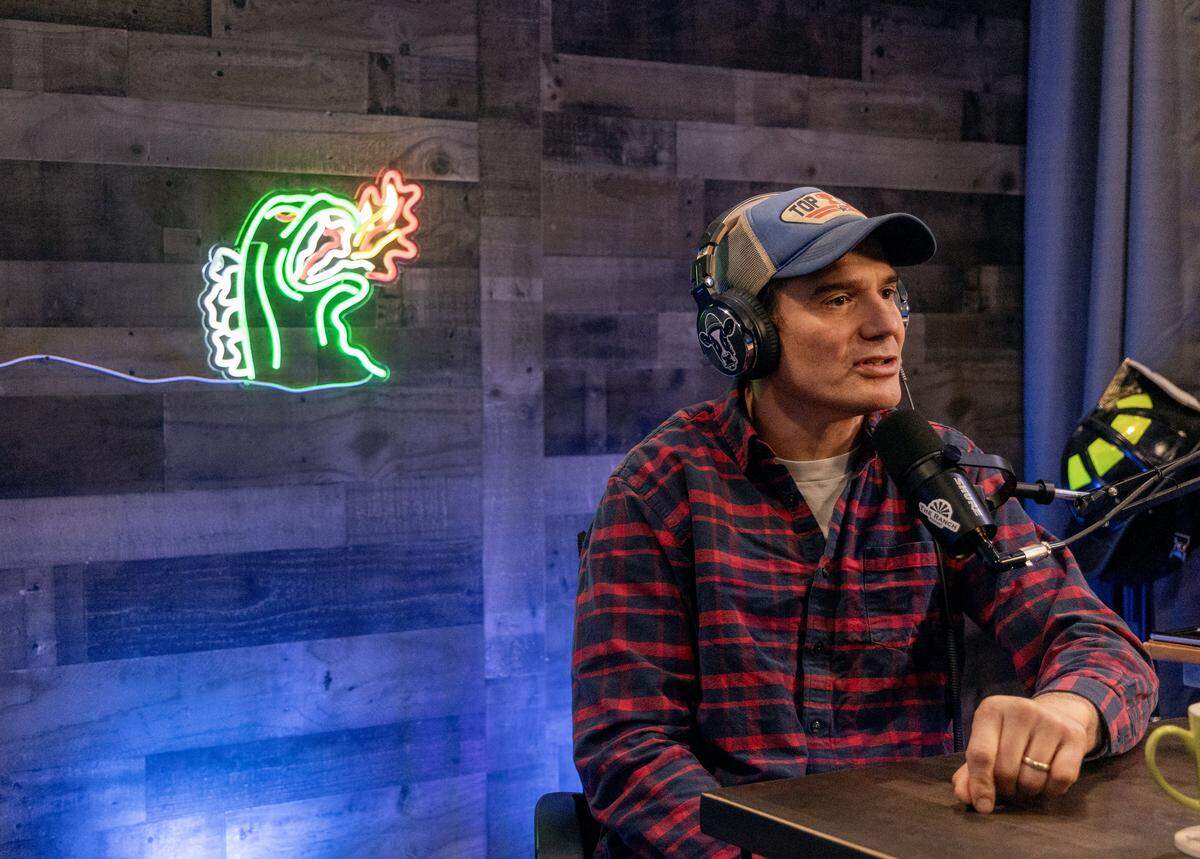
Most of Todd’s guests, listeners and reviews have only praise for The Ranch. When he hears criticism, he said, it’s typically the same refrain: He allows guests to “lie” or give false information, whether intentionally or not, on the podcast without fact-checking or pushback — an assertion he’s grappling with as The Ranch and Truth in Media grow.
“This is really hard. It’s really, really hard,” Todd said. “What’s the truth?”
Todd said one listener was angry with him over an interview with U.S. Sen. Mike Crapo in which the Republican lauded the Big Beautiful Bill budget reconciliation legislation passed by Congress last summer.
To Todd, Crapo’s comments were perfectly reasonable. And he’s not interested in fact-checking every statement.
“Look, if you want me to be the person who says I know the entire truth, and I am the moderator of reality for everyone, this is the wrong channel for you, because I don’t actually know,” Todd said. “I don’t know everything about the Big Beautiful Bill. I don’t know all the nuances of it. How could I say one thing (Crapo) says specifically is an overt lie?”
Even when Todd agrees that a guest has made a factual error on the podcast, he has debated how to address it. In one instance, Mike Hon, a candidate for Meridian Library District Trustee, stated that the City of Eagle’s budget is $6 million — not its actual budget of $62 million in 2025. The error was brought to Todd’s attention when the episode aired, but he left it alone.
Todd said he tried to get the Eagle mayor or another authority on a following episode to set the record straight, but was unable to find a guest to agree. The inaccuracy remains in Hon’s episode without comment.
“To the best of my ability, when a problem arises like this where it’s like, ‘Wait, this isn’t really actually clear,’ I try to invite a guest on that can explain it,” Todd said.
Church, who is still a regular listener in addition to being a repeat guest, said critics have to understand that the format of the show isn’t about questioning every point a guest makes, nor is the show geared toward the casual listener who drops in for a single episode or a sound bite on social media.
Just like Todd said he’s “married” to podcaster Joe Rogan, Church said The Ranch is made for people who stick around and listen to each episode to hear multiple angles on an issue, including the rebuttals that Todd tries to source.
“I would say that all facts are checked, it just might not be in real time,” Church said. “He does do his due diligence to make sure that he knows what the facts are.”
Todd said he often does more than one interview in a day and arrives to them armed with his curiosity and the understanding he’s built through life experience and the 700-plus conversations he’s had about Idaho topics since he started The Ranch.
The podcaster said trying to research each topic ahead of interviews, issue corrections or fact-check each episode would make it impossible to have the quantity and quality of episodes The Ranch is known for. He’s the sole person interviewing and producing the podcast, and making correction videos or comments would wade into territory he’s not eager to explore.
“That presupposes, one, my knowledge of the situation, and two, I start owning the complexity of the problem, and I don’t know how to do that,” Todd said.
Todd said his buffer against bad information is going straight to the source and trying to find “high quality” interviewees — he pointed to Little, Idaho Fish and Game Director Jim Fredericks and Idaho Hospital Association President and CEO Brian Whitlock as examples.
“He is not a journalist, and he’s talking about things that he is learning about in real time,” Brooks said. “I think, to be clear, Matt wouldn’t consider himself (a journalist).”
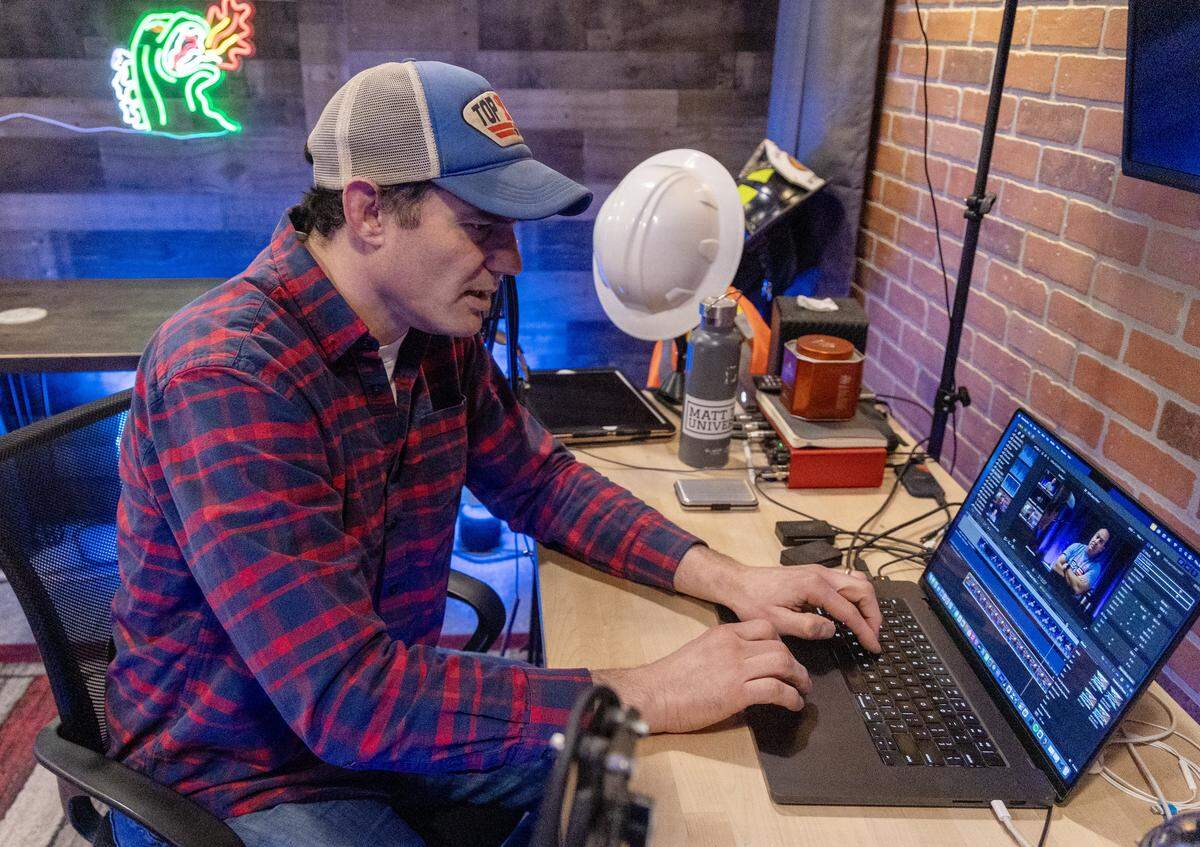
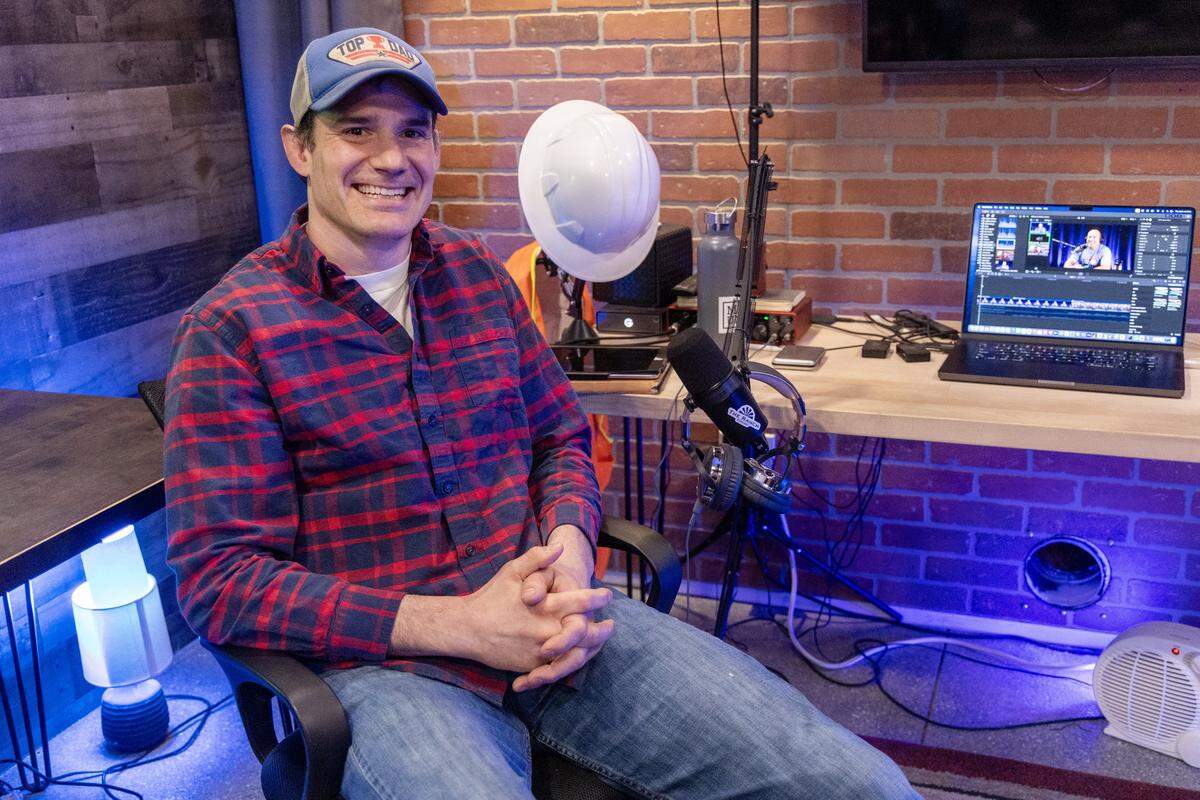
Todd doesn’t — he calls himself “just a dude in a garage” who is unsure that there’s a perfect way to navigate the current distrust in most media and overvaluing of “random people we see on the interwebs that may or may not even be people.”
“I am not some seasoned media professional who went to journalism school and knows how to navigate this,” Todd said. “Like, I’m a damn idiot. That’s it. So look no further than me being my worst critic.“
Building influence as a California transplant
Todd has already landed interviews with many of the most powerful people in Idaho. He has discussed some of the state’s most controversial issues, including abortion, growth, wolves and school choice.
As the podcast speeds toward its 800th episode, Todd has his eye on a dream interview: discussing invasive quagga mussels with Idaho State Department of Agriculture Director Chanel Tewalt.
“I have been trying for years to get her on,” Todd said with a laugh. “Everyone in the state has put in a good word.”
He’s drawn to the complexity of the issue, which Tewalt’s department has worked to manage in recent years when the invasive mussels were discovered in the Snake River. If left unchecked, they could severely impact irrigation, wildlife, recreation and more, but treating the river for the invasion also has consequences.
Brooks said Todd’s natural curiosity about issues like mussels, water rights and Idaho politics has earned him fans even as Idahoans maintain often-prickly attitudes toward California transplants.
“I think that might be part of the cards he holds in his deck — he doesn’t have baggage,” Brooks said. “He didn’t come from a specific industry or sector where people might be kind of dubious of his intent, and then when you meet him, you know he’s actually really inquisitive and is asking questions, and he doesn’t even know if they’re loaded.”
McGrane said his office’s data shows politics is a major reason why new residents are moving to Idaho, and The Ranch has been a useful resource for that audience to learn about the state.
“The genesis of it, it was kind of a local podcast for transplants from California in the region, but it kind of spread virally,” McGrane said.
For Todd, perhaps the most important part of The Ranch is helping people get away from the silo — he hopes the podcast introduces people to topics they would never think to learn about or perspectives they haven’t otherwise considered in what can often be a media echo chamber.
While some listeners aren’t shy about letting him know when they think he’s wrong, he said it means a lot when someone sees the vision.
“Occasionally I’ll have people be like, ‘Listen, I don’t always agree with the clips this person puts out, but I appreciate this one, or I appreciate that he continues to try to get both sides,’ ” Todd said of his listeners. “Those are the (ones) that I actually spend the moment like: ‘God bless you. Like, thank you for hanging in there with me.’ Because people have tendency to only tend towards things they like.“
This story was originally published February 12, 2026 at 4:00 AM.