Newsom migration: Californians moved to Idaho in droves, jolting housing market
AI-generated summary reviewed by our newsroom.
- COVID-19 pandemic-era politics coincided with a wave of Californians moving to Idaho.
- Remote workers with higher wages spurred all‑cash offers and bidding wars around Boise.
- Idaho housing inventory stalled as costs and developer caution slowed new construction.
READ MORE
Calif + Idaho
Expand All
Thousands of Californians move to Idaho every year. Who are they?

‘Architects’ vs. ‘arsonists’? A face-off between newcomers and longtime Idahoans
Newsom migration: Californians moved to Idaho in droves, jolting housing market

‘Bring reality to the populace’: California podcaster created Idaho’s biggest show
Editor’s note: This is part of a series of stories exploring how newcomers from California are changing Idaho. Have ideas? Email tips@idahostatesman.com.
Idahoans can thank Gavin Newsom for inspiring so many Californians to move to the Gem State.
That’s the conclusion reached by Mike Bushfield, a real estate agent with Homes of Idaho, based on recurring conversations he has had over the past year at open houses throughout the Treasure Valley. He tries to get a sense for why people are looking to buy a home, and the majority of those he meets from California tend to veer into politics — including the state’s Democratic governor, he said.
“I didn’t even know who Gavin Newsom was until I became a real estate agent,” Bushfield said in a phone interview with the Idaho Statesman. “People were complaining about him, and so I had to Google who this dude was.”
Under Newsom’s direction, California rolled out some of the nation’s most restrictive policies during the COVID-19 pandemic that started in spring 2020. By then, Idaho already was experiencing an influx in population from neighboring states, and the pandemic boosted it even more as people sought to escape shutdowns in the name of public health for livable locations with looser rules.
The floodgates opened, and tens of thousands of California residents rushed to Idaho, according to U.S. Census data. The Boise-area housing market took a direct hit, and median sale prices spiked nearly 59% over a two-year period, according to Zillow. Home sales hovering at around $300,000 at the beginning of 2020 climbed to about $500,000 by spring 2022, the real estate data showed.
And of the Californians who showed up, most were political conservatives, the Idaho Secretary of State’s Office reported. Among the newcomers from the nation’s most populous state since 2020, Idaho voter data reflected 76% registered as Republicans, with the remainder — less than a quarter — split between Democrats, unaffiliated or another political party.
The pandemic ushered in new remote-work opportunities, and Californians with higher wages who moved to deep-red Idaho also found their dollars stretched farther. All-cash offers, including in Boise and its surrounding suburbs, became commonplace and spurred bidding wars that drove up housing prices, Michael Megis, a longtime broker also with the Homes of Idaho real estate firm, said in an interview.
“I had damn-near fist fights,” he said. “I mean, it was insane.”

During the heights of that period, new residents from all over the U.S. arrived to Idaho, feasting on more affordable housing costs and sparking price increases, Megis said. Besides California, people who last lived in Oregon or Washington state also topped the list for those who made their way to the state to round out the COWs (California, Oregon, Washington) acronym that some locals have used to describe the bulk of newcomers, including Idaho Gov. Brad Little.
Idaho’s total population ballooned, for the first time hitting 2 million people in December 2024, the state’s Department of Labor reported. The record represented an estimated 13.4% jump from 2019 as Idaho remained among the top states for annual population growth by percentage over that span.
California no longer dons the crown
The wave of new people during the pandemic placed unprecedented strain on what had been a relatively affordable housing market. Supply-and-demand economic principles took hold and home prices in Idaho that shot up during the pandemic have continued to increase, said Susan Weaver, president of the trade group Boise Regional Realtors.
“Inventory is not keeping up with the growth,” she said by phone. “There’s a lot of different factors: land costs are going up, materials are going up in price, labor’s harder to come by.”
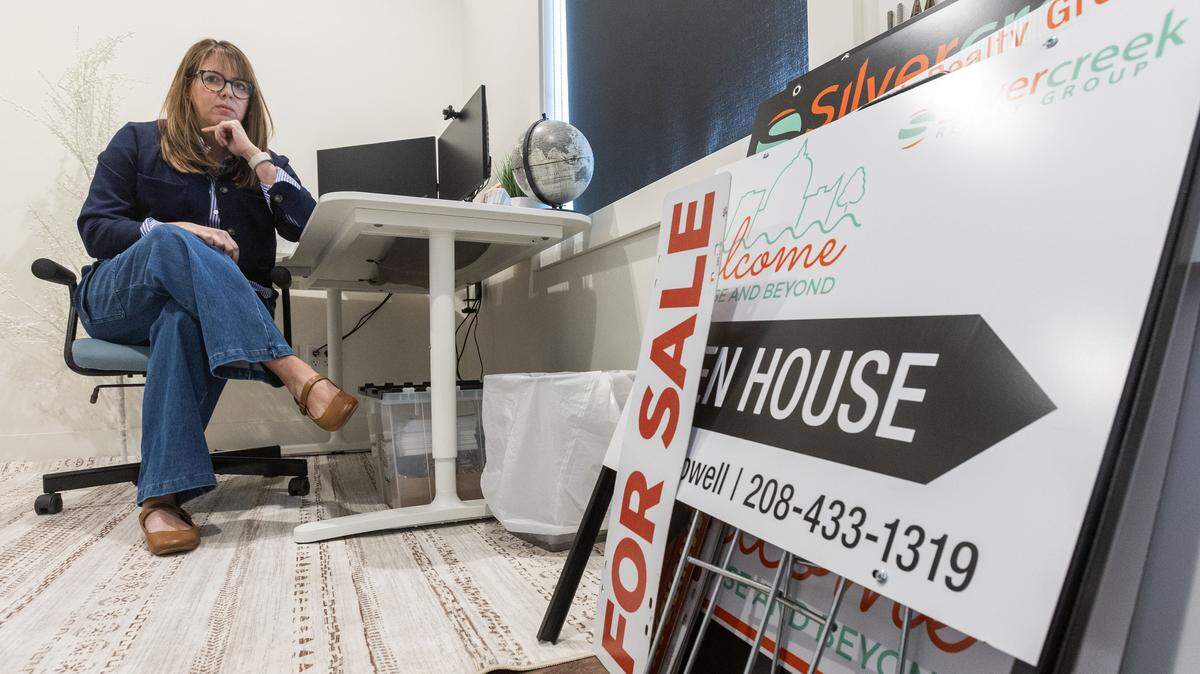
Home developers also have become more cautious about investing in large residential projects, said Weaver, who sells with Silvercreek Realty Group in Meridian. Ongoing uncertainty in the housing market, including over interest rates, has stalled some new production.
“Everybody’s just kind of sitting tight wondering what’s going to happen,” she said. “Everyone’s crystal ball broke, so we’re all just kind of giving our best guess.”
Historically low interest rates during the economic downturn at the outset of the pandemic started to rise in the middle of 2022. In some cases, Weaver recalled, homebuyers under contract could no longer afford the homes when the rates recovered and gave up their deposits. Likewise, developers — including some national builders that had entered Idaho’s booming housing market — also chose to take their losses and just walk away, she said.
Today, the Treasure Valley’s housing market has mostly stabilized, Weaver said. Inventory is at about two months worth of properties, whereas attaining true “balance” is typically between four and six months of inventory, she said.
The average sale price in the region actually went down a bit last month, which is helping begin to lean from a seller’s market to one that slightly favors buyers, Weaver said. Median sale prices in Boise that approached $600,000 in the middle of 2022 are now back down to about $500,000, according to real estate brokerage firm Redfin.
Now, more than 62% of homebuyers nationally paid less than the original list price in 2025, a Redfin analysis showed in another report. Home values in the Treasure Valley still grew by 2.4% in 2025 compared to 2024, but sellers have had to become more realistic about the price of their homes to incentivize buyers over the past year or two, Weaver said.
“They got used to the crazy prices during COVID, and everybody thought their home was more valuable than it ended up being,” Weaver said. “Over time, prices have adjusted to be more accurate and consistent. There’s not any craziness anymore.”
In perhaps another sign of shifting trends in Idaho, Californians no longer made up the largest group of newcomers in 2024, the latest U.S. Census Bureau dataset showed. That title is held by Washington, with estimates of nearly 18,000 new residents coming to Idaho with about 2,500 fewer from California.
Soon, one of the oft-cited reasons for Californians to move to Idaho won’t be relevant anymore. Facing a term limit, Newsom’s time as governor of California ends in January 2027.
This story was originally published February 10, 2026 at 4:00 AM.