This general election will decide Idaho’s next superintendent. Here are the candidates
READ MORE
Idaho 2022 Voter Guide
Check the Idaho Statesman’s Voter Guide for the Nov. 8 general election to help you make your decisions.
Expand All
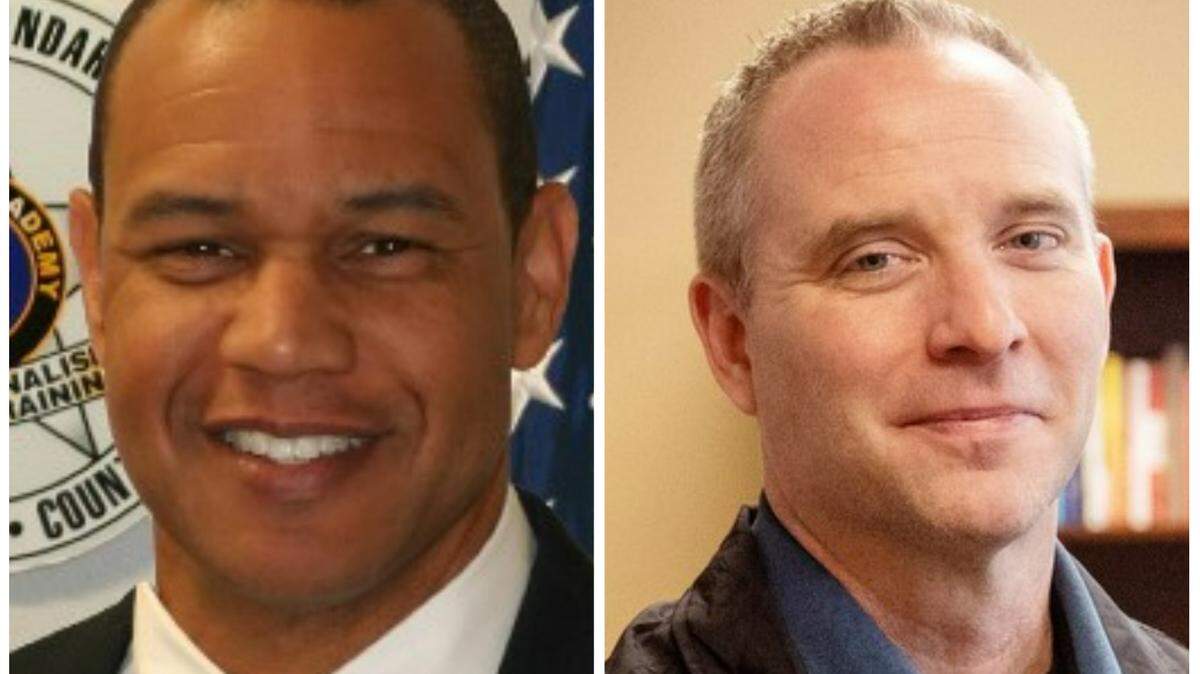
Who’s running for Ada County sheriff? Learn candidates’ positions on the big issues
Who’s running for Ada County Highway District Commission? Check out our Voter Guide
This general election will decide Idaho’s next superintendent. Here are the candidates

Who’s running for the Ada County Commission? Learn candidates’ positions on big issues
Idaho Voter Guide 2022: Read the candidates’ answers before you head to the polls
Two candidates will face off in November to be Idaho’s top education official.
Voters will determine the next superintendent of public instruction at a time when schools across the state face financial challenges, including a shortage of staff, aging facilities and continued allegations of indoctrination. The Legislature is also preparing to decide how to allocate $330 million they dedicated to K-12 public schools earlier this year.
Republican Debbie Critchfield, the former president of the State Board of Education, will face Democrat Terry Gilbert, a former teacher and Idaho Education Association president, in the Nov. 8 general election.
Critchfield won the Republican primary in May against incumbent Sherri Ybarra, who was running for a third term, and former state lawmaker Branden Durst. Gilbert ran unopposed.
Both candidates have pointed to some similar issues they’d want to address if elected, including expanding career technical education opportunities, improving literacy rates and addressing aging facilities.
But the two differ in how they say they’d approach the office and work with others in an environment that has, at times, been hostile to public education. While Critchfield is supported by more than two dozen Idaho lawmakers and a number of educators, Gilbert won the endorsement of the Idaho Education Association.
Candidates would bring different backgrounds to role
Leading up to the campaign, both candidates have had different backgrounds and experiences they believe make them qualified to be the state’s top education official.
Critchfield previously served as the president of the State Board of Education, a spokesperson for the Cassia County School District and a trustee.
She said her leadership experiences — and her time serving on the Board of Education during the COVID-19 pandemic — have prepared her to take on the job. She said she understands the role of the superintendent, has experience working with the Legislature and knows how to figure out what students and families need.
“I look forward to being able to re establish that trust, build up those lines of communication, so that we can move forward and get the work done,” Critchfield told the Idaho Statesman.
Gilbert was a former teacher who worked in rural Idaho schools. He served in various roles for the Idaho Education Association and served as its president for a year in the 1970s.
He said he decided to step out of retirement after learning no one was running as the Democratic candidate for superintendent of public instruction. A one-party system is dangerous for democracy, he said.
“I was an American government teacher, and democracy is a precious ingredient to me,” Gilbert told the Statesman.
Critchfield said she respects Gilbert’s time as a teacher, but that the skills needed to serve as superintendent of public instruction are “very different” than those used in a classroom.
Gilbert, who described himself as a lifelong educator, said his years in the classroom and time serving as an education advocate make him a good candidate for the job. He wants to be a voice for families and community members who feel the Legislature hasn’t fulfilled its responsibility to adequately fund public schools, he said.
Critchfield supports school choice
Both candidates told the Statesman one of their top priorities is to ensure the state prepares students for the workforce.
Critchfield said she also wants to ensure the State Department of Education supports local school districts. If elected, she said she would decentralize the Department of Education and have more regional support for school districts. School districts across the state have different needs and resources, and need more localized support, she said.
Another priority would be looking at how to allocate the money coming in for education after the Legislature earlier this year allocated $330 million to K-12 education, she said. The Legislature will decide where those funds go next session.
Though the State Department of Education’s budget proposal was due earlier this year, Critchfield said she could resubmit the proposal in December with her recommendations if she’s elected.
“I’d surely like to be a part of that discussion to make sure that we’ve got a plan, and that we’re intentionally directing that money to where it helps our students and teachers most,” she said.
Those funds could go toward a number of areas, including vocational and career technical education, salaries for classified staff and aging facilities, she said.
Critchfield’s platform also includes supporting school choice, which is defined by the State Department of Education as letting parents choose the “method of education” that best fits their families. It is often used as a way to refer to the idea of letting public funds follow students to private schools.
Gilbert said if elected, he will make sure public funds stay in public schools. Since he’s been involved in education in Idaho, he said the state has “not provided the educational resources” children and teachers need.
His other focus areas included increasing funding for vocational education programs, investing in quality early childhood education, improving the state’s graduation rates, maintaining school buildings, addressing the state’s literacy rates and treating teachers and support staff “as the professionals they are.”
Do candidates support school vouchers?
Throughout the election, the issue of school choice — and whether public funds should follow students who enroll in private schools — has stirred tension.
Education groups, including the Idaho Education Association and Idaho School Boards Association, have advocated strongly against any bills proposed during previous legislative sessions that would have taken money for public schools and sent that to private schools.
Critchfield and Gilbert both told the Statesman public school funds shouldn’t go to private schools.
Critchfield said she would oppose vouchers that use public school funding to send to private schools. She used the Empowering Parents Grants program, approved by the Legislature last year, as an example of a program she would support. The program primarily used $50 million in funds from the federal American Rescue Plan Act that had been sent to Idaho.
The Empowering Parents Grant program allows any family across the state — including those whose children attend private schools or are homeschooled — to apply for grants to use on expenses such as technology, instructional materials and tutoring.
“Vouchers have become this litmus test for whether or not we’re school choice,” Critchfield said.
As a superintendent, she said, her first obligation would be to public schools. While she would not specifically take from the public school’s budget, she said she would be open to the conversation of “how we address the private school tuition.” But it was unclear where those funds would come from.
“I don’t want to take from the public schools’ pie,” she said. “Anything that we look at above and beyond that, to me, needs to come from an existing program outside of the public schools budget.”
Gilbert, who reiterated multiple times that public funds should go to public schools, said he expects the “voucher vultures” will be at work this session. He specifically referred to the Idaho Freedom Foundation, an influential lobbying group that’s advocated for defunding public education.
“They demean public education and public educators,” he said. “They spread rumors about public educators, that public educators are seeking to indoctrinate students, that (critical race theory) is an evil event.”
He said they have also convinced parents to pull their kids out of public schools and have said voucher programs would be better for children.
Gilbert said he doesn’t believe his opponent will be a “fighter for public education.”
“She will capitulate silently to the overwhelming influence of the Republican Party,” he said. “I will fight for public education.”
Candidates say they must reestablish trust
If elected, Gilbert would be a Democrat working with a Republican-dominated Legislature that last year cut over $2 million from university budgets over concerns they were teaching critical race theory and providing other social justice programs, and accused K-12 teachers of indoctrinating students.
Last session, House lawmakers passed a bill that would have held librarians liable for distributing materials “harmful” to children. A folder lawmakers passed around with examples of these harmful materials included the popular young adult novel, “The Perks of Being a Wallflower,” and “It’s Perfectly Normal” by Robie H. Harris, a book for children on sexual health.
To support his mission, Gilbert said he wants to form a “cornerstone movement.” He defines it as a multitude of voices that can put pressure on the Legislature and push lawmakers to take action. The state shouldn’t be dominated by one voice, he said, and lawmakers need pressure to “do the right thing.”
“Public education is the cornerstone of our democracy. So I realized that as an individual and not part of the major party, I’m going to have to have lots of help,” he said.
This week, he earned the endorsement of the Idaho Education Association. The association’s endorsements are made by a committee that includes a member from each region of the state, along with IEA leaders and an aspiring educator, spokesperson Mike Journee told the Statesman.
Gilbert is a long time ally and has a proven track record of being a true education advocate, Journee said. He’s someone who understands the association’s members and the issues they face in public schools.
“He clearly has the trust of our members,” Journee said. “He understands the dynamics of the classroom and the needs of educators and needs from public schools.”
Critchfield, who has received dozens of endorsements from legislators and educators throughout her campaign, said the candidate who assumes the superintendent role will have to reestablish trust between the education sector and the Legislature. Communication, she said, is key.
“We don’t want breakdowns where it becomes adversarial, between the groups of people that share the goal of helping kids,” she said.
Lawmakers have called her up throughout her campaign, she said, and asked about certain issues, seeking accurate information. She said she wants to continue talking with people who have questions and concerns and finding answers so people better understand what’s happening in Idaho education.
“I don’t want it to be teacher versus parent, or teacher versus legislator, or whoever these groups are, because … we shouldn’t be competing,” she said. “We need to be cooperating to help kids.”
Reestablishing trust must happen at the state and local levels, she said.
Critchfield said she plans to share with legislators how the investments they have made in education have helped students and teachers in the classroom and recommend a budget that responsibly allocates funds to get results.
“We shouldn’t have to wait for the headlines of things that are disappointing or shocking to us in school districts,” she said. “Let’s make sure we’re consistently … sharing statewide stories about what the investments have earned us.”
This story was originally published October 14, 2022 at 4:00 AM.