‘This is my very humanity’: Supporters of abortion access rally against restrictive bill
READ MORE
Special report: Idaho’s abortion law
Idaho Gov. Brad Little signed a controversial bill based on the Texas law while expressing concerns over its legality. Here’s our coverage of Senate Bill 1309, which allows family members to sue abortion providers for a minimum of $20,000.
Expand All
Roughly 300 people gathered Saturday at the Idaho Capitol to protest an abortion bill that could ban the procedure after about six weeks and would make Idaho one of the most restrictive abortion-access states in the country.
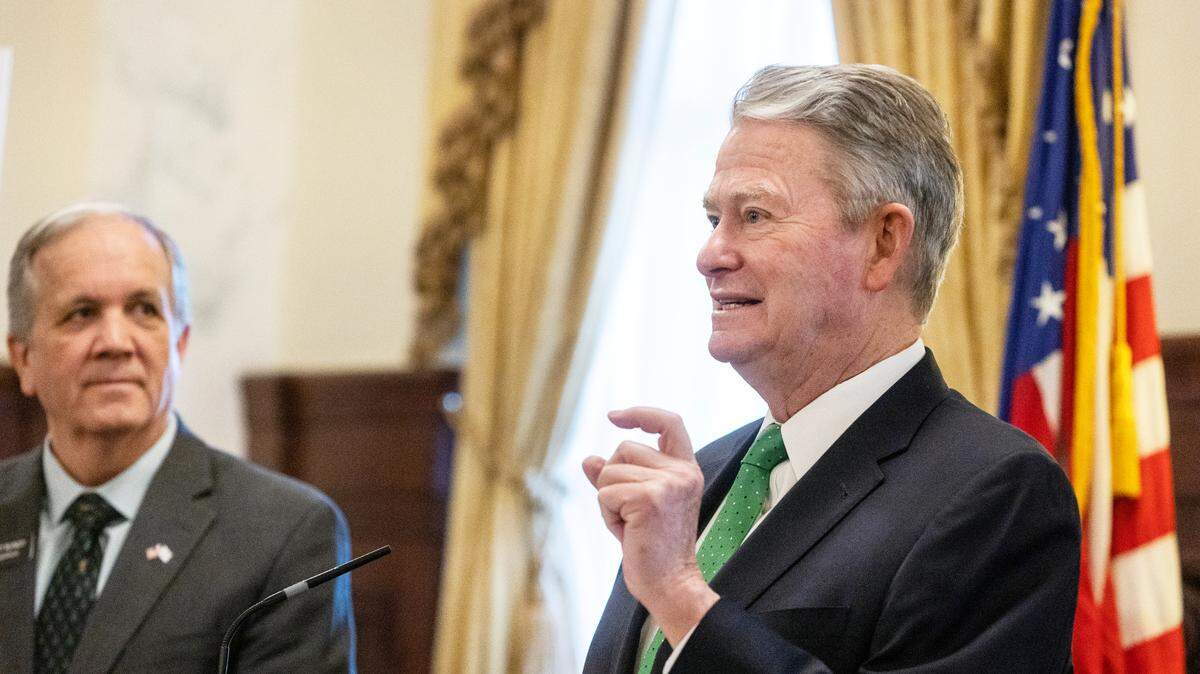
Demonstrators rallied at the Capitol before marching to the Post Office on Bannock Street to mail letters asking Gov. Brad Little to veto the bill. Legislators sent the bill to the governor’s desk on Monday, after the House passed the piece of legislation 51-14.
Sen. Melissa Wintrow, D-Boise, spoke at Saturday’s rally and said she opposed the bill “to represent the majority of Idahoans who believe that women and people who are pregnant deserve to have access to a full range of health care.”
“It’s more than ink on paper. It’s more than lines through words,” she said. “These are my very rights. This is my very humanity and my dignity that you are trying to erase.”
The right to an abortion in the U.S. is protected by a 1973 Supreme Court decision, Roe v. Wade, which maintains the right until a fetus is viable outside the womb, or at about 23 weeks of pregnancy.
But Idaho’s bill, which is widely viewed as a copy of a similar albeit more restrictive Texas law passed last May, would ban the procedure after cardiac activity in a fetus is detectable, which usually occurs at around six weeks and is before the time some women know they are pregnant. The bill has an unusual civilian enforcement mechanism, allowing a fetus’s father, grandparent, sibling, aunt or uncle to sue the abortion provider for a minimum of $20,000 and legal fees within four years of the abortion.
By avoiding state enforcement, the bill aims to circumvent legal challenges on constitutional grounds. The approach has so far worked in Texas, where the Texas Supreme Court and U.S. Supreme Court have declined to intervene, citing the fact that the private enforcement mechanism makes it difficult to dispute in court, as state officials cannot be challenged in court by its opponents.
One month after the Texas bill became law, the number of abortions performed by registered providers in the state fell by 60%, according to state figures.
Unlike the Texas bill, only family members could sue under the Idaho law, and potential legal action could only be pursued against providers. The law in Texas also allows legal action to be taken against people who assist a woman in getting an abortion.
“I think it’s important that people know that this is a coordinated effort to try to take away abortion rights as quickly and extremely as possible,” Mistie DelliCarpini-Tolman, Idaho state director of Planned Parenthood Alliance Advocates, told the Statesman.
The bill would take effect 30 days after the governor signs it, and is likely to face legal challenges.
A coalition of abortion rights groups organized Saturday’s rally at the Capitol, including Planned Parenthood, Freeing Idaho, Legal Voice, the Idaho Coalition Against Sexual and Domestic Violence and Add the Words, Idaho.
Rally attendees carried signs reading “Ban Off Our Bodies” and “I’m a woman not a womb.” Demonstrators sent “invoices” to the Republican governor noting the cost Idahoans may have to sustain to receive an abortion out of state if the bill becomes law. Neighboring states like Oregon and Washington have relatively nonrestrictive abortion laws.
“I don’t want people to die for something that they have a right to,” Levi Dorosh told the Statesman as they marched to the Post Office, referring to the large number of people who often pursue and receive unsafe abortions when the procedure is illegal or restricted.
Unlike the Texas law, the Idaho bill allows for exceptions in the case of rape or incest, but only if women have filed a police report and can show it to their provider. On Monday, one of the bill’s co-sponsors said that family members of a rapist could, under the law, still sue the provider.
Last year, Little signed another abortion bill that would outlaw abortions once cardiac activity is detected. But that bill contains a “trigger provision,” meaning it will not take effect until a federal appeals court upholds similar legislation anywhere in the country.
Rally organizers on Saturday said that opponents of the bill had sent thousands of messages and made over 2,000 phone calls to legislators, as well as hundreds of calls a day to the governor’s office since the bill left the Legislature.
Dorosh said they hope Saturday’s rally will keep Little from signing the legislation.
“I’m hoping seeing all these people will keep him from doing it,” they said.
This story was originally published March 19, 2022 at 2:32 PM.