
He had sex at 18 with two 16-year-old boys in Idaho. Now he seeks Montana court’s help
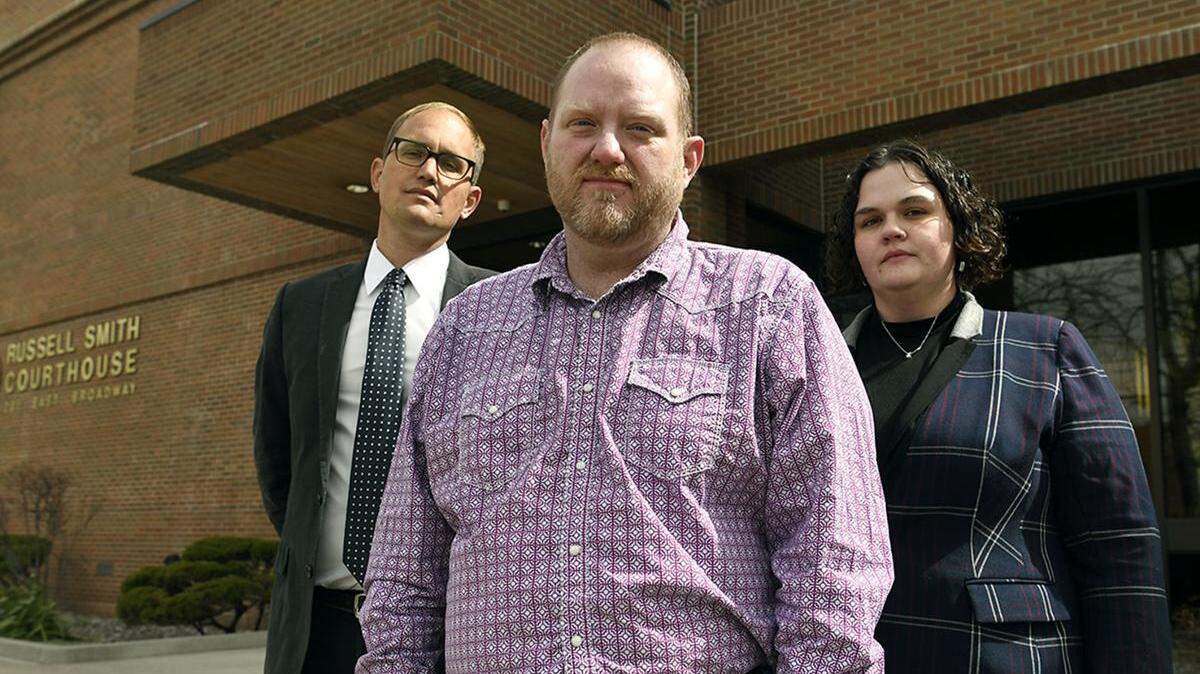
The Montana Attorney General’s Office opposed removing a former Missoula man from the state’s sexual offender registry despite evidence he was designated a sex offender because he had consensual gay sex when he was 18 years old in Southwest Idaho.
At a trial before U.S. District Court Judge Dana L. Christensen, Assistant Attorney General Hannah Tokerud argued that the case did not hinge on whether the man, Randall Menges, was convicted for having consensual sex.
“It hinges on whether he is required to register in Idaho,” Tokerud said.
Menges was convicted in 1994 under Idaho’s Crimes Against Nature law, which bans anal and oral sex between consenting adults, according to the lawsuit.
He was arrested after police found that he and two 16-year-old boys had “engaged in sexual activity with each other.” Police reports from the investigation reflect that the sex was consensual.
Menges served about seven years in Idaho state prison as well as additional years on probation. He moved to Montana after he discharged his sentence. He was required to register as a sex offender.
If any state requires a person to register as a sex offender, Montana will require that person to register, regardless of the facts of the case, Tokerud said at Tuesday’s trial.
Menges’ attorney, Matthew Strugar, argued that Montana is trying to “pass the buck” to another state while enforcing an unconstitutional registration requirement.
Strugar asked Christensen to order the state to stop requiring Menges to register, remove his name from the offender list and delete any state records related to his conviction.
In December, Menges, 45, who now lives in Butte, filed a lawsuit against the Montana Attorney General’s Office over whether Montana’s enforcement of the registration requirement violated his constitutional rights.
“This case involves the lingering effects of centuries of homophobic ‘sodomy’ prohibitions,” wrote Strugar in the original complaint.
In an interview with the Missoulian, Menges said the requirement has ruined job opportunities and relationships, and limited where he can live.
“Society just wanted me to disappear into thin air,” Menges said.
People don’t believe him when he explains why he was convicted, he said. And if they do believe him, they still get worried about employing him, because a simple Google search will show him to be a sex offender.
While he was still in prison, he tried to get his conviction overturned, but he’d missed the deadline to file, Menges said. Before this lawsuit, he’d almost given up hope of a normal life.
The possibility Christensen might lift the registration requirement is the first “ray of hope in a long time,” Menges said.
Christensen did not rule on the case from the bench but said he would get a ruling out “quickly.”
In 2003, the U.S. Supreme Court decided it was unconstitutional to criminalize sexual activity between people of the same sex. Ten years later, the Montana Legislature removed its ban on same-sex activity.
Prior to 2005, individuals ended up on Montana’s sex offender registry one of two ways. Either they were convicted of a crime in Montana that required them to register, or they were convicted of a crime in another state that was equivalent to a Montana offense requiring registration.
However, in 2005 the Legislature changed the law so that anyone required to register as a sex offender in one state had to register as an offender in Montana. Unlike Montana, Idaho still has a law against sodomy and oral sex and requires people convicted of those crimes to register as sex offenders.
Strugar and the American Civil Liberties Union are suing Idaho over whether its sodomy law is constitutional. Menges is also a plaintiff in that case.