Idaho districts struggling with overcrowding say they need new schools. It’s up to voters
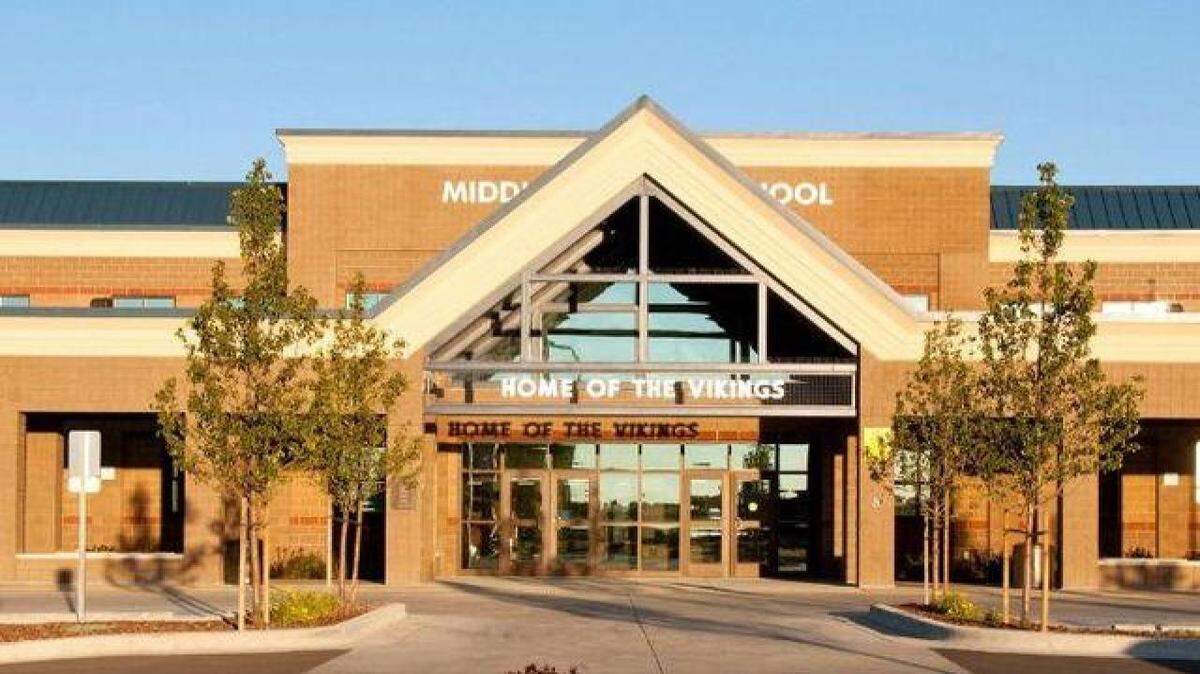
Elementary schools in the Middleton School District are so overcrowded that teachers have had to resort to converting the library — with a curtain as a makeshift wall — into a classroom space. Staff members also worked to repurpose a teacher’s lounge to make it look as much as possible like a classroom.
Mill Creek Elementary School is at 123% capacity, while Heights Elementary School is at 134%, Superintendent Marc Gee told the Idaho Statesman. The district ordered more portable classrooms, modular buildings that can be added to school property, to accommodate more students. But they won’t arrive until November because of supply chain issues.
And the district’s growth isn’t stopping. At the start of last year, the Middleton School District had 4,170 students enrolled, Gee said. This year, that number rose to 4,409, about a 5% increase.
“It’s just growing so fast,” he said. “The teachers are doing a phenomenal job, making the best of a tough situation. … But it makes it harder on the teachers to teach.”
Middleton isn’t the only district in the Treasure Valley facing the challenges of rapid growth and aging buildings.
On Tuesday, voters in the Middleton and Vallivue school districts will decide whether to approve bonds of more than $50 million each to help fund new elementary schools and school repairs.
The Middleton School District is asking voters to approve a $59.4 million bond. The money would fund a new elementary school to alleviate overcrowding in the district’s existing schools, a career technical education center and repairs and maintenance for one of the district’s existing elementary schools.
In Vallivue, the district is asking voters to approve a $55 million bond to fund two new elementary schools, security and building repairs, technology upgrades and the purchase of land for a future high school the district expects to need in the next 10 years.
Bonds a tough sell in Middleton, Vallivue districts
Bonds are the only way school districts can fund the construction of new schools, as Idaho schools can’t legally collect impact fees on new development. But bond elections have failed in both Middleton and Vallivue in recent months and years.
Middleton has not successfully passed a bond since 2008 — though it has tried at least four times since 2015 to get voters to approve the building of a new elementary school, Gee said.
In March, Vallivue’s bond proposal received approval from about 64% of those who voted, but it ultimately failed because it fell a few votes short of the required supermajority to pass bonds in Idaho.
If voters don’t approve the bonds this time, the school districts worry about how they will accommodate the continued growth in the Treasure Valley.
“We’re not trying to keep up with the growth now,” said Joey Palmer, director of federal and state programs with the Vallivue School District. “We’re desperately just trying to catch up with it.”
‘Bursting at the seems’
The Middleton School District predicted it would need a new elementary school for years. It put the question to voters once in 2015 and three times in 2018. All four times, the district’s bond proposals failed.
At the same time, the costs of building a new school rose. When the district first posed the question, its elementary schools were just hitting capacity, Gee said.
Now, they are “bursting at the seems,” he said.
“We absolutely need that elementary so that we can get students out of the teacher’s lounge and into regular classrooms, and out of these portables and into regular classrooms,” he said.
The district’s third elementary school, Purple Sage, is at about 85% of capacity, but that school houses some of the district’s special education classes, so it has intentionally kept some of those classes smaller, Gee said.
The district’s middle and high schools are also nearing capacity. Middleton Middle School is at 84% capacity and the high school is at 94%.
The new career technical education center could help the district increase its offerings and add capacity at its middle and high schools, as students interested in CTE courses would leave their schools to take classes at the center. Building a new middle or high school could be far more costly, Gee said, ranging in price from $75 million to $120 million.
“The CTE center is much more about creating capacity for the future, because the growth is not going to stop,” he said.
The funds will also go to repairs at Heights Elementary, built in 1986. The building’s roof is at the end of its lifespan and the elevator entries, some bathrooms and doors need updates to make them ADA compliant. The bond would also go toward installing air conditioning in the gym.
Middleton has a total of 326 out-of-district students, and it has mostly stopped allowing out-of-district students to enroll in the district — with a few exceptions — as its schools have continued to become more crowded.
In the Vallivue School District, six of the district’s seven elementary schools are over capacity. Now, the district’s elementary schools have 23 portable buildings for a total of 46 additional classrooms. But there’s no room to add more portable classrooms at the schools, Palmer said, and class sizes continue to grow.
At Desert Springs Elementary School, some students who need targeted instruction or intervention have the walk over to the nearby middle school and use its portable classrooms — losing instructional time and braving, at times, cold and snowy weather — because there’s no room at the elementary school. Some portables lack plumbing, so students and teachers need to go into the main buildings to use the restrooms.
The district also wants to buy land for a third high school, which it expects to need over the next 10 years. It wants to purchase the land sooner than later, as developers are buying up land now, Palmer said.
The overcrowding in the district also makes it hard to recruit new teachers, who may be hesitant to work in a situation where they are put in a portable classroom without restrooms, and have to accommodate large class sizes, Palmer said.
Palmer said it’s easy to see more growth coming.
“You can go to any of those schools and just stand in front of their schools, and look around and see all the construction that’s still coming,” he said. “So we’re already overcapacity at our elementary schools and and they haven’t even finished construction of the homes that are already coming.”
If the bond doesn’t pass, he said, it will only exacerbate those issues, while the costs to build those new schools rises.
How will bonds impact taxpayers?
The Middleton School District said the amount taxpayers pay per $100,000 of taxable property will decrease if the bond passes, but the value of residents’ property in the area is also rising substantially.
The Middleton School District now has a supplemental levy and a current bond it is still paying off for its high school. This fiscal year, the community paid $225 per $100,000, Gee said.
With the new bond, Gee said the district projects patrons would pay about $140 per $100,000 or less for just the bond piece. The district projects residents would pay a total of $155 per $100,000 if the bond were to pass, given the growth and increase in market value in the region, Gee said.
That means if someone had a home that was $450,000, and the value of that home spiked this year to about $675,000, that person’s taxes would rise by about $30, Gee said. If the bond passed, it would also add to the time residents would have to continue paying off the schools. But the way it will impact people all depends on people’s individual properties.
Gee acknowledged any increase in taxes could pose challenges to community members. He said the district is trying to raise awareness, so voters can make an educated decision at the ballot box.
“So many people are under a lot of stress between inflation, fuel prices. … You see a lot of people that are being pushed to the edge of their limit,” he said, adding that home values are also rising significantly. “We recognize that, and our goal was to try and calculate what we can do to keep that as level as possible.”
The Vallivue School District said the average cost to taxpayers per $100,000 of taxable assessed value is not expected to change.
The district said its tax levy rate is the lowest it has been in 15 years, and that is a factor of more people moving into the area, the district refinancing its bonds and the values in the market growing, Palmer said.
“The Vallivue School District is fortunate to have such a strong economy … that we’re able to restructure our bonds and be able to pull from that growth and the tax base to where we can lower our tax levy rate and mitigate the impact of the increased assessed property value,” Palmer said. “So that way we can take care of our kids’ needs.”
People’s individual taxes will depend on how much a home is assessed at.
Palmer said on Election Day, he’s trying out a new method to get people to vote: He’s running a marathon.
He’ll stop at every elementary school on the way and talk with principals and teachers about what it’s like to work in overcrowded schools. He’ll post about the experience along the way.
Palmer said he wanted to figure out a way to get more people to show up to vote, and that’s what he came up with.
“I thought, you know what? A lot of people pay attention to social media, if there’s some kind of novelty to capture people’s attention. So what can I do that’s kind of outside of the box?” Pamer said. “I thought, well maybe running in 100-degree weather on Election Day, and visiting with principals and teachers who are trying to do their best with the limited resources that they have, would increase awareness.”
He’s a little nervous, he said, but he’s willing to try anything for the kids.