Gov. Brad Little calls special session of the Idaho Legislature. What’s on the table?
The Idaho Legislature will convene for a special session.
Gov. Brad Little announced Tuesday that he is calling lawmakers back to Boise to address inflation amid a massive state tax surplus.
Little, a Republican who is seeking reelection in November, issued a proclamation directing state lawmakers to consider a single bill. It would create a flat income tax, issue income tax rebates and boost ongoing education funding.
“The need to respond to the effects of inflation on taxpayers and the education system constitutes an extraordinary occasion,” the governor’s proclamation read. “The state cannot risk inaction in the face of sustained, intransigent inflation.”
Little announced this month that Idaho’s revenue surplus — which has reached record highs in consecutive fiscal years — is expected to tally $2 billion, another record. Meanwhile, inflation in the West surpassed 8% this summer, driving up the cost of food, fuel and other goods and services.
“The Legislature and I agree,” Little said during a news conference Tuesday. “Idaho’s record surplus, the people’s money, must be returned back to people as quickly as possible to counteract historic inflation.”
The proposed legislation would return $500 million to Idaho income taxpayers through rebates. Each resident who filed income taxes for both the 2020 and 2021 tax years would receive $300 — or $600 for joint filers — or 10% of income taxes paid for 2020, whichever is greater.
The proposal also establishes a new flat income tax: a 5.8% rate across the board, for individual and corporate income. The current rate for the top individual and corporate income tax bracket is 6%. The bill would exempt from taxation the first $2,500 of income for individuals and $5,000 for joint filers.
The changes would cut state income tax revenue by $162 million.
The special session is scheduled for Sept. 1.
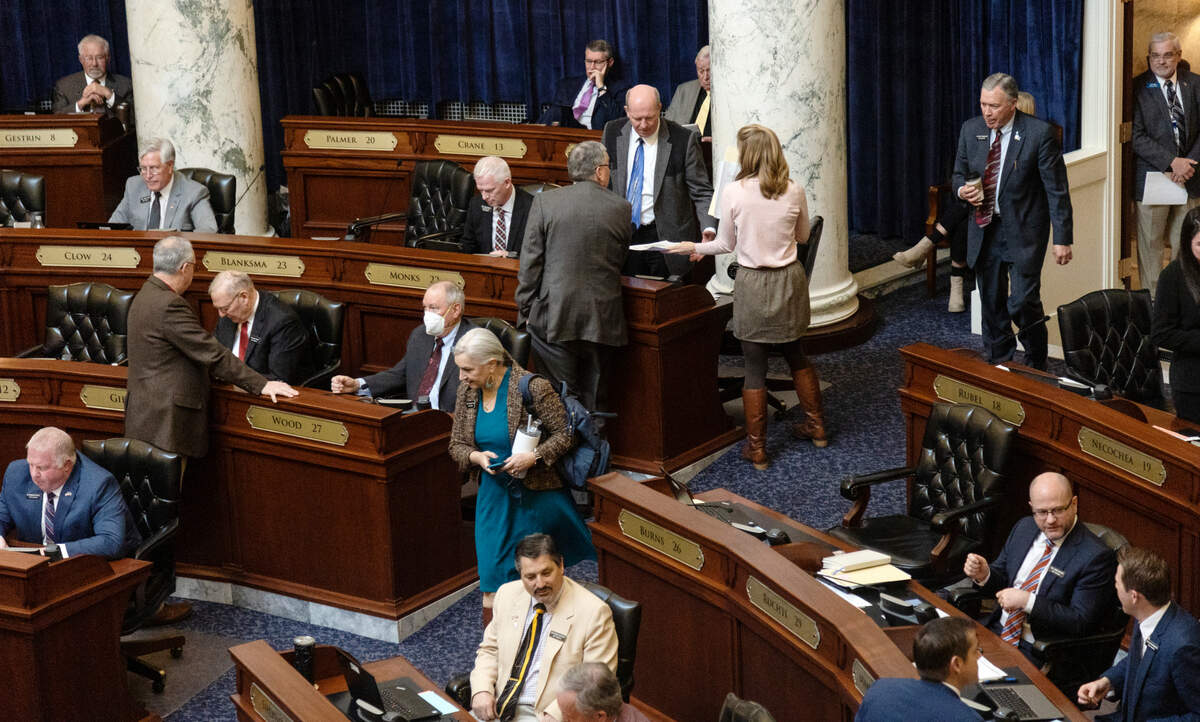
Per Idaho law, only the governor can call an extraordinary session, and lawmakers must confine their work to the purpose laid out by the governor.
Little’s proclamation states lawmakers may only consider the proposed bill and “shall have no power to legislate on any other subjects during the extraordinary session.”
Public schools would see big boost
The proposed bill would direct $410 million in state sales tax revenue annually to education, which, if passed, would be the largest single investment in education in Idaho history, according to the draft legislation reviewed by the Idaho Statesman.
Most of the money would go to Idaho’s public school income fund, while the remaining $80 million would be directed to a new “in-demand careers fund.” The career fund would bolster professional development programs and is meant to “prepare our institutions for the likely increase in workforce development training that occurs during times of economic uncertainty,” a news release said.
Beginning in fiscal year 2025, the money distributed to each fund would increase by 3% annually. The Legislature would control all of the funding.
The Idaho Education Association’s members endorsed the education goals in the proposal, President Layne McInelly said in a statement.
McInelly said the move would be the Legislature’s “first serious step in generations” to meet its constitutional mandate “to establish and maintain a general, uniform and thorough system of public, free common schools.”
“If approved, this proposal puts Idaho on the right path to correct long-standing structural funding inadequacies crippling public education,” he said in the statement.
Now, many school districts across the state have to rely on special levies and bonds — which must be approved by voters — for “basic operational expenses,” McInelly said.
“That makes it next to impossible to provide professional certified educators and other employees with the wages, benefits and respect they deserve,” he said. “As a result, every school district in the state is hemorrhaging experienced, certified educators. The future of our children and our state demand this be fixed.”
The Idaho School Boards Association also said that it supports the education goals the governor laid out for the upcoming special session.
“Investing in our public schools is investing in our kids and communities alike,” Jason Knopp, the ISBA president, said in a statement to the Statesman. “This proposal shows that we can provide relief to families while still ensuring that we’re meeting the operational needs of our schools so that students in Idaho can thrive.”
Superintendent of Public Instruction Sherri Ybarra said she was grateful for the “continued commitment to K-12 education.”
“Education has consistently been a top funding priority for the governor and for legislators, and they have been great partners in our efforts to make sure all Idaho students grow and succeed,” she said in a statement.
The proposed legislation has bipartisan support, although Democrats are seeking assurances from Little that he won’t sign an appropriation bill during the next full legislative session that cuts education funding elsewhere.
“Now’s the time, there’s no excuses,” Sen. Janie Ward-Engelking, D-Boise, told the Statesman. “We have to invest money in education.”
Thirty-seven House members and 25 senators are cosponsoring the legislation, signaling that it should garner support from the majority needed in each chamber to pass.
Education proposal rivals ballot initiative
The proposed education boost comes months before Idaho voters will consider a ballot initiative that would increase public school funding by more than $320 million.
The initiative, spearheaded by citizen advocacy group Reclaim Idaho and known as the Quality Education Act, would create a new 10.925% income tax bracket for Idaho taxpayers who earn $250,000 or more in taxable income, and would increase corporate income taxes from 6% to 8%.
Tax experts in recent weeks, however, identified several flaws in the initiative, if approved by voters. Among other unintended consequences, the initiative would revert income tax rates to their levels before the 2022 tax cut. That means it would raise taxes from 6% to 6.5% for the current top individual income tax bracket, according to analyses by the Tax Foundation and the Associated Taxpayers of Idaho.
Luke Mayville, Reclaim Idaho’s co-founder, praised the proposed investment in education in a statement to the Statesman, but also raised some concerns over the governor’s proposal.
“This proposed investment in education is a big step forward for Idaho,” Mayville said.
But the proposal also includes some “bad elements,” Mayville said. It is “clearly designed to supplant” the Quality Education Act and it “overburdens” the middle class while giving tax breaks to large corporations and wealthy people, he said.
“But on balance, the bad elements of the governor’s proposal are outweighed by the good,” Mayville said. “Even as the proposal aims to supplant the Quality Education Act, it hands a major victory to the thousands of volunteers and supporters who circulated and signed the initiative.”
Mayville credited the group’s efforts as the reason Little proposed such a large investment in education. He said it’s still not known whether the proposal will pass and how it would impact the education initiative, so for now, Reclaim Idaho will continue its election efforts.
If approved, the initiative would go into effect Jan. 1. The special session bill would go into effect Jan. 3.
The Idaho Supreme Court has held that legislation enacted through a ballot initiative and legislation enacted by the Legislature each have equal footing. That means the special session bill, with a potential effective date two days after the initiative’s, likely would repeal and replace the initiative changes.
Little on Tuesday declined to say whether the legislation is related to Reclaim Idaho’s initiative. He did, however, signal that he doesn’t support the ballot measure.
“The initiative raises taxes,” Little said. “The last thing you want to do when people are having a hard time is say, ‘Here, we’ll help you out, we’re going to raise your taxes.’ ”
Ward-Engelking, on the other hand, said, “certainly, Reclaim Idaho is part of the reason this is happening.”
“They got this message out to people and they got the support of Idahoans to get it on the ballot because Idahoans know our children are at a disadvantage,” Ward-Engelking said. “My Democratic colleagues and I have pushed for increased education funding for years and this is the way to get it done right now.”
This story was originally published August 23, 2022 at 11:00 AM.