‘Abuse of discretion’: Death row prisoners sue over Idaho’s new firing squad
AI-generated summary reviewed by our newsroom.
- Prisoners sued over the director OK'ing firing squad and lethal injection protocols.
- The suit says the prison director approved execution policies without disclosing facts.
- Attorneys allege the execution policies violate constitutional rights and state law.
Days after Idaho made the switch to a firing squad for executions, two Idaho death row prisoners next in line to be put to death sued the state prison system, saying its director withheld information about how she settled on the specifics for carrying out the method.
Attorneys for prisoners Thomas Creech and Gerald Pizzuto filed suit this week in state district court against Idaho Department of Correction Director Bree Derrick. In the filing, they called her approval of an updated standard operating procedure for the firing squad and lethal injection as a backup method “arbitrary, capricious, or an abuse of discretion, and in excess of the statutory authority of the agency.”
The new protocols posted last month to IDOC’s website for the first time laid out in detail how the state plans to conduct firing squad executions. The new law, passed by the Idaho Legislature and approved by Gov. Brad Little, took effect July 1, making Idaho one of five U.S. states to allow use of a firing squad — but the only state with it as the primary execution method.
“In a push to roll out the state’s newest method of execution … the director approved new policies for preparing to carry out the death penalty,” the lawsuit read. “But the director has not provided any explanation for her choices, disclosed the facts or information considered when doing so, or offered the barest of justifications.”
Attorneys with the Federal Defender Services of Idaho, the legal nonprofit that represents most of the state’s death row prisoners, allege in the suit that Derrick’s actions risk infringing on Creech and Pizzuto’s constitutional rights. They cite possible violations over prohibitions of cruel and unusual punishment, as well as due process and equal protections, respectively guaranteed under the U.S. Constitution’s Eighth and 14th amendments.

The lawsuit is brought under a legal theory that the prison system has violated a state law known as the Administrative Procedure Act, which provides oversight to the legislative and judicial branches of state agencies and their actions. Faced with an earlier appeal from Pizzuto over the same law, the Legislature passed a law this year that aimed to remove any review, including by courts, of the IDOC director’s decisions as it relates to implementing the state’s death penalty.
Neither IDOC nor the Attorney General’s Office, which represents Derrick and the Department of Correction in litigation, immediately responded Friday morning to requests for comment from the Idaho Statesman.
Failed execution led to firing squad law
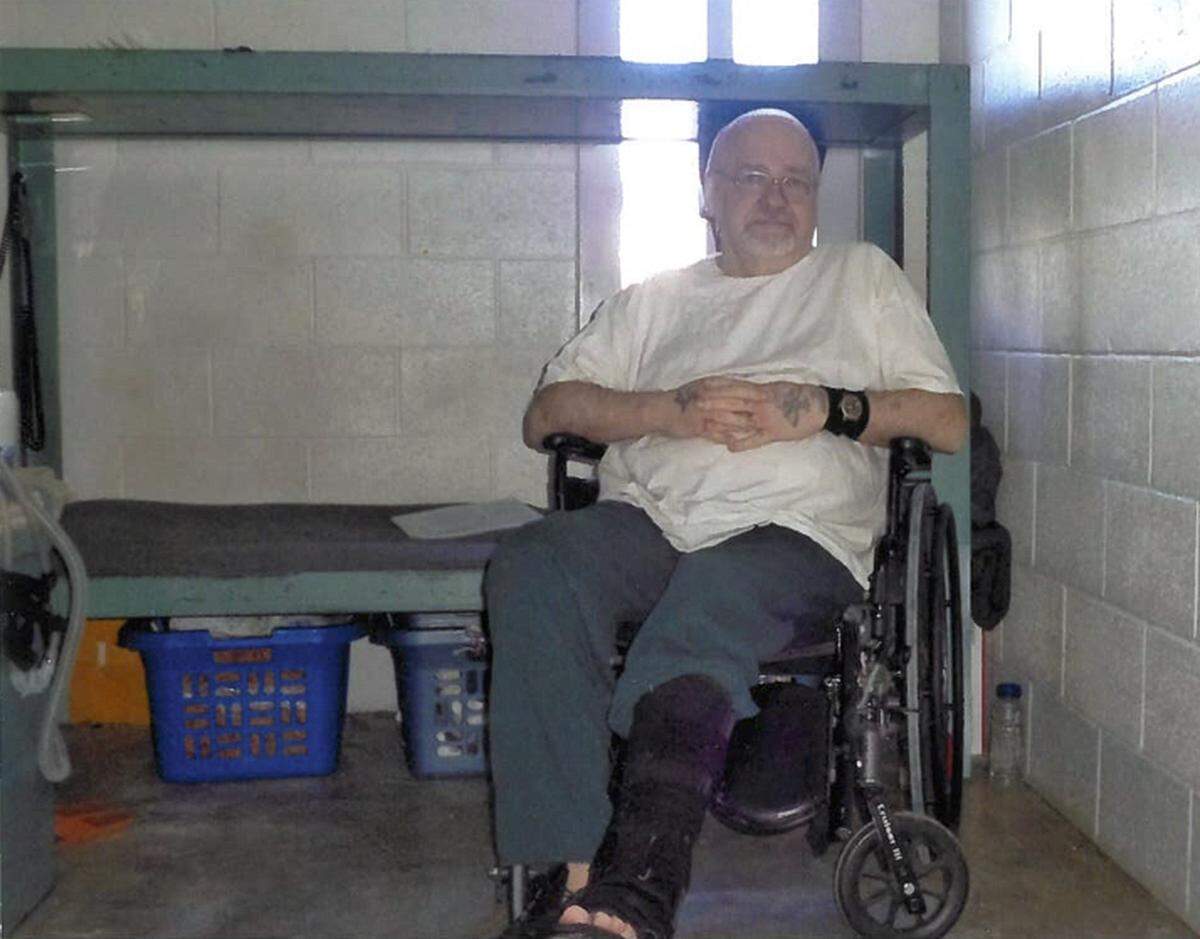
Creech and Pizzuto are Idaho’s longest-serving death row prisoners. Creech, 75, has been incarcerated for more than 50 years, most of them on death row, for the murder of three men — one a fellow prisoner. Pizzuto, 70, has been imprisoned for more than 40 years for the shooting deaths of two people during a 1985 robbery.
Each prisoner lives with a host of medical issues, their attorneys wrote. Pizzuto has late-stage bladder cancer and coronary artery disease, and has had several heart attacks. Creech has a large stomach aneurysm, edema and Type 2 diabetes.
The Federal Defender Services of Idaho declined to comment, and directed the Statesman to its legal complaint.
Idaho, one of 27 U.S. states with the death penalty, hasn’t executed a prisoner in more than 14 years. It has never done so by firing squad, previously prioritizing lethal injection after hangings were its execution method of choice dating back to before statehood in 1890.
In February 2024, the prison system attempted to put Creech to death by lethal injection, but failed to do so when members of the execution team couldn’t find a suitable vein in his body for an IV to deliver the drugs. After nearly an hour, then-IDOC Director Josh Tewalt called off the execution.
The Legislature, which passed a law in 2023 to adopt the firing squad as Idaho’s backup method, then passed another in 2025 to make it the state’s lead. Tewalt previously cautioned state lawmakers that transitioning from lethal injection to a firing squad as Idaho’s preferred method would result in even more lawsuits.
“I don’t think you could expect fewer legal challenges to a firing squad,” he testified in February 2022 before a House committee. “I would suggest that viewing alternative methods of execution as an easier path — or as a path to reduce litigation, or make executions more likely — is going to have the inverse result.”
The new firing squad law didn’t go into effect until this year to grant the prison system time to rebuild its execution chamber to accommodate shooting prisoners to death. The renovation came at a cost of more than $1 million, the Statesman previously reported.
In a separate lawsuit brought by three news outlets, including the Statesman, a federal district judge in Idaho last year issued a preliminary injunction that barred IDOC from lethal injection executions until the agency improved audio and visual access for the media to how the method is carried out. The Attorney General’s Office appealed the decision to the 9th U.S. Circuit Court of Appeals and it awaits a ruling.