Idaho will soon turn to firing squad executions. Police will pull the triggers
AI-generated summary reviewed by our newsroom.
- Idaho will prioritize firing squad executions over lethal injection starting July 1.
- IDOC will recruit six POST‑certified law enforcement members for the firing squad team.
- Renovations to Idaho's execution chamber is finished at a cost of more than $1.2 million.
Trained members of Idaho law enforcement with demonstrated firearms proficiency are expected to fill slots for carrying out the death penalty by firing squad as the state prison system transitions to the controversial execution method next month.
Six volunteers certified for no less than three years apiece through Peace Officer Standards and Training, or POST, will be recruited to ensure the Idaho Department of Correction is ready to comply with a state law that prioritizes shooting prisoners to death over lethal injection starting July 1. No one on the team may have faced disciplinary action over firearms, use of force or related conduct over the prior year, according to new execution protocols the prison system released this week.
State prison leadership has sought to avoid needing to rely on volunteers among corrections officers to pull the triggers in an execution, IDOC Director Bree Derrick previously said. The agency explored the possibility of a remote-operated system as Idaho becomes the only U.S. state with a firing squad as its lead execution method, but one did not come to fruition. That left IDOC to instead devise a human firing squad, the agency said.
“The Idaho Department of Correction recognizes the gravity of carrying out a court-ordered execution and the responsibility that comes with it,” Derrick said in a statement to the Idaho Statesman. “The department is committed to fulfilling this responsibility with professionalism, respect, and strict adherence to the law. Our procedures are designed to ensure that any execution is conducted in a secure, orderly, and dignified manner while safeguarding the rights of all individuals involved and maintaining the safety and security of staff, witnesses, and the public.”
The firing squad will consist of three primary shooters and two alternates, with a team leader who will check, maintain and load the IDOC-owned rifles used for executions. None of the team members may have a blood or legal relationship to either the condemned prisoner or their family, or that of their victims or their relatives.
The identities of all firing squad members will be strictly confidential, per state law. The only two people allowed to know their names are the state prisons director and a deputy prisons chief.
During marksman testing from a minimum of 7 yards away, each member chosen must be able to hit a similar shaped and sized target at a similar height as the one that will be used during an execution without missing. During the execution, the three-member firing squad will shoot the seated prisoner from a distance of approximately 10 yards, department spokesperson Ryan Mortensen said by email.
“Failure to accurately hit the specific target with one round from each IDOC-provided firearm disqualifies the volunteer from selection,” reads the Idaho execution standard operating procedure approved by Derrick.
The state prison system has already purchased five AR-style Daniel Defense DD5-P .308-caliber rifles, equipped with scopes, suppressors and bipods for use by its firing squad, Mortensen said. The DD5-P is technically a pistol, but is referred to as a rifle in the IDOC protocols. The cost with accessories per firearm was $4,844 — or a total of more than $24,000.
The particular rifle model includes components designed to reduce recoil and is “engineered for reliability in demanding conditions,” the manufacturer’s website said.
$1 million-plus renovation
Work to retrofit the execution chamber for a firing squad at the state’s maximum security prison south of Boise started in May 2025 and is now finished, Mortensen said. Construction cost more than $900,000, with another $314,000 spent on design and engineering for a project total of more than $1.2 million.
In 2023, the Idaho Legislature dedicated $750,000 to complete the renovations when it passed a bill that made a firing squad the state’s backup execution method. After a failed attempt by lethal injection in 2024, state lawmakers passed follow-up legislation in 2025 that made the firing squad Idaho’s primary method for carrying out the death penalty, but provided no additional funds for buildout.

Idaho is one of 27 U.S. states with the death penalty, and one of five with a firing squad as a permitted execution method. The others are: Mississippi, Oklahoma, South Carolina and Utah. South Carolina executed three death row prisoners by firing squad last year — the first of their kind since Utah last performed one in June 2010.
Robin Maher, executive director of the Washington, D.C.-based nonprofit Death Penalty Information Center, which tracks capital punishment in the U.S. and takes no position on the practice, noted concerns about the return of the firing squad in some states.
“Every new execution method in history has been introduced with the promise that it will be foolproof and ‘more humane’ than the previous method,” Maher said by email. “Unfortunately, those promises have always been broken. Idaho officials have now invested more than a million taxpayer dollars to implement a firing squad — a method of execution that has already proven to be as flawed as any other.”
Eight prisoners are on Idaho’s death row, including seven men and one woman — all convicted of murder. Idaho has not executed a prisoner in 14 years, last carrying out the death penalty by lethal injection in June 2012.
The Federal Defender Services of Idaho, a legal nonprofit that represents the majority of the state’s death row prisoners, declined to comment about the new firing squad protocols.
A target on the heart
Republican Gov. Brad Little, who seeks a third term this November, signed both firing squad bills into law. The 2025 bill delayed implementation so IDOC had time to rebuild its execution chamber.
“While I am signing this bill, it is important to point out that fulfilling justice can and must be done by minimizing stress on corrections personnel,” Little wrote after approving the law in 2023.
Toward that end, IDOC has worked to find a solution for who would carry out the new firing squad execution law following the issuance of a death warrant. The agency intends to hand off the responsibility to police officers “whose training and experience includes the deployment and proficient use of firearms,” the new protocols said.
Bonneville County Sheriff’s Sgt. Bryan Lovell serves as president of the Idaho Fraternal Order of Police. He had yet to review IDOC’s firing squad standard operating procedure, but said it’s a misconception that members of law enforcement are better suited to handle shooting deaths, namely for state-sanctioned executions.
“I don’t want people to convolute things about why people become cops, including for carrying out an execution,” he said in a phone interview. “It’s not the goal, and very far from any duties that any law enforcement would be involved in.”
Police train for the possibility of using deadly force in rare circumstances to mitigate danger to themselves and the public, and separately to help others through emergencies, Lovell said. But police are not uniquely qualified from prison guards or corrections officers to process their own emotions as it relates to trauma from the high-stress environment inside the prison system — including to perform a planned execution.
“You’re talking about the complete opposite end of the spectrum of reasons why deadly force would be used and that’s something you work to avoid first, if at all possible,” he said.
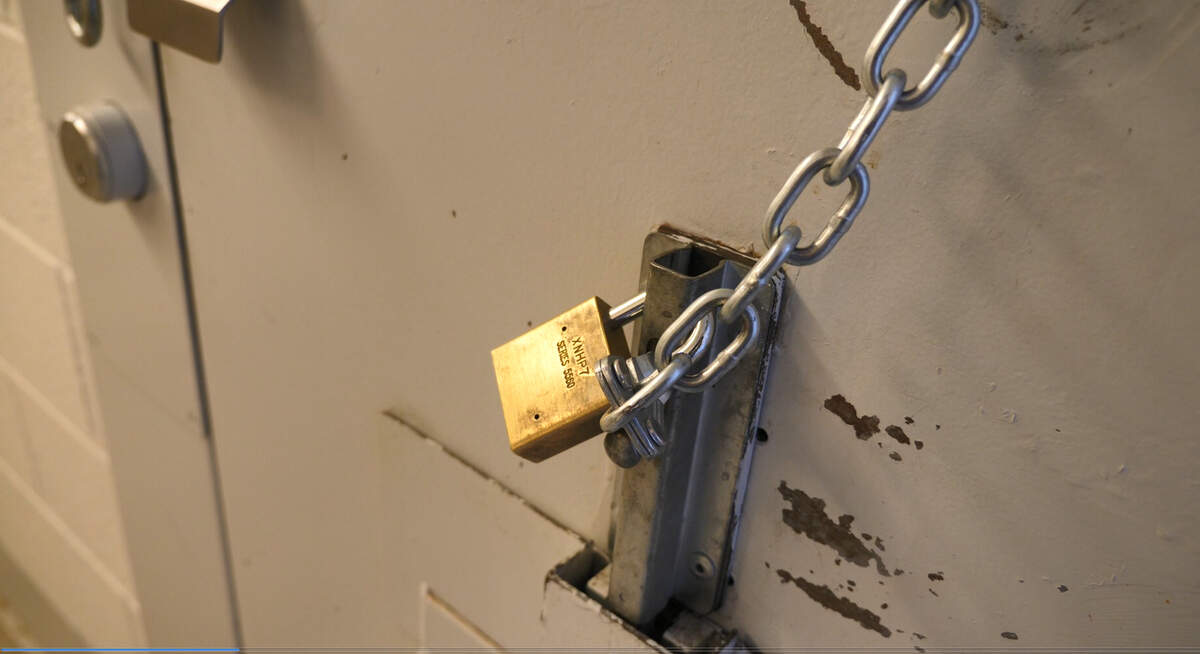
To prepare for the potential need, members of the firing squad will conduct at least quarterly trainings and execution rehearsals with IDOC rifles, the document details. All prison execution team members — consisting of the firing squad, the escort team, a medical unit and administrators — must participate in at least four training sessions within a year of the scheduled execution or will be ineligible.
The firing squad’s rehearsals will include both live fire and dry fire sessions. Weekly trainings will go into effect once a death warrant is issued, and at least four trainings and two rehearsals will take place in the two days before the scheduled execution, according to the new protocols.
No later than 11 p.m. the night before the execution, the condemned person will be offered a mild sedative, and once more no later than four hours before they are scheduled to die, the document reads. The prisoner will be escorted into the execution chamber, strapped to an execution chair with restraints and a target affixed to their chest directly over the prisoner’s heart.
The firing squad plan details that the prison director will read the condemned person’s death warrant aloud and grant them a chance at any last words. An eye covering will be provided to the prisoner if they request it.
The firing squad team leader will then begin a cadence for the three shooters to fire the rifles — each loaded with a magazine with a single .308 110-grain TAP round — in unison at the target.
The director will wait up to two minutes while the medical team leader watches for any signs of life on an electrocardiogram, and the director under consultation can order a second “volley of fire” at the prisoner if needed before sending in the on-site county coroner to pronounce the time of death.
With three weeks until the law takes effect and following updates to the prison, policy development and operational planning, IDOC is nearly ready to implement firing squad executions for the very first time in the state of Idaho, Mortensen said.
“The department will be prepared to carry out an execution order after July 1,” he said.