
Micron’s Boise footprint grows as chipmaker asks city to annex another 240 acres
AI-generated summary reviewed by our newsroom.
- Boise P&Z unanimously recommended annexing 240 acres to serve a new Micron substation.
- If approved, Micron will have annexed more than 1,140 acres into Boise since 2022.
- Developers and residents warned East Columbia lacks a constructed secondary access road.
With its $50 billion expansion, Micron has grown exponentially in Boise. But it’s also grown the city itself — literally — adding hundreds of acres to Boise’s southeastern edge.
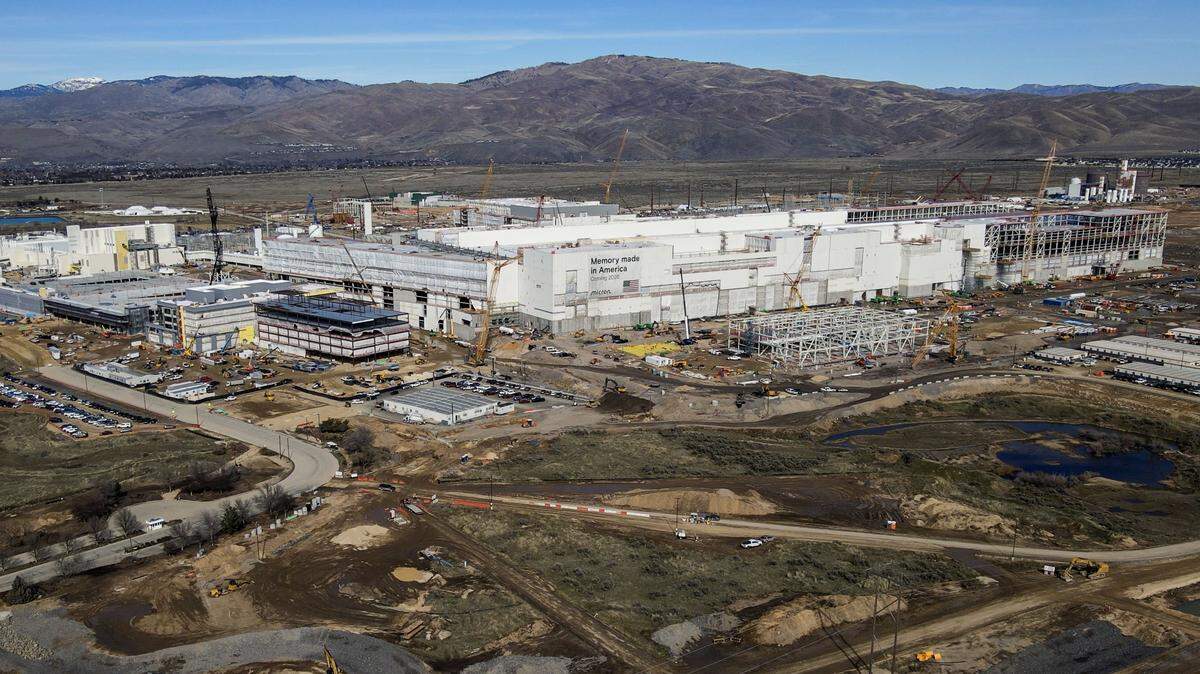
Now, the trillion-dollar chipmaker is on track to pull another 240 acres into Boise city limits as Micron’s new campus expands farther eastward on company land south of Columbia Road.
The Boise Planning and Zoning Commission on Monday unanimously recommended that the City Council approve Micron’s latest annexation request, this time to accommodate a new electrical substation next to the second of its two manufacturing forthcoming plants.
If finalized by the council, Micron will have brought more than 1,140 acres into the city since 2022, according to data from a city staff report.
The request comes as Micron closes in on completion of its first factory, called ID1, and turns its attention to its second, ID2. The two buildings mirror each other, Jeff Binford, Micron’s senior vice president of U.S. expansion, told P&Z on Monday. Both include 600,000-square-foot “clean rooms” to assemble the company’s microchips, the Idaho Statesman previously reported. And both require their own electrical yard, Binford said.
“As you know, Micron is in major expansion mode right now,” he told P&Z.
Most of Micron’s Treasure Valley properties are already annexed into the city, Binford said. The latest, a blocky parcel abutting the second plant, would be brought in under Boise’s “I-3” industrial zone, which was specifically developed for “industrial technology” and manufacturing like Micron’s.
The land around Micron’s campus is “reserved for future high-tech expansion,” according to Deborah Nelson, a Boise attorney representing the company.
“Annexing this property will support the city’s comprehensive plan goals of contiguous and efficient development, and is consistent with the city’s economic goals of supporting existing businesses,” she said.
The power station would be buffered from proposed residential areas by 1,500 feet and a 40-foot-tall berm made from soil excavated during construction of the second plant, Nelson said.
As part of Monday’s hearing, the P&Z also approved a conditional use permit for the use of 85- to 100-foot power poles to feed the substation; Nelson said that Micron already has 70- to 100-foot poles on site.
Nelson told the board that the substation would have “no negative material impacts” on future neighbors and would not impact power to homes nearby.
Roads a riddle near Micron plants
So far, though, there are scant few homes in the area the city calls East Columbia, though interest in developing the area has piqued along with Micron’s fabs.
The problem is that there’s only one way in and out: East Columbia Road, which doglegs off Gowen Road and dead-ends near the Boise River. That threatens to pinch access and evacuation during a wildfire and caps what developers can do — though some, like the Conger Group and Hawkins, have advanced plans regardless.
Ethan Mansfield, a pre-development manager at Hawkins, has been critical of how the city handled the situation. While the Ada County Highway District has a secondary road in its latest master plan, Boise’s development agreement with Micron doesn’t require the company to pay to build it — something, Mansfield said Monday, it has required smaller developers to do.
Mansfield told the P&Z that this annexation was likely the last time the city could leverage Micron into paying for the road itself.
“Whether a project value is $50,000, or $500,000, or $5 million or $50 million, this city staff has always required public improvements where they are planned,” he said. “They have not let plans sit on the shelf collecting dust.”
This $50 billion undertaking is treated differently, he said.
Earlier this year, Hawkins submitted plans for a 200-unit apartment building near the campus, which stalled under objections from the city’s fire marshal, Mansfield previously told Statesman in an interview. City conditions for that project would have seen Hawkins pay to construct a public road through its property, Mansfield said.
“We are asking Micron to be subjected to the same city standards that we have,” he said.
Micron has agreed to dedicate a right of way through its property for ACHD to build a new road, Nelson said, though she rejected the notion that the company should pay for it directly.
“They’re looking to Micron to provide their secondary access,” she said of the developer. “This road is not needed to serve Micron’s use — it actually doesn’t make sense in an industrial campus.”
Nelson told the board that Micron doesn’t own all the land needed to make a continuous road consistent with ACHD’s vision, anyway. And, she said, Micron has already paid for its share of Ada County roads through impact fees assessed to new development. The highway district has charged Micron $7.1 million in fees since the start of 2023, according to a public records request filed by the Statesman. All but about $100,000 of that was paid as building permits came online in 2024 and 2025, records show.
Still, as Micron’s production comes online — and Boise seeks to locate homes next to jobs — the road remains “something to consider for ACHD and the city,” commissioner Jennifer Mohr said.
It’s a consideration for neighbors, too, like East Columbia homeowner Kathy Bean.
“The fire risk is real,” she said Monday. “We don’t want any other development unless a second road gets built.”