
Micron has paid Boise millions in fees. Where does the money go?
AI-generated summary reviewed by our newsroom.
- Boise collected just over $25 million in planning fees from Micron through this May.
- The Ada County Highway District charged Micron $7.1 million in impact fees.
- Micron paid Boise and the Ada County Highway District over $32 million in fees.
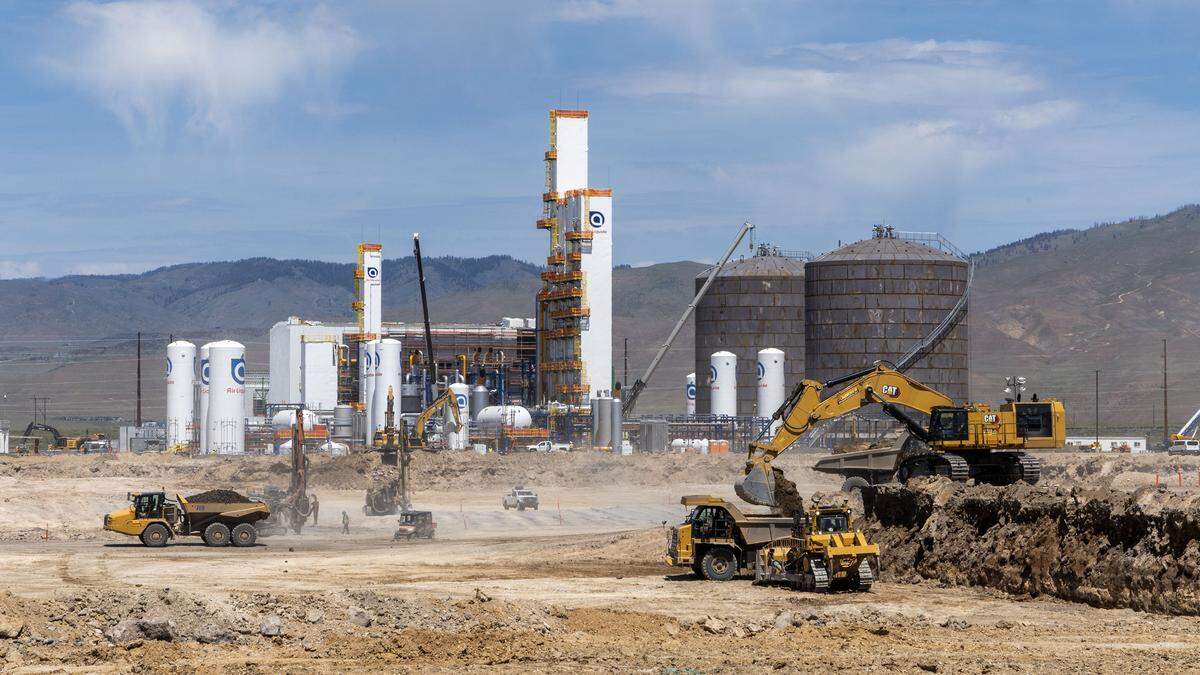
Manufacturing at Micron’s new $50 billion plant isn’t set to start until next year, but the project is already reaping millions of dollars for Boise.
Micron has paid the city of Boise and the Ada County Highway District more than $32 million throughout the construction process in planning, development and impact fees, according to records provided to and obtained by the Idaho Statesman.
Boise collected just over $25 million in planning fees from the chipmaker from the start of 2023 — the year the first fabrication plant was announced — through this May. That’s more than a third of all the planning and development fees the city has collected or expects to collect between fiscal year 2023 and 2026, which ends in September, according to city budget documents.
The fees are retained within the city’s Planning and Development Department to help fund project reviews, permitting and inspections, according to city spokeswoman Maria Ortega. Since 2023, Micron has submitted 70 separate planning filings alongside hundreds of other related permits with the city of Boise, city records show.
Some fees are cheap — $26.50 to file for a required neighborhood meeting, $2,000 or $3,000 to file for an annexation or rezone. Permits for blasting and fuel dispensation, much of what’s still happening on the construction site, typically run $140-$180 each.
Other costs climb quickly. Earlier this year, Micron’s plan to build an $18 million, 182,000-square-foot warehouse came with nearly $170,000 in city fees, including $93,456 for the building permit, $60,746 to check the commercial plan and $14,952 for a fire safety review. A similar $19 million warehouse generated $177,000 in fees.
At Micron’s scale, those are relatively small projects. Last month, the city invoiced Micron for $464,917 in fees associated with a $42.9 million plan to build out the inside of its industrial wastewater facility; $297,000 of that paid for the building permit fee, $121,000 went toward commercial planning costs, and just over $47,000 went to fire checks. That’s on top of the $273,267 Micron had already paid on the project, according to city records.
Micron fees ‘offset’ planning costs
Micron announced its Boise investment in September 2022, just as the city was wrapping up its fiscal year. That year, budgeted prior to the announcement, Boise’s Planning and Development Services department cost $13.7 million to operate; this year’s budget plans to spend $23.6 million, a 72% increase in spending. Over that same period, the department has added around 35 full-time-equivalent positions, bringing its total to 135 planned for 2026.
The city today is processing fewer permits and conducting fewer inspections than during the post-COVID rush of 2021 and 2022, according to budget documents. In 2021, Planning and Development Services processed more than 24,000 permits and 74,000 inspections, a “unique” situation as Boise dealt with a glut of pent-up demand that set a high-water mark for city services, Ortega said.
Recently, the number of annual permits appears to have stabilized below 20,000 per calendar year. But, according to Planning and Development Services director Maureen Brewer, the department is seeing larger and more complex applications, all of which demand more staff time than, say, a single-family home. Micron, St. Luke’s downtown hospital expansion and a new batch of warehouses in Southeast Boise are all examples of projects that require significant work hours, she said.
“Permit volume alone does not fully reflect department workload,” Brewer said. “The complexity of projects, review timelines and major commercial and industrial development all affect the level of staff support required to review applications.”
The city’s overall budget has grown since Micron unveiled its expansion. As a percentage of general fund expenditures, planning and development accounted for around 5% of the city’s budget in fiscal 2022; this year, it makes up around 6.4%. It’s the city’s fourth-most-expensive department, trailing significantly behind the top three: police (27.5% of the general fund), fire (22.8%) and parks and recreation (14.3%).
It isn’t all Micron.
“Boise’s construction market has operated near full capacity for years as the city has experienced significant growth,” the city stated in its latest budget book. But, Ortega said, Boise doesn’t track expenses in a way that allows you to directly compare the municipal costs of approving and monitoring Micron’s projects with what’s being brought in.
“That said,” Ortrega told the Idaho Statesman, “those fees help offset the cost of staff time, review services, inspections and other operational resources needed to support large-scale development activity.”
Fees alone don’t cover the full cost of planning and permitting, Ortega said. They’re designed to curb the city’s outlay, not pay the full bill.
Lately, a larger share of the department’s budget has fallen on the general fund, even as planning and development fees reach new highs: Before Micron’s announcement, about 91% of the department’s budget was collected back in fees; this fiscal year, the city expects fees to cover 83%.
“Current fees charged do not cover all costs within the department,” Ortega said. “Further, some of the work of (Planning and Development Services) that benefits the broader community continues to be supported by the general fund.”
City staffers expect development fees to peak in fiscal year 2028 and 2029, topping $20 million each year. Then, as Micron’s construction wraps, forecasts call for revenue from development fees to retreat below current levels in the 2030 fiscal year.
What about roads?
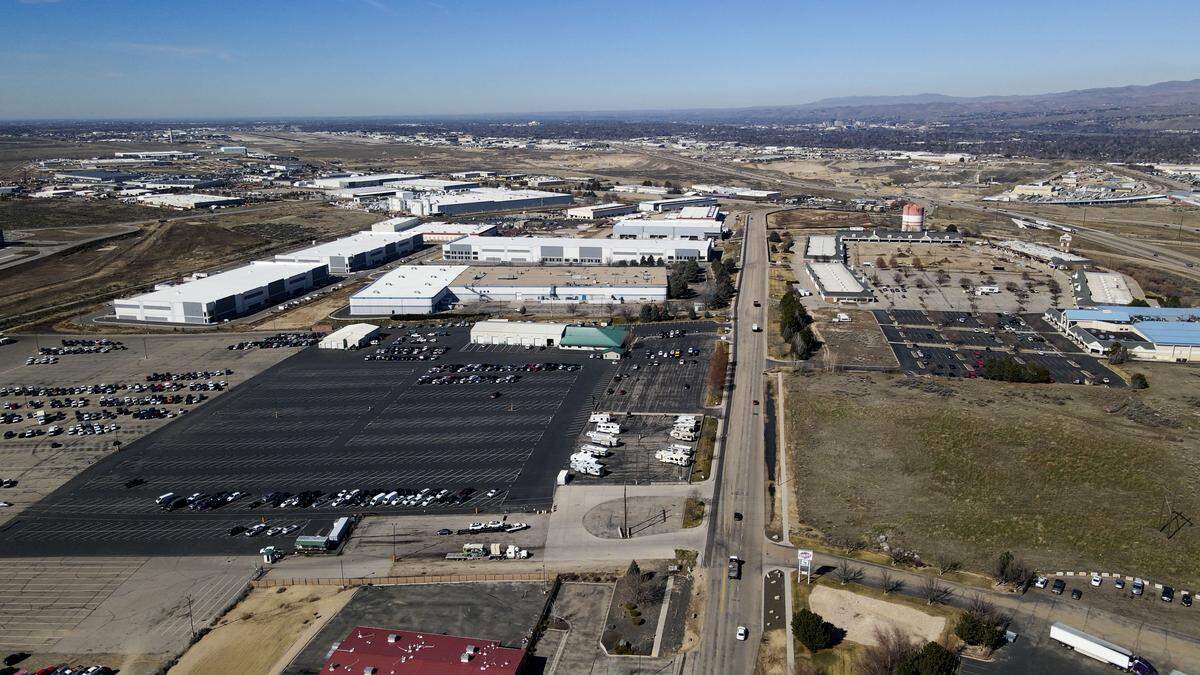
Boise isn’t the only jurisdiction that collects fees on new development. The Ada County Highway District, which governs Ada County’s local roadways, assesses impact fees to offset the costs of new, growth-related infrastructure. The highway district has charged Micron $7.1 million in fees since the start of 2023, according to a public records request filed by the Statesman. All but about $100,000 of that was paid as building permits came online in 2024 and 2025, records show.
Highway district impact fees “ensure the District’s roads, bridges and sidewalks keep pace with private development,” according to ACHD. They fund the majority of infrastructure improvements in the district’s capital improvement plan, and as such can be spent on qualifying projects anywhere in the county — not just infrastructure around Micron, according to ACHD.