Inside Micron’s $50B expansion: ‘We’re running our own little city out here’
The new building rising on Micron’s headquarters campus in Boise is hard to miss from Interstate 84 — a long, steel-framed structure that, when finished, will hold one of the cleanest manufacturing spaces on the planet.
Up close, the scale is even more striking.
On a construction tour in May, company officials pointed out that its $50 billion expansion is more than just a single work site. It includes a new memory-chip fabrication plant (also called a fab), a web of utility and water-treatment buildings to support it, and the early-stage earthwork for a second fab planned at the same site.
“It’s absolutely massive,” Scott Gatzemeier, Micron’s corporate vice president of front-end U.S. expansion, told the Idaho Statesman on an exclusive tour of construction at the campus. “It’s like we’re running our own little city out here.”
A massive fab built for the smallest tolerances
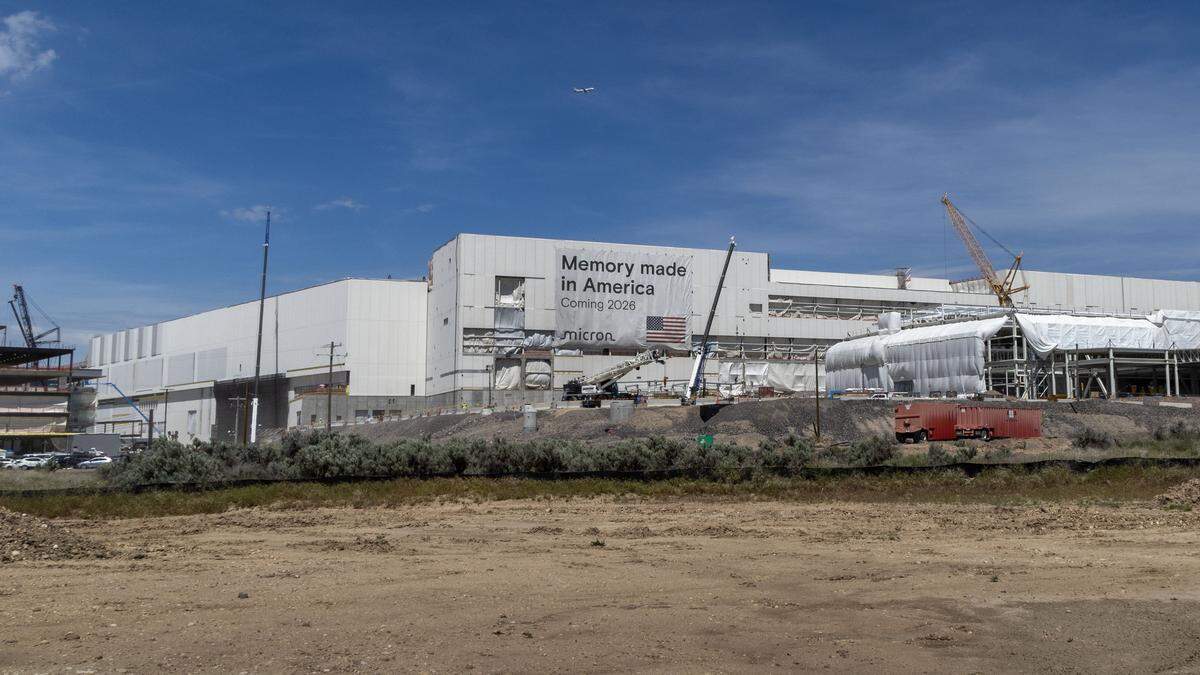
The first fab, still unfinished, stretches for over a third of a mile, Gatzemeier said.
It’ll eventually include a 600,000-square-foot cleanroom, a space where memory chips are manufactured under conditions far cleaner than a hospital operating room. The “wings” on either side will house supporting equipment.
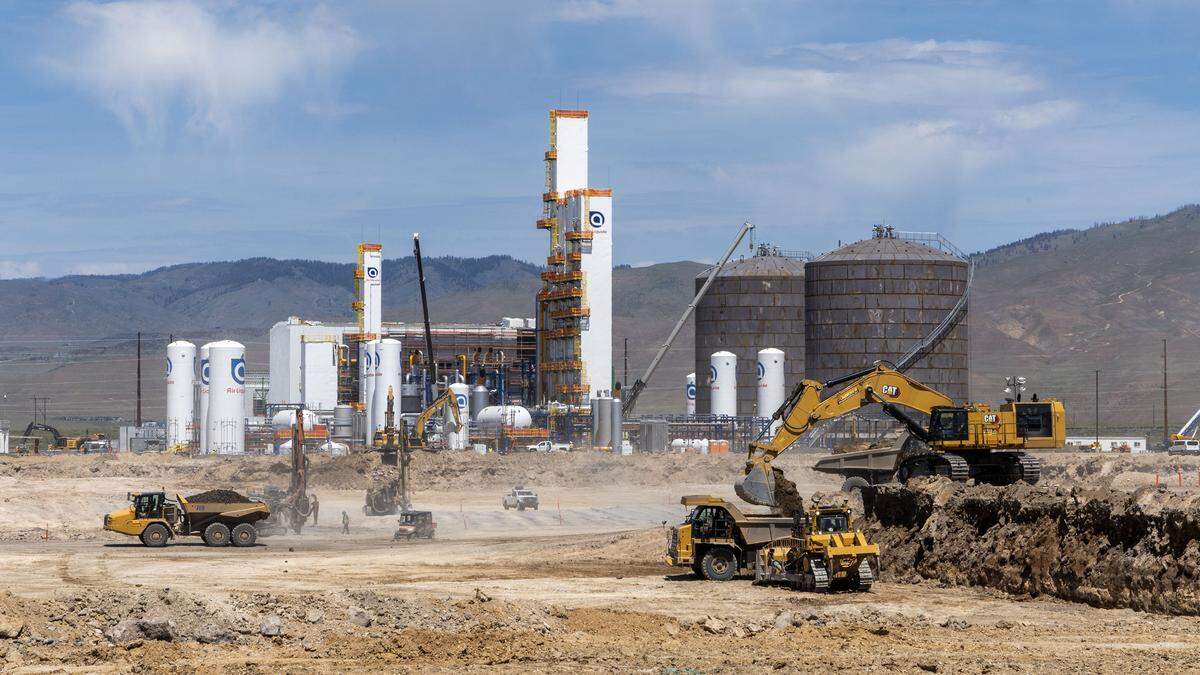
Even now, the exterior offers clues about what’s coming inside — alhough a banner hanging from the structure that says, “Memory made in America. Coming 2026,” has to come down to put up the exterior panels on that portion of the building to fully enclose it. A spokesperson for the company said the banner was popular with crews working at the site.
But a semiconductor plant isn’t just a big building, Gatzemeier said. It’s a dense network of systems: air handling, cooling, vacuuming, fire suppression and multiple kinds of water loops, all routed through high-purity piping in an environment where contamination can ruin a product.
“Semiconductors are almost like a really clean oil refinery,” he said.
Micron expects to move manufacturing equipment into the first fab later this year and produce the first wafers in mid-2027.
Thousands of workers, and the safety challenges of a megaproject
Micron has previously said its Boise investment totals about $50 billion across the two fabs.
On the tour, Gatzemeier emphasized both the long-term construction workforce needed and the hiring the company expects once the fabs are operational.
“Obviously the jobs are good, high-paying jobs,” he said.
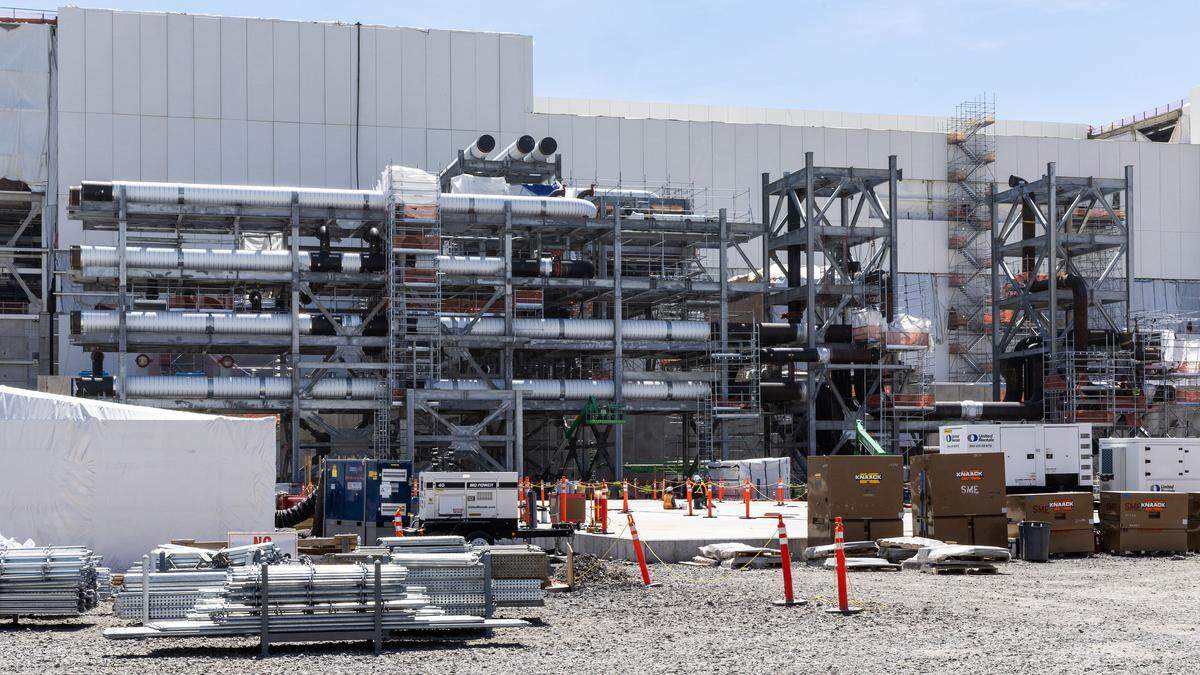
Construction at the site has ramped up to a level that requires its own extensive workforce parking, equipment staging and a constant focus on safety, he said.
“If you were to ask me what keeps me up at night, it’s the safety of all the Micron employees and the construction employees and making sure that we have very good, robust safety programs,” he said. “We want it to be a desirable project where people want to come work and want to come be a part of it.”
Site preparation for a second fab is underway
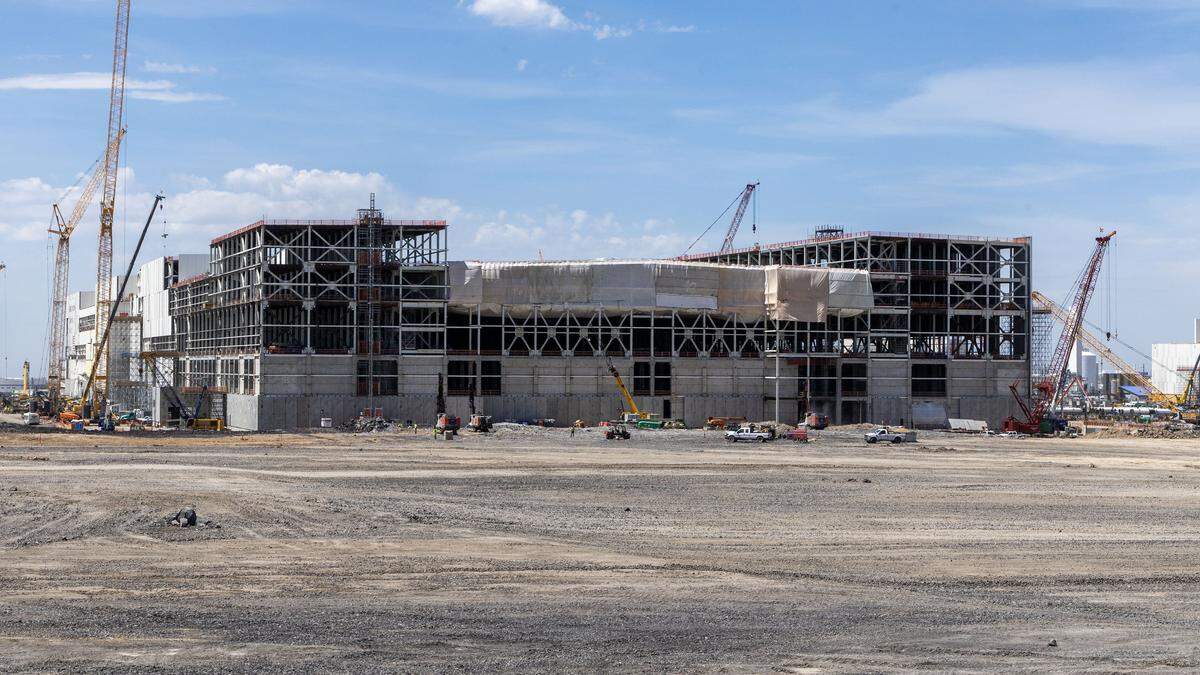
Beyond the first fab is a ledge where the ground is higher, and site work is already underway to clear a space for the second fab.
Crews have been blasting to break rock and lower the grade, Gatzemeier said. The second fab is expected to become operational near the end of 2028.
“Those boring rigs drill into the ground and allow us to place dynamite shots,” he explained. “And each blast that we do every day at 4:30pm is around 800 shots. I think the most we’ve done is 1,000.”
That work is aimed at leveling the site so the second fab can be built on a similar elevation, with stormwater management and other variables in mind, he said. The two fabs are expected to be linked.
A supplier ecosystem grows alongside Micron
As Micron expands, so do companies that support memory-chip manufacturing.
Gatzemeier pointed to suppliers increasing their presence across the Treasure Valley, including new warehouse space and offices to support Micron’s operations.
He argued the ripple effects are part of why so many states competed to land major semiconductor manufacturing. In addition to the manufacturing jobs, he said, the community sees indirect growth — everything from restaurants and grocery stores to healthcare offices.
Micron has projected more than 4,000 jobs at the company tied to the two new fabs, as well as job growth across suppliers and other industries.
‘Another way we can help train the Idaho workforce’
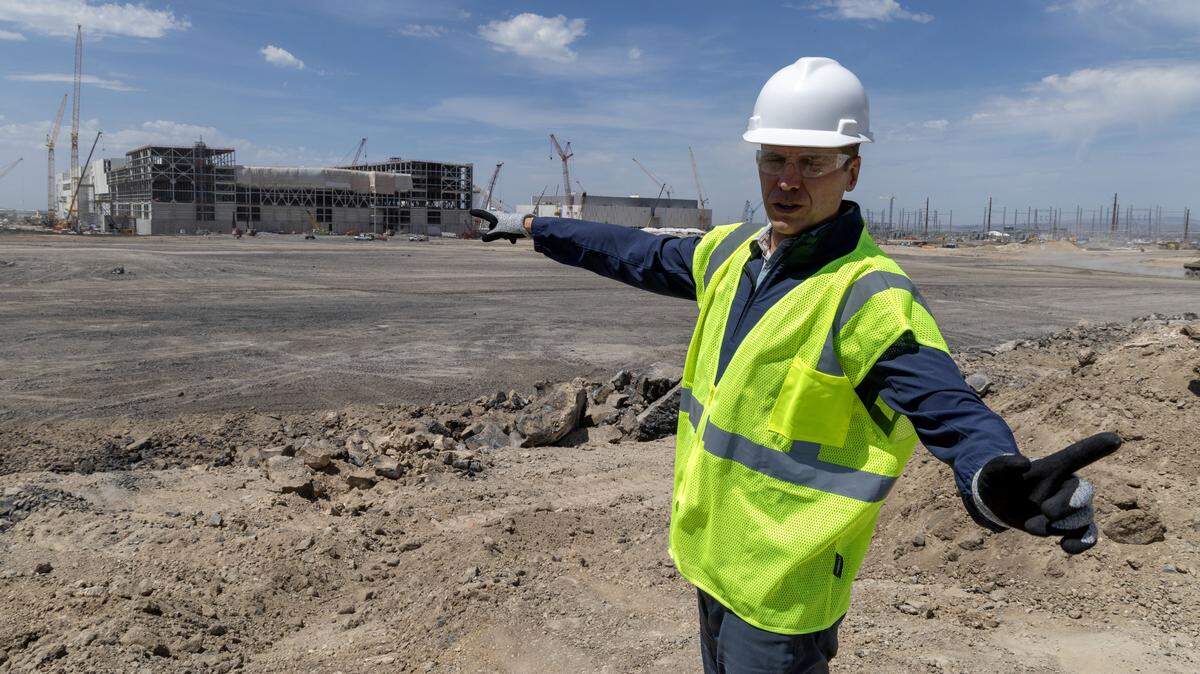
During the tour, Gatzemeier highlighted workforce development projects meant to feed the pipeline of technicians and engineers.
One upcoming milestone is a new training center. Micron is leasing a large warehouse near the old Boise Factory Outlets mall and is partnering with some of the company’s suppliers and the College of Western Idaho to train technicians there to work on equipment.
The grand opening is expected this summer.
“It’s another way we can help train the Idaho workforce to take advantage of this opportunity,” Gatzemeier said.
What comes next
Micron’s campus in southeast Boise is changing in ways beyond the new fabs.
The tour passed by a new seven-story office building with a cafeteria and large auditorium, and a newly built daycare facility across from a new parking structure.
For Boise, the construction is a front-row view of a bet Micron is making on long-term demand for memory chips, and on Idaho’s ability to support one of the most high-tech manufacturing efforts in the world.
There is still a great deal of work to go, from underground utilities and “trestles” that will carry gases and materials to finishing the fab enclosure, Gatzemeier said. But as the first structure rises and the second site is blasted and graded, it’s clear the company is not just adding on. It’s remaking its hometown campus.