SW Boise: Frustrated commissioners chastise both sides after hours of heated testimony
From its beginning, the city of Boise’s proposal to annex and develop portions of unincorporated Southwest Boise was nothing if not a demonstration on the complexities of urban planning. The resulting confusion spilled over during a Planning and Zoning meeting this week where more than 50 people showed up, with testimony going on for hours.
Originally, the Boise Parks and Recreation Department proposed to annex 157 acres of Parks Department land known as the Murgoitio parcel, along with 132 acres owned by the Boise School District and the Boise Airport. Annexation was part of the City Council’s plan to sell Murgoitio and 15 acres of school land to housing developers.
Southwest residents, who had been promised the Murgoitio parcel would be turned into a park, protested.
City officials responded by reviving decades-old talk of annexing all of Southwest Boise, a 10-square-mile area with 34,000 people, but soon ditched that idea as too costly. Then Mayor Lauren McLean ordered a temporary halt to plans to annex the Murgoitio parcel.
That left the 132 acres. By Monday’s meeting, only one piece of the proposal remained contentious: 15 acres of empty school property at 8373 W. Victory Road, which was recently sold to a housing developer for $12 million, a deal contingent upon annexation.
It was purchased by Welltower Inc., a real estate investment trust in Ohio, and Layton Construction, of Utah. The companies plan to build a “wellness focused housing development” with a mix of single-family homes, townhouses and apartments.
For two hours, person after person testified about why the area didn’t need more homes. Many became emotional. Others brought detailed slideshow presentations. Concerns included well water levels, traffic on the already-congested Victory Road and environmental impacts.
One man said he moved to Southwest Boise to get away from development. Others said there should be more impact studies done. Many were upset with the confusing way the school proposal had been bundled into the Murgoitio application.
Parks and Recreation Superintendent Jennifer Tomlinson defended the process, saying the city had followed all the necessary codes.
By the time everyone had spoken, the commissioners seemed fed up with both sides. Several commissioners criticized city officials for what they characterized as the rushed and unnecessarily complicated way the annexation process was handled.
“The city has sort of made a mess of this process,” Planning and Zoning co-chair Bob Schafer said.
Commissioner Meredith Stead said she herself found the application confusing. She advised that applications should be brought forward separately in the future, rather than having multiple properties owned by multiple agencies bundled into one.
“I probably struggle with everybody else to define what exactly we’re looking at,” Stead said.
Commissioner Milt Gillespie took the lead on making an unconventional motion: He suggested the commission recommend the city annex the land and change the land-use map, but only after city leaders had done work to address the “confusion and obvious upset” created by their procedural choices. It was unanimously approved.
Gillespie said the application should be rewritten to list the correct applicants and land parcels. The Parks Department is still listed as the applicant, and it was Tomlinson who appeared before the commission. Several residents at the hearing pointed out the oddity of this, considering the properties in question belong to the Boise School District and the Boise Airport.
Gillespie recommended the actual applicants be present at the mid-September City Council hearing.
He also said the city should provide the public an opportunity to comment on the new application before that hearing.
Overshadowed by the larger park issue, some testifiers said there had not been adequate opportunity to address the school property annexation.
“There’s no intent to pull a fast one here,” Gillespie said, addressing residents’ accusations that the Parks Department had intentionally made the application difficult to understand. “This is just a really hard process, and it’s extremely complicated, and things didn’t happen in the optimal way.”
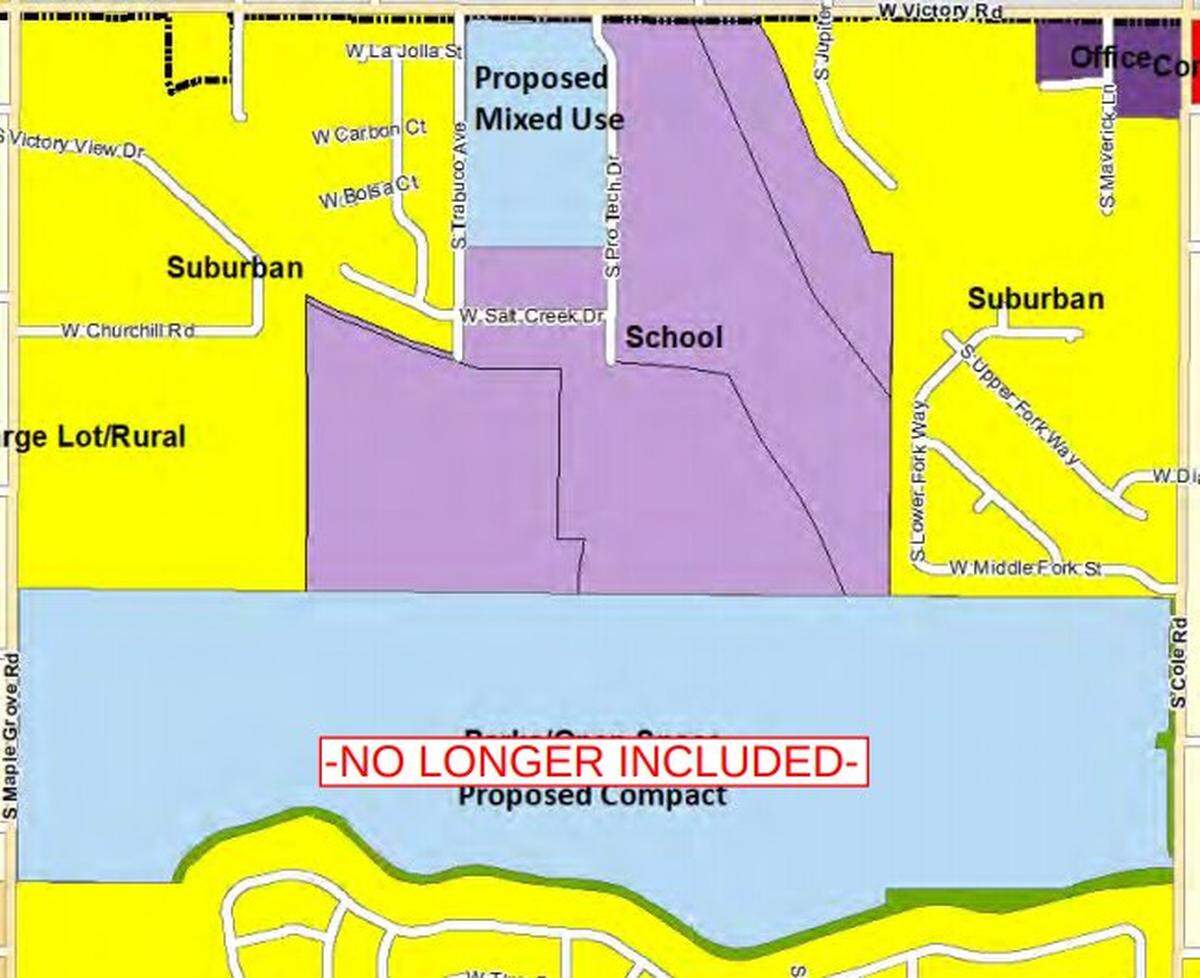
But the commissioners were also frustrated at attendees’ attempts to place wide-ranging issues on the back of this 15-acre property. Well water concerns were valid, they said, but this one development wasn’t going to have a significant impact.
“For the folks who want to stop this process and do a massive water study of the Treasure Valley, I understand that, but think again,” Gillespie said with exasperation. “...I don’t see the nexus between this parcel and these giant, big issues.”
Commissioners said fears that changing the land use map to “mixed-use” would create more traffic were unfounded.
“It seems contradictory, but mixed-use really resolves a lot of the issues like traffic and air pollution and things like that, because you have people traveling less distance to their jobs and to shops and school,” Stead said.
Gillespie concluded by pointing out that those upset about Southwest development were themselves living on property that had once been open land.
“I invite you to think about that and how that really works and what the fairness and equity of that position is,” Gillespie said.
Sally Krutzig covers Treasure Valley growth and development. Have a story suggestion or a question? Email Krutzig at skrutzig@idahostatesman.com.
This story was originally published August 12, 2021 at 4:00 AM.