‘People go up there and vandalize at night.’ Now, a new gate will go up at Table Rock
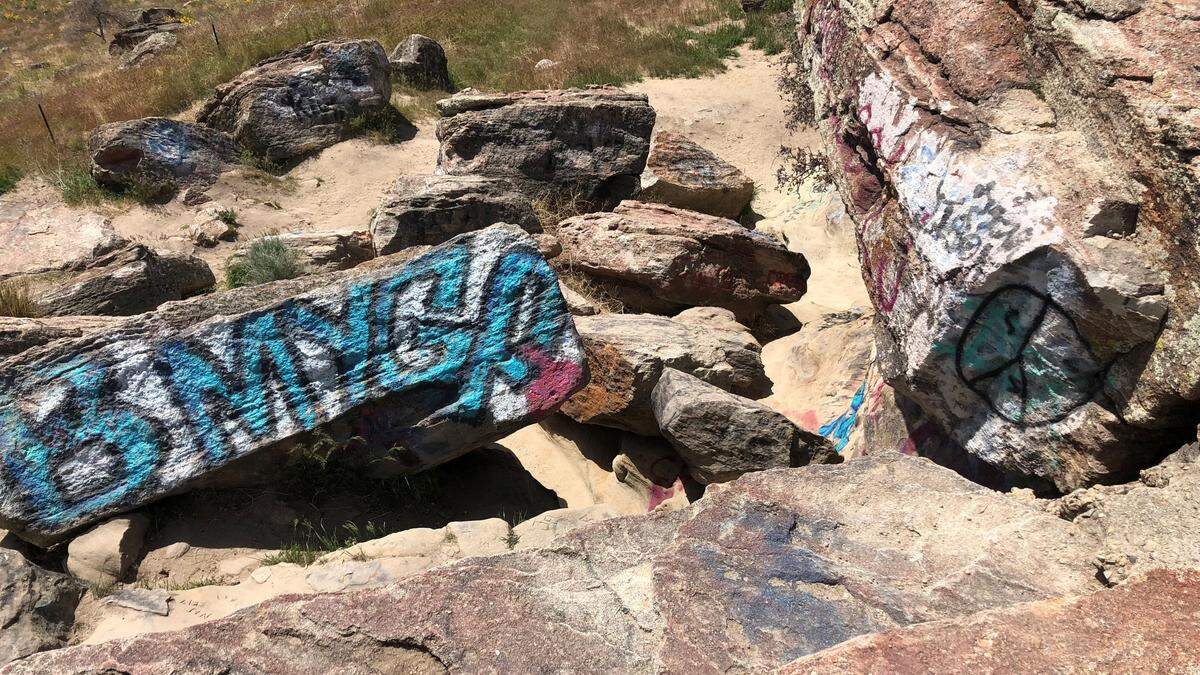
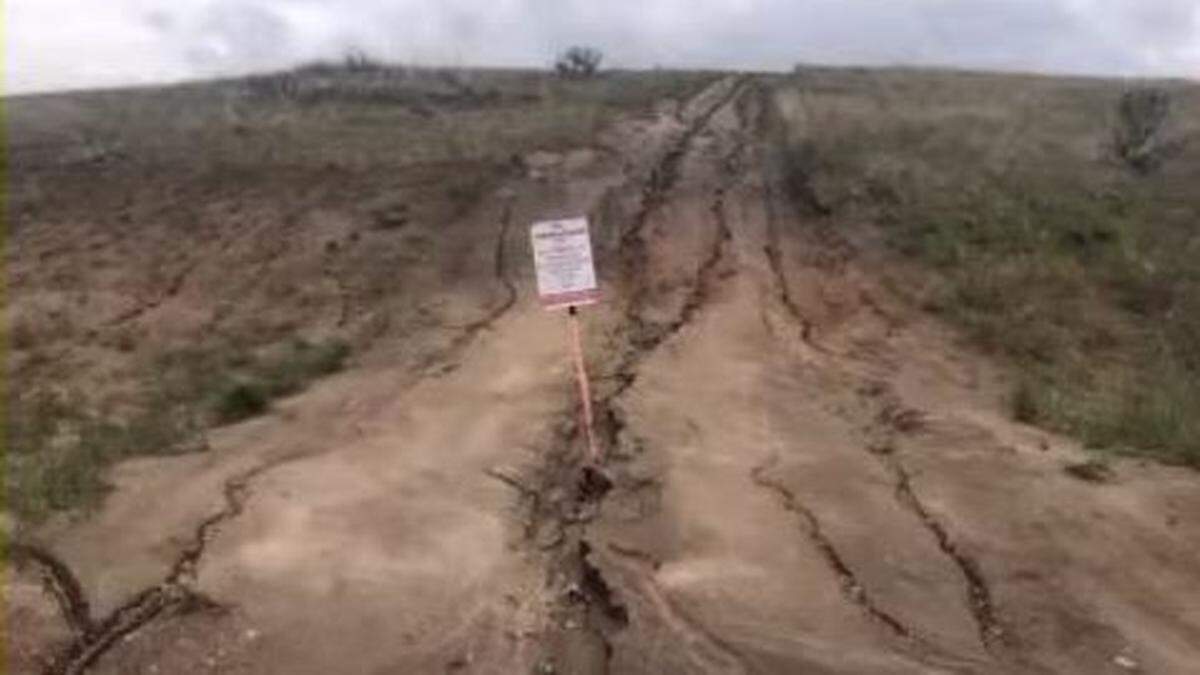
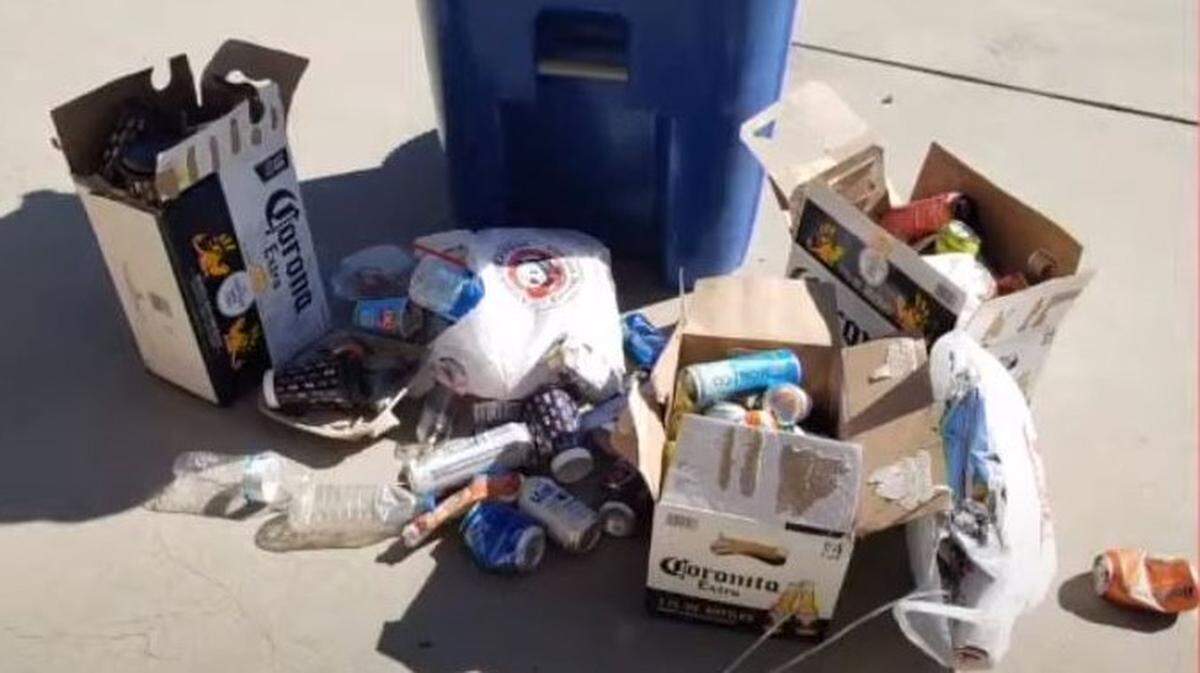
Vandalism. Trash. Terrain torn up by off-road drivers. Mailboxes pockmarked by shotgun pellets. Graffiti on the iconic cross. Lots of after-dark traffic.
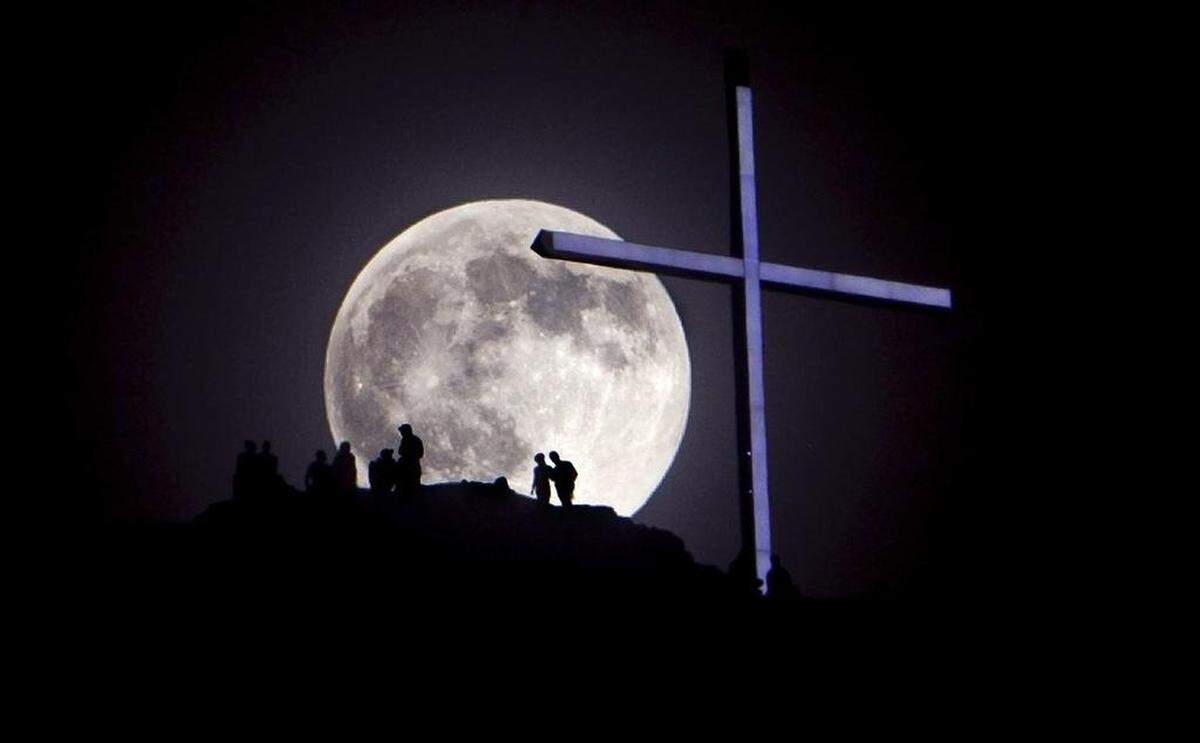
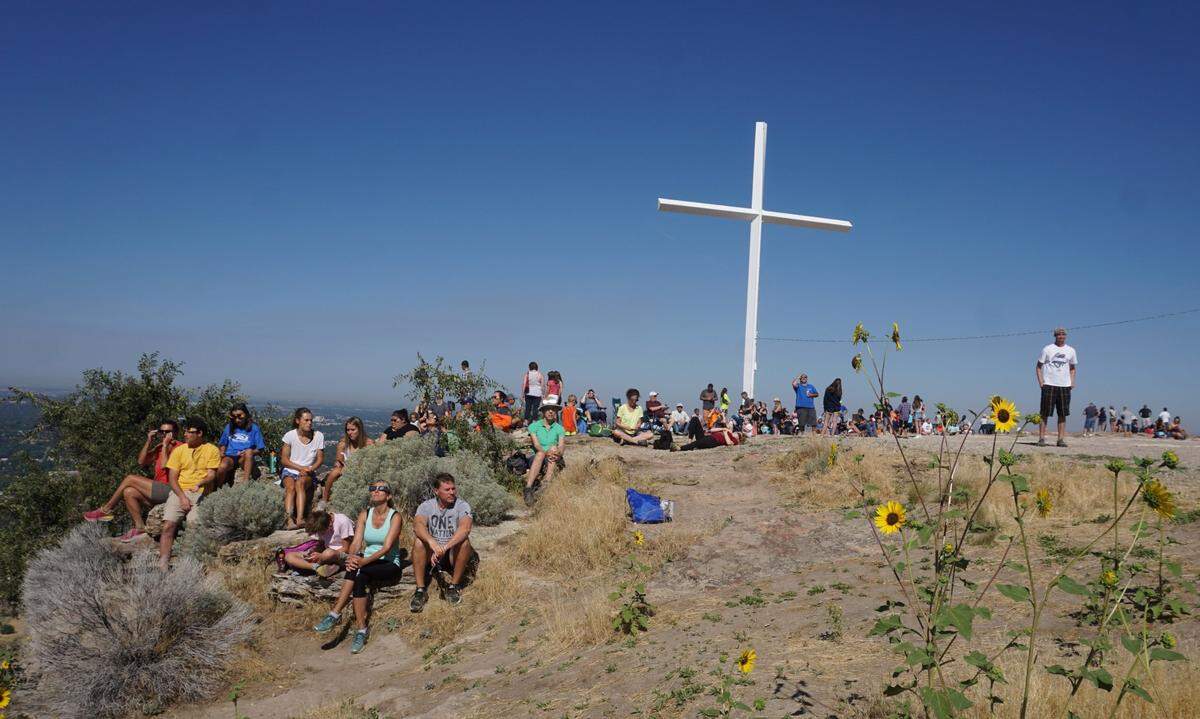
These problems have worsened on and near Boise’s Table Rock Mesa, beloved for its cross and sunset views, over the past few years. One landowner says the coronavirus pandemic has accelerated them.
“People go up there and vandalize at night,” said Doug Bates, whose family owns a 9,600-square-foot house on Wildhorse Lane in the Foothills north of Table Rock. “Almost every night, neighbors go up with bags and pick up garbage.”
Now, more than a year after the Boise City Council agreed to install a gate on Table Rock Road that Bates and others want to curb the problems, the gate will go up.
Construction of the gate, at the intersection of Alto Via Court, will begin this week, the mayor’s office said Monday in a news release. It is expected to be in operation in early April.
Neighbor makes cleanup a cause
Table Rock and its cross are on public land administered by the Idaho State Historical Society, whose headquarters are below the mesa on the old state penitentiary site off Warm Springs Avenue.
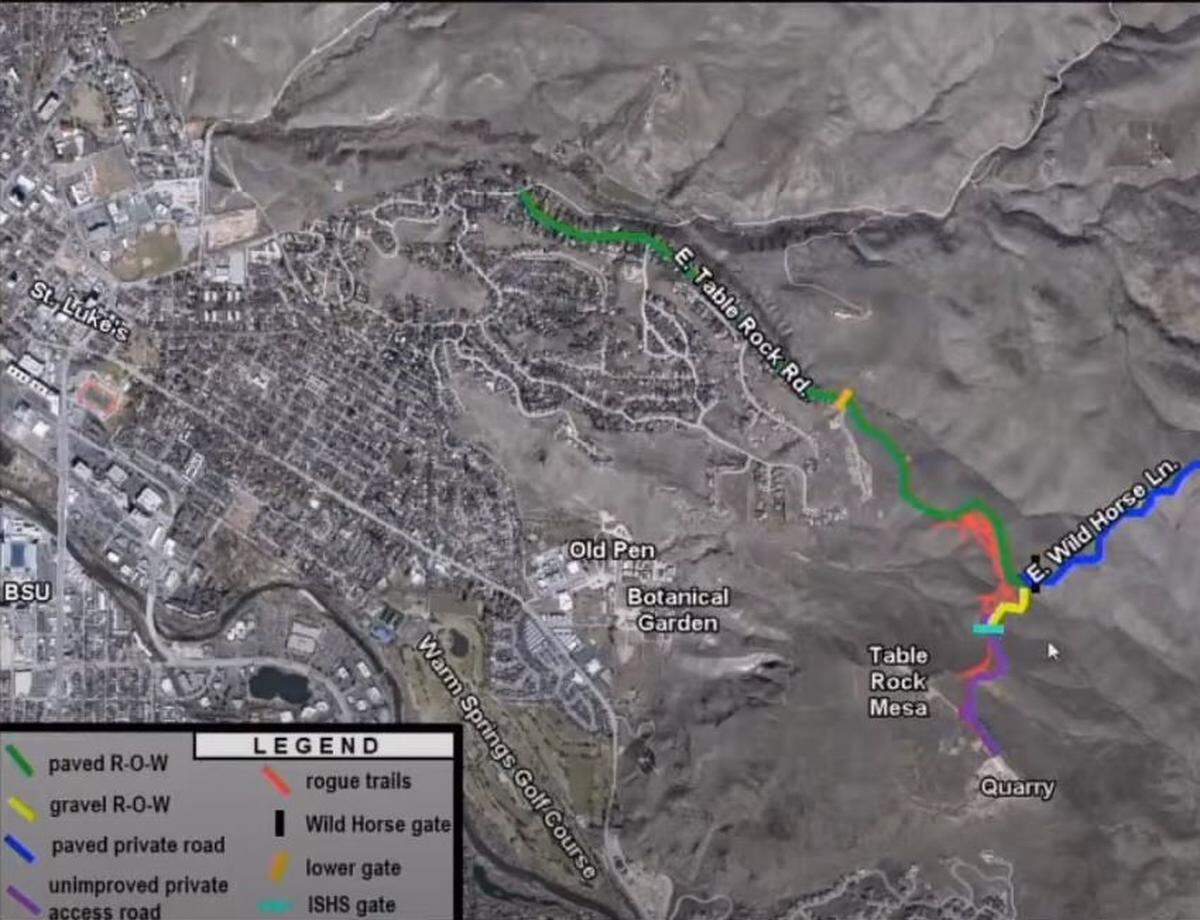
The land to the north is privately owned ranch and residential property, except for public roads, including the final ascent up Table Rock Road. Houses line Table Rock Road. More than a dozen widely spaced mansions dot Wild Horse Lane.
Bates has made cleaning up Table Rock a cause. He told the ACHD Commission in October that litter begins on Reserve Street near Fort Boise and continues up Shaw Mountain Road and into the Table Rock neighborhood.
Based on a city tally of traffic last spring, Bates estimates that 160,000 vehicles per year go up Table Rock Road, “the vast majority of them after dark.” Four in 10 are from out of state, he said.
Cars park illegally in front of ACHD’s no-parking signs on both sides of upper Table Rock Road, shrinking the road to a single lane, he said. Sometimes the signs are stolen.
“Once people get up there, it’s too late, there’s nowhere to park, they see others parking, and that’s where they go to park,” he said.
Historical Society says problem much worse than 10 years ago
Janet Gallimore, the director of the Idaho State Historical Society, joined Bates at the meeting. Graffiti and garbage atop Table Rock have outpaced the state agency’s resources, Gallimore said. The agency placed rocks to discourage vandals more than 10 years ago, she said, when “it wasn’t nearly as bad as it is now.”
The society’s board last spring closed the parking lot atop Table Rock. The society also created an advisory committee that began meeting this fall. The society wants to strike a balance between preserving Table Rock and providing public access, she said.
A survey showed that sunrise, mornings and sunset are popular times, with most respondents using Table Rock for hiking and sightseeing, and smaller numbers using it for education, rock climbing and mountain biking.
“We recognize that Table Rock is a sacred pace, and we’re committed to the storytelling up there, but we also recognize that people want access,” she said.
Options: Fee-based shuttle, improved parking
The gate is a partial solution. The society is considering a fee-based shuttle from the Old Penitentiary parking lot during the day. It also is considering improving parking adjacent to Table Rock Road.
Many users, including those with impaired mobility, need to drive to Table Rock and cannot hike the trail from the Old Pen grounds below, Gallimore said.
“The trail is not for all visitors,” she said. “It’s quite steep. It’s quite rugged. Families with small children would go up Table Rock with strollers.”
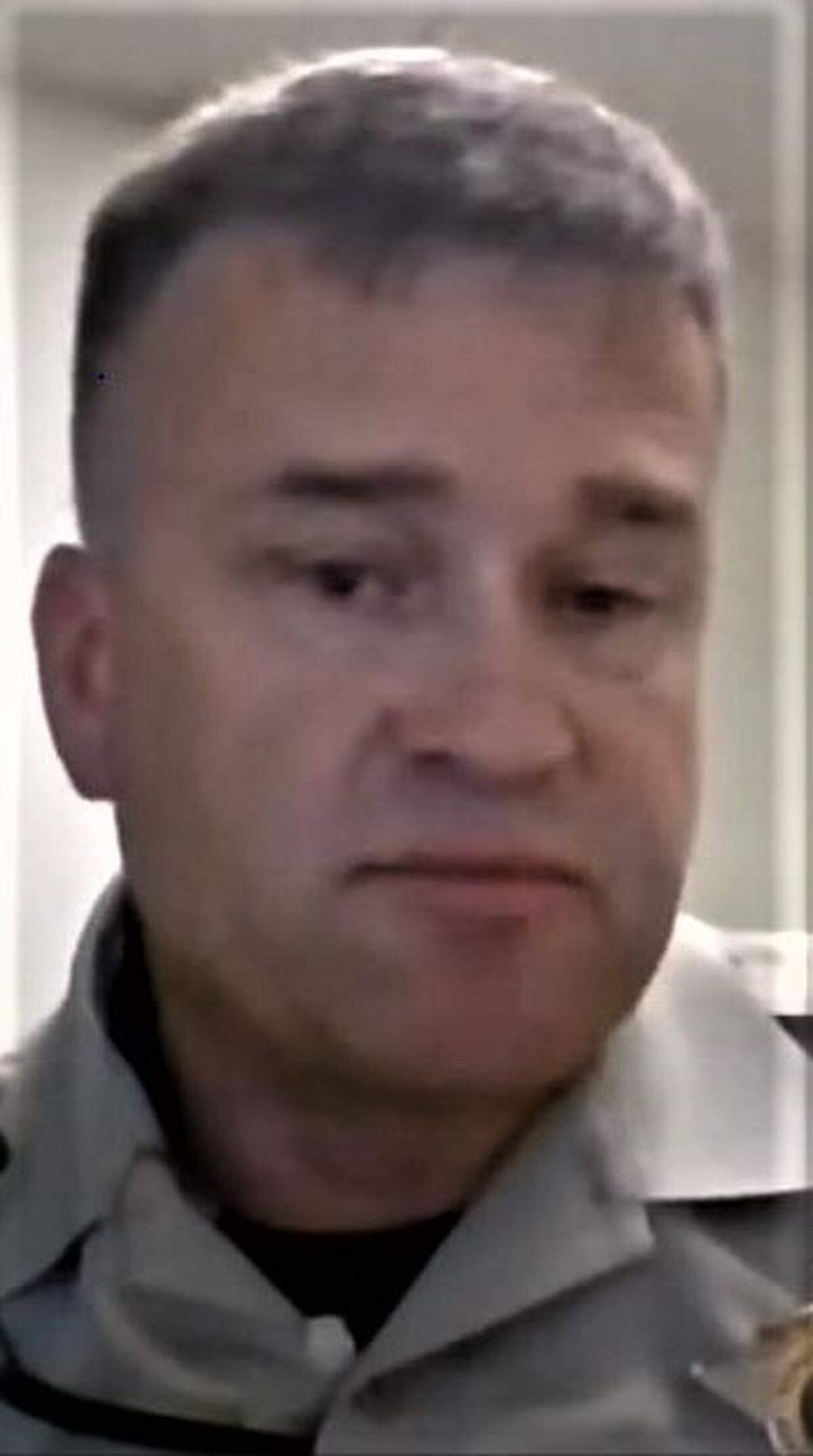
Police consider Table Rock a worsening problem, too. Boise police jurisdiction ends above Alto Via Drive, and the Ada County Sheriff’s Office patrols the stretch of Table Rock Road above it.
Sheriff’s Sgt. John Harris, who supervises the area, told the commission that Bates sometimes texts him when problems pop up, and Harris sends deputies when he can.
High school students swarm during virus shutdown
When the spread of COVID-19 led Gov. Brad Little to order Idahoans in late March to stay home, “tens of thousands of high school kids with nothing to do, they were going to go up Table Rock,” Harris said.
Policing alone cannot solve the problems, Harris said. “We can’t write that many citations, tow that many cars,” he said.
The gate may help. It will be an automated gate just above Alto Via Court, after which the only houses are the mansions on Wild Horse Lane, which connects with Table Rock Road.
The new gate will supplement, not replace, existing gates at the end of Wild Horse Lane and about half a mile away from the cross on Table Rock Road. It will turn a half-mile walk to the cross into a 1½-mile one.
ACHD is prohibited by state law from gating a public road, but the city can gate it by invoking its police powers to protect public safety and welfare, said Steve Price, ACHD’s general counsel.
Gate closed at night, open in day
The gate will be closed from sundown to sunup. Wild Horse Lane residents will be the only drivers able to open it at night.
That troubled one highway commissioner. “We will be creating during darkness, a private road out of a public road,” Commissioner Sara Baker said.
But that didn’t stop Baker from voting in December, along with the rest of the commission, to approve a licensing agreement with Boise. Baker left the board in January after not seeking re-election in November.
Bates said in October that by stopping nighttime traffic, the gate “will block probably 60% of the problems.”
The city says visitors can keep using the two trailheads associated that lead to Table Rock: the Old Penitentiary trailhead and the Mesa Trailhead adjacent to Warm Springs Golf Course.
Harris, the sheriff’s sergeant, said he grew up in the East End and spent many days as a teenager hiking in the Table Rock area. Today, though, “verbal warnings are not working,” and 24-hour access is no longer feasible.
“I’m rather excited about the gate at Alto Via,” he said. “I think that’s going to help us out.”
▪ ▪ ▪
Table Rock: Boise icon
Table Rock was one of 150 Boise icons included in a book and a series the Idaho Statesman published in 2013 to celebrate the city’s sesquicentennial. The article below was written by Anna Webb, then a Statesman reporter.
Table Rock, one of the most familiar landscapes in the city, is really several icons in one.
First, there’s the geology. The flat formation off Old Penitentiary Road is dotted with small caves and tiny crevasses along its slopes. It stands more than 3,600 feet high.
Table Rock owes its existence to Lake Idaho, the giant body of water that stretched from the Owyhees to Weiser, and from the Boise Front to Hagerman around 8 million years ago. Geologists say collections of fine lake sand formed Table Rock’s distinct ledge-like shape. Geothermal springs cemented it into sandstone.
Lake Idaho eventually drained away through Hell’s Canyon, leaving behind notable formations like Table Rock.
Human beings have interacted with Table Rock in many ways. Shoshone tribal members used the rock as a lookout. In the years shortly after pioneers platted the city of Boise in 1863, residents began flocking to the geothermal waters of Kelly Hot Springs, just east of Table Rock’s slopes.
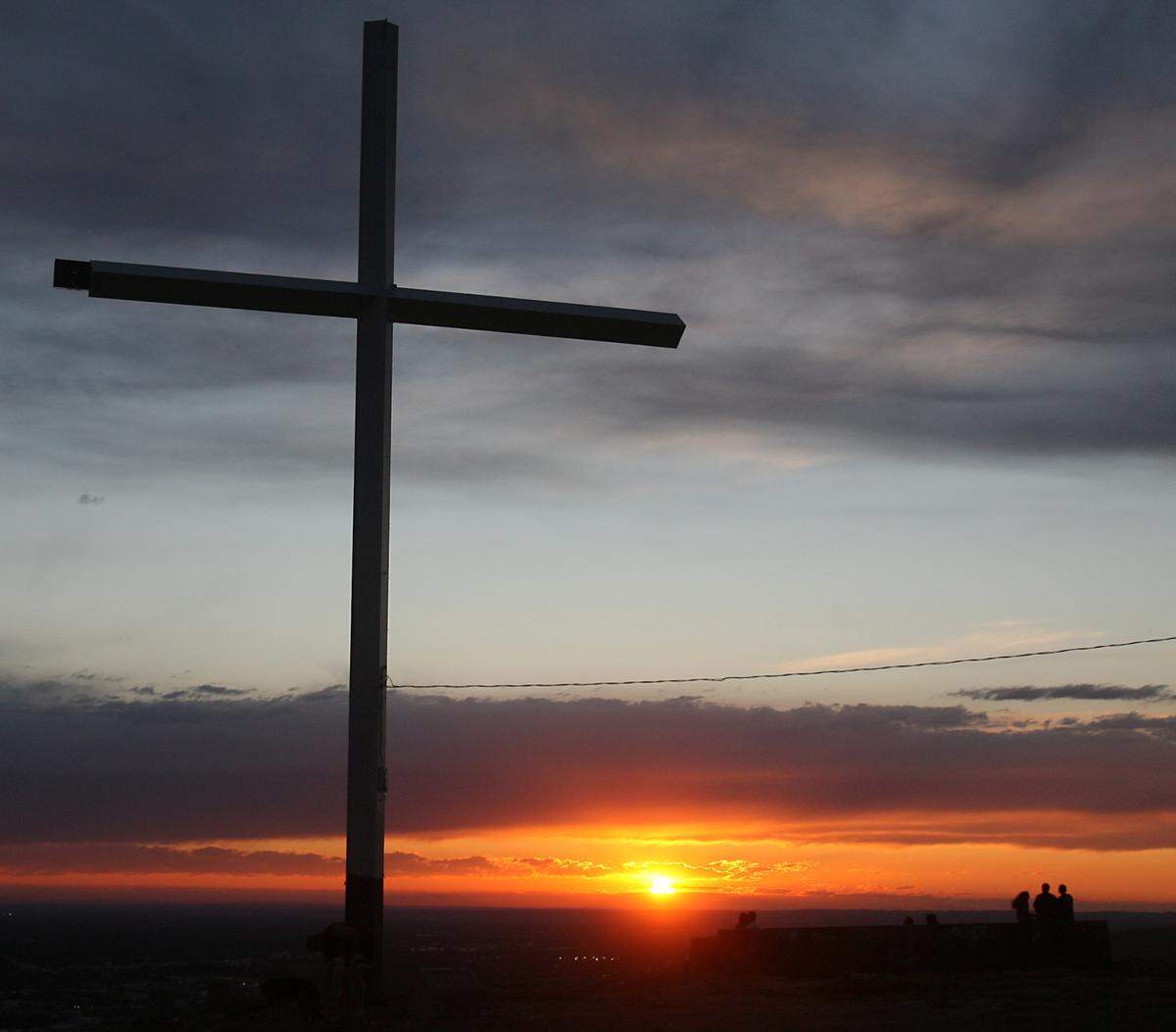
Table Rock was the source of the sandstone that built some of Boise’s first structures, including the Old Pen. Table Rock’s “built environment” provides even more mini-icons.
In 1931, Boisean Ward Rolfe and a group of his friends from Boise High School drove a Model T Ford up the hill the year they graduated and formed a giant letter “B” out of rocks on Table Rock’s southern slope.
“We decided Boise needed a B. So we went up there and put it up there,” Rolfe told the Idaho Statesman in a 2006 interview.
Rolfe died in 2011 at the age of 100, but the B remains — painted and re-painted in the colors of high schools from across the Valley.
The cross on Table Rock is also an icon. Like Boise’s Ten Commandments monument — installed by the Eagles following the popular “Ten Commandments” film — the Table Rock cross has its roots in 1950s popular culture.
Boisean Glenn Lungren, a member of the Jaycees service club, saw an episode of “This is Your Life” on television about a mail carrier who built a cross in his town. Inspired, Lungren kicked off a drive to raise money for a similar cross in Boise. The drive succeeded, and the Jaycees built the 60-foot cross in 1956 on Department of Correction land.
In the 1970s, in response to questioned about a religious symbol on public property, the Department of Lands sold the .07 acres where the cross sits to the Jaycees for $100.
Over the next decades, the cross continued to be a lightning rod for opposing groups. Standing on Table Rock amid broadcast antennas, it inspired conversation, marches to the Capitol and letters to the editor from fans and detractors alike.
Some wish it gone. Some moved to Boise because they fell in love with it. Some see it as a beacon of faith, others as nothing more significant than a familiar white light on the hill.
This story was originally published February 1, 2021 at 8:20 PM.