Want a new apartment? An inside look at why affordable ones aren’t being built in Boise
Want to live in a shiny new but affordable apartment within walking distance of downtown Boise? A city initiative might make that possible.
But it’s a modest initiative that might be for as few as 17 households. And the apartments likely would be for you only if your idea of an affordable two-bedroom unit is one that rents for up to $1,700 per month, or possibly $2,000.
The unfolding tale of a vacant lot on a residential street west of downtown offers an inside look into how few opportunities exist to add new affordable housing in Boise, how costly it can be to build, and how tricky it is for developers to make money on it.
The lot is at 1715 W. Idaho St., one block north of the Red Lion Hotel on Main Street. A boarded-up house borders the site on one side, a surface parking lot on the other, and the backs of two Main Street buildings and their parking areas to the rear: the New Life Apostolic Church and a commercial building that houses two businesses, Rock Hard Granite and Creamer Heating & Air Conditioning. The site is a block from a bus line, six blocks to the Idaho Power headquarters and 11 blocks to City Hall.
A few years ago, Nampa developer Mike Mussell bought the lot intending to put up a three-story, wood-framed building with apartments for long- and short-term rentals.
Some neighbors didn’t like the massiveness of the building’s design and worried about short-term renters as neighbors. An analysis said the top 4 1/2 feet of the site’s poor-quality soil would need to be removed and replaced for building stability. That would be expensive. Mussell changed his mind and put the site up for sale.
Brady Shinn took notice. Shinn is a property-development project manager at Boise’s urban renewal agency, the Capital City Development Corp., or CCDC. He keeps an eye on properties for sale in the city’s urban renewal districts, said Jordyn Neerdaels, the agency’s spokesperson. The right property could provide an opportunity. With CCDC’s financial help, it could be redeveloped into something that could provide needed housing, help Boise’s economy and spruce up a sagging neighborhood.
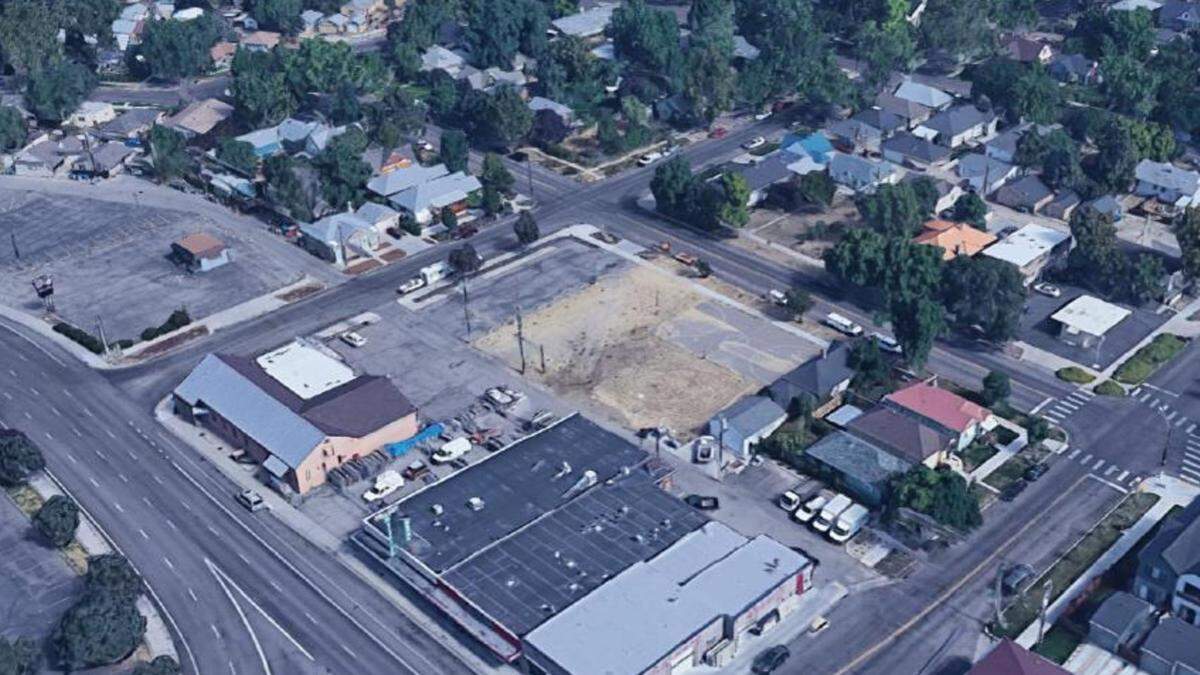
“He realized it would be pretty cost-prohibitive for a private developer,” Neerdaels said by phone. “The removal of dirt would cost a minimum of $250,000 for soil remediation. All of those costs may be passed along to potential renters or homeowners.”
An urban renewal agency has something private developers don’t: taxpayer money to spend on development. When a city council in Idaho creates an urban renewal district, all property taxes received by taxing jurisdictions in the district are frozen for 20 years. Any new tax revenue generated by increases in property value, including from new development, go to the agency for use in the district until the district expires. Boise’s agency collected $16.5 million last year in property taxes from its five districts, including the one encompassing 1715 W. Idaho St.
It can use that money to build sidewalks, plant trees, install signs, lights and artwork, and pay for utilities up to the property line. And when it sells a parcel to a developer, it can sometimes write down the parcel’s value, effectively selling it at a discount or giving it away.
CCDC bought the parcel.
.JPG "Nets and sign where Boise Bike Polo players play on proposed Tibbs Condominiums site at 1709 to 1715 W. Idaho St. (2).JPG")
The agency has gained experience buying underused property, developing a concept for housing there, and inviting developers to propose attractive projects. That’s how the upscale, 67-unit The Afton condominiums came to be built on River Street near the city’s main library. It’s how the more modest 37-unit Watercooler apartments were built on West 14th Street, and the 34-unit Ash Street Townhomes were built southwest of downtown. That’s what CCDC is trying to repeat at 1715 W. Idaho.
Last fall, CCDC announced that it wanted infill housing there. It invited proposals and told developers: We won’t dictate what you can propose, but we hope for housing to serve the Boise workforce, the middle class. And if you can provide any lower-income housing, too, so much the better.
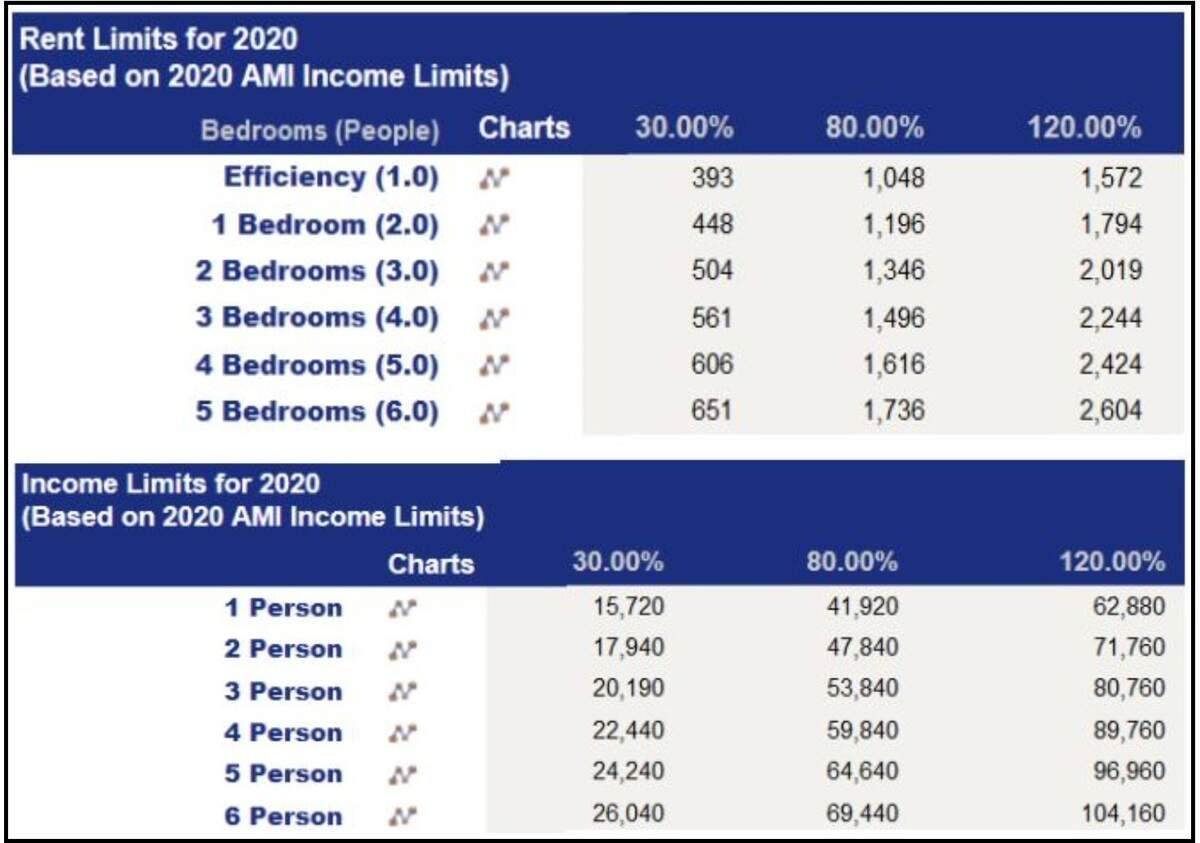
The agency defined workforce housing as that for people who earn 80% to 120% of the area median income. For a two-bedroom apartment, that would permit monthly rents up to $1,346 at the 80% level, roughly $1,700 at 100% and up to $2,019 at 120%. Lower-income housing would serve people who earn as little as 60% of the median income.
The Census Bureau says $59,800 is the median 2019 income for a two-person household in Ada County. CCDC gave the developers recommended rent limits for 80% and 120% of that income, with rents eating up about one-third of income. At 80%, or an income of $47,480 per year, the highest rent for a two-bedroom unit would be $1,346. At 120%, or $71,760, it would be $2,019.
Three developers made proposals:
1. McCarty Flats
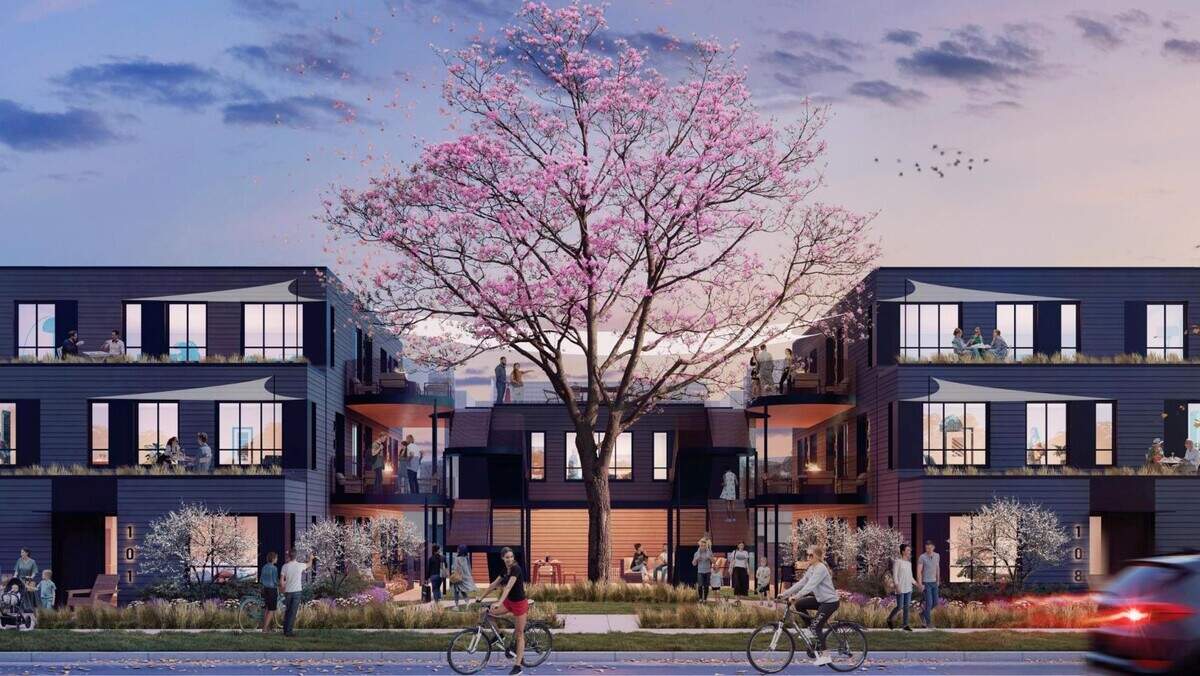
Developer: Hormaechea Development LLC, of Boise, led by Michael Hormaechea, who developed The Afton
Architect: GGLO, whose principal in charge is Mark Sindell
Units: 17
Monthly rents: Two bedrooms $1,682 to $2,019 (100%-120% AMI), one bedroom $1,196-$1,495 (80% to 100% AMI), studio $786-1,048 (60% to 80% AMI)
Size: Two bedrooms 992 square feet (sf), one bedroom 736 sf, studios 576 sf
Cost to build: $3.8 million (average $224,474 per unit)
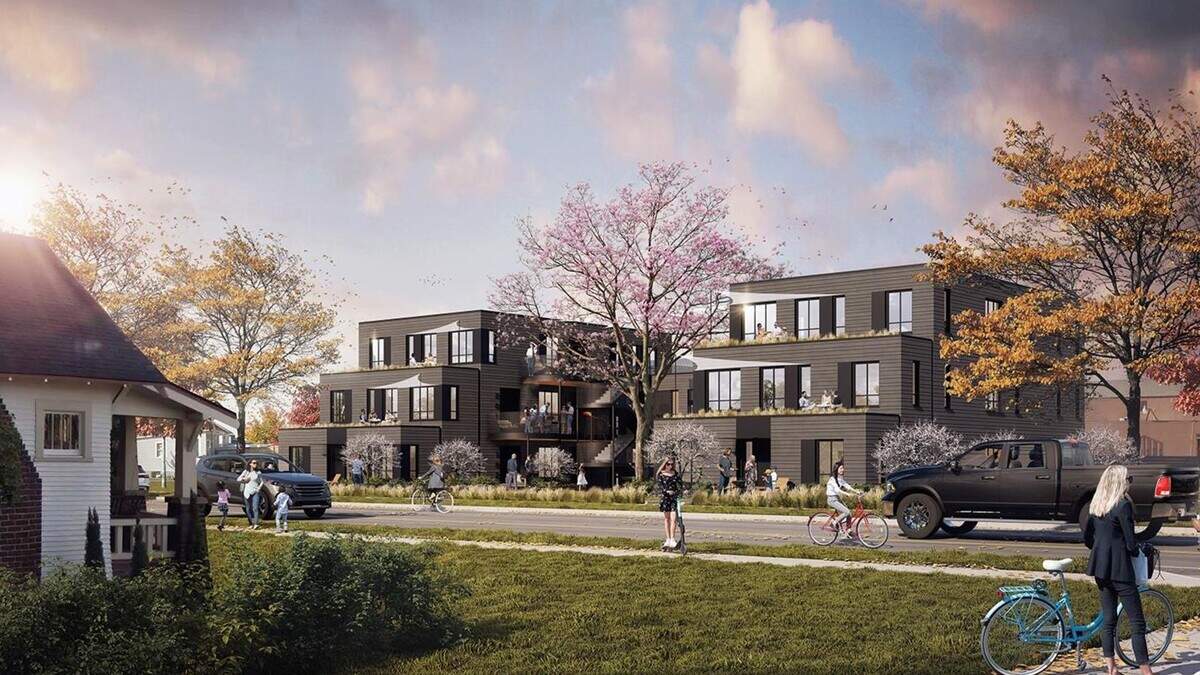
This is the only developer so far to give its project a name: McCarty Flats. That is Hormaechea’s nod to the McCarty family, which first developed West Downtown.
Hormaechea proposed a 17-unit building, as the other developers did, because that’s the maximum number of units allowed there by the city’s zoning code.
The building would have four two-bedroom units, nine one-bedroom units and four studios. The two-bedroom units would be big enough for small families as well as singles or couples, he said.
The proposal makes “a strong and clear commitment to addressing middle-income affordability,” he told CCDC’s board at its Jan. 11 meeting.
The 17 units are just the base proposal. Hormaechea hopes to acquire adjoining properties to allow a larger development. So does the next developer:
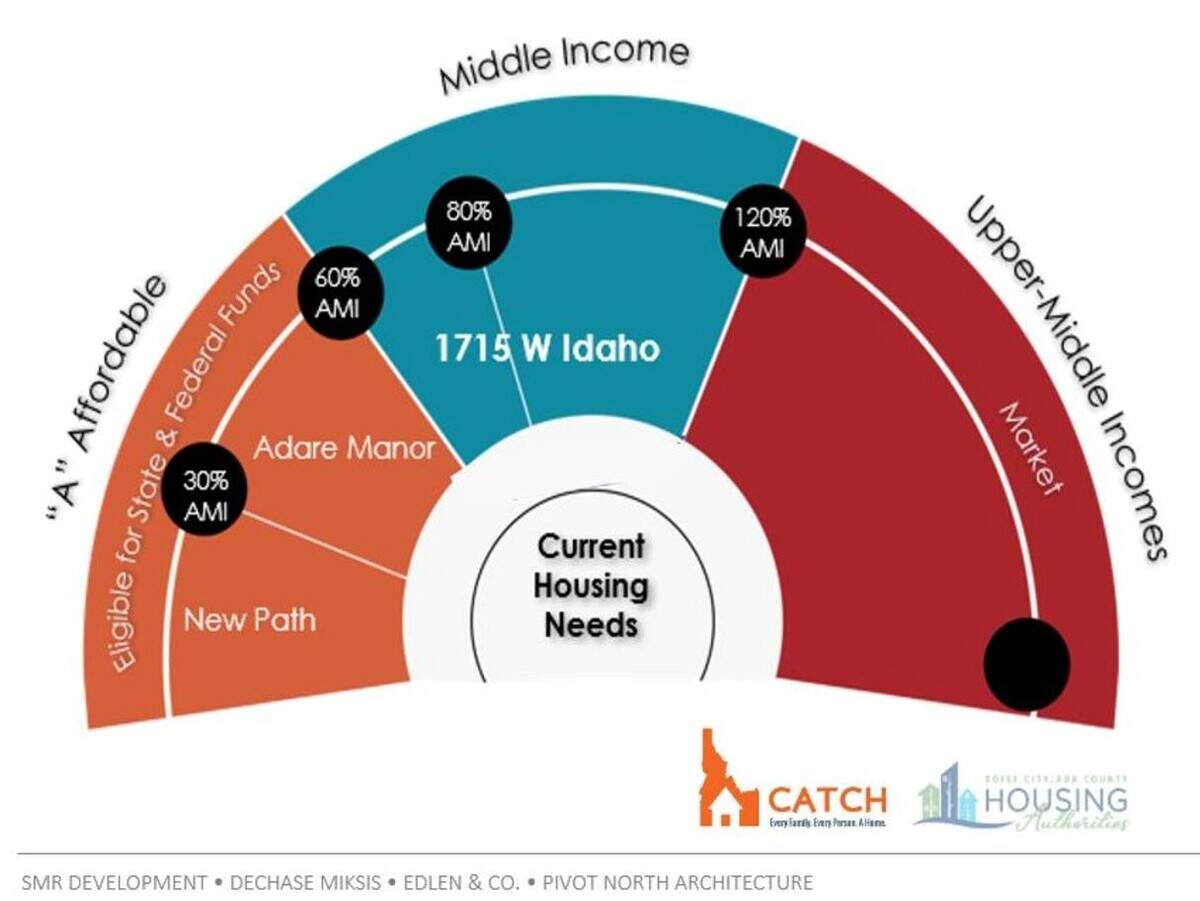
2. SMR, deChase Miksis and Edlen
Developers: This is a partnership comprising SMR Development, of Boise, the lead developer, led by founder Shellan Rodriguez; deChase Miksis, partner; and Edlen & Co., of Ketchum, partner
Architect: Pivot North, of Boise, principal John King
Units: 45
Size: 450 to 816 square feet per unit
Monthly rents: $800 to $1,700
Cost to build: $10.7 million ($237,666 per unit)
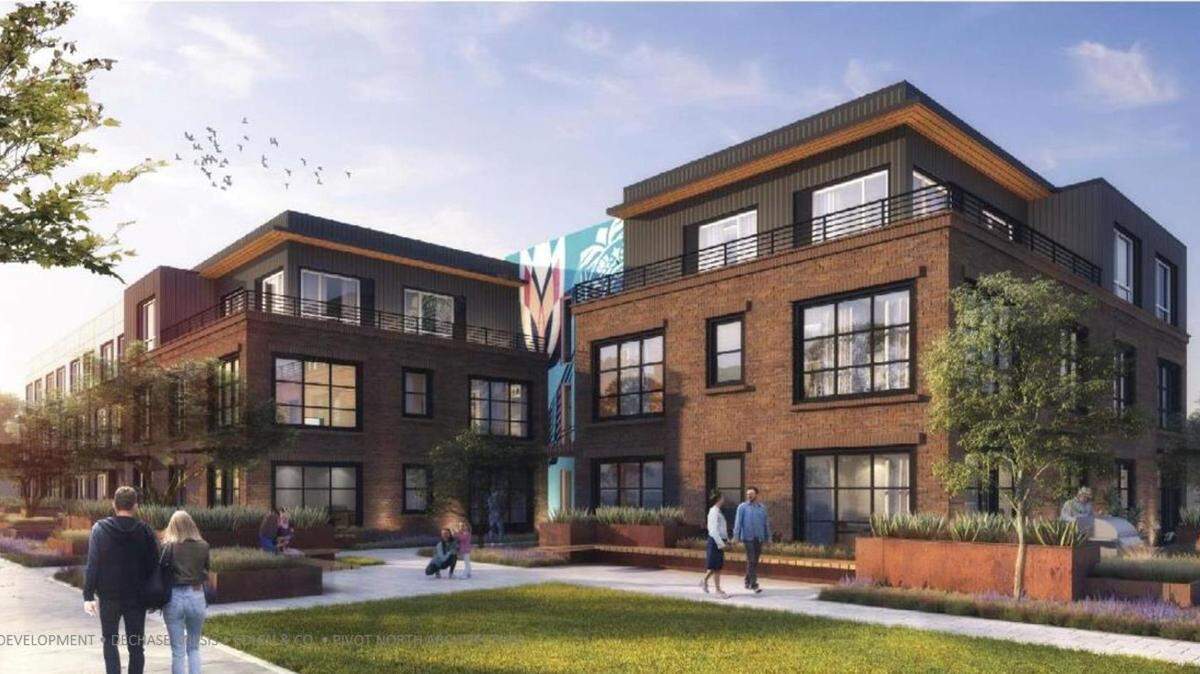
While neither Hormaechea nor this group has acquired any adjoining properties, both have talked to neighboring landowners, and Rodriguez says she has an accepted offer from the owner of the property that houses the granite and air-conditioning businesses. Rock Hard Granite says it is relocating to Caldwell in February. So Rodriguez’s plan includes units on the neighboring properties.
“We’re basically leveraging the 0.4 acres that CCDC owns to develop 1-1/4 acres,” said Rodriguez, who used to work for the agency.
Twenty-three units would have two bedrooms, 10 would have one bedroom and 12 would be studios.
The developers say their housing would serve households earning roughly $40,000 to $80,000 per year, with average rents for people earning 100% of average median income.
“I want to be very clear: We’re providing ‘missing-middle’ workforce housing for Boiseans,” she said.
But what if the developers cannot acquire the adjoining parcels? Rodriguez said that to make the project work, they could shrink the unit sizes, boost the number of one-bedroom units, and take advantage of a housing bonus that the City Council has been considering to promote denser development.
3. Conner Construction
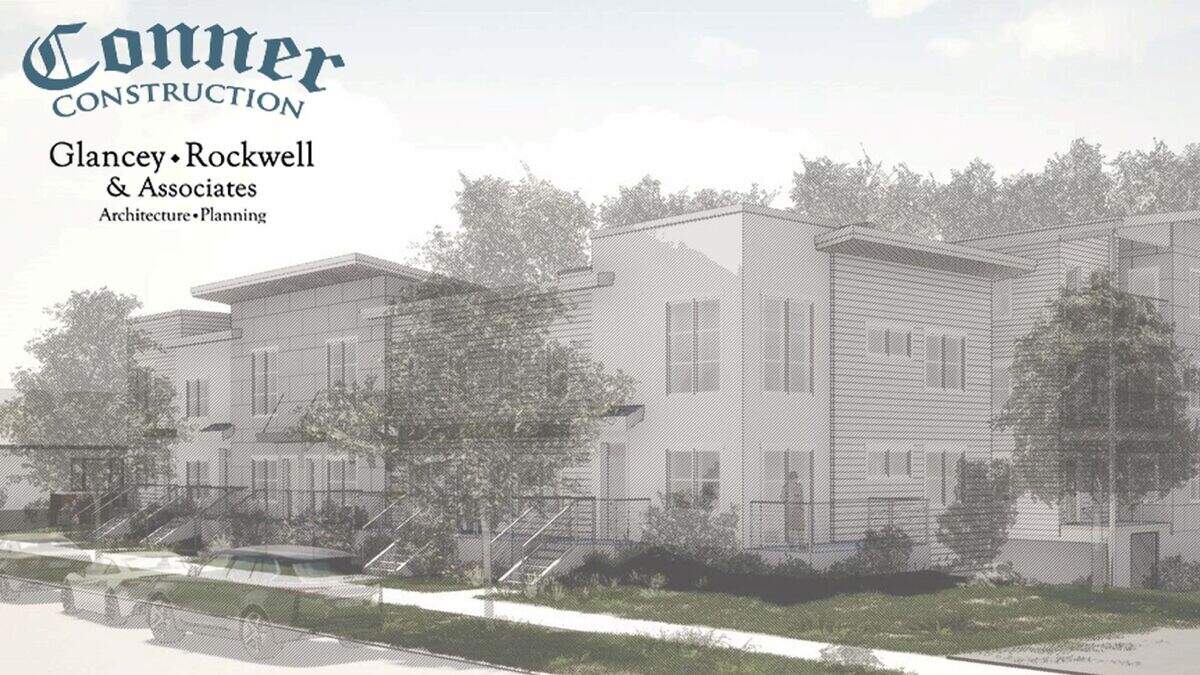
Developers: Chris Conner, the major investor, a Boise builder since 1979; and Aleks Yanchuk
Architect: James Glancey, of Glancey Rockwell & Associates, Boise
Units: 17, including 10 apartments and seven townhouses
Monthly rents: Not specified. “These homes will be affordable to anyone making 100% AMI income.”
Size: Two-bedroom apartments, 950 square feet; two-bedroom townhouses, 960 square feet.
Cost to build: $4.5 million ($264,553 per unit)
Conner is building the upscale Highlands Cove subdivision around Crane Creek Country Club in the Boise Foothills.
In a slide presentation, Chris Conner said his goals with this project are: “Build long-term affordable housing. Develop site sustainability and comfort. Incorporate local Idaho businesses. Create a family-friendly location to live. Increase beautiful architecture in the Boise Downtown area.”
“This project is still in preliminary stages and is currently over budget for everything we would like to see included,” the company’s application says. “Conner Construction would like to achieve economic feasibility for this project.”
He said his proposal could be improved if the city would require less parking and allow denser development on the parcel. Allowing more units “could allow for a better return on investment, thus reducing (the) requirement for financial assistance from CCDC,” his presentation said.
As Conner’s application indicates, it is hard for developers to make money by building new apartments whose rents are at 80%, and sometimes even 100%, of the local average median income, in Boise, where land costs have soared and where builders and other contractors are in such high demand that they can command high prices, too.
What next
The apartment sizes are modest, yet the costs still average roughly a quarter million dollars per living unit. The developers’ take could be modest too: Of SMR-deChase-Edlen’s $10.7 million budget, $628,000 is the developer’s fee, while $6 million is for construction, $1.6 million for site acquisition and improvements, and the rest for professional, local-government, insurance and other fees, reserves, taxes and furnishings.
The urban renewal board plans to pick one of the proposals at its Monday, Feb. 8, meeting. Then the agency and developer would negotiate contractual details.
If all goes well, construction could start next fall or winter, and the first units could be ready to rent in fall 2022.
The board must figure out how to weigh the first two developers’ plans to acquire neighboring properties. That’s the kind of leveraging the city wants, because it brings a better financial and neighborhood-improvement return on public investment. As Conner’s application says, building more units permits economies of scale. That can make the difference between building or not — and may help keep rents lower.
But neither Hormaechea nor the Rodriguez-led group has acquisitions nailed down. Meanwhile, the terms that CCDC proposed don’t actually require affordable housing, they just express a preference for it. If a developer decides it would not be able to make money delivering what the city seeks, CCDC could end up subsidizing luxury housing with taxpayer money — or owning an empty lot that cost taxpayers $613,000 with no prospects for redevelopment.
(Remember that soil problem and the agency’s ability to write down the site cost? At least one of the applicants wants CCDC to write the value down to zero.)
Former Mayor David Bieter, a member of CCDC‘s board, is skeptical that whatever is built at 1715 W. Idaho will succeed in becoming truly affordable housing without an additional government subsidy beyond what the urban renewal agency can offer.
“I think we’re going to have a hard time weighing these fairly,” he said at the Jan. 11 board meeting. “And I don’t expect the 17 units to get anything really affordable.”
The board chairperson, Dana Zuckerman, an urban and land-use planner and housing developer, is more optimistic. If the first-choice developer cannot do the job the urban renewal board wants, the board could turn to its second-ranked choice, she said.
“I think we have excellent proposals here,” Zuckerman said. “I think we can’t really lose.”
This story was originally published January 27, 2021 at 4:00 AM.