‘A chilling image’: Judge rules on appeal in Meridian man’s viral arrest
An Ada County district judge has affirmed a jury’s decision to find a Meridian man guilty in a 2024 encounter with police that went viral after the arresting officer knelt on the man’s neck.
The decision comes a year after 23-year-old Samson Allen appealed his guilty verdict of resisting and obstructing police. Judge Gerald Schroeder of Idaho’s 4th Judicial District on May 22 affirmed that Allen broke the law when he refused to comply with then-Meridian Police Officer Bradley Chambers’ orders for him to step away from his truck during a dirt-bike accident investigation.
But Schroeder discounted another of Chambers’ orders as unlawful and said the officer’s use of force painted “a chilling image.”
Allen was arrested on June 30, 2024, after his younger brother had lost control of his dirt bike while riding on a residential street in North Meridian. Allen and another brother loaded the bike into Allen’s truck and planned to head to the hospital when Chambers approached the pair.
“That’s not gonna work,” he told them, according to video footage from police and the Allen family. “Take it out of the truck.”
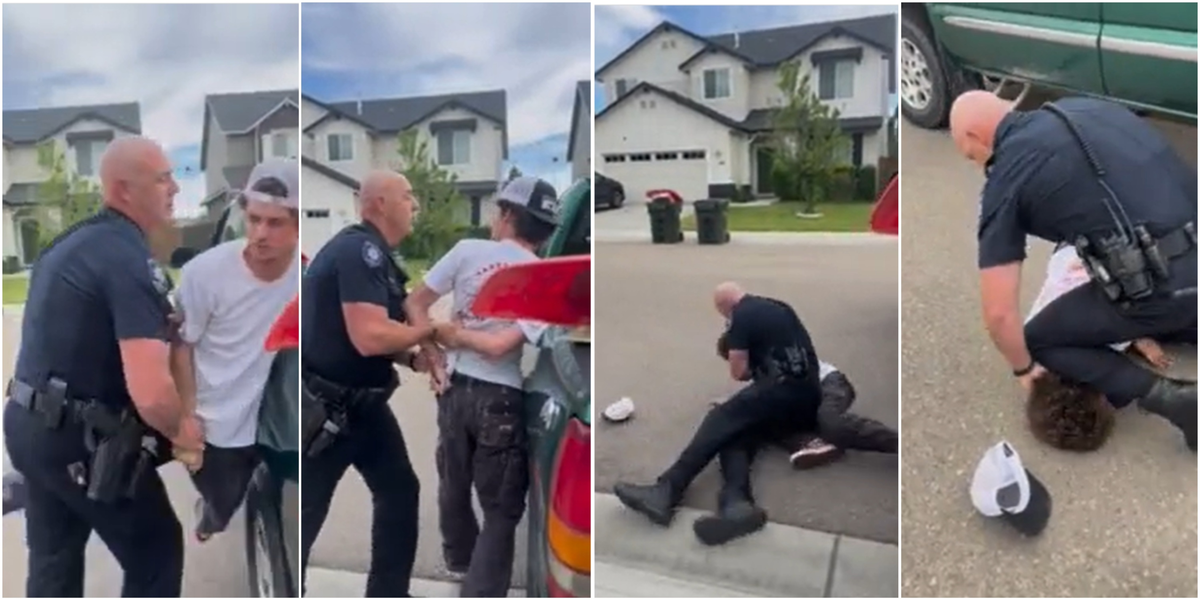
Allen refused to unload the bike, which weighed roughly 300 pounds, according to court records. Then, Chambers came up behind Allen, ordered him to step away from the truck, grabbed his wrist and forced him to the ground. Chambers pressed his knee into the then-21-year-old’s neck and held it there for nearly a minute.
Videos of the arrest garnered millions of views online and sparked outrage — and an internal review of Chambers’ use of force. But the review concluded that Chambers acted in accordance with department policy and the law, according to Meridian Police Chief Tracy Basterrechea, and in May 2025, a jury in Boise sided with prosecutors who argued that Allen was guilty of misdemeanor resisting arrest.
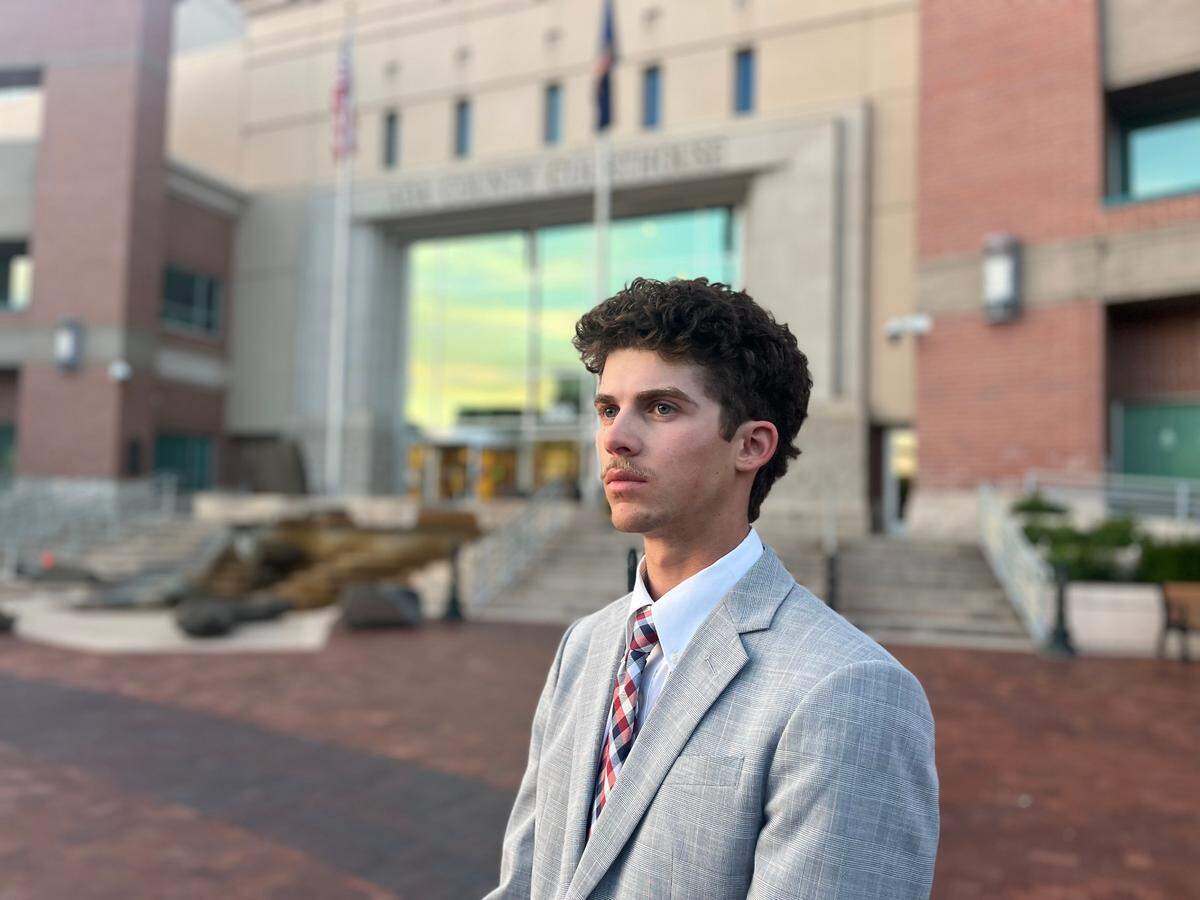
The presiding judge ordered Allen to three months of unsupervised probation and entered an order withholding judgment, meaning that Allen is eligible to have his conviction set aside and his case dismissed if the terms of his sentencing are satisfied.
Allen appealed the order on the grounds that there was insufficient evidence to find him guilty and that the court should have provided additional instructions to the jurors, court documents show. That included a line from a 2009 Idaho Supreme Court case stating that “an individual may peacefully obstruct or refuse to obey an officer’s unlawful act” without being guilty of resisting and arresting.
Judge upholds verdict, says one order from officer not lawful
In his ruling, Schroeder wrote that the crux of the proposed addition was addressed in another section of the jury instructions. That would have allowed Allen to argue for an “affirmative defense,” or the notion that he did resist but under mitigating circumstances that made him not guilty.
“No error has been shown,” Schroeder, a former chief justice of the Idaho Supreme Court, wrote. “... The jury was properly instructed.”
Schroeder’s decision found that Chambers’ command for Allen to take the dirt bike out of his truck was “not lawful,” because Allen “could not physically have done so.” But not stepping away when ordered? That’s where Allen appeared to have gotten himself in trouble. And everything that happened afterward — including the knee-on-neck force — is effectively outside the scope of the charges and appeal.
The order to step away was lawful, Schroeder decided, and he upheld that a “rational” jury could have found sufficient evidence that Allen resisted it. In considering the appeal, it’s standard for the court to view “the evidence in the light most favorable to prosecution,” he wrote.
Still, he detailed “compelling mitigating factors” that the jury could have considered.
There was video evidence showing “a well over two hundred pound police officer slam a one hundred forty five pound young man to the ground and pin him down with a knee on his neck, a chilling image,” he said. There was testimony from Meridian police officers that Chambers failed to adequately deescalate the encounter.
But “the problem for the Appellant is that this action took place after the events charged,” he said.
“Although the Court might have reached a different conclusion,” about Allen’s guilt, Schroeder wrote, that was for the jury to decide, not the appeal court.
“If there are consequences flowing from that conduct by Chambers they will occur in a different venue,” he said.
The decision means that the trial court’s order withholding judgment will stay in place.
Allen family raises concerns about case as next steps unclear
Allen’s attorney during the appeal, public defender Cameron Hosack, did not respond to an email from the Idaho Statesman inquiring about the possibility of any further appeal.
Allen’s father, Chris Allen, has continued to raise concerns about the handling of his son’s case, including regarding evidence he alleges was not presented to the defense.
It’s unclear what avenue, if any, Allen plans to pursue now. In December 2024, he filed a tort claim with Chambers and the city of Meridian, putting them on legal notice for allegedly violating his constitutional rights during the arrest and causing “severe and irreparable physical, mental and emotional injuries,” the Statesman previously reported. Tort claims are typically filed as a precursor to a lawsuit. Allen has until June 30, 2026, to sue if he chooses to.
Chambers transferred to the Boise Police Department in the months following Allen’s arrest. In January 2025, he left Boise and has since been rehired in law enforcement in Napa County, California, where he worked prior to moving to Idaho.
This story was originally published May 29, 2026 at 4:00 AM.