Get a text about unpaid traffic tickets? Here’s what ITD says you should do
Idaho drivers are the targets of a “wave” of scam text messages circulating across Idaho.
That’s according to the Idaho Transportation Department, which is warning residents about fraudulent texts.
“Scammers are targeting Idahoans with messages that look official but are completely fake,” Idaho Department of Motor Vehicles administrator Lisa McClellan said in a Tuesday, March 10, news release.
If you receive a suspicious text from the ITD or DMV, here’s what to do:
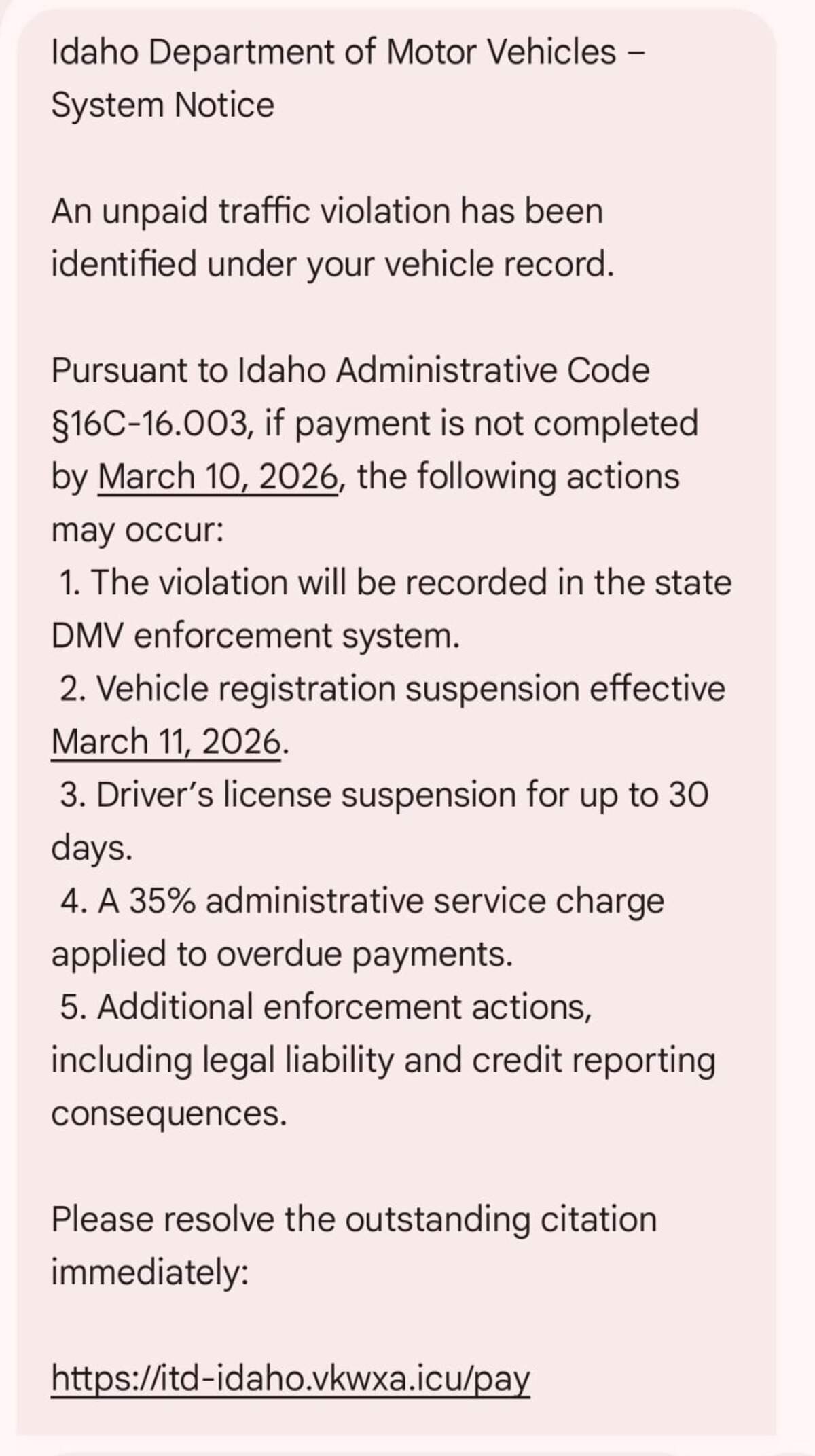
What do fake text messages look like?
Idaho residents are receiving text messages from unknown numbers claiming to be the Idaho Transportation Department.
“These messages often claim that a traffic citation must be paid online or that a vehicle registration is overdue,” the Idaho Transportation Department said in the release. “They are fraudulent and not connected to ITD or any official DMV services.”
The most recent onslaught of fake texts are presented as a final warning before disciplinary action is taken.
According to Primis Bank, this is a common trick used to create “fake urgency.”
“Scammers often claim your license is suspended, a payment is overdue or your account will be closed unless you act immediately,” the Virginia-based bank said. “Cybercriminals count on people being rushed or distracted. Slow down, read carefully and question anything that feels off.”
The texts typically include a link where you can allegedly resolve the violation by making a payment.
Don’t click on it, state officials say.
“If the link does not have a dot gov address, it’s a scam,” McClellan said.
What should I do if I get a scam text?
“If you receive one of these messages, do not click any links and do not provide personal or payment information,” the Idaho Transportation Department said in the release. “Report the message to your mobile carrier and delete it.”
Clicking on malicious links or providing your personal information outside secured and safely monitored communication channels can leave you vulnerable to identity theft or losing control of your financial accounts, according to the Federal Trade Commission.
You should also block the number the scam text was sent from, according to the Bank of America.
If you’re unsure the message is from a verified organization or government agency, you can call them using the customer service numbers provided on official websites, the Federal Trade Commission said on its consumer advice website,
A good way to stay ahead of scammers is keeping your software updated on all of your devices, Bank of America said.
How to report a fraudulent text
If you receive a fraudulent text, the FBI recommends that you
- File a complaint online with the Internet Crime Complaint Center.
- Check your account using a legitimate website.
- Contact the agency’s customer service phone number.
- Delete any scam texts you received.
If you clicked any link or provided your information, take efforts to secure your personal information and financial accounts. Dispute any unfamiliar charges.
You can also use your phone’s “report junk” option to report unwanted texts to your messaging app or forward them to 7726 (SPAM), the Federal Trade Commission said.