As Boise builds up, Eagle tees up density restrictions with little public input
AI-generated summary reviewed by our newsroom.
- Eagle planners backed density reductions across the city despite no public turnout.
- Rezoning could bar some apartments and reshape what developers could build downtown.
- Minimal public outreach raised concerns about transparency and support for less density.
As Boise squeezes more people into its limited city boundaries, other nearby cities want another approach to tackle the region’s growth.
None maybe more so than Eagle, which could soon whack density standards down to spread out home construction on larger lots across the city and rezone several parts to match approved developments.
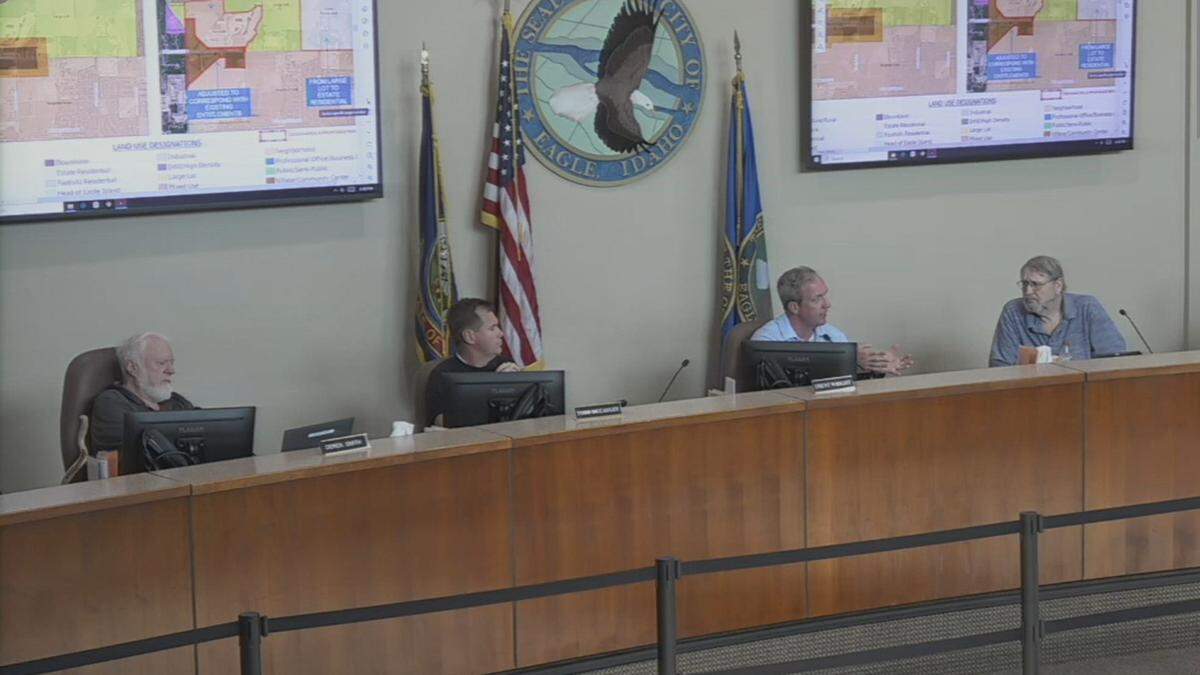
Eagle’s Planning and Zoning Commission voted unanimously to recommend that the City Council approve an amendment to the city’s comprehensive plan and land-use map, despite some concerns and zero public attendance or input at a public hearing. The changes would, in some cases, halve the allowable density in parts of the city.
The changes “could represent a pretty big deal to the city,” said Commissioner Todd McCauley during the June 2 public hearing before the vote. “It seems like a big enough deal that it’s surprising that no one’s here.”
It’s not clear who proposed the changes. Calls and voicemails the Idaho Statesman left with the Eagle Mayor Brad Pike and the city’s communications and planning and zoning departments were not returned.
William Vaughan, the zoning administrator, said during the hearing that the genesis for the changes came from feedback the City Council had received during public testimony on other matters.
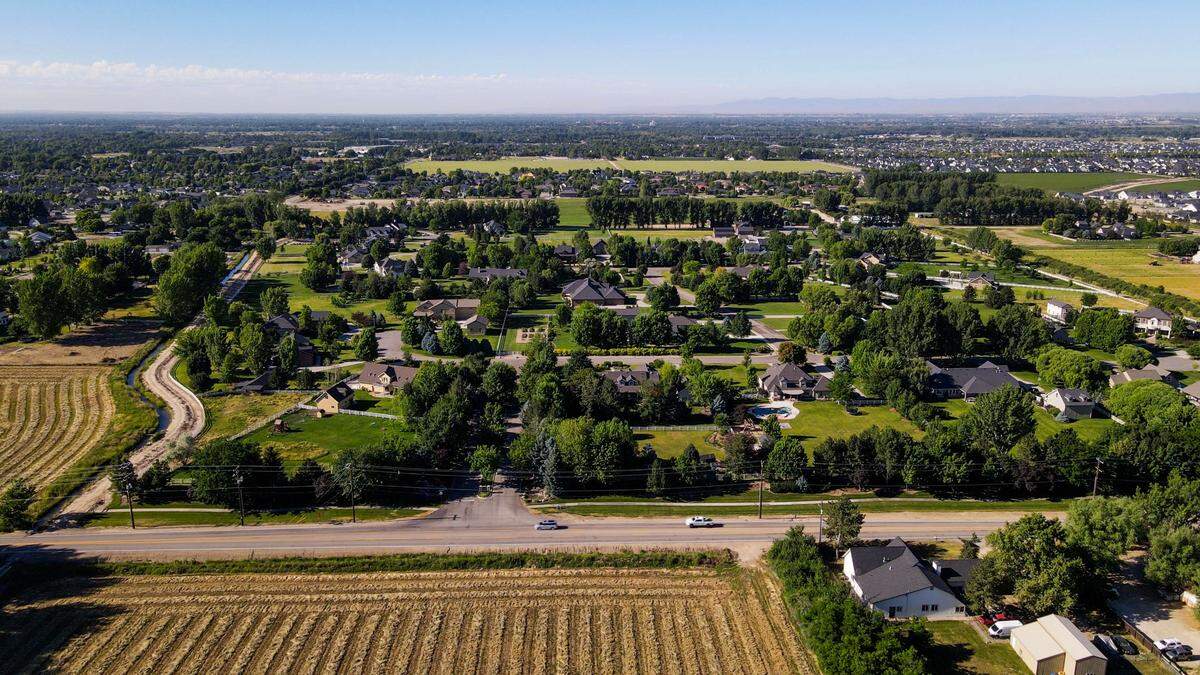
The changes could affect much of the city’s zoning, which determines what types of homes and buildings developers can build. Zoning also designates different areas for housing, commercial or industrial uses.
The comprehensive plan does not set the rules in stone as the city zoning code does. The plan is a guiding document for the growth and development of the city. However, Idaho law says zoning districts “shall be in accordance with” and “in keeping” with the adopted plan, according to Eagle’s 2023 Comprehensive Plan. Updating the city code would require separate votes with public hearings.
The changes would:
Lower residential neighborhood areas from 2-4 to 1-3 units per acre.
Lower compact residential areas from 4-8 to 3-6 units per acre.
Lower infill and high-density areas from 8-20 to 6-12 units per acre.
Lower mixed-use areas from 20 to 10 units per acre.
An acre is roughly equivalent to a football field, the average grocery store or half of a downtown Boise city block.
The changes could dramatically alter what developers could build in the city’s downtown, which is mostly zoned for a combination of housing and businesses. The limitations would effectively bar the development of many apartments, condos or town houses — such as the 40-unit affordable Eagle Manor at 276 E. Cedar Ridge St., just east of the Albertsons on Eagle Road.
Town houses, for example, normally take up 12 to 18 units per acre. According to a 2016 study from the National Association of Homebuilders, the median density nationwide for town house and apartments subdivisions combined was almost 19 units per acre.
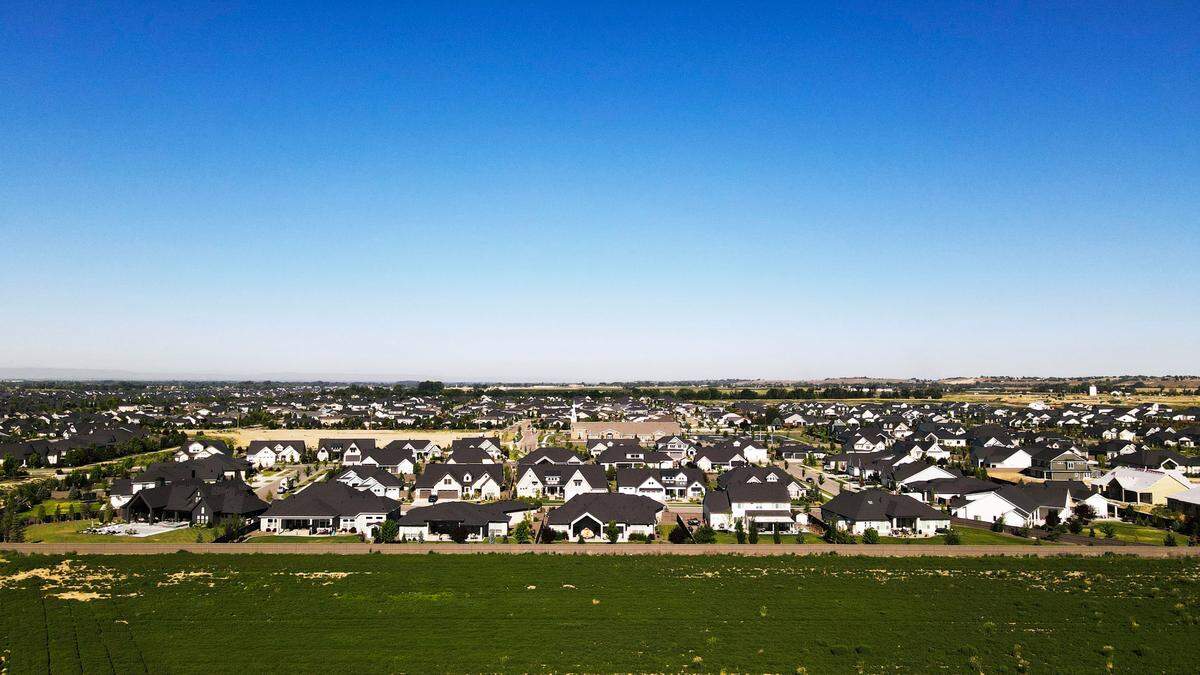
Lower densities often contribute to urban sprawl.
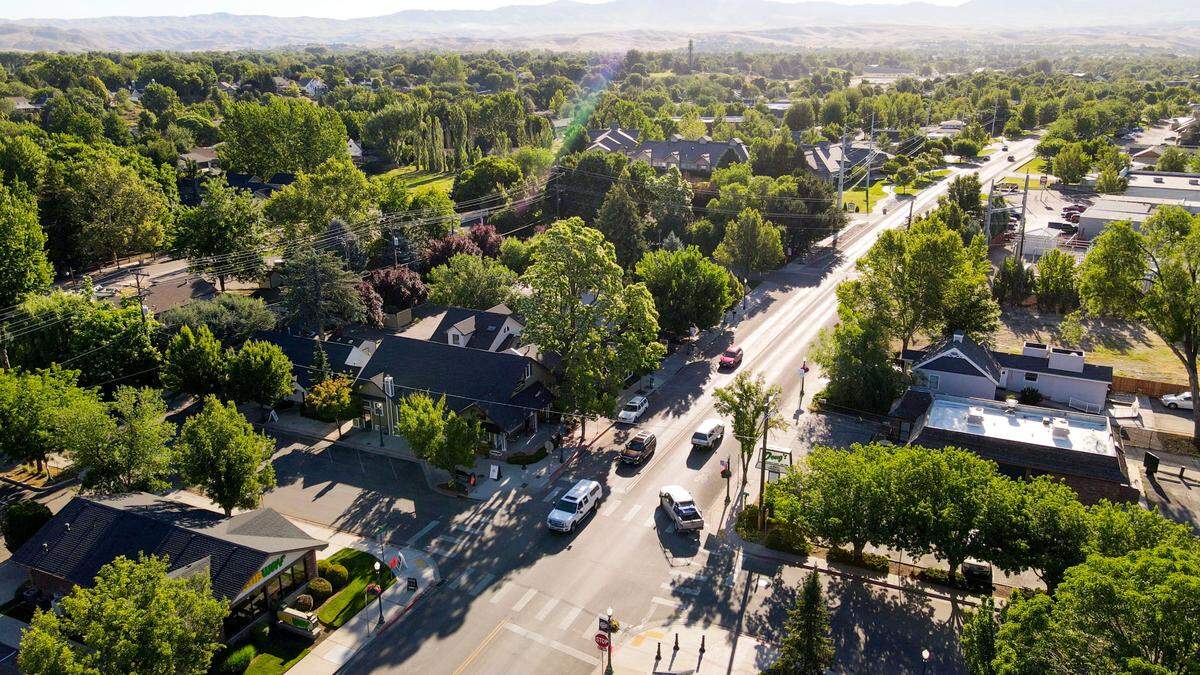
According to a study from the National Institutes of Health, “There is substantial evidence that urban sprawl has negative effects on human health and the environment” with the need to rely on vehicles to get around. This includes air pollution, fewer opportunities for people to exercise and poorer water quality caused by runoff.
Others, however, argue that sprawl is necessary to address America’s housing shortage and increase opportunities for people to build wealth through home ownership.
The proposed updates also cross out the “High Density Residential,” “Regional Retail” and “High Density Employment” areas from downtown, along with “manufactured homes” from the list of housing types the city should support.
The commissioners showered the plans with praise, saying that it was exacting and took a “yeoman’s job” to accomplish it. Commissioner Paul Oland, however, had possibly the sharpest critiques, saying that the “un-densification” was significant and could hurt the city’s ability to pay for infrastructure like roads.
“When you drop (density), it’s always harder to go back in the other direction in the future,” he said.
Some of the commissioners said density was not a concern after the city added about 23,000 acres with the annexation of the big Avimor planned community in 2023. The annexation faced strong community opposition. Plans for Avimor call for the construction of over 8,700 homes.
McCauley, before voting to approve the changes, agreed with Oland’s concerns but said he was “unprepared” to handle a discussion on density “given the amount of time I’ve spent on this.”
Because the Planning and Zoning Commission can only recommend the changes, not impose them, McCauley said that putting his fingerprints on density requirements was “a level of specificity that I feel unprepared to handle.”
Could changes place ‘greater burden’ on Eagle taxpayers?
Flummoxed by the lack of attendees, the commissioners added a recommendation that the city communicate with residents about the changes, though they did not specify how or when.
“I was surprised that there were no developers here this evening,” said Commissioner Derek Smith. “I thought for sure we would have several.”
The only comment the commission received was from Eagle resident Dave Miles, who submitted his letter too late to be read during the hearing.
Miles’ letter, which the Statesman received through a public records request, opposed the reduction in densities and the removal of high-density, residential retail and high-density employment from downtown.
“I believe these changes are short-sighted and will not provide for an effective mix of densities for the city to ensure that Eagle has a fair and appropriate tax base to ensure its long-term financial success,” he wrote. “These changes will place a significant and greater burden on the current residential tax payers of Eagle in the long run.”
Little public notification, big changes for Eagle
Both Miles and the commissioners were unsure why there was so little public outreach on the changes. In an email to the Statesman, Miles said that he had only learned of the changes by signing up for the city’s notices of all hearings.
Eagle published a public notice in the Idaho Statesman on May 18, saying it was proposing changes to its comprehensive plan and land use map, and edits to the plan’s chapter on land use, but did not provide any details. The city posted an image with the date and time of the meeting and link to the meeting agenda on its Facebook page 10 hours before the meeting on June 2. That post had three likes.
Vaughan, the zoning administrator, said during the hearing that the Eagle City Council had directed city staff to make the changes by the end of the year and that staff had followed the law for public noticing.
“The direction that we received felt like that there was a belief that the public hearing process would be legally sufficient given the city’s code and the state code, as it relates to input into the process,” he said.
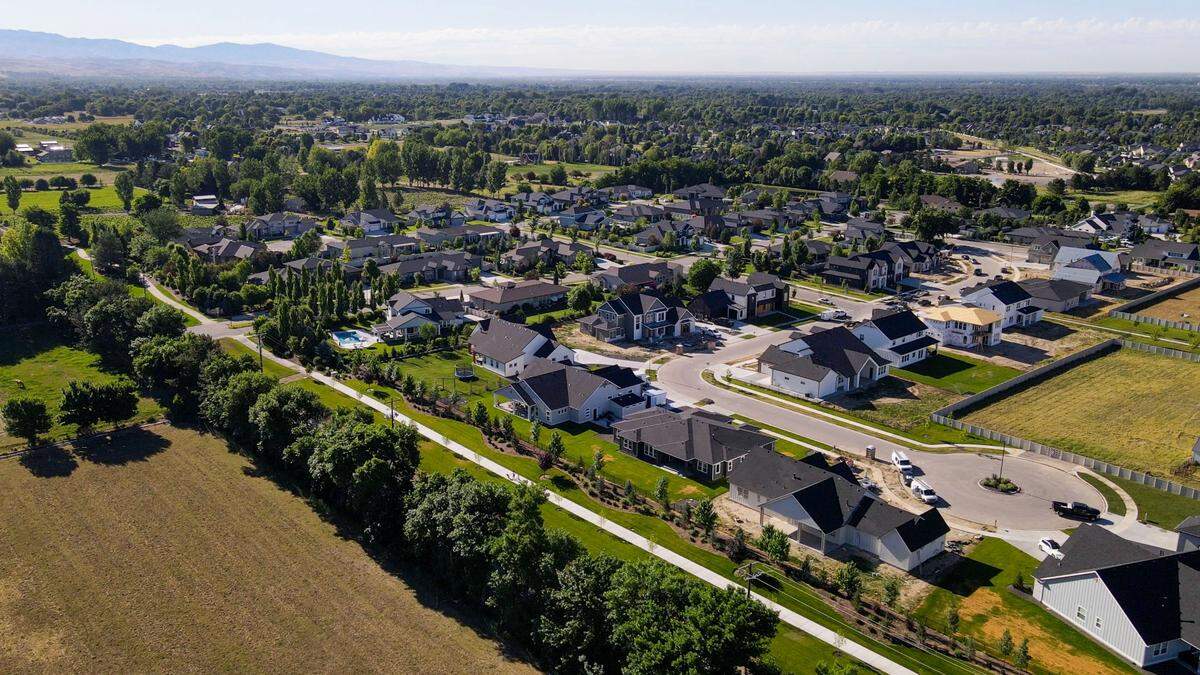
Several of the commissioners chalked up the lack of attendees to indifference, lack of interest or outright approval of lower density.
“I think probably, if everyone knew about this, most people probably would be pretty excited to see densities lowered across the board, other than landowners themselves,” McCauley said.
There is much academic debate over what higher or lower densities do to property values. While lower density could increase property values by maintaining exclusivity and limiting housing supply, several studies have shown that increasing density could lead to an increase in property value.
According to a 2022 study published in the Land Use Journal, a 10% increase in density was associated with a 1.1-1.9% increase in house prices per square foot in metropolitan Chicago, Los Angeles, Minneapolis, Philadelphia and Seattle. However, “the estimates are smaller and even negative in several cases” in outlying areas, according to the study.
Steve Guerber, the commission vice chair, said that three people had told him they supported lower density and that it seemed to be what everyone, except developers, wanted. Developers often oppose lowering density as it could limit their flexibility to build and limit profits from developing apartments or town houses.
“I’m not sure how you let people know exactly what this is doing,” Guerber said. “And maybe that’s why a lot of people aren’t here — they just aren’t taking the time to look at it, or aren’t concerned about what’s going on.”
Smith was more blunt, saying the lack of attendees showed what mattered to residents.
“Until 2007 I did not care two hoots about what the city did, or any city for that matter, as long as my mail was delivered,” Smith said. “As long as the water had pressure in the morning before I went to work and the garbage was picked up, I was fine …
“I did not care, because it didn’t affect me particularly, and as to the empty seats this evening, I think that reflects many people who probably have such a narrow view as I did at the time.”
This story was originally published June 11, 2025 at 4:00 AM.