A popular SE Boise bridge nearly collapsed in January. It’s now reopen. What to know
The Ada County Highway District ducked a bullet at the end of January after discovering that a popular bridge in Southeast Boise could support only the weight of about one car. A month on, ACHD announced Monday that the bridge is now reopen to vehicles.
But the highway district is still trying to figure out what to do about a permanent replacement that is sure to cost tens of millions of dollars, and how to pay for it.
The bridge could easily have collapsed after testing showed on Jan. 31 that nearly half of its pillars had signs of moderate-to-severe decay — a treacherous scenario. The bridge sits between the Barber Valley and greater Southeast Boise and is a popular bus route to several schools, including Timberline High School and Liberty Elementary School.
The bridge spans the Boise River at the mouth of Barber Park, which thousands of Boiseans use as a jumping off point to float down the Boise River in inner tubes during the summer.
According to Rachel Bjornestad, spokesperson for ACHD, even though the bridge is now open thanks to those temporary repairs, the district is still planning to replace the bridge. The highway district, she said, has been working to get the repairs in place before mid-March, when water levels typically start rising from spring runoff.
Workers diverted the river around the decaying supports with an inflatable bladder-like contraption, but they had a narrow window to do so, Bjornestad said.
“Water levels are low enough,” she said by phone. “(But) once the water levels get too high, then we can’t divert the water.”
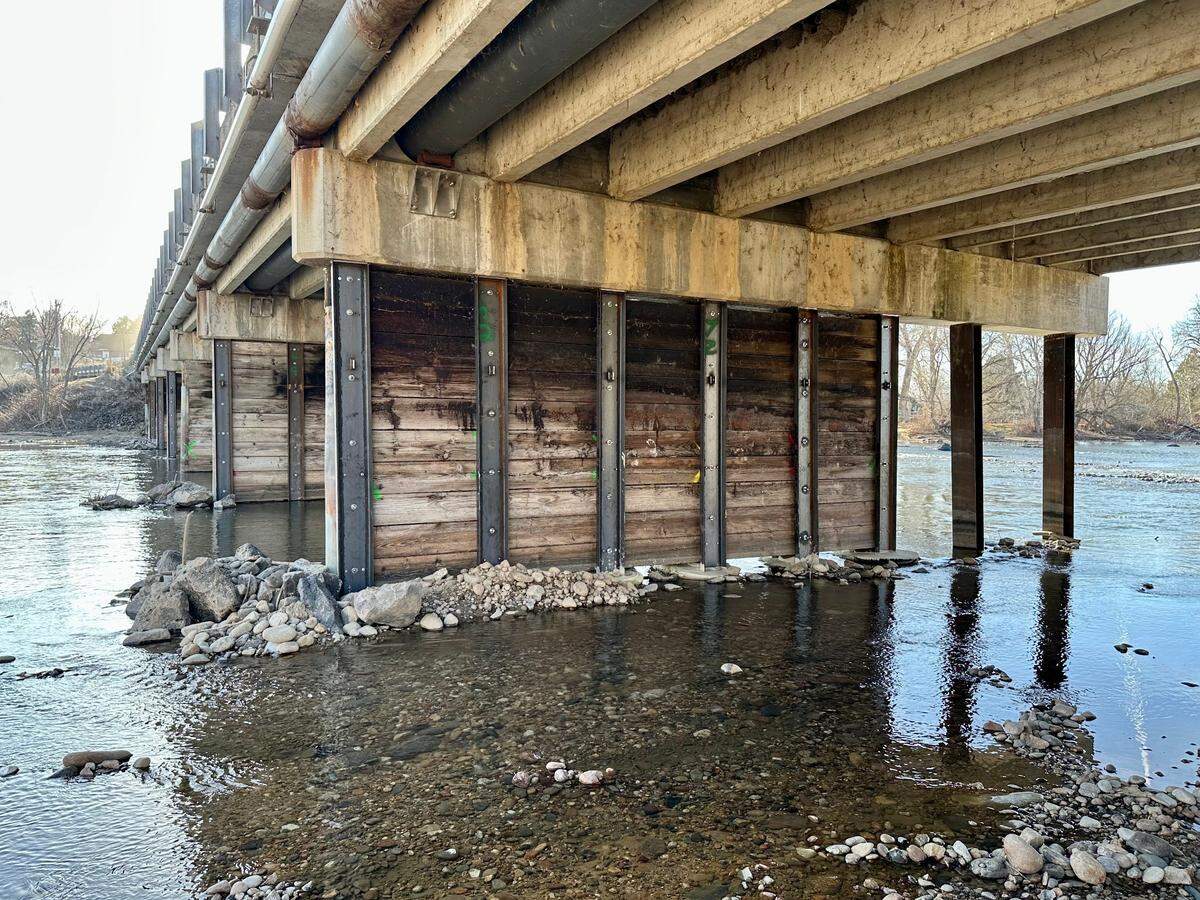
Bjornestad said the interim repairs should last until the district can reconstruct the bridge.
“It just gives us some breathing room,” she said. “The interim repairs don’t change the fact that we’re going to reconstruct the bridge as soon as we can.”
The highway district is beginning the design phase for the reconstructed bridge and has pushed the timeline up since it discovered the decay, she said. A “very tentative timeline” puts crews starting construction on the new bridge in the fall of 2026. Bjornestad said it was too early to tell if a travel lane could remain open during reconstruction.
“This bridge project is going to be faster than most of our bridge projects,” Bjornestad said.
ACHD is publishing updates to its Eckert Road Bridge project page on its website at achdidaho.org/eckertbridge.
What happened in SE Boise? How’d we get here?
ACHD had done inspections on the bridge every two years, as is customary, but had planned to replace the bridge within the next five to seven years. To prepare for that, staff did a more in-depth evaluation that revealed the decay.
The 1954-built bridge is unique in Ada County, said ACHD director Ryan Head in February, because it uses wooden pillars for structural support rather than concrete, which is the usual material for bridges. Other bridges were not at risk.
“Was there anything missed in previous inspections?” Head said. “The answer at this point in time is no. We have done inspections as expected on an every-two-year basis. This is the same process (the Idaho Transportation Department) uses for all bridges throughout the state.”
Head said he wasn’t sure how the bridge had decayed so much since the last evaluation, but that it was bad enough that the bridge could only support the weight of possibly a larger personal pickup truck or his minivan fully loaded with people.
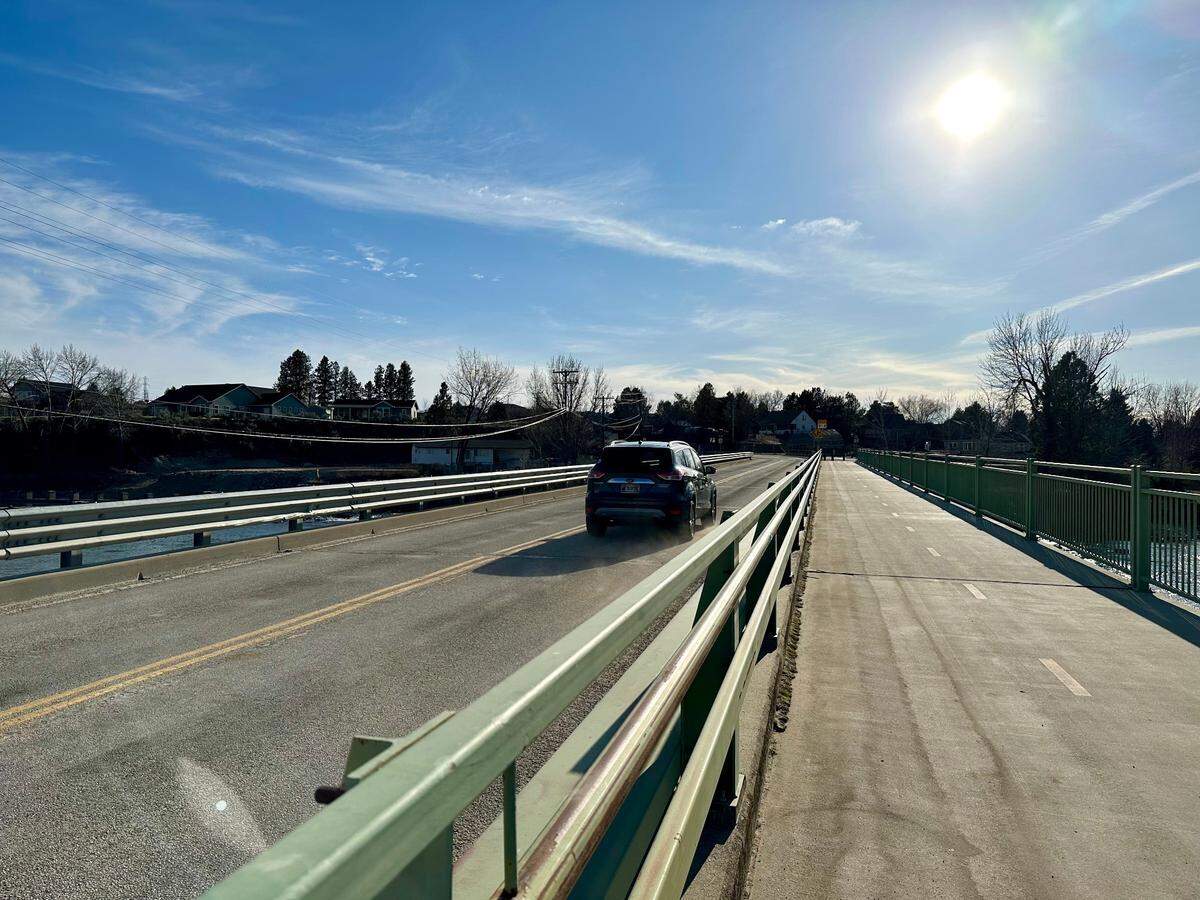
According to Head, the bridge had carried over 7,000 trips per day, and 1,200 more during the summer.
How much is Eckert Bridge going to cost taxpayers?
The estimated cost for the temporary fixes is about $500,000, which the district is paying for out of its general funds, Bjornestad said. However, the state-funded Local Highway Technical Assistance Council awarded ACHD grant funding for most of the cost of the replacement bridge, though there is no set amount yet.
Bjornestad didn’t yet have an estimated cost for the reconstruction, but said the district would have a better idea once ACHD finishes designing the new bridge. Before the emergency closure, ACHD’s five-year plan pegged the removal and replacement of the bridge at about $38 million. Head said he was unsure how the new findings would affect that cost.
“Ultimately, when you accelerate a project, there can be some additional costs,” Head said. “But there also can be some savings through this process as well.”
The state funding won’t cover pedestrian or bicycle paths or additional work the district says is needed to improve the nearby intersection of Eckert Road and Boise Avenue that nearby residents have long decried as unsafe. So that money, too, is likely to come from ACHD’s own coffers.
Boise Avenue spills onto a tight corner with a 35-mile-per-hour speed limit on Eckert Road and limited visibility from a hill. The intersection upgrade was part of the highway district’s plans to replace the bridge within the next five to seven years.
One possible fix to the intersection, Bjornestad said, would be to curve the replacement bridge to help with visibility from the bridge and the hill. That would not be covered by the state funds, since that money is limited to replacement costs.
When the decay was first discovered, several of ACHD’s commissioners expressed concern about where funding would come from and whether the highway district would have to sacrifice the timelines of other projects.
Bjornestad said that, depending on the cost of the reconstruction, pushing other projects back to fix the bridge is possible.
This story was originally published March 10, 2025 at 2:55 PM.