How the Boise school board just surprised neighbors angered by a proposed development
A controversial development in Southeast Boise was set to move forward after the city’s Planning and Zoning Commission recommended that the City Council approve it, despite flared tempers and shouted comments from the public.
But unbeknownst to the public or city staff, the Boise school board voted to buy the property the very same night the commission voted. The school district said the developer approached school officials about selling the site, which is next to Timberline High School’s football field and track.
“The acquisition provides a rare opportunity for the District to expand its footprint in an area where available land is extremely limited,” the district said Tuesday in a news release.
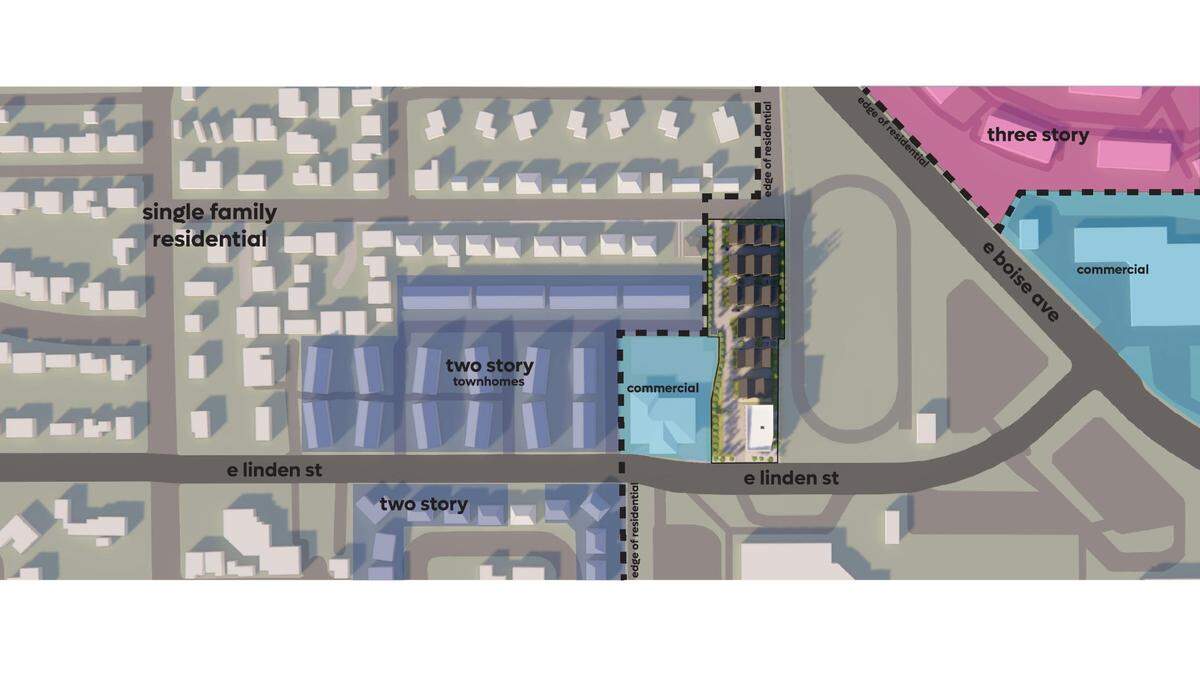
The site is just north of White Pine Elementary School and Timberline and near Eastgate Shopping Center.
Why the Boise board liked the development
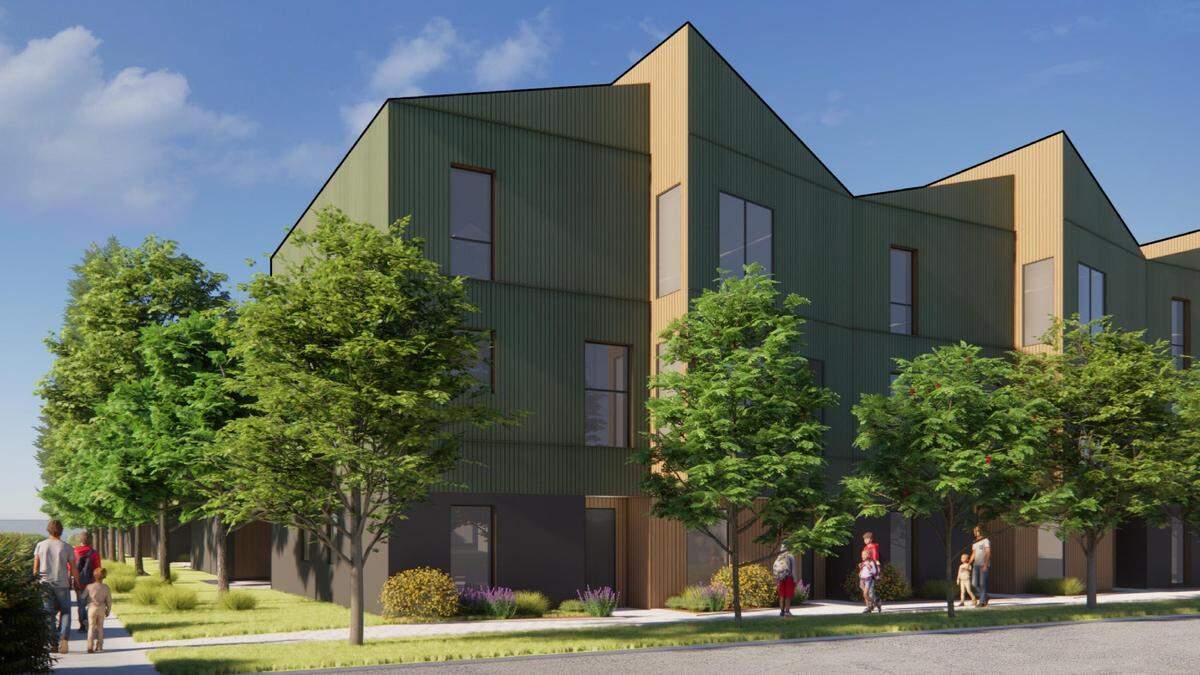
The 31 proposed town houses would have filled a narrow parcel at 396 E. Linden St. with six three-story buildings. A seventh three-story building would have added 10 to 12 apartments and two ground-floor commercial spaces.
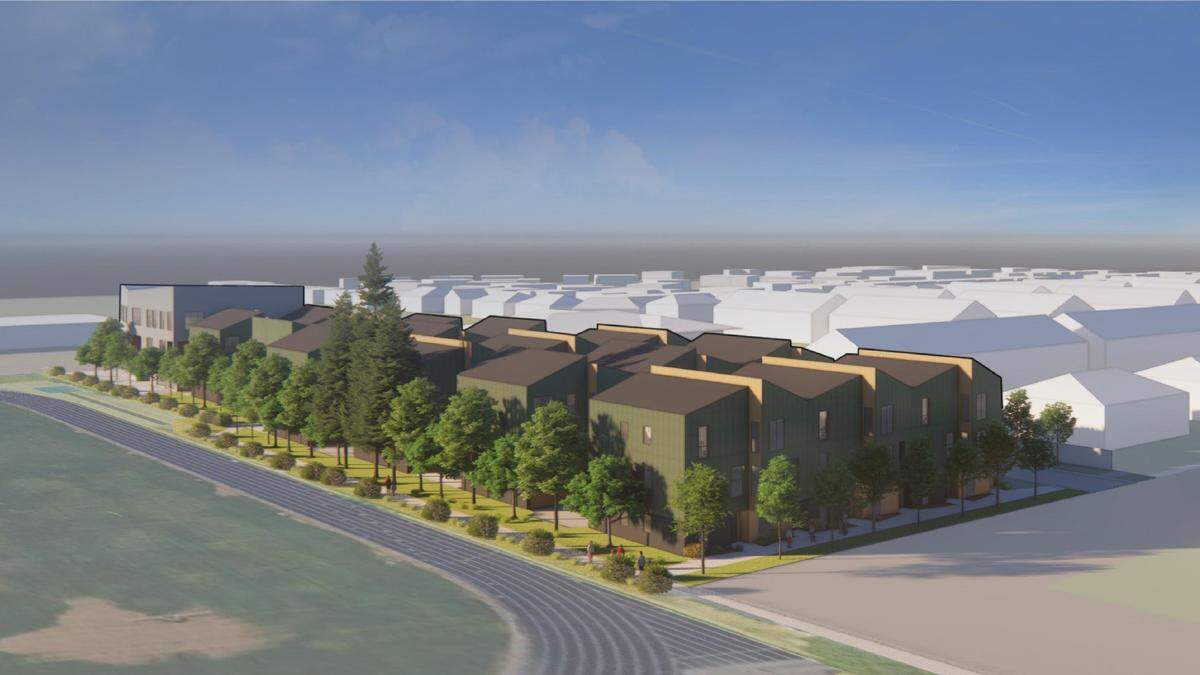
The developer is a Boise business named D3V Black. According to business filings with the Idaho Secretary of State’s Office, D3V Black was organized by Joe Weigt and governed by three businesses registered to Weigt, Russ Taylor and Ian Donovan.
Donovan also proposed a boutique hotel and 27 townhouses in Garden City in 2021 and a 39-town house development in Harris Ranch, according to prior Idaho Statesman reporting. The city of Boise approved the Harris Ranch development in 2023, though construction has yet to start.
“From a planning and zoning standpoint, we felt that this was kind of the perfect zone for this more denser housing,” said Ian Hoffman, a partner at Boise’s Ghm Architects firm, who represented D3V Black during Monday night’s commission meeting. “We’re trying to create a neighborhood that has multiple housing types.”
Many of the commissioners, in their explanations of their positive votes, said the development was a key example of the city’s effort to grow vertically, rather than outward into the surrounding desert.
“This, to me, is a perfect example of that,” said Commissioner Bob Schafer. “You have schools in the vicinity, you have commercial services in the vicinity. I think that is the intent of the (new zoning) code — to put more housing in situations like this.”
But about sixteen hours later, the Boise School District news release announced that the district would buy the site for $3.4 million.
The district had been monitoring the development and had discussed it with the city, the Ada County Highway District and D3V Black, according to the release.
“The developer ultimately approached the District with an opportunity to purchase the property rather than proceed with the planned residential development,” the release said. “There are currently no immediate plans for the property’s development, but the District will consider its best long-term use to support students and the broader community.”
D3V Black said it could not provide comment.
Neighbors concerned about buildings with asbestos on site
The development proposal had long been a sore spot for neighbors. Nearby residents opposed it during a neighborhood meeting in June and continually opposed it on social media.
The Planning and Zoning Commission meeting Monday evening was no different, with vocal opposition that tipped into misinformation and shouted remarks. Some neighbors were asked to leave after yelling at commissioners, saying they were corrupt and had blood on their hands for recommending City Council approval.
Those comments came in regard to concerns that the demolition of three houses and three outbuildings on the property could expose nearby students to hazardous materials like asbestos.
Asbestos is a microscopic crystalline fiber that can cause fatal cancers years after exposure. It was used widely in construction for things like insulation, drywall and roofing until the federal government banned most uses of the material in 1978 over health concerns. The fibers can spread easily and stay airborne for days, and no amount of exposure is safe.
The city of Boise, Ada County, the state of Idaho and federal government have loopholes in regulating the demolition of single family homes with asbestos in them, allowing contractors to demolish up to four such homes with little oversight or penalties.
Josh Woodard, an owner of Boise’s Abatement Pro, previously told the Statesman that “There’s a pretty gaping regulatory hole” for a residential home demolition with asbestos.
There are no requirements for air quality, soil or groundwater testing, nor are there any requirements to notify neighbors that the building contains hazardous materials, according to Alice Corcoran, a spokesperson for the Environmental Protection Agency’s Region 10, which includes Idaho. There are no special rules for demolitions near sensitive areas like schools or hospitals.

“There’s really no rules,” John Hoyne, founder of Boise abatement company Johnny on the Spot Environmental, previously told the Statesman. “Ada County and the city of Boise turn a blind eye” to asbestos.
However, because D3V Black proposed commercial spaces on the ground floor of the apartment building, the development might have fallen under more stringent EPA rules.
In September, D3V Black pledged to follow all regulations to keep the site safe and dust from spreading.
“There’s mitigation processes,” Russ Taylor, operations manager for D3V Black, previously told the Statesman. “We’re going to make sure people adhere to that … Removing (asbestos) is beneficial for everybody.”
The school district’s news release did not mention the buildings.
Residents resist ‘perfect’ infill development
Nearby neighbors on Monday had a litany of other complaints too.
Many focused on how the development could increase traffic on an already busy thoroughfare and could alter the character of the neighborhood, though there are town houses next door to the property.
“This rapid and reckless over-development is plaguing our entire valley, and it’s bordering on gross negligence,” said Alex Abols. “Boise is known as the city of trees. It’s quickly becoming known as the city of apartments, concrete and reckless over development, and may soon be on par with urban disappointments like Denver, Seattle, Portland and Los Angeles.”
“We can stop this,” he said.
One neighbor said she had recorded 520 signatures on a petition against the development. Commissioners said they had received and read over 100 pages of submitted comments.
Some comments proposed — without evidence — that the development was split into three applications purposefully to avoid the EPA’s environmental regulations, that there were buried bodies beneath the site and that the Boise School District opposed the project.
According to city staff, the project was split into three applications because there were three things the development team needed approval for: a rezoning, a variance and a subdivision.
“They’re asking for three separate entitlements, so we’re running that as three separate applications,” said Jesi Lile, a planner with the city of Boise. “Our planning applications have nothing to do with what DEQ or EPA would require.”
Lile said D3V Black would need to work with the state of Idaho — not the city’s planning department — if there were any bodies buried on the property.
Lile also said the school board had been notified of the project and had attended meetings on it, but had not indicated that it would cause capacity problems at Timberline or White Pine. She said the city had received no official notification that the school board opposed the development, though the district’s Tuesday news release said its staff had discussed concerns about increased traffic and student safety with the city, ACHD and D3V Black.
“The timing of the Planning & Zoning Commission’s discussion and our Board’s approval happening on the same night was purely coincidental,” said Dan Hollar, spokesperson for the Boise School District, by email. “While we can’t speak for the developer, we assume they continued with the P&Z process in parallel with our negotiations as a contingency in case the sale did not go through.”