Idaho lawmaker seeks rental protections in ‘very competitive’ market. What to know
If you, or someone you know, have ever paid hundreds of dollars to apply for a rental apartment and never heard back, you’re not alone.
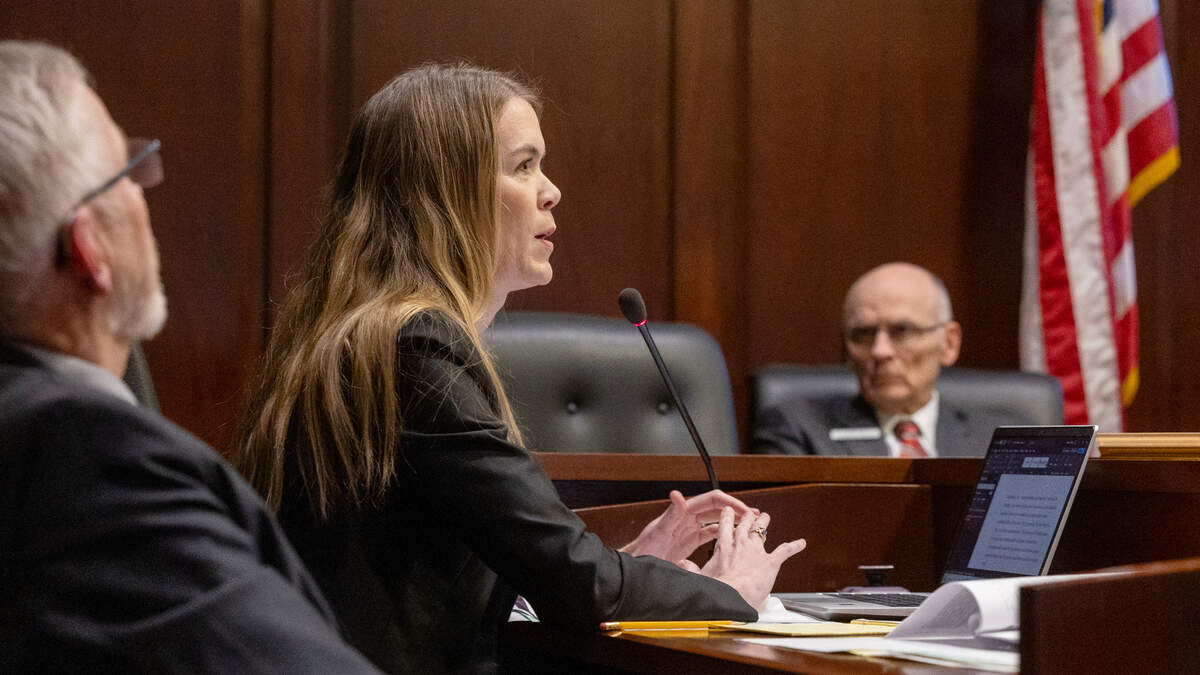
A new bill in the Legislature from state Sen. Ali Rabe, D-Boise, seeks to address this issue, she said during a Senate committee hearing Wednesday. Rabe is the executive director of Jesse Tree, a nonprofit focused on preventing evictions and homelessness.
The bill would prohibit landlords from charging rental application fees for over two households at a time — which Rabe said is already standard procedure for most landlords except for a handful of bad actors.
“Some landlords are just taking that fee and then immediately denying the applicant, or very commonly, just not getting back to them at all,” she said. “People I’ve talked to across the state have made it clear that to get into a unit, you have to pay hundreds. I’ve even seen folks pay over $1,000 to get into a new place to live.”
Rabe said landlords will take an application fee and immediately reject them, saying that the unit has already been filled. But the rental listing will stay up and the landlord will continue to accept application fees.
The bill would not apply to landlords who don’t charge or directly receive a fee — such as if they charge through a platform like Zillow — nor would it apply to those with waiting lists, according to the bill text.
Rabe said the average fee in many areas of the state is $100, which can add up in a tight housing market that has only gotten tighter over the last few years.
“The cost of renting in Idaho has skyrocketed, increased by almost 40% just the last few years, and vacancy rates have decreased quite a bit,” she said. “The market is very competitive.”
Rents in Idaho have increased 1.9% from January 2024 to January 2025, according to real estate platform ApartmentList. The median rent in Boise was $1,241 in January.

The bill has strong backing, including from the National Association of Residential Property Managers and the Idaho Apartment Association. The latter represents about 29,000 rental units in the state. Both organizations worked on the bill with Rabe.
Spencer Henderson, legislative chair for the Southwest Idaho chapter of the National Association of Residential Property Managers, said the vast majority of the organization’s members supported the bill.
“From the way that I read this bill, there’s no limit on the number of applications you can take,” Henderson said. “What it refers to is, how many can you process at a time?”
Henderson said landlords could take 50 applications and start processing the first two applicants. If they don’t meet the qualifications, then they would go to the next person on the list. Those down the list who are never processed would then get their application fees returned.
“We feel that the bill meets or exceeds, probably, industry standards,” he said.
Why the need for a new Idaho rental bill?
According to Rabe, the number of landlords who are taking advantage of application fee schemes is low — but it primarily affects those who are lower income.
“I always say most landlords are good,” Rabe said. “The abuse is happening from a handful of folks, but I think it’s worth addressing the problem.”
Evan Stewart, program director at Jesse Tree, said one client Jesse Tree worked with paid an application fee and had to pay an additional $1,800 nonrefundable fee to hold the apartment. The landlord denied her application and refused to return the holding fee.
“This bill does not cap application fees, nor tell a landlord what they can or cannot charge,” Stewart said. “It merely works to limit the application fees to those most qualified for the unit and provide transparency in rental listings.”
Tyler Wolters, executive director of the Idaho Apartment Association, said that it is already standard operating procedure to process fewer than two applications at a time, but the bill would protect tenants.
He said it was likely that over 80% of landlords were doing it right, but that the organization wants to protect those tenants who could be taken advantage of.
Application schemes, Rabe said, are a common problem across the country that legislators in other states — such as Kentucky, Oklahoma, Tennessee and Texas — are considering.
“Landlords are coming forward saying, ‘We want to address this, we want to codify best practices,’ and I think we should listen to that,” she said. “This codifies what landlords are already doing, so it’s not imposing additional requirements on a majority of landlords unless they are taking advantage of tenants.”
Government overreach, or consumer protection?
Most of the arguments in opposition to Rabe’s bill were over fears that it would expand government overreach and interfere with the free market.
Lynn Bradescu, a real estate agent and member of the National Association of Residential Property Managers, said she takes only one application at a time but didn’t want to be a policeman and monitor it.
“I just don’t believe in having more regulations that we don’t need,” she said. “I’m doing everything right, and I’m sure a lot of other property managers are, so why are we creating more problems?”
Dan Schoenberg, a part-owner of a property management company in Moscow, testified against the bill because it would only allow landlords to charge rental fees if they have a rental that is available or is expected to be available within 60 days.
Schoenberg said the requirement would place a burden on landlords in communities with large student populations, such as in Moscow.
“Our tenants, specifically our student tenants, have to work many months ahead,” Schoenberg said. “I don’t want to put any more administrative processes in place that I have to follow in order to meet the requirements of the state law, just to be able to rent an apartment for a tenant.”
Schoenberg and Rabe said they were already working together on an amendment to address those concerns. The committee voted to send the bill forward to the House floor with possible amendments on the 60-day issue.
Wolters, the executive director of the Idaho Apartment Association, said he didn’t think there was any government overreach.
Rabe argued that the bill has bipartisan support and is focused on consumer protection.
“Consumer protection ensures that our free market can operate effectively, prevents fraud, while advertising exploitative practices and ensuring that we have a free and fair market allows consumers to participate in the market with trust,” she said.
This story was originally published February 7, 2025 at 4:00 AM.