What just happened to Tommy Ahlquist’s big building proposed in Boise’s east downtown
Developer Tommy Ahlquist’s proposal to build Boise’s tallest new building in years has suffered a setback after an outpouring of opposition from neighbors.
But Ahlquist isn’t giving up.
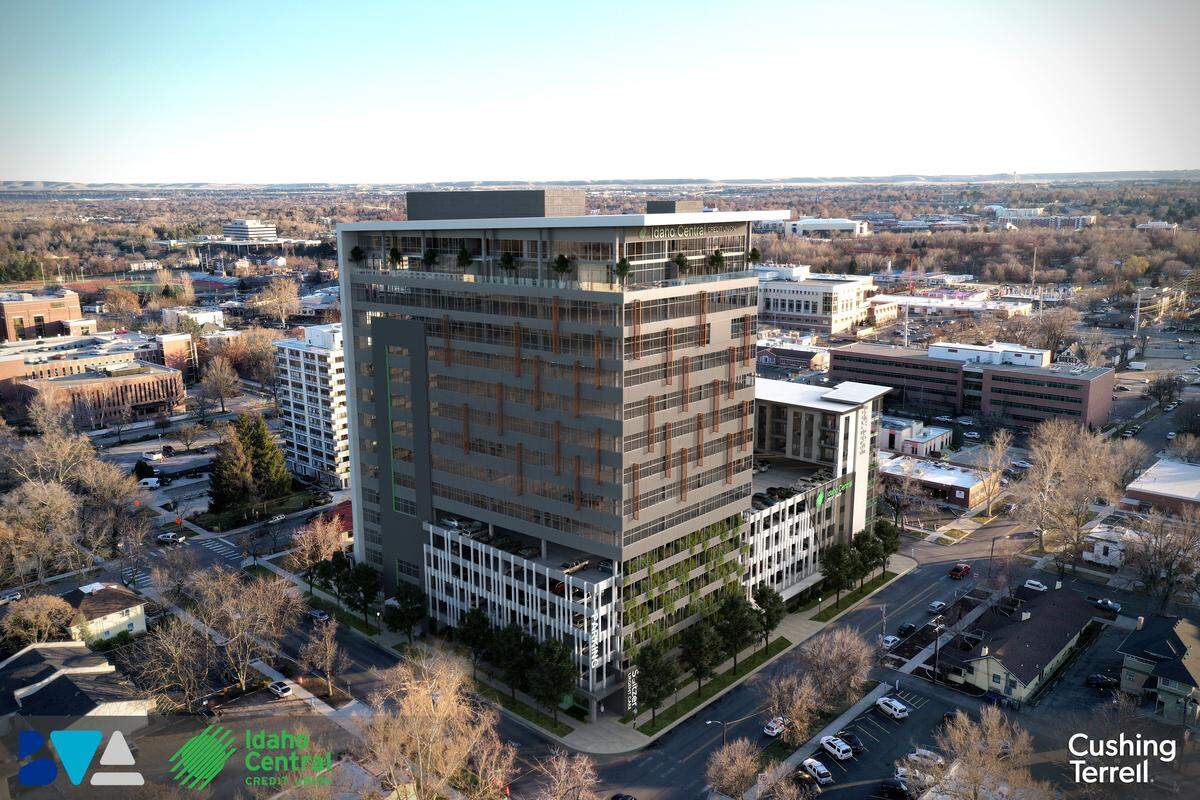
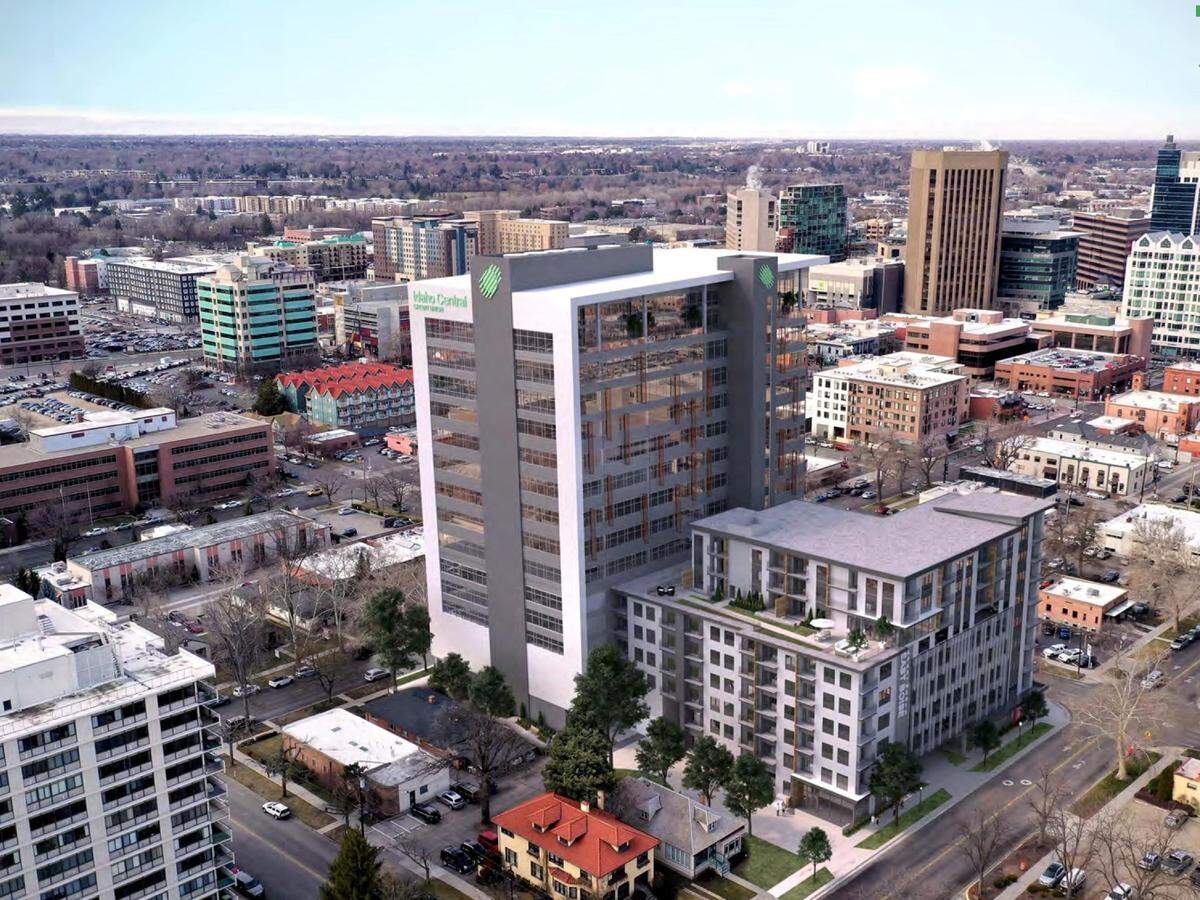
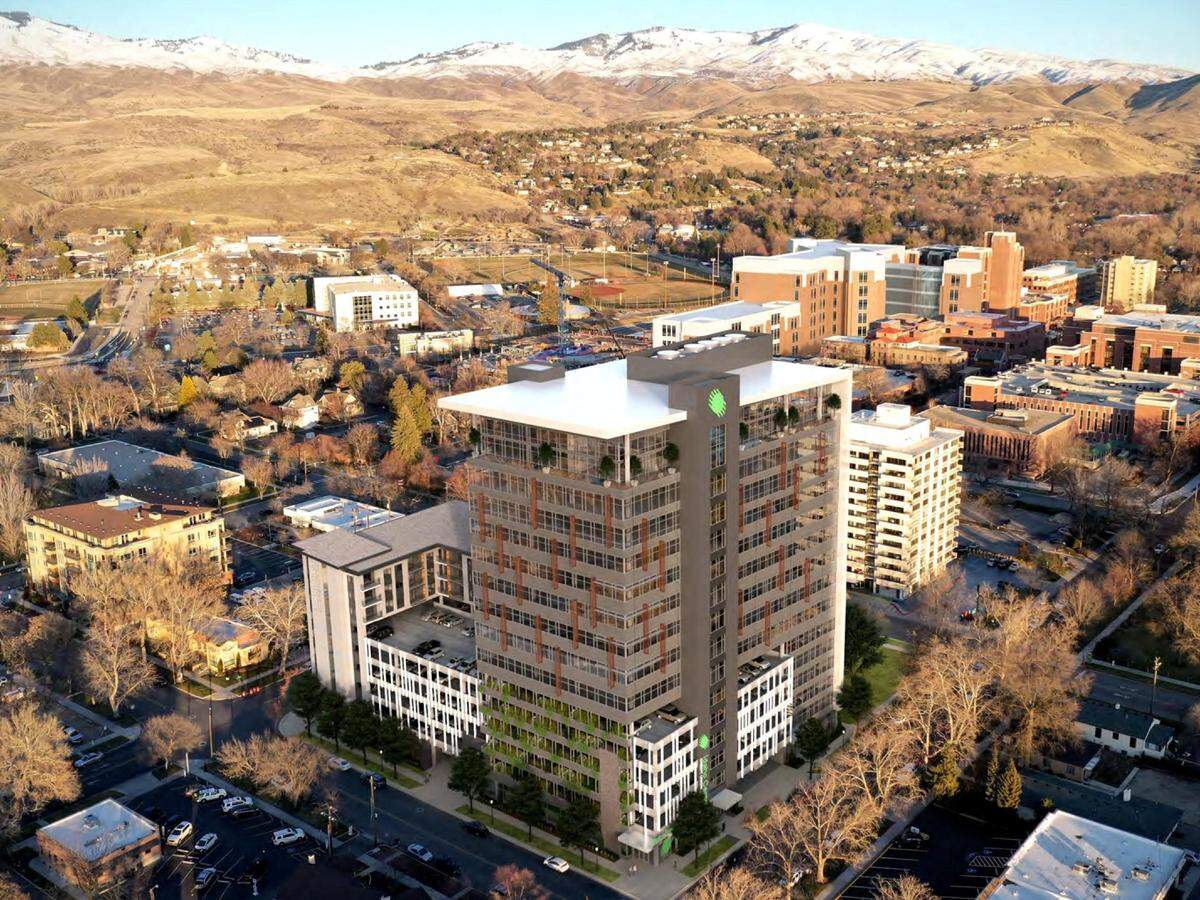
The Boise Planning and Zoning Commission has unanimously recommended that the City Council reject the two-tower building at 200 N. 4th St., between Bannock and Idaho streets. The taller tower would rise 16 stories, the shorter tower 10.
Ball Ventures Ahlquist joined with the Idaho Central Credit Union to propose the building last spring. BVA is the Meridian development firm in which Ahlquist, a prominent physician and former Republican candidate for governor, is a partner. ICCU owns the site.
Neighbors complained that the project was too tall and too massive for the site. But the opposition wasn’t unanimous: The Downtown Boise Neighborhood Association credited the developers with making several changes that earned the association’s support.
The building would be just three blocks east of the 13-story Key Financial Center and a half-block west of the 12-story Imperial Plaza Condominiums. Some neighbors noted that most nearby buildings are just one to three stories tall.
Building would cast shadow over block
The taller tower, at 232 feet, “will literally cast the rest of the block into the dark of its shadow,” wrote Dennis Benjamin in a letter to the city. Benjamin is a lawyer and part-owner of an old house that his law firm occupies one lot removed from the site.
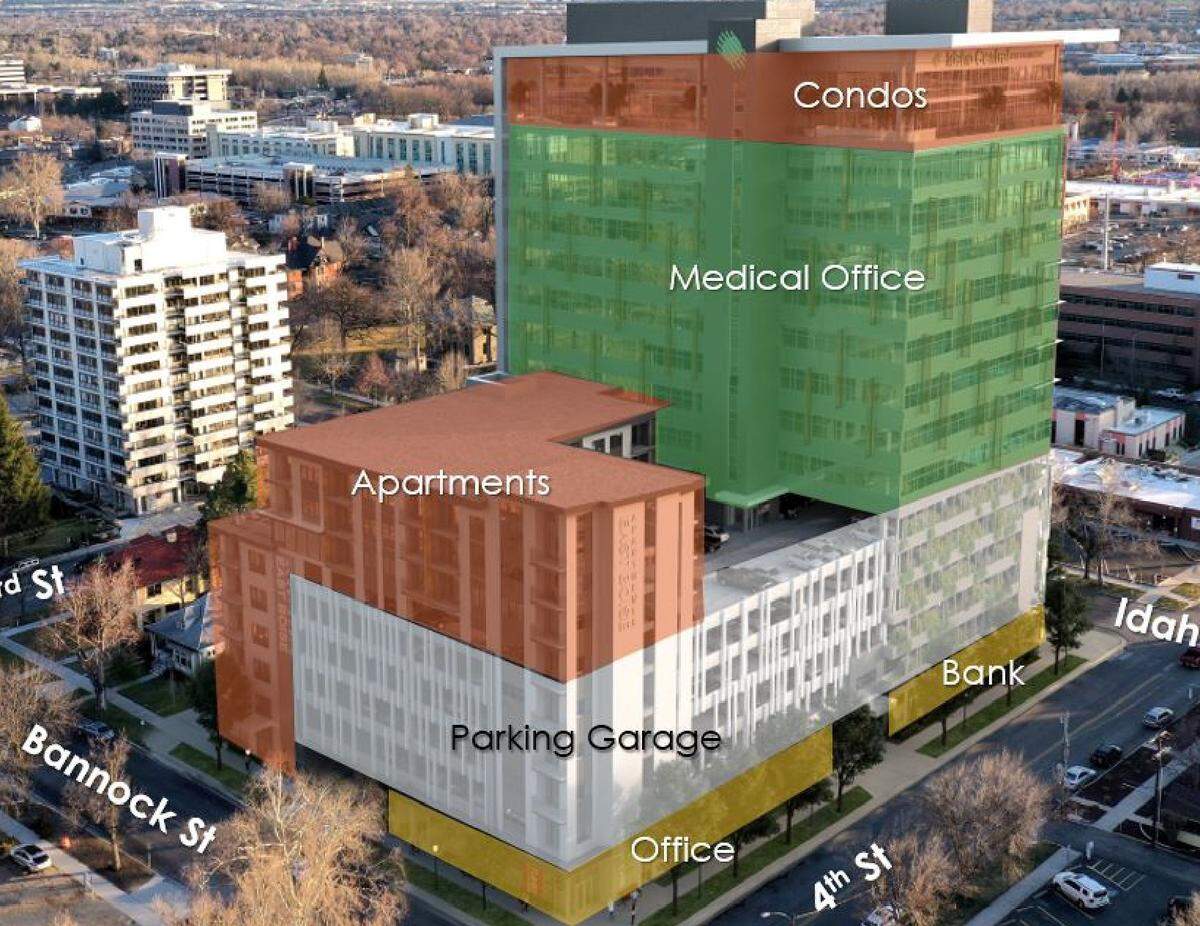
The 16-story tower would include a ground-floor ICCU branch, a Saltzer medical clinic and two smaller business spaces. Floors 2 through 6 would have 460 parking spaces. Floors 7 through 14 would have two floors of ICCU offices and six of medical offices. Floors 15 and 16 would have four to eight condominiums.
The 10-story tower would have 82 studio, one-bedroom and two-bedroom market-rate apartments, roughly twice as many as originally proposed. Shortly before the Planning Commission met Monday, BVA changed its proposal for the smaller tower to make it 10 stories instead of nine to allow for the additional apartments.
At 244,000 square feet, the building would be more than twice as large as the Key Financial Center. To make way for it, BVA would tear down a three-story ICCU branch, and its accompanying parking lot, and a 1,500-square-foot home built in 1941 that has been used lately for offices.
The project would take up roughly two-thirds of the block. It would leave four existing one- and two-story buildings in place closer to 3rd Street.
Neighborhood associations, condo owners object
The development faced resistance from the start. Opponents include Preservation Idaho, a historic preservation group; the Imperial Plaza Condominium Association; and a group called Better Change for East Downtown. The North End and East End neighborhood associations also criticized the proposal.
After meeting with neighbors, the developers responded by making what their lawyer, Geoff Wardle, called “significant” changes. They redesigned the building so its 16-story tower would face Idaho Street instead of Bannock. That preserved a view of the Capitol for residents of the Imperial Plaza, and it moved some business-oriented traffic off Bannock Street and onto Idaho.
The developers also added more apartments and relocated a parking entrance.
But they did not reduce the building’s height, shrink its overall size, alter its contemporary architectural style, or provide more space between the building and sidewalks, or move parking underground — all requests made by neighbors.
Although the Downtown Boise Neighborhood Association supports the project, the association initially asked the city for lower height, underground parking and Juliet balconies for the apartments. A Juliet balcony is one that is too narrow for a chair where a tenant can sit. The association’s former president said Monday, however, that BVA had satisfied all of the group’s concerns except the balconies.
Reducing the height “would result in a shorter, wider, more massive structure that is inconsistent with good design,” Wardle wrote in a letter to the city. Eliminating the balconies, he wrote, “would be inconsistent with the Downtown Design Guidelines and is classist.”
At a Planning Commission meeting Monday, the association’s former president, Tim Flaherty, praised the proposed project’s “incredible design” but said he wanted to know how BVA would “control the amount of junk that people put out there” on balconies.
The changes did not appear to satisfy most other opponents. Dozens of Boiseans sent emails or letters to the city complaining that the building would be incompatible with the neighborhood and would violate the city’s comprehensive plan, called Blueprint Boise.
“The planned office tower would destroy the character of the surrounding neighborhood and is more appropriate for the Central Business District,” wrote Matthew L. Parks, a lawyer representing Better Change for East Downtown.
The building “would be a monolith, more than twice as tall as any other building in the surrounding neighborhood,” wrote Harry L. and Beverly Clark, who live in The Jefferson, a condo building at 323 W. Jefferson St.
Justin Snyder, owner and director of Le Soleil, a French-immersion day-care center and preschool just east of the project site on the same block, said the building would make it harder to bring the 3- to-5-year-old pupils to nearby parks for outdoor activities.
“I am certain the proposed project will present a significant hardship to my business and to the safety of the children in our care,” he wrote.
Many of the opponents testified during the commission’s four-hour meeting Monday.
Ball Ventures Ahlquist credits ‘useful feedback’
Planning Commission members struggled with balancing their desires for increasingly dense downtown housing and preserving the surrounding neighborhood’s predominant character of older, smaller buildings.
“The intensity is too much. The massing is too much. The setbacks are nonexistent,” Commissioner Ashley Squyres said.
BVA is pressing ahead. Tonn K. Petersen, BVA’s vice president of development, said the company would appeal the Planning and Zoning Commission’s decision to the City Council.
Petersen said BVA was encouraged by the Planning Commission meeting despite the opposition and final vote. “We appreciate the public process,” he said Thursday by phone. “We received very useful feedback.”
The feedback included suggestions from some commissioners to limit the building’s height to between 135 and 170 feet — heights closer to Imperial Plaza’s. It also included setting the building back from the sidewalk.
“They set forth that pathway to approval,” Petersen said, “and we can accommodate those recommendations.”
But BVA will not change its proposal before presenting it to the City Council, he said. That would require submitting a new application.
The existing request seeks to rezone the site to a Central Business District zone and to obtain a conditional-use permit for the credit union’s proposed drive-thru.
“To be clear, we think the project as submitted is appropriate in terms of mass, height and scaling,” Petersen said. “We certainly think we have a project that can meet the relevant laws and ordinances, that can fit within the zoning we applied for.”
“This is going to be a wonderful project for downtown that is growing, that meets the need for residential (housing), and really provide a work, live and play environment,” he said.
This story was originally published November 6, 2020 at 4:00 AM.