
‘Incredible and astonishing’ — even 40 years later. National title bonds this Boise State team
Together, they celebrated 1980 in the most 2020 fashion.
From all corners of the country, former Boise State football players and coaches got together Dec. 20 on Zoom to reconnect and remember one of the greatest accomplishments in school history.
That day marked 40 years to the day since the Broncos won the NCAA Division I-AA national championship.
“It’s one of the most special things in my life, every time I get to see them,” said Jim Criner, Boise State’s head coach in 1980. “I’ve had some very good teams with good people, but this group … the way they played together was the most incredible and astonishing thing.”
Ask anyone on that team, and the camaraderie immediately comes up. It showed in close wins in two playoff games. It showed in overcoming three close losses.
And it continues to show up, whether in online meetings — they also boosted one another’s spirits with a Zoom get-together in the spring — or getting together in good times and bad.
“When you’re playing, you’re close, but you never know what happens when you aren’t playing anymore,” said defensive back Rick Woods, a junior on the 1980 team. “But they’re brothers for life. Every one of them.”
Like any great team, what happened 40 years ago was not created overnight. For the seniors, it was the culmination of three of the strangest years you can imagine. The Broncos went 26-7 from 1977 to 1979, but never made the playoffs for various reasons. The chance to win a championship was not about to slip away.
“Strange and unique, that’s how I’d describe those years leading up to it,” said David Hughes, a senior running back in 1980. “There was no way, after what we’d been through, that we weren’t going to win it all.”
1977: Big Sky champs, no playoff
Criner was hired at Boise State in February of 1976, about two days before signing day. His first season, the Broncos went 5-5-1 with a 2-4 record in Big Sky play.
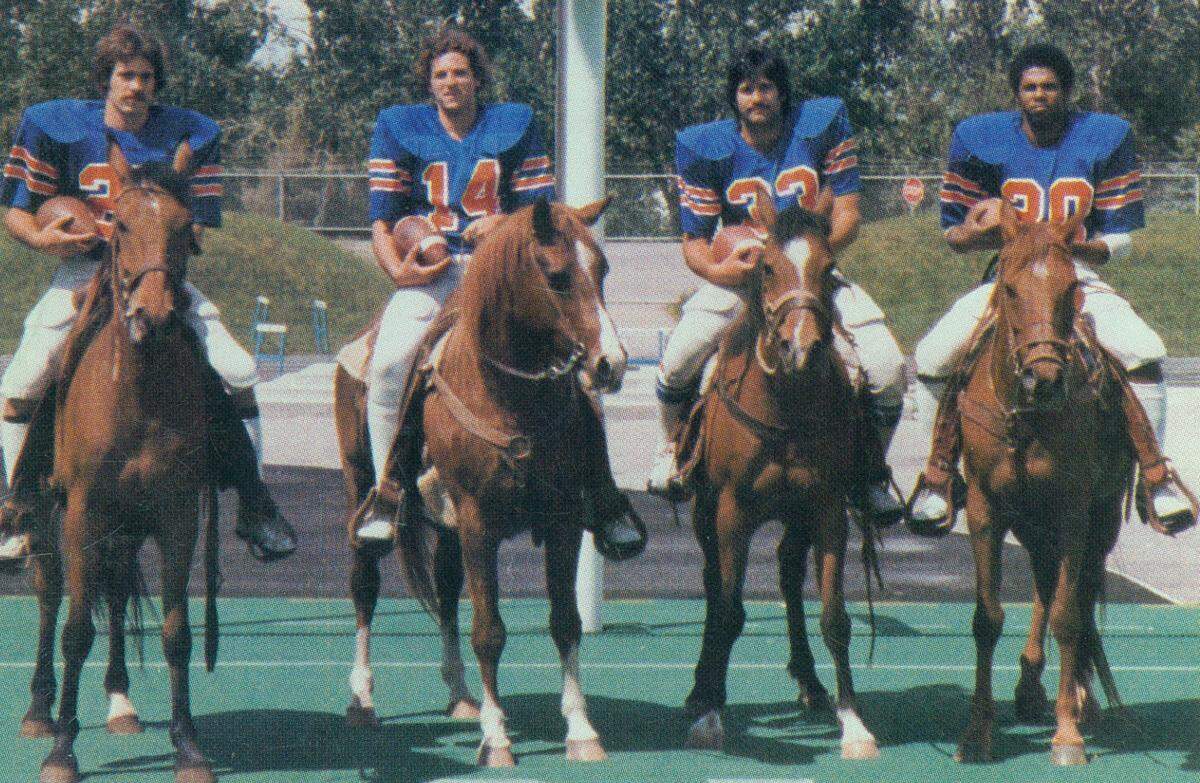
But his first full recruiting class, inked in February 1977, was bountiful, especially at one major spot. Hughes, Terry Zahner and Cedric Minter were in that class — the three combined to rush for nearly 8,500 yards at Boise State.
Picked fourth in the Big Sky preseason poll, the Broncos surprised by knocking off then-No. 1 and defending Division II national champion Montana State 26-0 on Oct. 1, 1977. They continued to roll through the Big Sky, but Criner had a sneaking suspicion it wouldn’t end perfectly.
See, Boise State had a scheduled game with Idaho to be played on the final day of the season, Nov. 26.
Only problem? That was the day when the Division II playoffs were set to begin.
Athletic Director Lyle Smith had noted before the season the schedules were set years in advance, before the playoffs even existed. Initially, Criner tried to see if the Broncos could get out of the game, but Smith pointed out that Idaho depended on ticket sales, just as Boise State did.
“We were about two-thirds through the season, and I was like, ‘Oh my gosh, we cannot play that game,’ ” Criner said. “But Lyle, fabulous as he was, was reasonable, he explained it well. It hurt to tell the team, but that’s when I knew we had a real football team, because the goal changed, but they played harder.”
The Broncos won four in a row leading up to the Idaho game in Moscow, putting their 5-0 Big Sky record on the line. With the playoffs not a possibility for Boise State, Northern Arizona, which went 5-1, got the playoff bid.
So, it became the Broncos’ bowl game.
And did they ever play like it.
Boise State crushed Idaho 44-14, getting Criner his first win over the Vandals.
“That game was everything to us,” Hughes said. “I think we could’ve made it far in the playoffs, so we took out a lot of that frustration on Idaho. I think we made the division between the two schools worse.”
After throwing 12 times in the first three quarters and leading 27-14, Boise State threw 13 times in the fourth quarter alone. The Broncos threw a touchdown pass with less than 2 minutes left to go up 41-14.
Then, they tried an onside kick, and recovered.
Finally, the salt on the wound was added with a field goal with 11 seconds left.
“He made a mistake running up the score … that last part was all bush, and it’s going to haunt him,” Idaho coach Ed Troxel said afterward.
Criner wound up beating Idaho four more times. Troxel resigned a month later.
“It wasn’t Idaho’s fault,” Criner said. “We just wanted to go out strong.”
1978: Slight rebuild, big mistake
These days, coaches tend to shy from the word “rebuild,” but Boise State’s own media guide in 1978 referred to the season in that way.
Experienced players on both lines graduated, as did 1,000-yard receiver Terry Hutt, and quarterback Dee Pickett opted to become a pro rodeo cowboy instead of playing his senior year.
But the recruiting prowess continued.
Future College Football Hall of Fame defensive lineman Randy Trautman, linebacker Ray Santucci, tight end Duane Dlouhy, plus Boise High defensive backs Larry Alder and Woods were part of the class.
“Larry and I were kind of a package deal,” Woods said. “We visited Wyoming, and they said we might start by our junior years. Criner sat us down and said, ‘You’ll win a national championship.’ ”
But, as expected, there were some growing pains — after a 3-0 start, the Broncos lost four of their last seven games, all by eight points or fewer.
“We weren’t finishers, and I think the ability to do that comes with experience,” Hughes said.
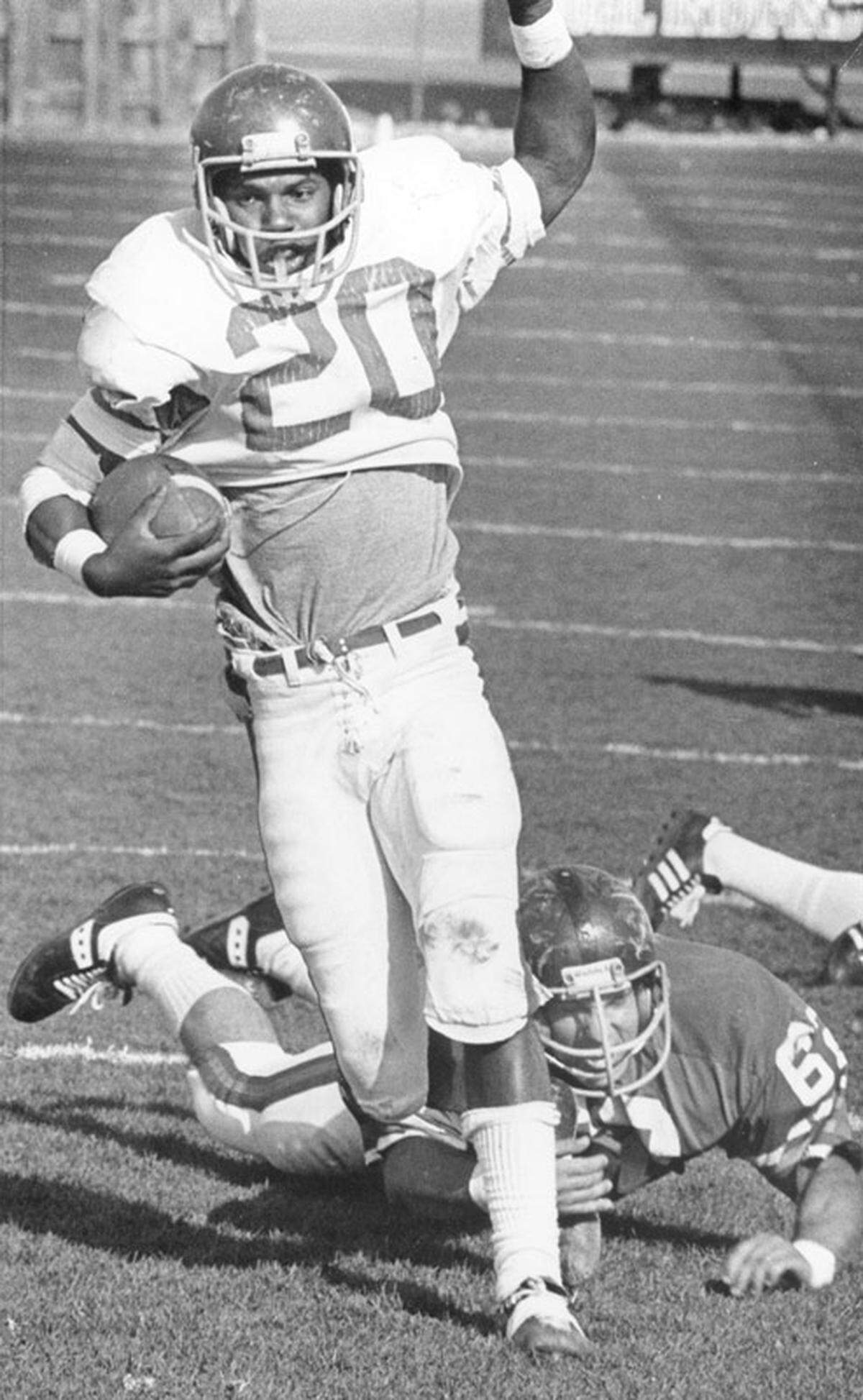
The passing game struggled, with quarterbacks completing less than 50% of their passes with a 9-to-16 ratio of touchdowns to interceptions. Minter’s monster 1,526-yard season was a bright spot, as was the defense, which gave up 16.5 points per game.
Despite a 7-4 record, 3-3 in Big Sky play and no playoff shot, things were looking up for the Broncos.
Then, a bad thing happened.
Prior to Boise State’s Nov. 11 Big Sky finale at Northern Arizona, a man named Bob Rodrigo showed up in Flagstaff.
Rodrigo claimed to be a scout for the Pittsburgh Steelers, but according to NAU coach Joe Salem, didn’t know the Steelers had drafted NAU’s kicker earlier that year.
Turns out, Rodrigo was a spy.
Criner and he worked together at Cal State Hayward in 1969. Salem was suspicious and called the Big Sky immediately. It didn’t help Boise State too much, as NAU won 31-30, stopping a fourth-quarter two-point attempt.
After initially denying it, Criner admitted four days after the game what he had done, that he had paid for Rodrigo to illegally scout the Lumberjacks.
“The reason I did it was because I wanted to win,” he said at a 1978 news conference.
Though Criner isn’t keen to talk about it now, Hughes said the team was surprised.
“It was like, ‘Come on Criner, what’re you doing?’ ” Hughes said. “The guy was like 300 pounds, he wasn’t going to hide from anyone! I knew Jim was competitive, but man … .”
On Dec. 17, 1978, the Big Sky handed down the penalty — no postseason for the 1979 season, Criner must not recruit off campus, and the Broncos were not allowed to view any opponents’ 1979 film.
1979: Serving the punishment
Joe Aliotti did not exactly have the best timing.
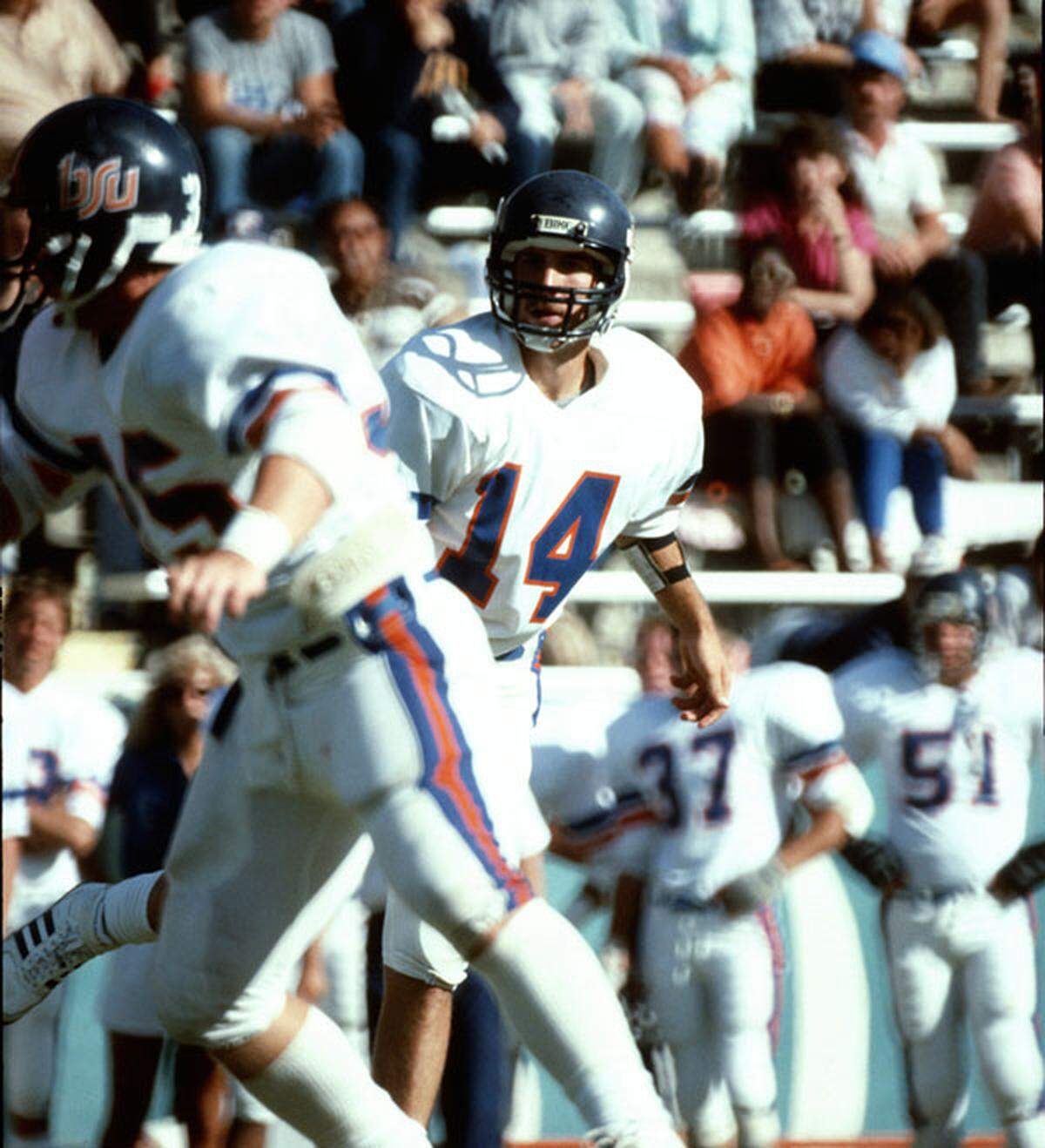
Coming out of Los Medanos (Calif.) College, the quarterback was eager to get a shot at starting for Boise State when he signed in the 1979 class. Coaches even told him he could play baseball, too.
But he was joining the team knowing the first of his two seasons would not have a postseason, because of the violation. And the baseball team would be eliminated after the 1980 season.
“A heck of a way to start, right?” Aliotti said. “But you just have to move on, make the most of it.”
That was the exact approach the rest of the team took, too.
One would think not having current game film of opponents would be a pretty big challenge, but the Broncos overcame it.
“It was difficult, don’t get me wrong,” Aliotti said. “But I was a big learner. I’d want every piece of film from previous years, or if they had a new coach, the schemes he’d run at other stops. We had to be smart, utilize every resource we could.”
Criner said, “That tells you something about our players, how they adapted.”
Boise State got off to a tough start, losing a close 9-7 game to Division I-A Long Beach State.
But then, the Broncos started to click.
With Aliotti bringing a major boost at quarterback, coupled with a dominant defense, the Broncos played like they had nothing to lose.
“It started to dawn on us just how good we were, and we started to understand the ramifications of that year,” Aliotti said. “It was like, we’re going to win, screw everyone else.”
After losing to Long Beach State, the Broncos didn’t lose again in 1979.
The Broncos rattled off 10 straight wins to finish the season, all but two by double digits. Aliotti led the nation in passing efficiency and the defense allowed just 12.7 points per game.
Ineligible to win the Big Sky title, the team still hung a 1979 championship banner in the weight room. Later, when a Big Sky official toured the facility, it was removed.
“That still irritates me a little bit,” Woods said. “Queen was big back then, so we played ‘We Are The Champions’ a lot in there.
“It felt good we validated how good we were the next year. To me, that was the best team we had.”
Even better than a national championship winner?
“I think Rick is right,” Criner said.
“I definitely think we could have won two in a row, which would’ve been incredible,” Aliotti said.
1980: It all comes together
Three years, all reasonably good, and the Broncos had no postseason appearances to show for it.
Coming off sanctions, the 1980 Broncos were loaded. But frustration still was there.
“Everyone was a bit edgy,” Aliotti said.
Hughes recalls a moment before spring practices started, when a boxing match between two players got out of hand in an on-campus ring (yes, that existed 40 years ago). Teammates took sides, and it spilled outside the ring and into the bleachers.
“I mean, we just had a bunch of guys who went after it, no matter what they did,” Hughes said.
Said Aliotti: “We had a ‘come to Jesus moment’ after that. It was like, ‘All right, we have a shot to do something big here, are we all gonna get on the same page?”
It took a little time.
Boise State started out 2-2, including a dominant win over Utah in the opener, but the last being an 18-17 Big Sky loss to Montana State on a two-point conversion with 33 seconds to play.
The Broncos wouldn’t lose another conference game the rest of the way, dropping only a nonconference game to Cal Poly, finishing the regular season 8-3 with a 6-1 Big Sky mark. No other team in the conference won more than four league games.
With a strong fan base, a strong record and a strong venue, Boise State was among the four teams chosen for the 1980 Division I-AA playoffs. Their first game was set for Dec. 13, 1980, against No. 2 Grambling and legendary coach Eddie Robinson.
“I didn’t know much about him, but when I learned, I was so impressed,” Hughes said of the coach who won 408 career games at the historically Black university. “… They had these trees of terror on the defensive line, (four-time Pro Bowlers) Everson Walls and Albert Lewis were defensive backs.”
Hughes said the night before the game, a few Grambling players cornered him and sized him up, trying to get in his head.
“I couldn’t sleep, I jumped in my tiny car and drove to the stadium at like 6 a.m., I was ready to play,” Hughes said. “I was so hot, I didn’t even notice how cold it was.”
The famously chilly, foggy game was one old-school Boise State fans will never forget. The record says it was 25 degrees, but Woods said, “I promise, it was colder.”
Grambling controlled the game up front, but an Aliotti touchdown pass to Minter late in the second quarter made it 7-7 at halftime.
Boise State’s championship ambitions were obvious late in the game.
In a sign of Boise State late-game trickery to come, Aliotti hit Kipp Bedard on a 62-yard touchdown early in the fourth quarter on a flea flicker to take a 14-7 lead.
Then, the inspired defense stepped up. Twice, the Broncos’ defense stuffed Grambling fourth-down attempts inside the Broncos’ 10-yard line in the last 7 minutes. Woods sealed the game with an interception in the final seconds, the Broncos’ sixth takeaway of the game.
“Just an incredible football game,” Woods said. “That proved we never were going to quit, and it showed up again a week later.”
For the national championship, to be played in Sacramento, California, the Broncos drew the defending national champ, Eastern Kentucky. About 8,000 people attended the game, televised on ABC.
Among those on hand was future Boise State coach Dan Hawkins, along with a caravan from Boise and many families. Dave Campo, then an Oregon State assistant, who was on Criner’s Boise State staff from 1977 to 1979, was on the sideline.
“It was chaos — I had all of my friends and family there,” Aliotti said. “My dad was a steelworker, he sometimes would get off work on Friday, drive through the night to see me play in Boise, then head back. So, it being in Sacramento, that was special.”
A Hughes touchdown just before halftime put Boise State ahead of the Colonels, a lead the Broncos held until late. EKU scored early in the fourth quarter to cut the lead to 24-22, but failed on the two-point attempt.
However, with 55 seconds to play, quarterback Chris Isaac threw a beauty of a deep ball to David Booze for a 60-yard touchdown, and a 29-24 lead.
“If not for (Aliotti), I’m pretty sure Alder and I would’ve been Boise State’s Bill Buckner and Scott Norwood,” Woods said. “We just blew that coverage. Even after the game, Campo — who wasn’t even our coach anymore — just railed on us.”
But there still was life in the Broncos.
Aliotti hit Bedard (who had 212 yards) with three consecutive throws to get inside the red zone. Then, he threw three incompletions.
Fourth down.
Game on the line.
Ball at the Eastern Kentucky 14.
“It’s what you always dream about, you want the throw to decide the game, and especially, to win a championship,” Aliotti said. “The play we called, I kept thinking about what (offensive coordinator) Gene Dahlquist had been saying all game long — remember the tight end.”
Aliotti rolled to his right, and nothing was open. The Colonels’ pass rush was streaking toward him. But out of the corner of his eye, on the other side of the field, drifting to the corner of the end zone, was the tight end, Dlouhy.
“I coached more than 40 years, and Joe Aliotti was the best quarterback I ever had,” Criner said. “The way he could make that sort of adjustment, the way he knew where the 21 other guys on the field would be, it was incredible.”
The pass floated right into Dlouhy’s hands for the touchdown with 12 seconds to play.
“The last pass I ever threw was a touchdown to win a national championship. You cannot write a better script,” Aliotti said.
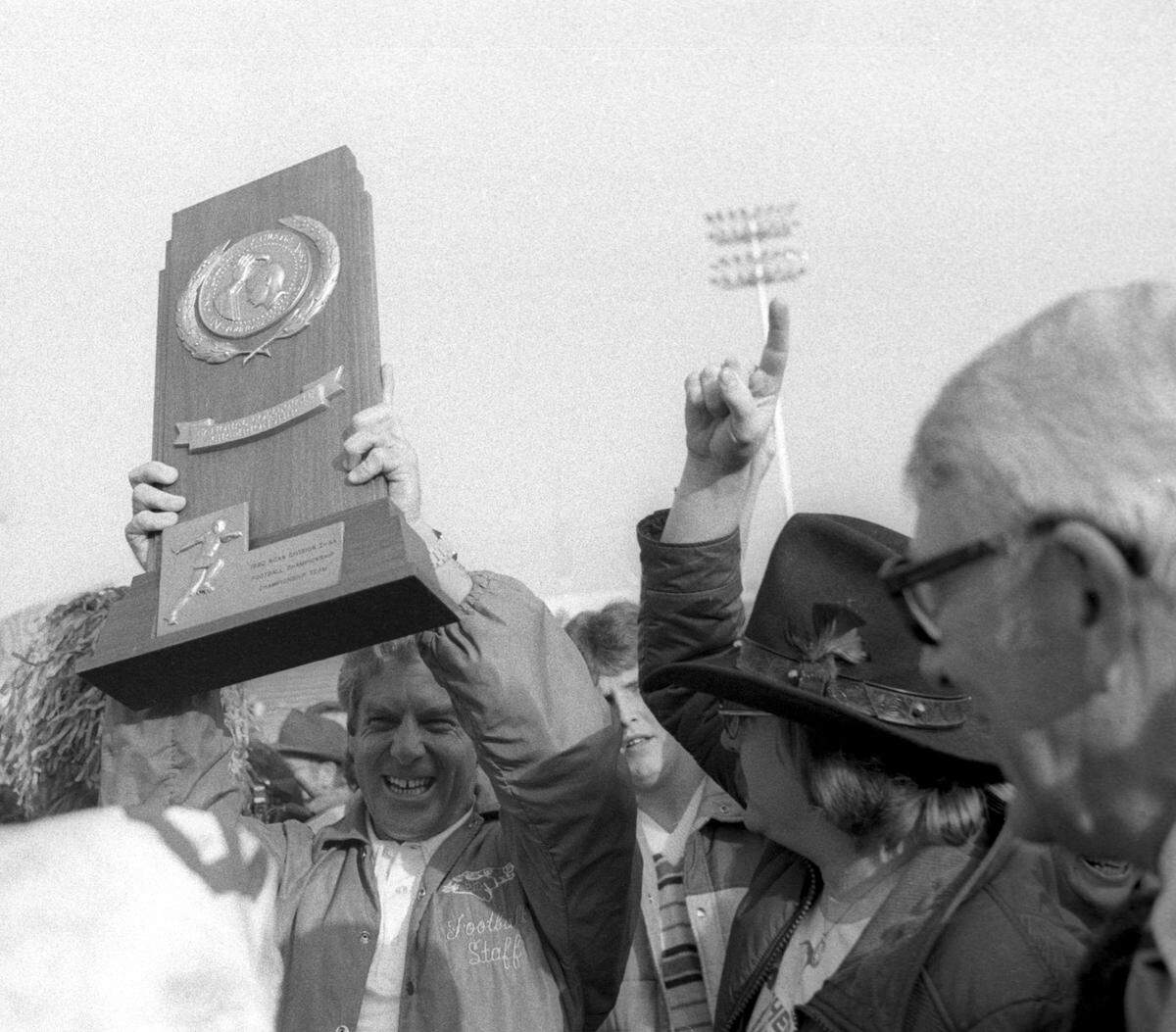
Final score: Boise State 31, Eastern Kentucky 29.
Boise State, national champion.
“We’d had a lot of success, but never quite where we wanted to be. … They fought like tigers for years, and they deserved to win it,” Criner said.
Said Aliotti: “It was a very Boise State team — we weren’t the biggest, but we always had the fight. When we worked together, you couldn’t stop us.”
Added Woods: “It would have been such a letdown to not win it all after everything that led up to it.”
Back together again, virtually, the Broncos remembered the good times. They also have appreciated each time they get to see one another, as time sets in – guys like Trautman, Dlouhy, Dan Brown and Mike Bradeson have passed away in recent years.
“We toast them every single time,” Woods said.
And even 40 years later, a thrilling finish still evokes the most incredible feelings, along with the sense of accomplishment to finish so strong after so many trying times.
“It just shows you that even when things look tough, if you’ve had a lot go against you, we could come together at the biggest moments and do some amazing things,” Hughes said.