Army Corps tables proposed 15-mile trail at Lucky Peak. Here’s why
The Army Corps of Engineers has tabled plans to create a trail near Lucky Peak Dam, according to documents shared publicly by the Idaho Wildlife Federation on Tuesday.
In a document dated Nov. 20, Lt. Col. Richard Childers, district commander for the Corps’ Walla Walla district, opted to implement a “no action alternative” on the proposed 15-mile trail. The trail, which has been in talks since 2017, would have started near Lucky Peak Dam at Lydle Gulch and followed the south shore of Lucky Peak to the Chimney Rock camping area across from Spring Shores Marina.
According to Childers’ report, the Corps weighed its original multi-use, 15-mile trail proposal against two alternatives: a pedestrian-only, 1.8-mile trail to the top of Chimney Rock or leaving the site as it is, called the “no action alternative.” Childers wrote that the Corps made its decision based on “the balancing of a broad range of interests, considerations, priorities and values expressed by key stakeholders.” According to the report, those stakeholder interests “are dynamic and may change over time,” leading the Corps to reconsider the decision.
A spokesman for the Army Corps’ Walla Walla district told the Statesman on Tuesday that the Corps expected to finalize its decision next week, at which time representatives would be available for comment.
During a public comment period earlier this year, the Idaho Wildlife Federation raised concerns that the trail would disturb critical wildlife habitat, as it is wintering range for the state’s largest mule deer population. At the same time, the Upper Snake River Tribes Foundation testified that the trail would impact land with significant meaning for the four tribes it represents.
“The project area for this proposed 15-mile multiple-use recreation trail is located on the aboriginal territory of USRT’s member tribes and is a very cultural and spiritual area that should not be disturbed for any reason,” the foundation said in its August comments to the Corps.
Scott Hauser, executive director of the Upper Snake River Tribes Foundation, said in a phone interview Tuesday that the area was used by the tribes for burials, prayer, hunting and fishing. It contains historically significant artifacts and sites, including “holding areas” used in the 1800s by the U.S. government before marching Native Americans to Fort Hall in eastern Idaho.
“I can’t really say how much value there is in this area and how important it is to the tribes of the Snake River,” Hauser said, praising the Corps’ decision.
Hauser said the foundation has expressed its desire to be included in future conversations about the land, which could also be used as a fuel break for wildfires.
Tamarack Resort will open for ski season this week
Tamarack Resort will fully open its ski operations on Friday, according to a news release from the Donnelly-area resort.
For the last two weekends, Tamarack has invited season passholders to the mountain as it refined COVID-19 safety protocols. Like other Idaho ski areas, Tamarack is requiring face coverings indoors and in lift lines.
“In many ways this will be a season unlike any other, and the Tamarack team is committed to ensuring our guests can safely experience the joy of winter recreation along with the delight in discovering a new favorite in The Village,” Tamarack President Scott Turlington said in the news release.
A new “upscale” restaurant, the Reserve, will also open at the Tamarack Village with a Mediterranean-inspired menu.
Fish and Game treats cow moose for apparent eye infection
Conservation officers with the Idaho Department of Fish and Game’s Magic Valley Region captured and treated a moose believed to be suffering from an eye infection.
In a news release, the agency said it received several reports from Hailey residents of a cow moose that appeared to have severely infected eyes. On Dec. 2, a resident called Fish and Game to report that the moose and her calf were in their front yard. Fish and Game officers and Blaine County Sheriff’s deputies responded, tranquilizing the moose so they could examine her.
Fish and Game biologists collected cultures from the moose’s eyes and injected her with antibiotics to treat what they believe to be conjunctivitis — more commonly known as pink eye. They also fitted the moose with a radio tracking collar in order to study her movements.
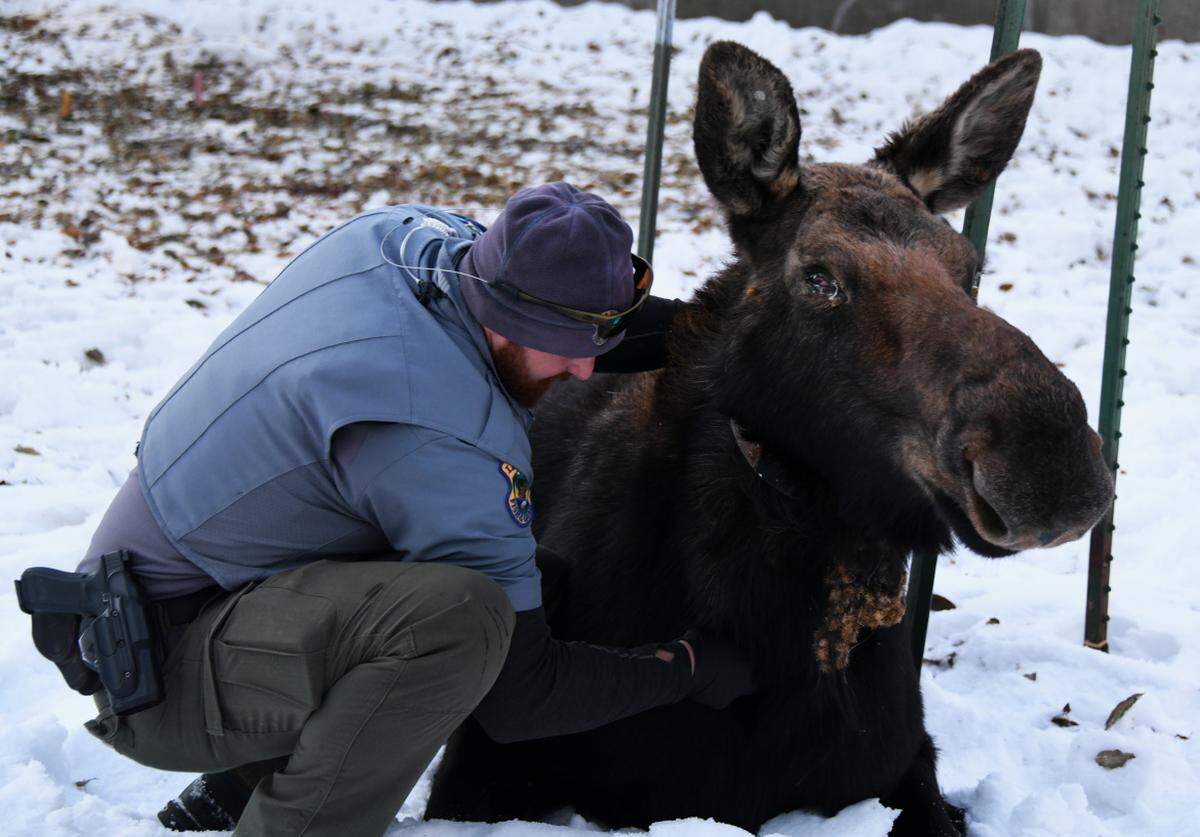
Fish and Game doesn’t typically provide treatment to wildlife for medical conditions. Officials explained the decision in the news release.
“The decision to anesthetize and treat the moose was made since moose populations in many areas of Idaho are struggling due to unknown causes,” officials said.
Samples taken from the moose’s eyes have been sent to the Fish and Game Wildlife Health Lab in Eagle to try to determine the type and cause of infection.
University of Idaho offers avalanche training
The University of Idaho is offering free avalanche awareness training for “aspiring backcountry travelers who are interested in ways to safely explore snowy mountainous terrain,” spokesman Brian Walker said in an email.
The online training will take place via Zoom on Wednesday from 4 to 6 p.m. Visit uidaho.edu/events to register.
Walker said attendees will learn the basics of how avalanches occur, as well as how to recognize and avoid avalanche terrain.